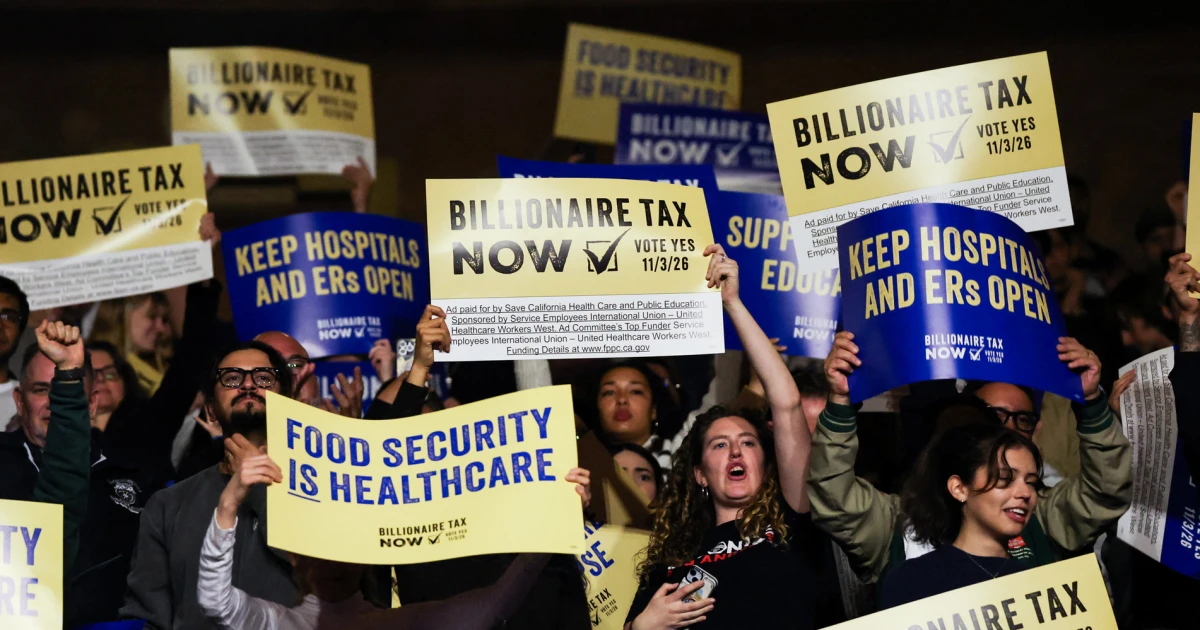
The secretary of state’s office confirmed Wednesday that a controversial billionaire tax initiative has qualified for the November ballot, setting up what is expected to be one of the state’s most costly and divisive ballot measure battles.The proposal has exposed fissures within the Democratic Party, pitting progressive advocates, such as Rep. Ro Khanna (D-CA) and Sen. Bernie Sanders (I-VT), who argue the wealthy should shoulder a larger share of the tax burden, against business groups and centrist Democrats such as Gov. Gavin Newsom (D-CA), who warn it could drive high earners and investment out of California.
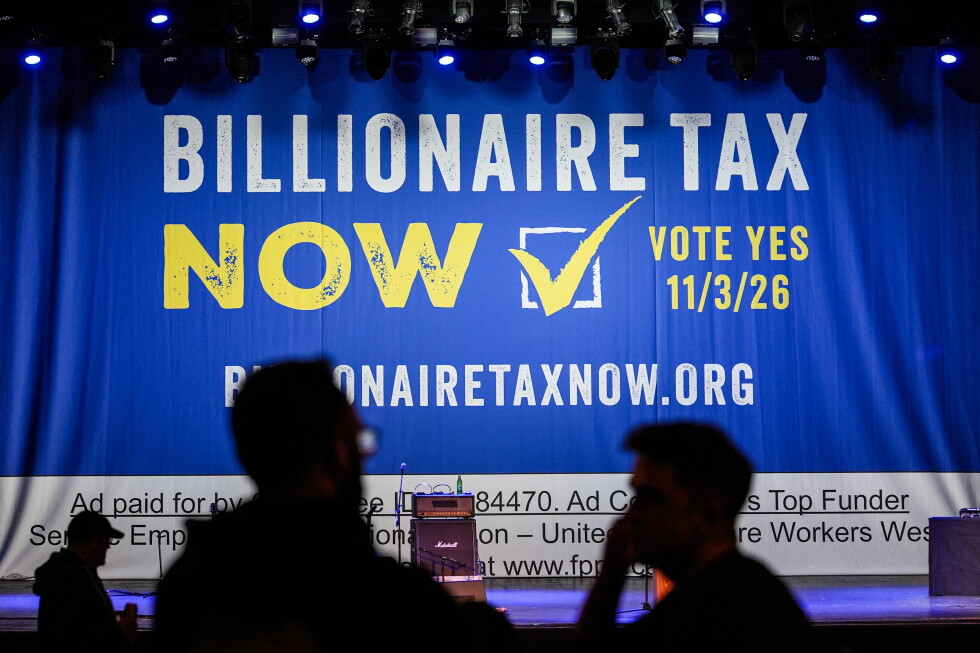
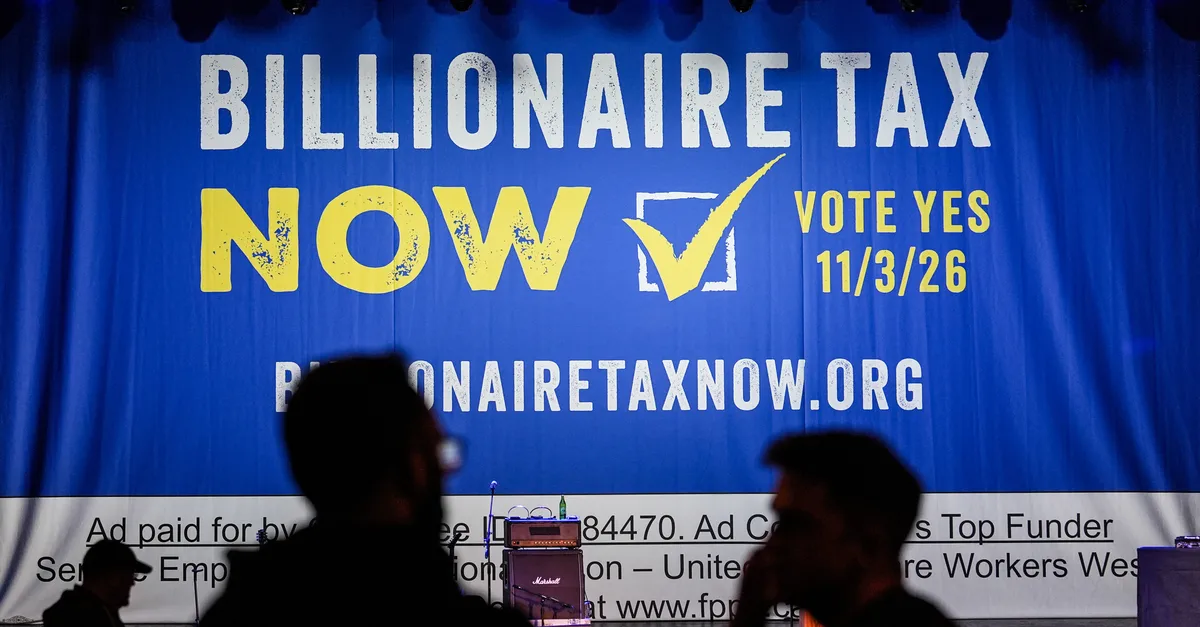
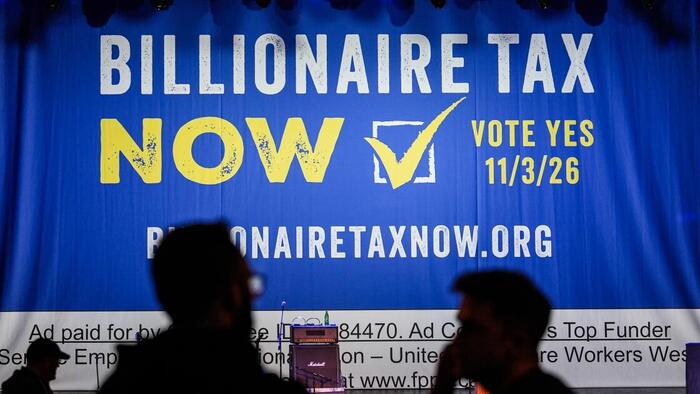
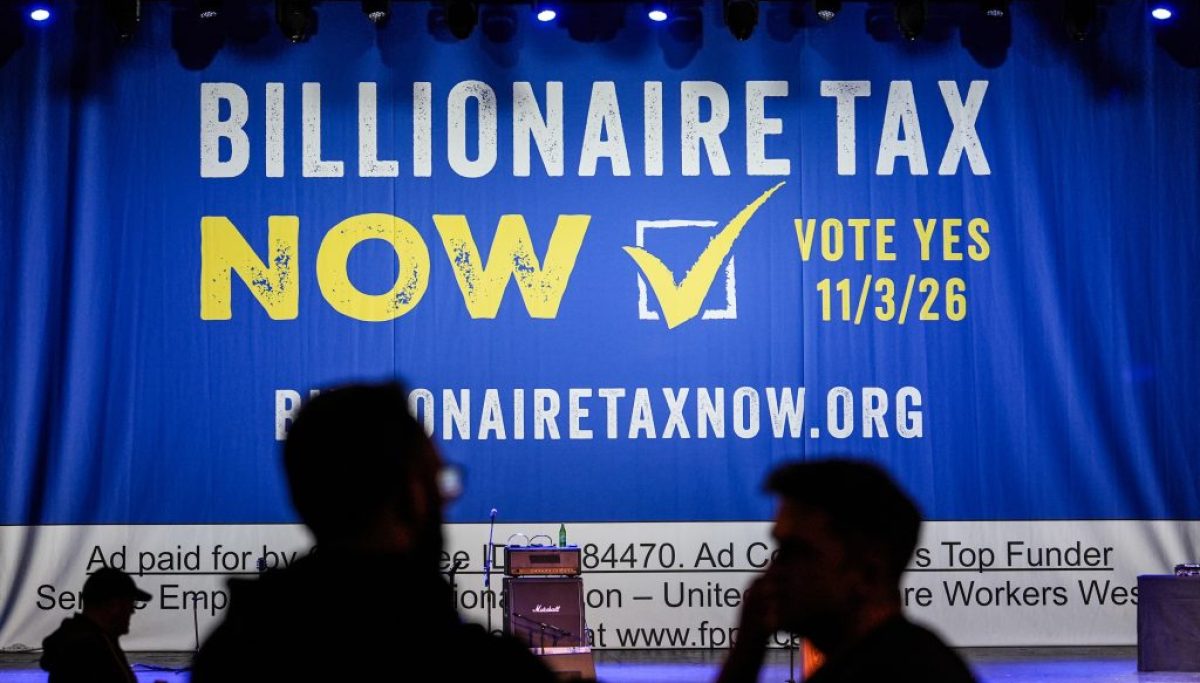
A large banner is seen at a campaign event for a proposed “billionaires tax” in Los Angeles on Feb. 18, 2026. (AP Photo/Jae C. Hong, File)
Newsom, who is widely expected to launch a 2028 presidential campaign after leaving office, has vowed to defeat the measure, signaling a willingness to spend what political capital he has left to block it. Newsom has argued the tax would ultimately weaken California’s economy and reduce future revenue. Gubernatorial candidates Steve Hilton, a Republican, and former Health and Human Services Secretary Xavier Becerra, a Democrat, have also come out against the proposal.There may still be enough political pressure to secure a last-minute deal that keeps the measure off the ballot. Supporters have until June 25 to decide whether to move forward.The initiative would impose a one-time 5% tax on the assets of California residents with at least $1.1 billion in net worth. Under the proposal, an individual with $1.1 billion in assets would owe $55 million, payable over five years.The campaign is being led by Service Employees International Union-United Healthcare Workers West, which has argued California will need new sources of revenue to offset reductions in Medicaid and other federal healthcare programs enacted under President Donald Trump’s domestic policy package last year. State analysts projected the measure could generate tens of billions of dollars in additional revenue over time. However, the Legislative Analyst’s Office has also warned that the proposal could reduce annual income tax collections by hundreds of millions of dollars if some of California’s wealthiest residents leave the state.Supporters contend the tax is necessary to address widening wealth inequality and argue California’s economy is strong enough to retain most of its 216 billionaires. To address concerns about valuation and liquidity, the proposal would allow independent third-party appraisals, permit payments to be spread over five years with interest, and defer certain taxes on illiquid assets, such as privately held startup shares.Critics, particularly in the technology sector, argue the measure could force entrepreneurs and investors to sell assets to meet tax obligations, potentially disrupting businesses and discouraging investment.Hilton called the proposal “something that just captures so perfectly the stupidity and the failure of 16 years of one-party rule,” arguing it is primarily an effort by organized labor to secure additional funding for its priorities.As the debate intensifies, concerns about California’s ability to retain wealthy residents have resurfaced. Several high-profile billionaires have relocated to lower-tax states such as Texas and Florida, fueling opponents’ fears that the state’s tax base could erode further.“Billions of dollars of actual revenue have already left,” Hilton said. “It’s gone. It’s too late. Even if their stupid negotiation thing means that they don’t put this on the ballot, their pathetic, ridiculous inside-a-swamp game in Sacramento has already cost the state of California billions of dollars in revenue that we are not getting back.”A broader departure of wealthy residents and major employers could reshape California’s economy, reducing investment and economic activity that often supports smaller businesses. Seven Summers, who owns a jewelry store in Santa Barbara, told the Washington Examiner earlier this year that the prospect of high-net-worth residents leaving the state would have ripple effects throughout the economy.GAVIN NEWSOM’S TRUMP PROSECUTION ENVY“I think it’s a ridiculous idea to enforce heavier taxes on people who have already paid taxes into the system and a grand amount of taxes at that,” he said. “You’re going to take our highest-earning people, and you are going to push them out. I cannot believe something like this could be on the ballot.”Summers said he was “encouraged and surprised” by Newsom’s opposition to the measure and dismissed the argument supporters have pushed that wealthy residents would remain in California because of its climate and lifestyle advantages as “laughable.”