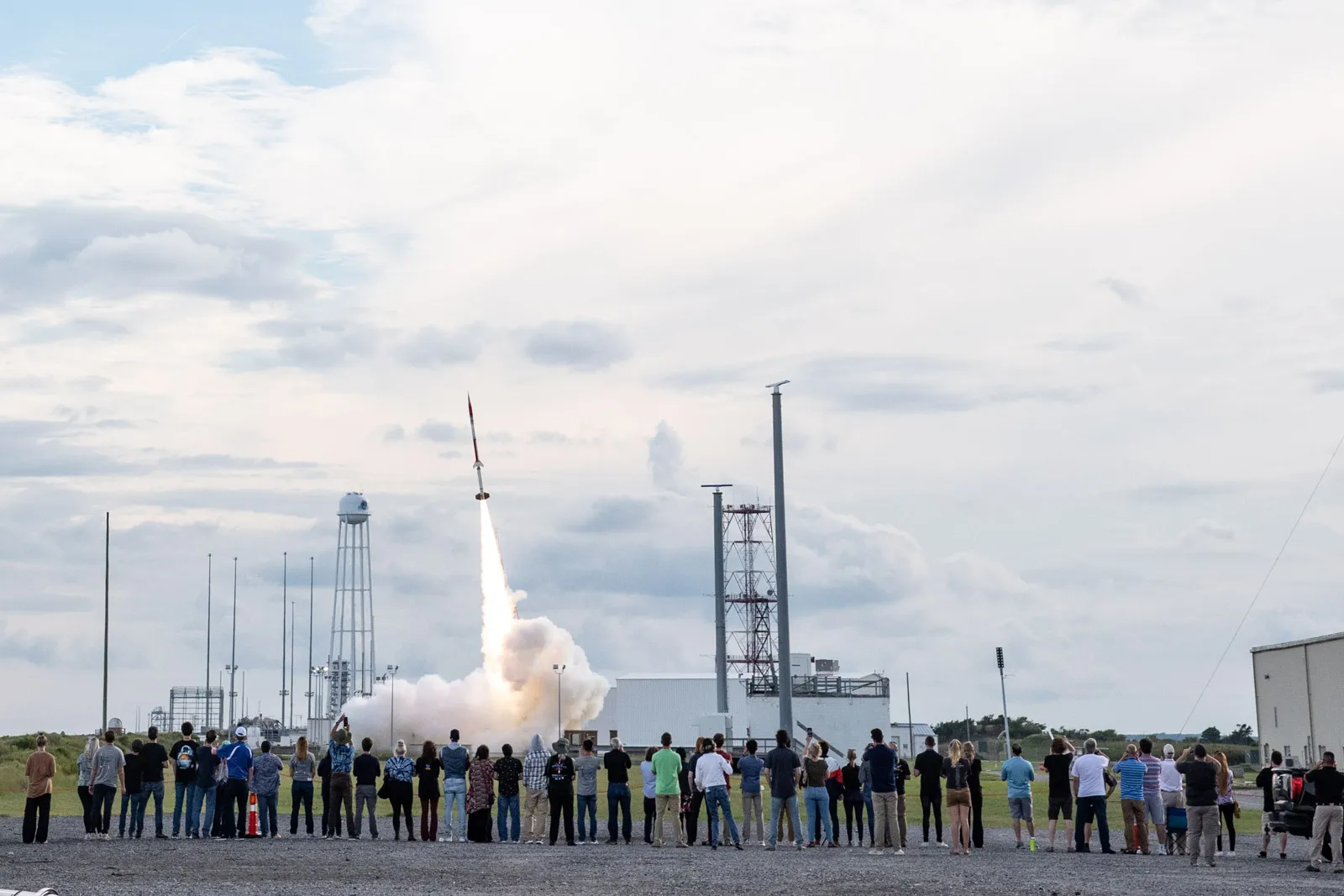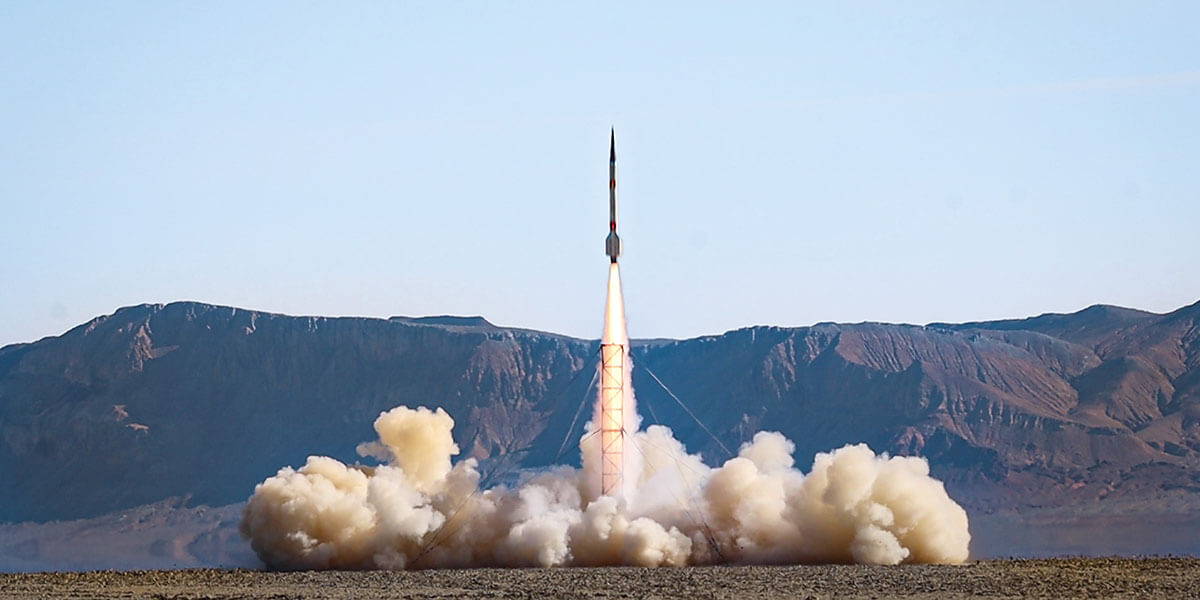
Launch of Daybreak from the rocket launch site in the Black Rock Desert, Nevada.
USC Rocket Propulsion Lab (USCRPL) are on a roll with their to-do list.
When the student-run team was established at USC Viterbi’s Department of Astronautical Engineering two decades ago, their founding goal was to become the first collegiate team to launch a rocket into space.
Since meeting that target in 2019 with Traveler IV and breaking the altitude record for amateur rocketry with Aftershock II in 2024, the team has set its sights on becoming the only collegiate team to have a fully in-house space program, capable of carrying commercial and scientific payloads to space.
Their latest mission, Daybreak, has passed the first hurdle to that goal. Launched from the black Rock Desert in Nevada on 18 April, the rocket crossed the Kármán line (the boundary between Earth’s atmosphere and outer space), reaching an altitude of 331,790 feet (above ground, not sea level) and a maximum velocity of 4700 feet per second / Mach 4.3.