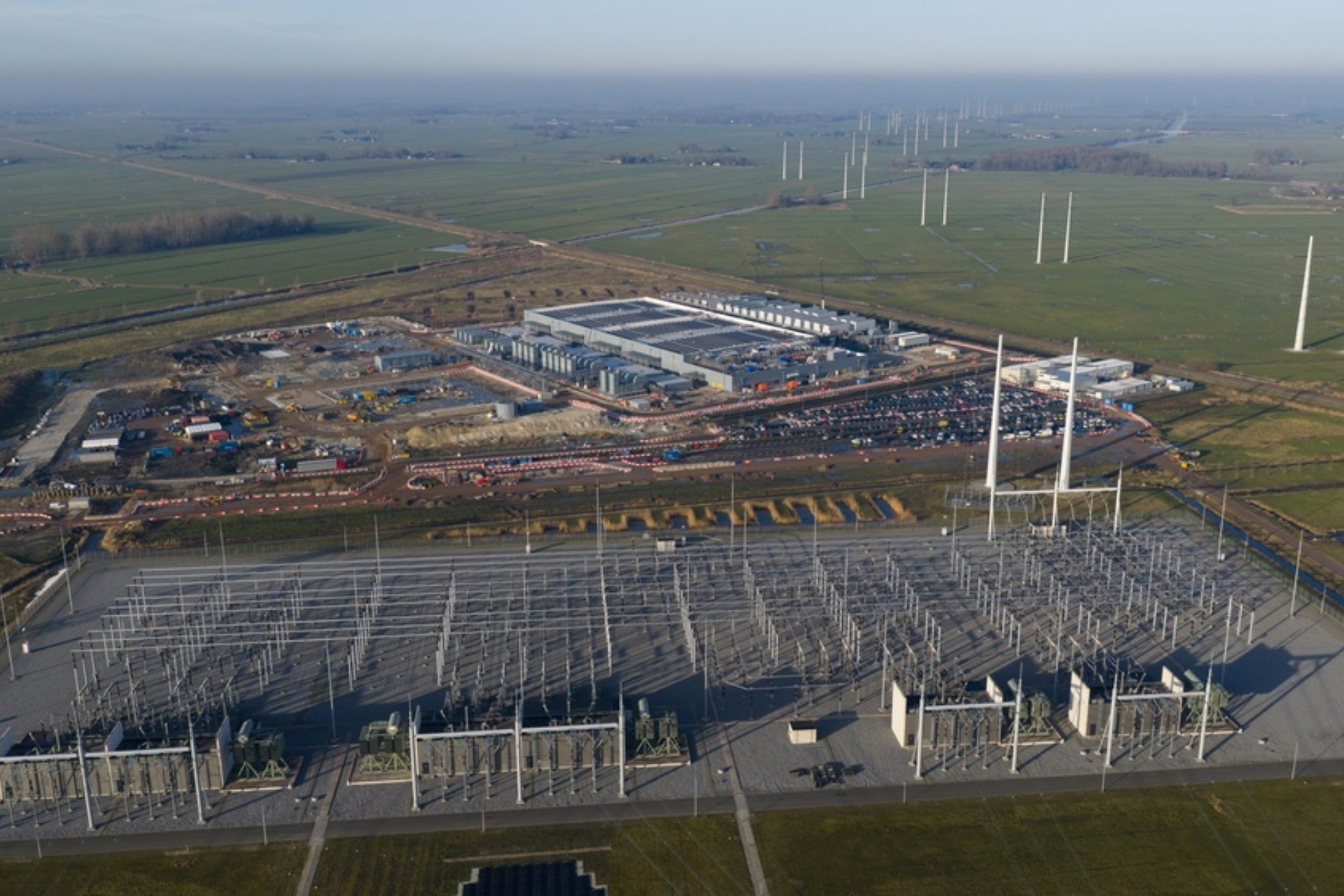
Photo credit: Make more Aerials / Shutterstock
The most important near-term question in the wake of FERC’s large load rulemaking is not jurisdictional; it is how utilities, RTOs, and regulators will implement flexible interconnection.
FERC’s ruling emphasizes getting more from existing infrastructure broadly and gives runway for non-firm interconnection options specifically. States and transmission organizations should prioritize these pathways. If they fail to do so, it will likely encourage using behind-the-meter gas generation operating as primary supply rather than reliability backstop.
Treating large-load requests as though the only acceptable outcome is fully firm service supported by required network upgrades is misaligned with both system realities and customer preferences. A growing share of prospective data center load can accept some combination of curtailment risk, staged service rights, on-site generation support, battery-backed flexibility, or other operational constraints in exchange for earlier energization. But in many regions, interconnection frameworks remain binary: Either the system is prepared to serve peak demand under all modeled conditions, or the customer waits for studies and upgrades to run their course.