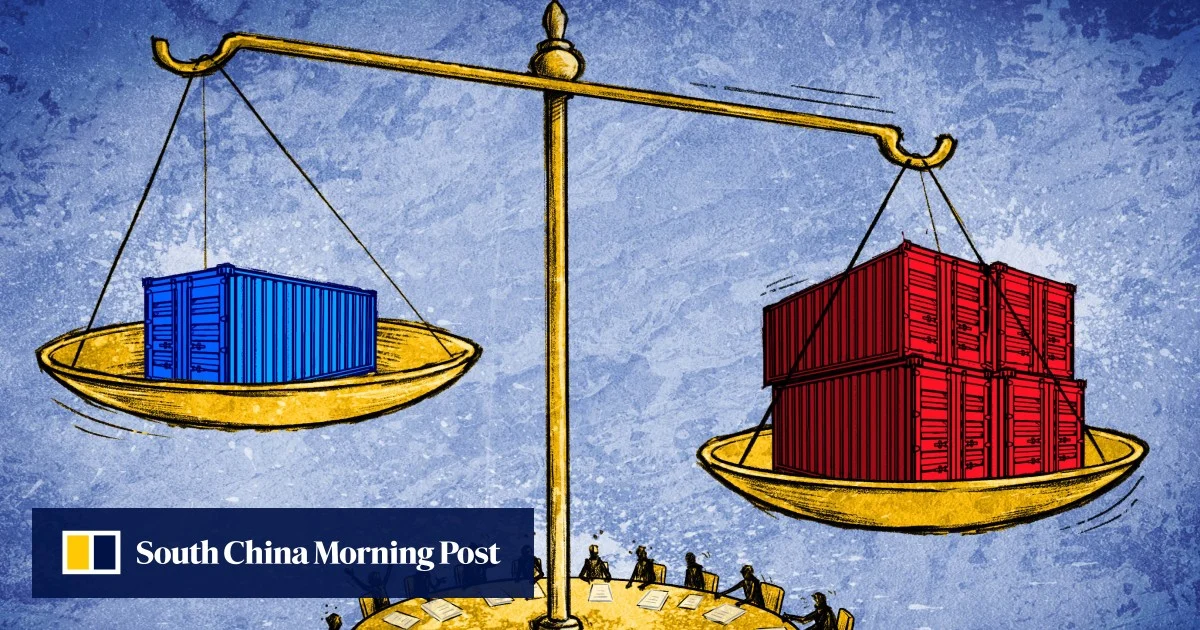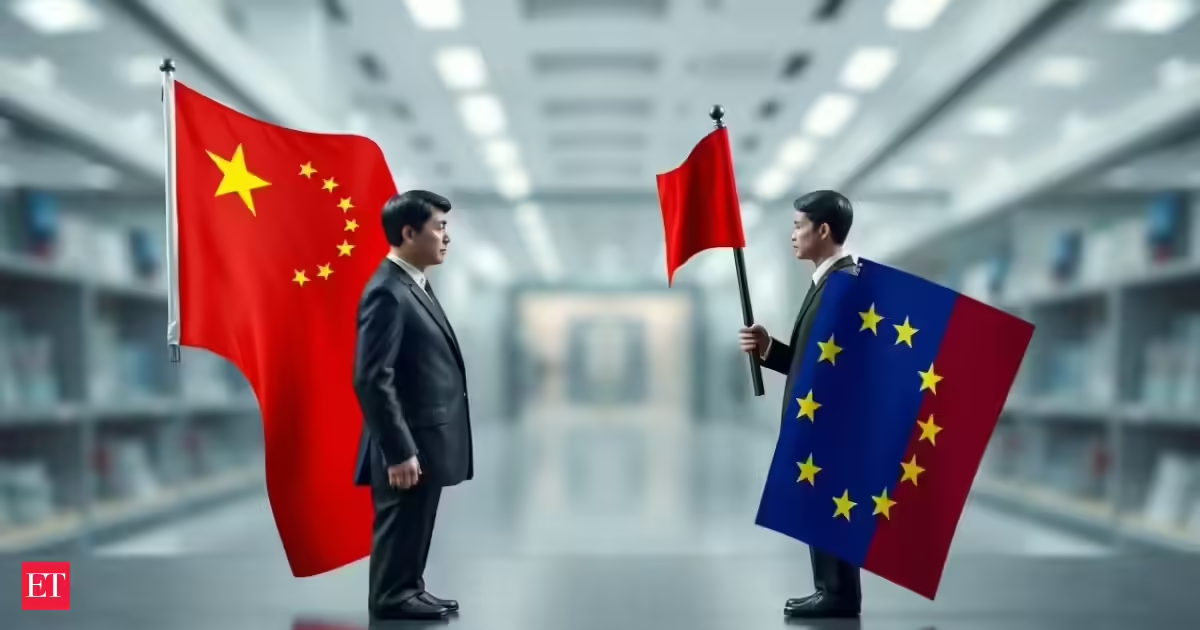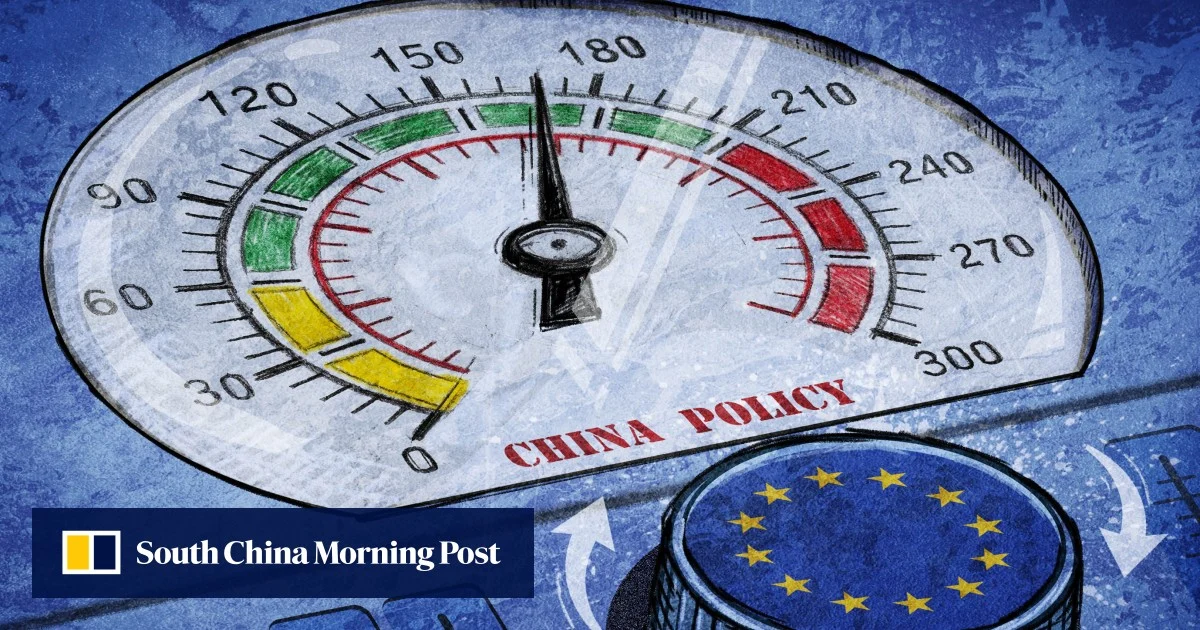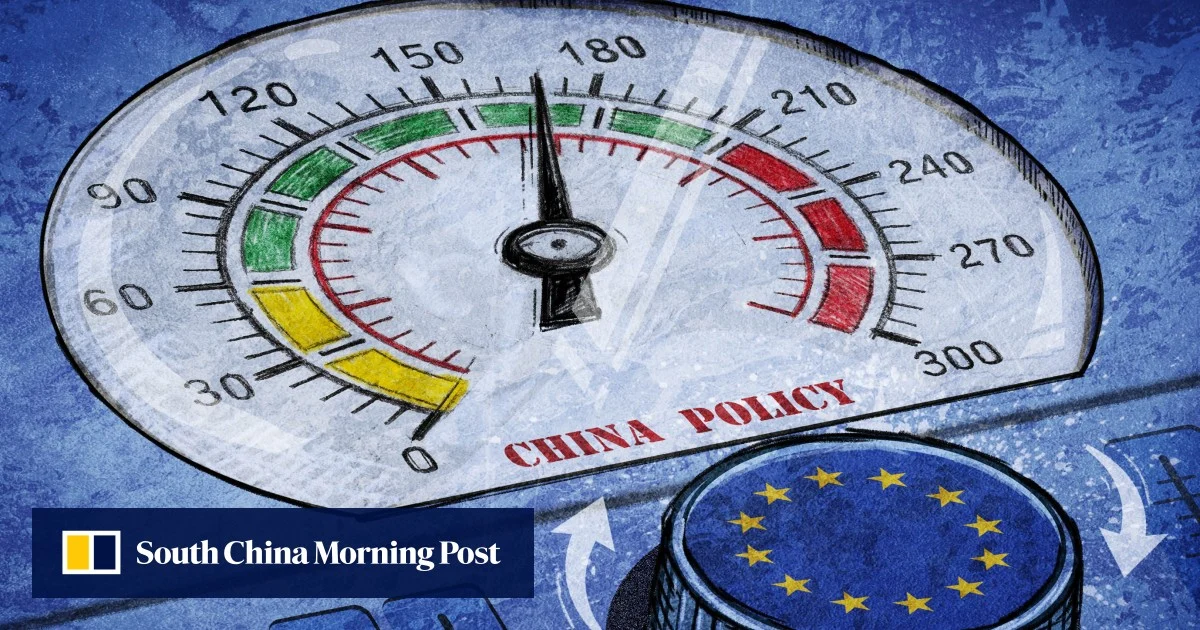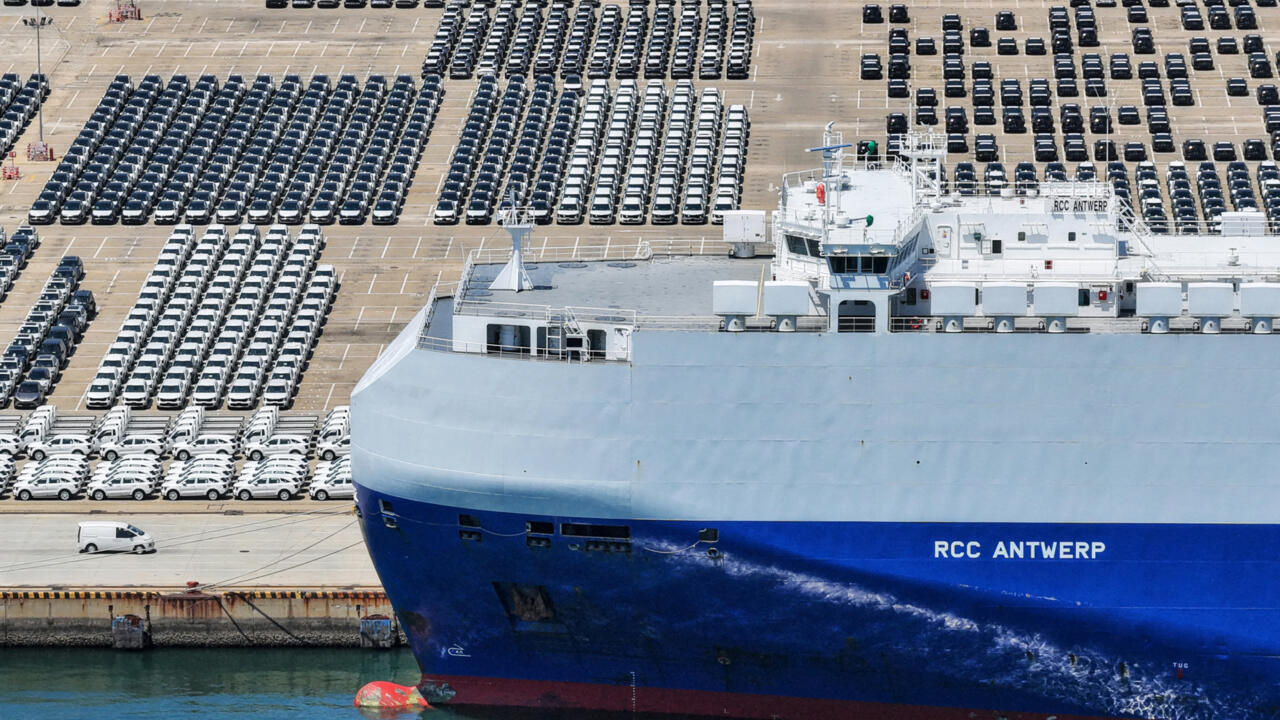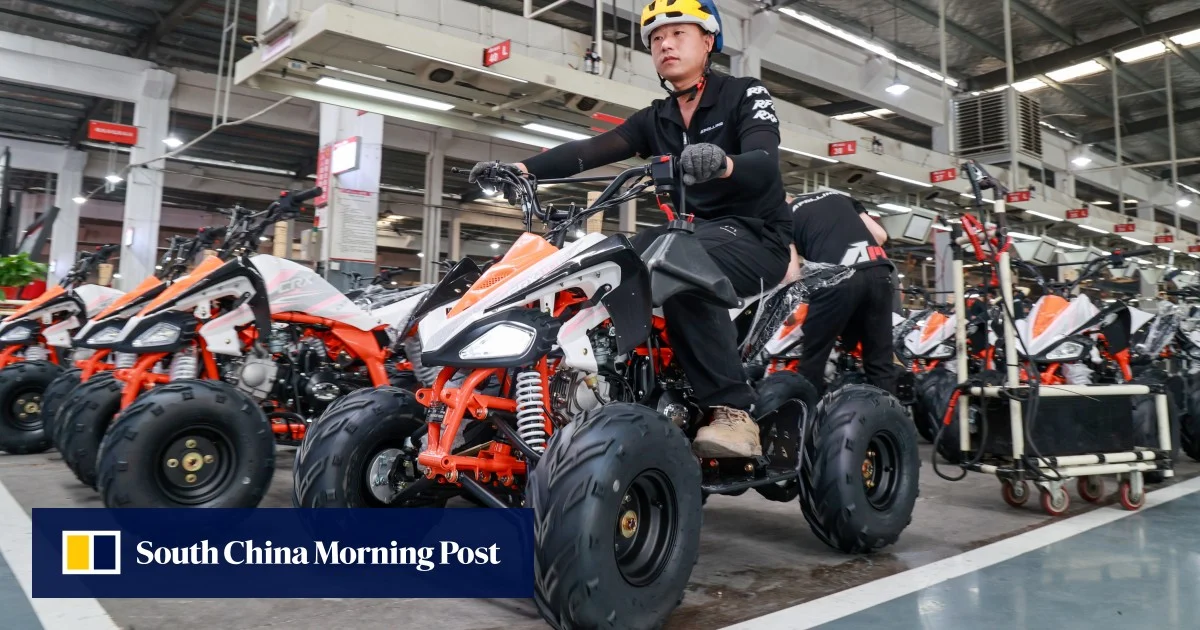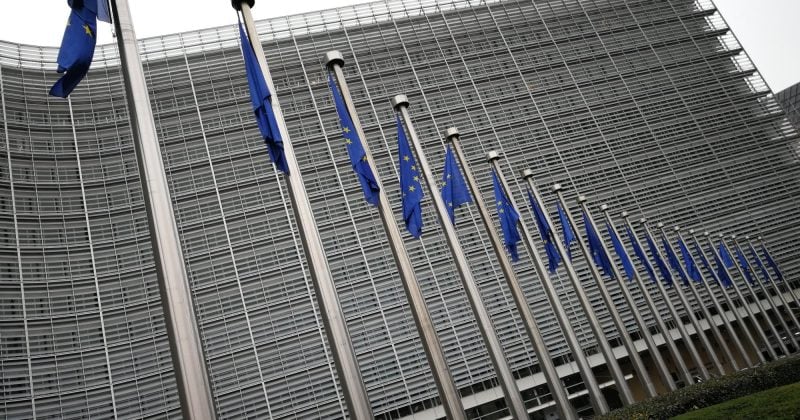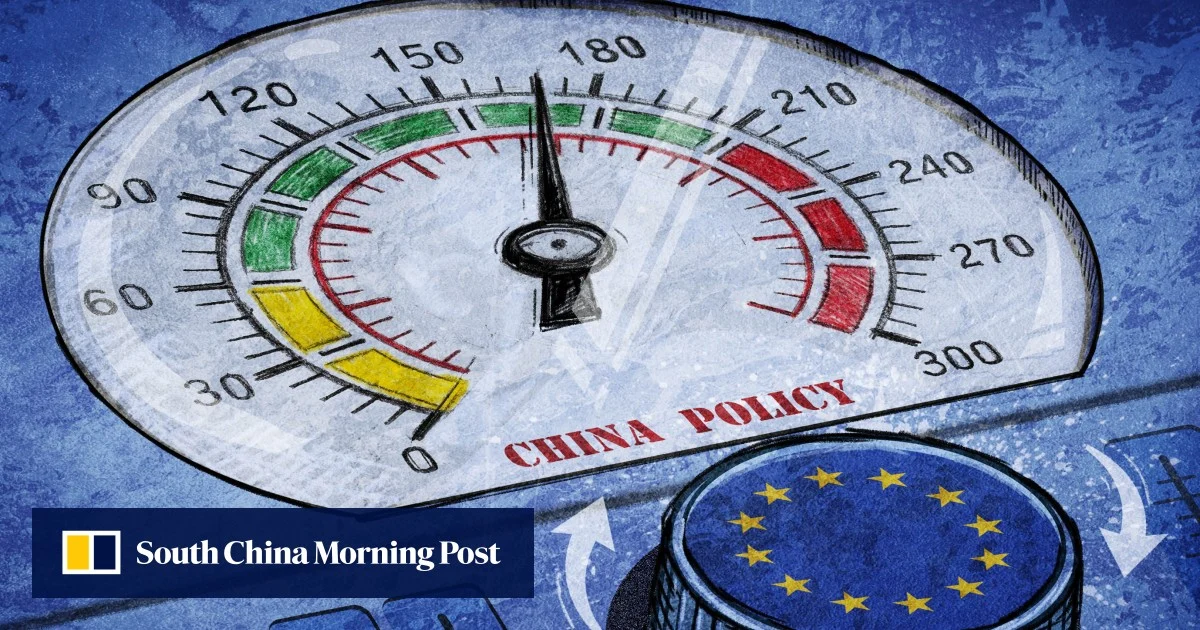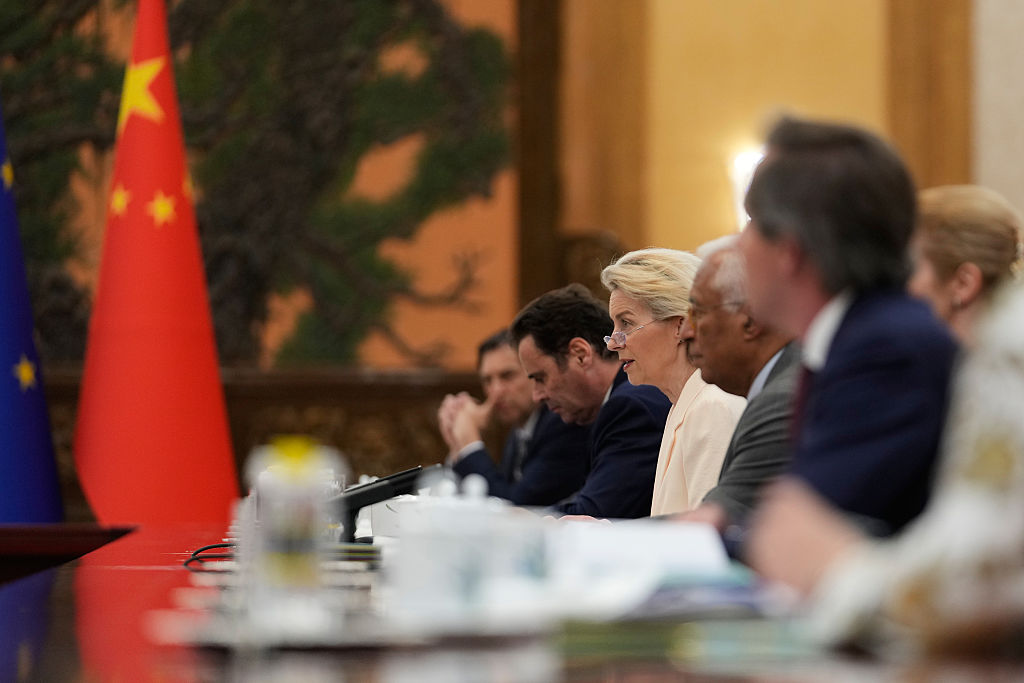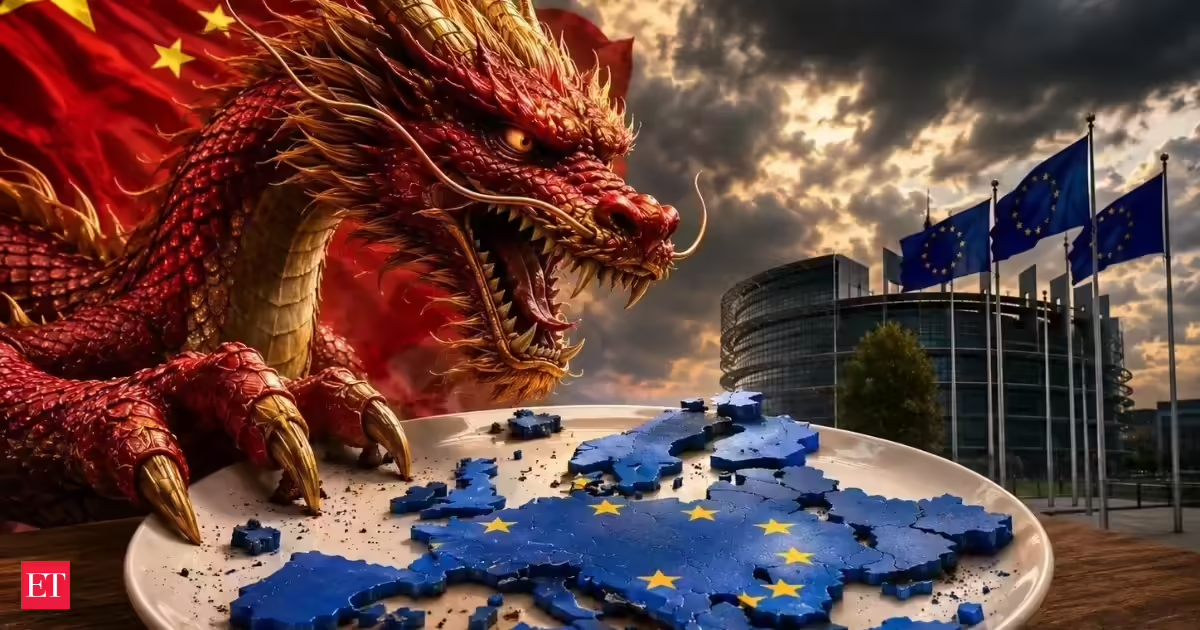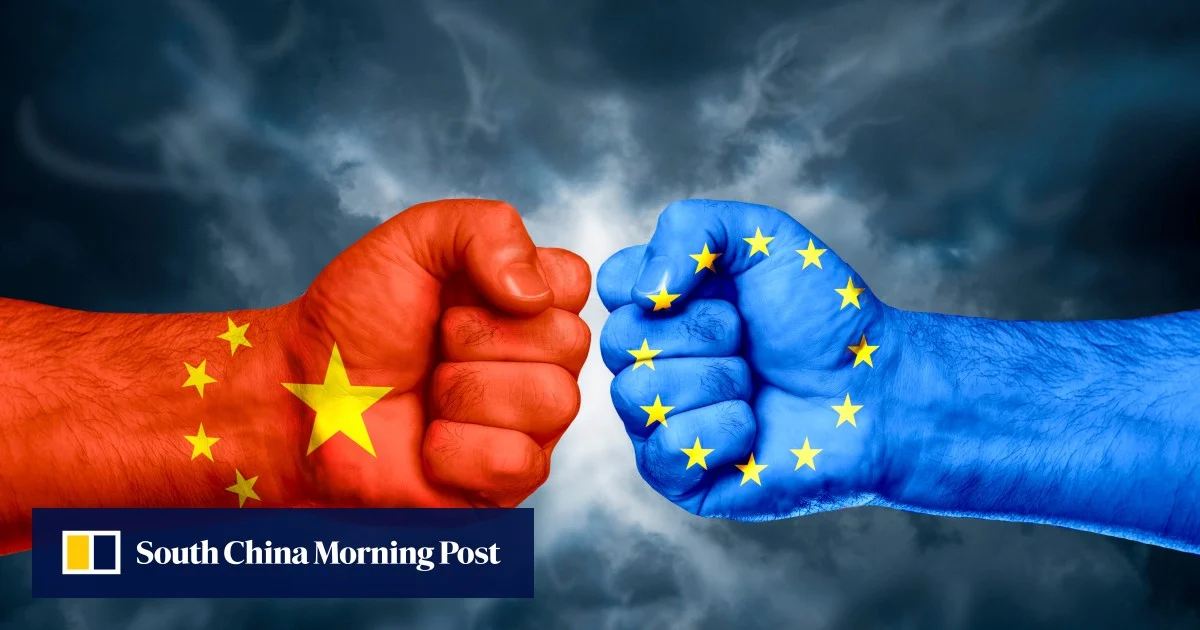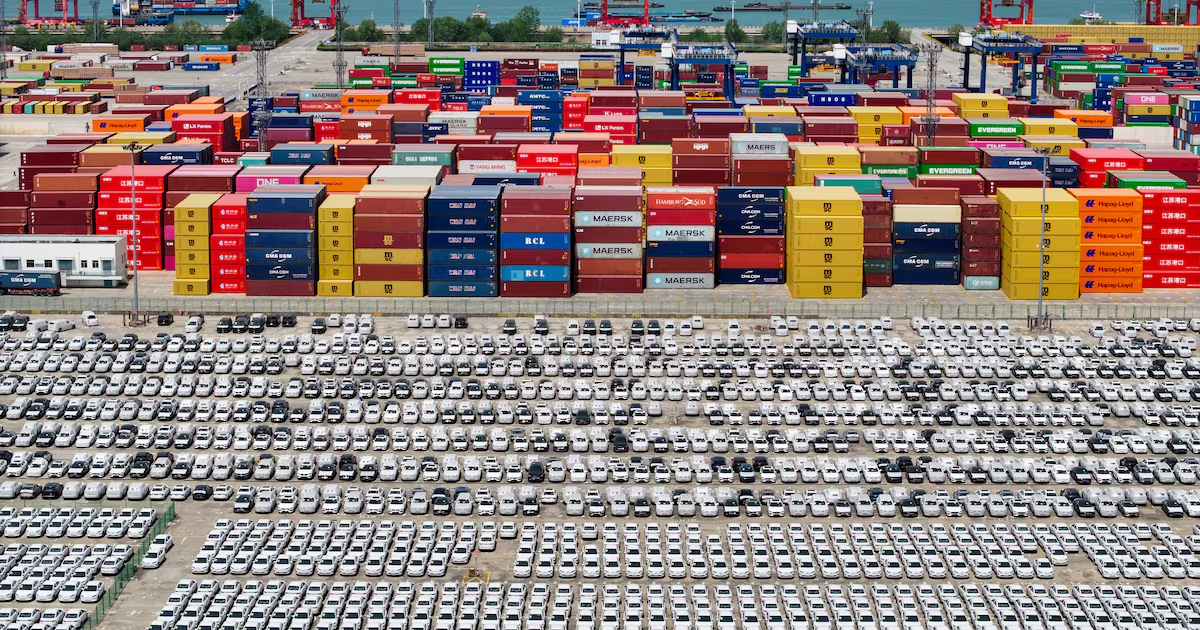
China is eating bigger and bigger bites out of Europe’s lunch and EU leaders aren’t quite sure what to do about it. Years ago the “Made in China” tag was synonymous with cheap and flimsy goods: clothes, toys and electronics you mightn’t expect to last you very long. Things have changed. The Chinese economic behemoth has been busy moving up the value chain and now dominates what Beijing believes will be the industries of the future. It is racing ahead in the mass production of electric vehicles, solar panels and other clean tech. In some cases, it is taking over entire markets and muscling out fledgling European competitors. European governments have been accused of being too slow to wake up to that reality.China is also hoovering up a greater share of traditional heavy manufacturing industries that have for decades powered Europe’s economy.“There is a growing consensus a new China shock is reverberating across global goods markets,” economists Sander Tordoir and Brad Setser wrote in a paper for the Centre for European Reform think tank last month. “Nowhere is that shock more consequential than in Germany. Its manufacturers in core industries – cars, machinery, chemicals and aircraft – are being simultaneously squeezed out of China and other foreign markets, and at home,” the pair wrote. Chinese president Xi Jinping meets European Council leader Antonio Costa and European Commission president Ursula von der Leyen. Photograph: Xie Huanchi/Xinhua/AP The amount of goods China is selling into the European market has increased substantially over the last decade and looks set to continue to do so. Tordoir has been sounding the alarm for a while, warning of grave consequences if Europe doesn’t readdress this growing economic imbalance. Simply put, China makes vastly more goods than its own economy can consume, meaning it relies on overseas markets to sell much of what its industries are pumping out. Domestic demand has been dampened by a scarring property market slump.China makes vastly more goods than its own economy can consume. Photograph: EPA In trade-speak this is known as overcapacity. The result is a flood of products – from steel to electric vehicles – pushed into the European market, usually on the cheap, which undercut European producers. At the same time, European businesses are being shoved out of the Chinese market, compounding what was an already uneven trading relationship. [ Europe faces risks from both China and the US - but there are solutionsOpens in new window ]Economists fear the ultimate result will be a hollowing out of European industries, locking Europe into a lopsided dependence on China. European factories are already starting to close or shed jobs. Businesses are relocating manufacturing operations to China, to gain more access to that market. The Chinese Communist Party’s economic model gives a big leg up to strategic sectors, while encouraging intense internal competition, further fuelling excess production and pressure to export. Companies enjoy direct state subsidies and other means of support, such as cheap loans with preferential rates, materials at below-market prices and generous tax exemptions and grants, which EU officials say give Chinese producers an unfair edge in the global market. Sums done by the OECD estimate Chinese companies receive between three and nine times more state support than manufacturers in other advanced economies. The EU has taken tentative steps in response. The European Commission, which is the union’s executive arm that leads on trade, has put protectionist tariffs on Chinese electric vehicles and introduced safeguards to block China from dumping steel into the European market. European Commission president Ursula von der Leyen and her top officials want the EU to take a tougher stance to defend the bloc’s economic interests. Photograph: Nicolas Tucat/AFP via Getty Images Commission president Ursula von der Leyen and her top officials want the EU to take a tougher stance to defend the bloc’s economic interests. The EU’s 27 leaders are in Brussels for a summit where they will discuss China over dinner on Thursday evening. Fearful of provoking retaliation from Beijing, that point in the agenda has been labelled a discussion about “global macroeconomic imbalances”. “We all know it’s about China ... We have to defend ourselves,” a senior diplomat from one EU state said. Von der Leyen is believed to be keen that the EU sharpen, or expand, its armoury of defensive trade tools. Germany has always been reluctant to antagonise Beijing, because China is still a large market for its carmakers and export-dependent economy. Spain’s left-wing prime minister Pedro Sánchez has also cosied up to Xi Jinping. There are signs German chancellor Friedrich Merz is reconsidering his stance, in the face of a widening trade deficit. China will retaliate hard against any EU measures. Beijing’s game plan will likely be to threaten its own tariffs or restrict access to raw materials, to heap pressure on European governments and divide the 27 member states. China has a near-monopoly on rare earth minerals needed to make components in wind turbines, cars, headphones, hospital MRI machines, weapons systems and aeroplanes. It didn’t hesitate to weaponise that dependence during its tariff dispute with Washington. Letting the status quo carry on doesn’t seem like a credible option. “Leaving the China shock unmitigated and unchallenged would be profoundly irresponsible in a world where China has shown it will use its control over key global supply chains as leverage,” Tordoir and Setser wrote in their recent paper. However, having spent the last year and a half doing their best to avoid a trade war with the United States, the EU may not have the stomach to rush into one with Beijing. [ China forges ahead on digital currency while Europe’s banks look onOpens in new window ]
European leaders debate getting tough on China: ‘We have to defend ourselves’
Having spent the last year and a half avoiding a trade war with Washington, European leaders may not have the stomach to start one with Beijing
948 words~4 min read