Solid-state batteries for electric vehicles have been grabbing headlines over the past few years, but mos automakers don’t expect them to be ready for commercialization before the end of the decade. Battery companies expect several other chemistries to arrive first, including an advanced version of current lithium-ion batteries with silicon in the anodes.
“We believe silicon is the next anode technology,” Kurt Kelty, the vice president of battery and sustainability at General Motors, told me in an interview at last week’s GM Empower conference in San Francisco.
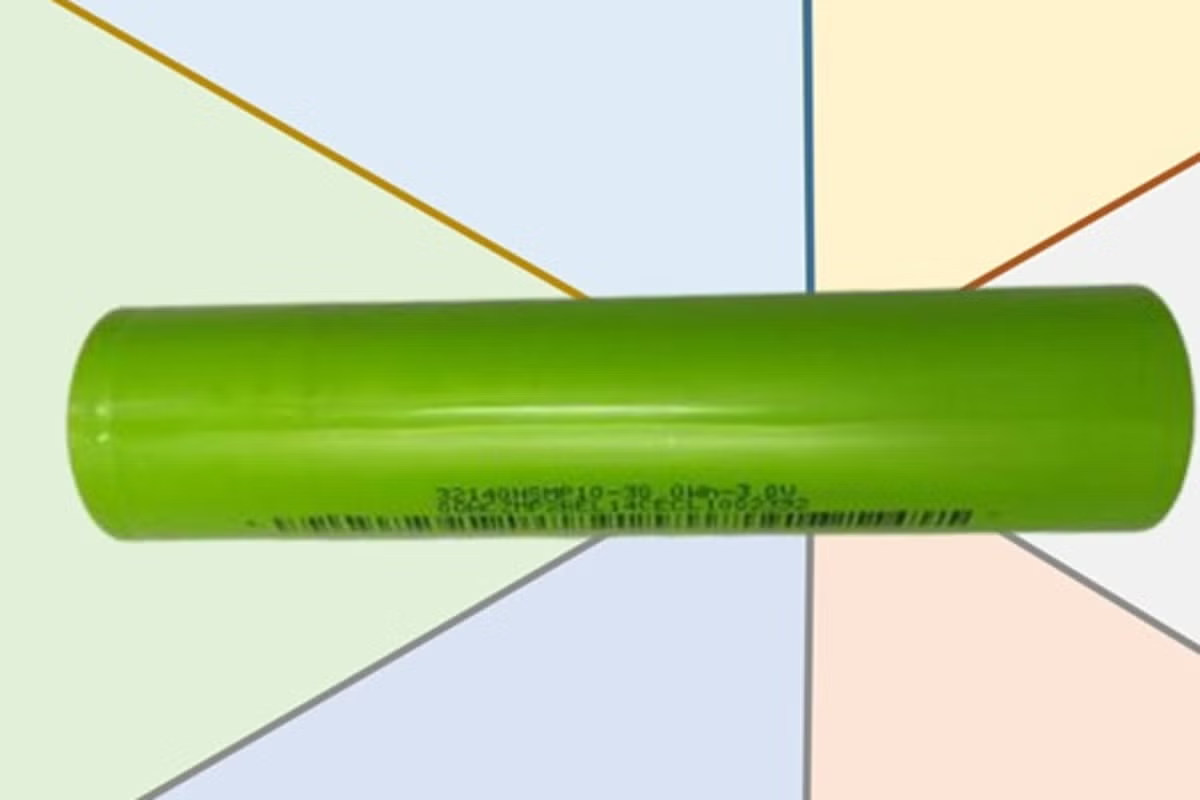
Amprius Technologies: silicon anode Li-Ion battery cells
The goal remains the same: to make EVs drive further, charge faster, and be safer. The anode can help automakers achieve that. It is a critical battery component, storing ions during charging and releasing them during discharging.
Today, anodes are almost universally made from graphite, a material tied to expensive, environmentally fraught mining, with more than 90% of its processing concentrated in China. Battery makers have stuck with it anyway, because graphite keeps batteries stable and energy-dense. But by reducing the amount of graphite in the anode and increasing the amount of silicon, you can massively improve batteries, even if you still need some graphite to manage the swelling that would occur in a pure silicon anode.