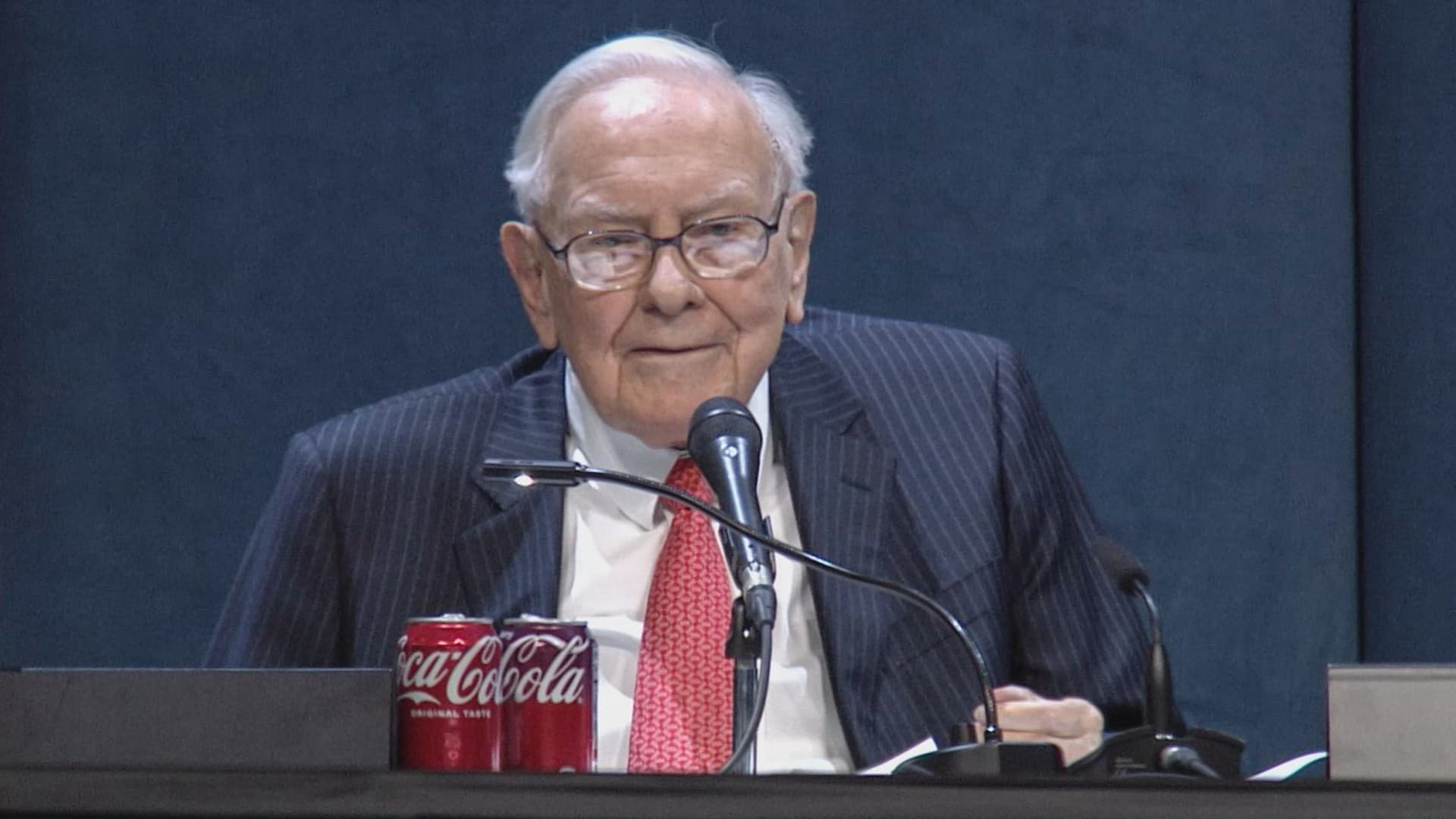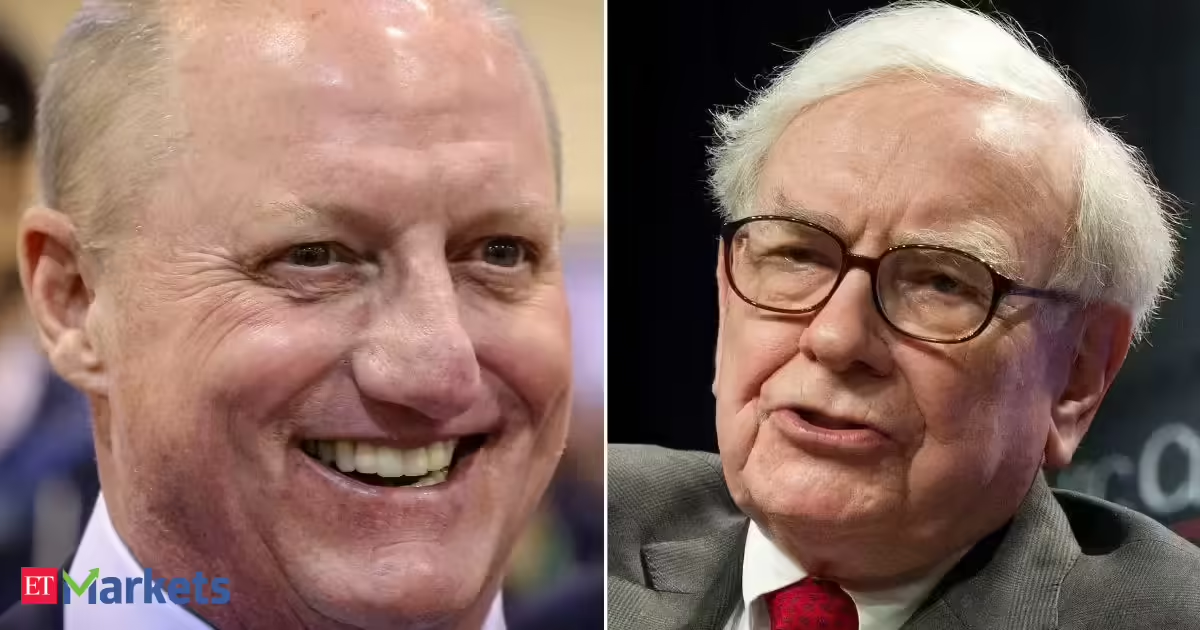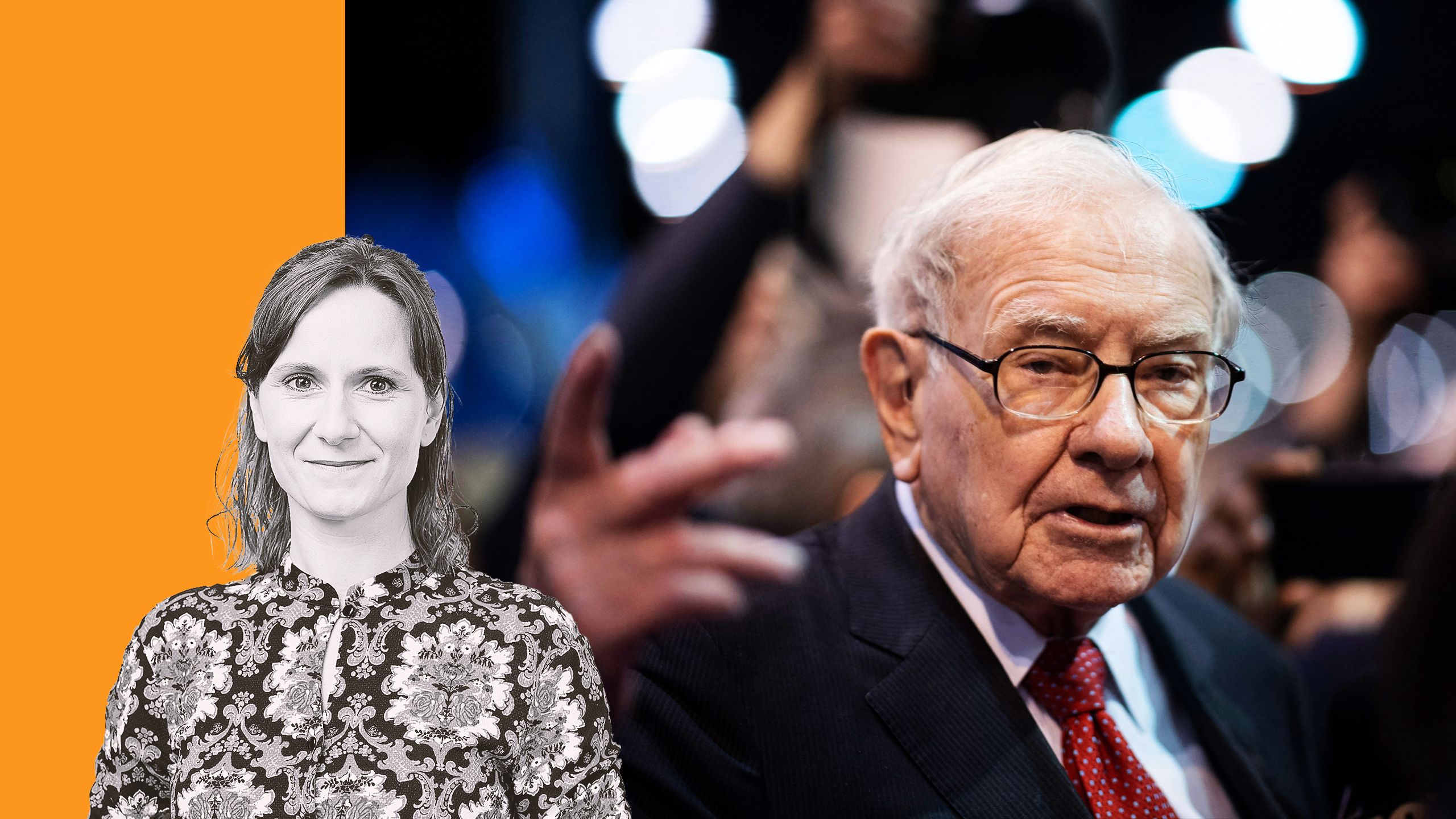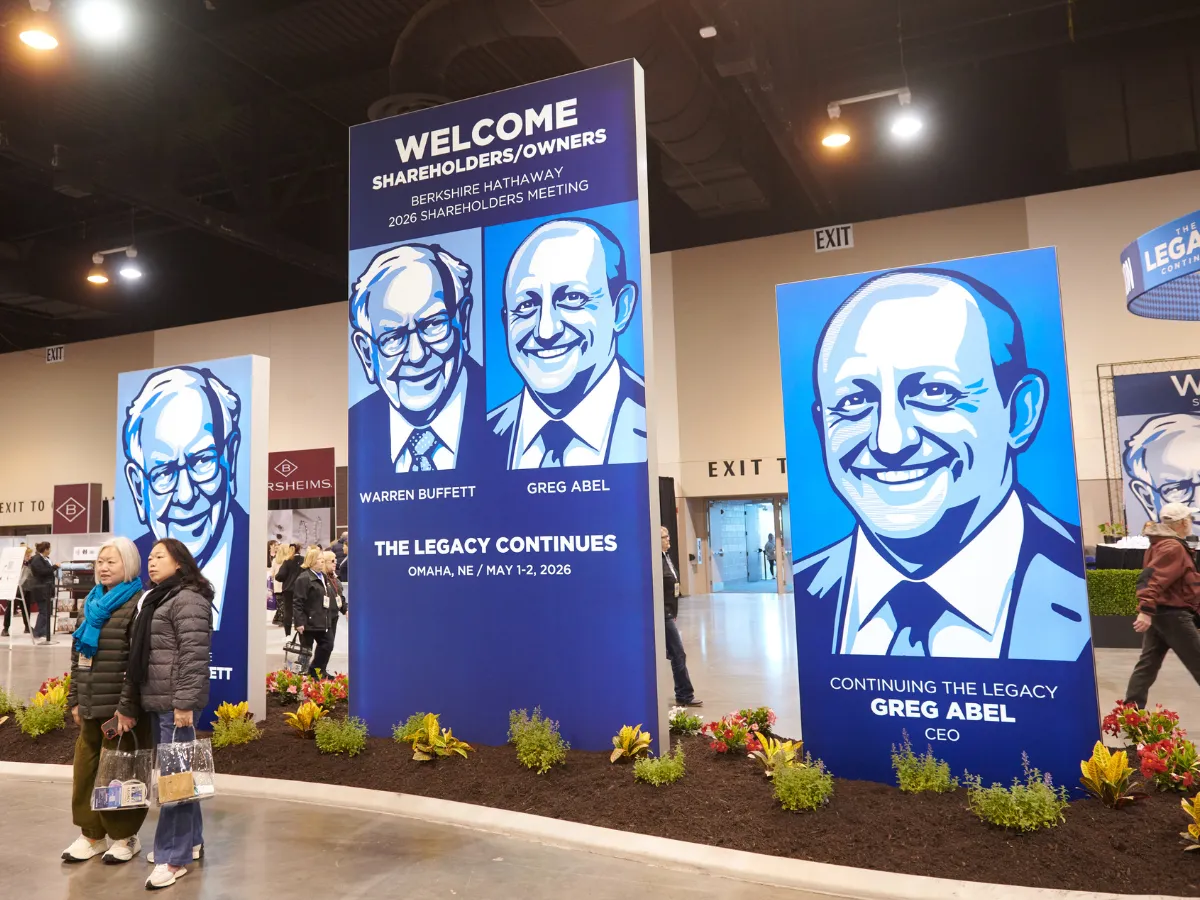
Skip to Content News Archives Economy Energy Oil & Gas Renewables Electric Vehicles Mining Commodities Agriculture Real Estate Mortgages Mortgage Rates Finance Banking Insurance Fintech Cryptocurrency Work Wealth Smart Money Wealth Management Investor Personal Finance Family Finance Retirement Taxes High Net Worth FP Comment Executive Women Puzzmo Newsletters Financial Times Business Essentials More Innovation Information Technology FP500 Podcasts Small Business Lives Told Tails Told Shopping Financial Post Store Obituaries Place a Notice Advertising Advertising With Us Advertising Solutions Postmedia Ad Manager Sponsorship Requests Classifieds Place a Classifieds ad Working Profile Settings My Subscriptions Saved Articles My Offers Newsletters Customer Service FAQ News Economy Energy Mining Real Estate Finance Work Wealth Investor FP Comment Executive Women Puzzmo Newsletters Financial Times Business Essentials HomeFinancial TimesInvestorWhat is the point of Berkshire Hathaway?It can be bold — or become an index fundAuthor of the article:Last updated 15 minutes ago You can save this article by registering for free here. Or sign-in if you have an account.The world needs Berkshire's leadership, no matter who is at the helm, so Berkshire's strategy must change. Photo by Dan Brouillette/Bloomberg via Getty ImagesBerkshire Hathaway is very important — for both its sheer size and its symbolic position in American business. It is worth over a trillion dollars, making it the 11th most valuable company in the US. The 10 larger companies are all in tech, and all of them (save, arguably, Apple) have been boosted recently by AI or Elon Musk mania. Berkshire stands for an older, more prudent and far-seeing form of corporate capitalism, based not on technological revolution but enduring economic truths. At a feverish moment like this, Berkshire’s example matters.Subscribe now to read the latest news in your city and across Canada.Exclusive articles from Barbara Shecter, Joe O'Connor, Gabriel Friedman, and others.Daily content from Financial Times, the world's leading global business publication.Unlimited online access to read articles from Financial Post, National Post and 15 news sites across Canada with one account.National Post ePaper, an electronic replica of the print edition to view on any device, share and comment on.Daily puzzles, including the New York Times Crossword.Subscribe now to read the latest news in your city and across Canada.Exclusive articles from Barbara Shecter, Joe O'Connor, Gabriel Friedman and others.Daily content from Financial Times, the world's leading global business publication.Unlimited online access to read articles from Financial Post, National Post and 15 news sites across Canada with one account.National Post ePaper, an electronic replica of the print edition to view on any device, share and comment on.Daily puzzles, including the New York Times Crossword.Create an account or sign in to continue with your reading experience.Access articles from across Canada with one account.Share your thoughts and join the conversation in the comments.Enjoy additional articles per month.Get email updates from your favourite authors.Create an account or sign in to continue with your reading experience.Access articles from across Canada with one accountShare your thoughts and join the conversation in the commentsEnjoy additional articles per monthGet email updates from your favourite authorsSign In or Create an AccountorHowever, the idea that the Berkshire model has an edge in long-term value creation is increasingly difficult to maintain. If you compare its rolling 10-year total returns with the S&P 500, the period in which Berkshire consistently beat the index ended in mid-2012. Since then, the two pass the lead back and forth, with the S&P outperforming when animal spirits are strong, as they are now, and Berkshire doing a shade better when sentiment is weak, as in April of last year. Fundamentally, it’s been a 14-year draw, which is starting to be a long time, even by Berkshire’s standards.Canada's best source for investing news, analysis and insight.By signing up you consent to receive the above newsletter from Postmedia Network Inc.A welcome email is on its way. If you don't see it, please check your junk folder.The next issue of Investor will soon be in your inbox.We encountered an issue signing you up. Please try againWarren Buffett, not only the greatest investor but the most charismatic corporate leader of our time, stepped down as CEO six months ago, replaced by Greg Abel. So it is time to ask an old question again: what — beyond symbolism — is the point of Berkshire?There is one straightforward if slightly dreary answer to this question. Berkshire is less volatile than the S&P, which is useful for some risk-sensitive investors (though, ironically, Buffett has railed against confusing volatility with risk, which he thinks means risk of loss). It also pays no dividends, making it more tax efficient for investors who don’t need income. So you might think of Berkshire as a no-fee, low-volatility, tax-efficient mutual fund that is very unlikely to out or underperform the S&P 500 over long periods of time.That’s not a trivial recommendation. In fact it sounds like a product I would like to own. But is it enough, given what Berkshire means? Is matching a passive index, while keeping a few dollars from the tax man, the absolute best that fundamentally driven, patient and principled investing can do? This is depressing, if true.And there is an even less flattering way to read Berkshire’s recent performance: that it trades like an insurer, which is what it is, despite its unusually large investment portfolio. Over the past five years, Berkshire has traded largely in step with the S&P 500 property-casualty index, slightly undershooting it.I hope Abel will aim higher. But based on the experience of the past decade and a half, that will require making substantive changes.The first and most important is to forget the idea that Berkshire has a meaningful advantage in putting capital to work in major market “dislocations”, as Abel recently put it. That didn’t turn out to be particularly true in the great financial crisis — Berkshire shares only outperformed by a little in the 10 years that started with the 2007 market collapse, and its equity value per share growth was historically average in that period, too. It is surely less true today.Large asset managers like Blackstone and Apollo have become conduits for global liquidity. They will be looking to put big money to work quickly in the next crisis, if the Fed does not open a liquidity window first. Berkshire’s days of providing “Friday night money” at exorbitant rates to good businesses in distress are probably over, just as its days of buying “dollars for 50 cents” (unpopular companies with value hidden on the balance sheet) ended many decades ago. Waiting for the next crisis to create opportunities is not the strategy for creating above-average long-term returns.There may be other ways it can press its advantages, though. One is to lean into its identity as an active manager, especially in its portfolio of public equities. Berkshire is unique among insurers for the size of its equity holdings, which regulators tolerate because of its deep financial reserves. If the dominance of tracker funds can make it harder to outperform the index in the short term, they must also create long-term opportunities to take concentrated positions in misunderstood companies. In short, Berkshire should act more aggressively on its convictions. It has already proved that it can move quickly and at scale. The company added about a billion Apple shares to its portfolio between late 2016 and early 2018, a terrific, bold investment. More concentrated bets like this will make earnings more volatile but, to Buffett’s point, the whole point of being a long-term investor is looking past volatility.The second, related advantage has to do with Berkshire’s access to cheap capital, either sourced internally or from the markets. Its recent acquisition of the homebuilder Taylor Morrison for US$8.5 billions gives a hint at what is possible. America has a housing shortage but homebuilding is a fragmented industry that has to pay a lot for growth capital, in part because investors still remember the housing bubble. Berkshire has an opportunity to be a consolidator, rolling up smaller players and giving them an edge in cost of capital. In short, it can become a business-builder as well as a business buyer and manager — a private equity fund but with an infinite time horizon.The world needs Berkshire’s leadership, so Berkshire must change.© 2026 The Financial Times Ltd Join the Conversation This website uses cookies to personalize your content (including ads), and allows us to analyze our traffic. Read more about cookies here. By continuing to use our site, you agree to our Terms of Use and Privacy Policy.
What is the point of Berkshire Hathaway?
The idea that the Berkshire Hathaway model has an edge in long-term value creation is increasingly difficult to maintain. Find out more here
1,412 words~6 min read