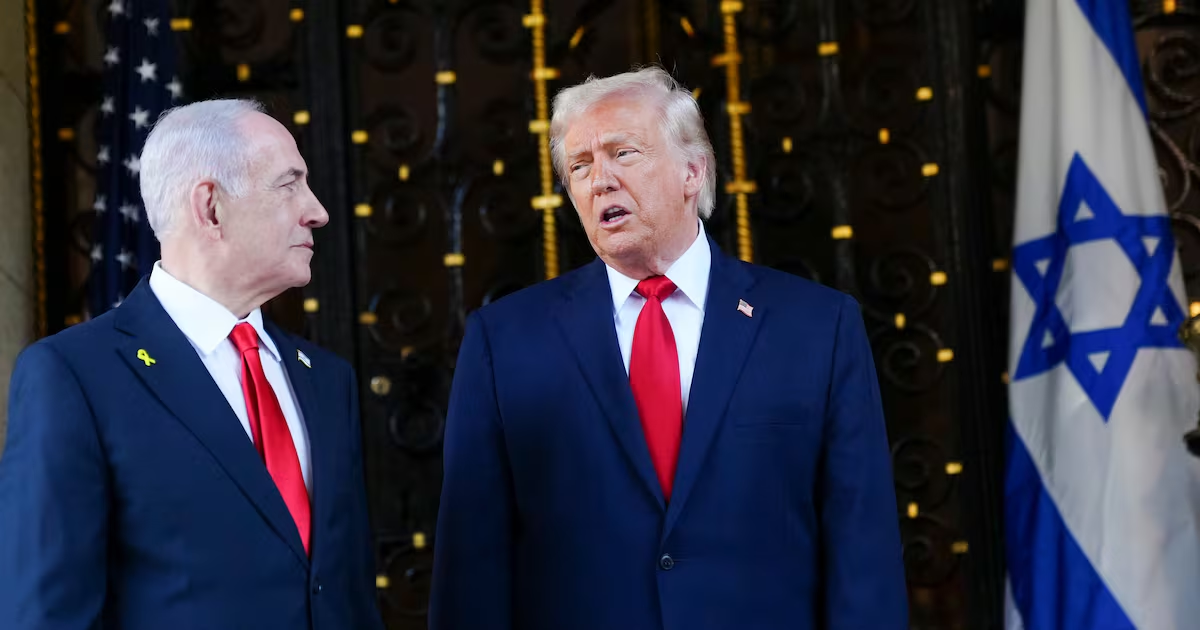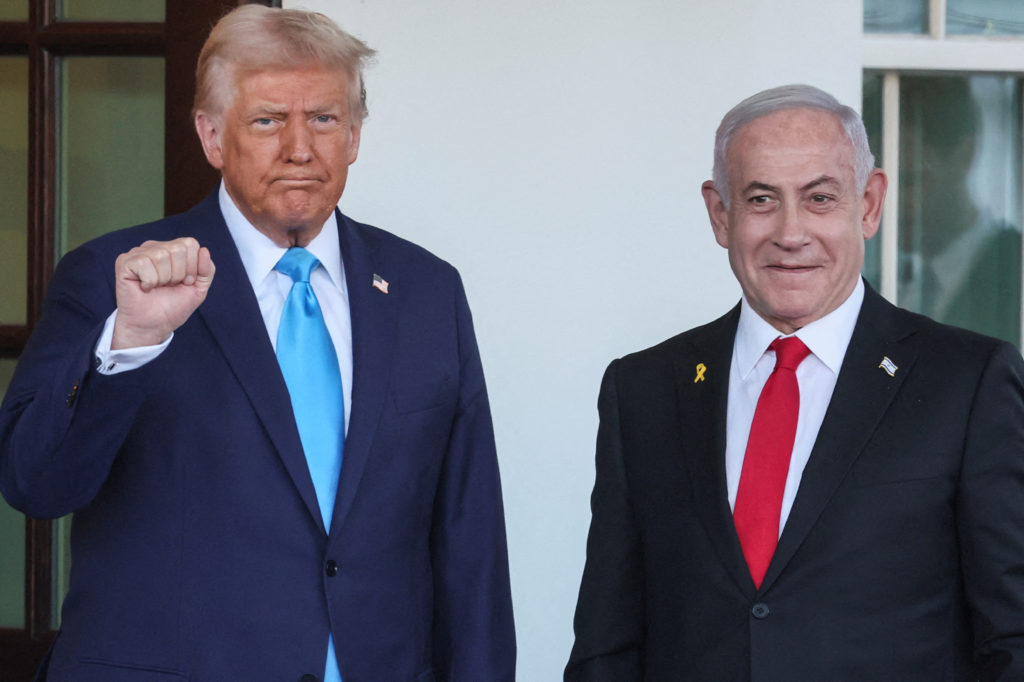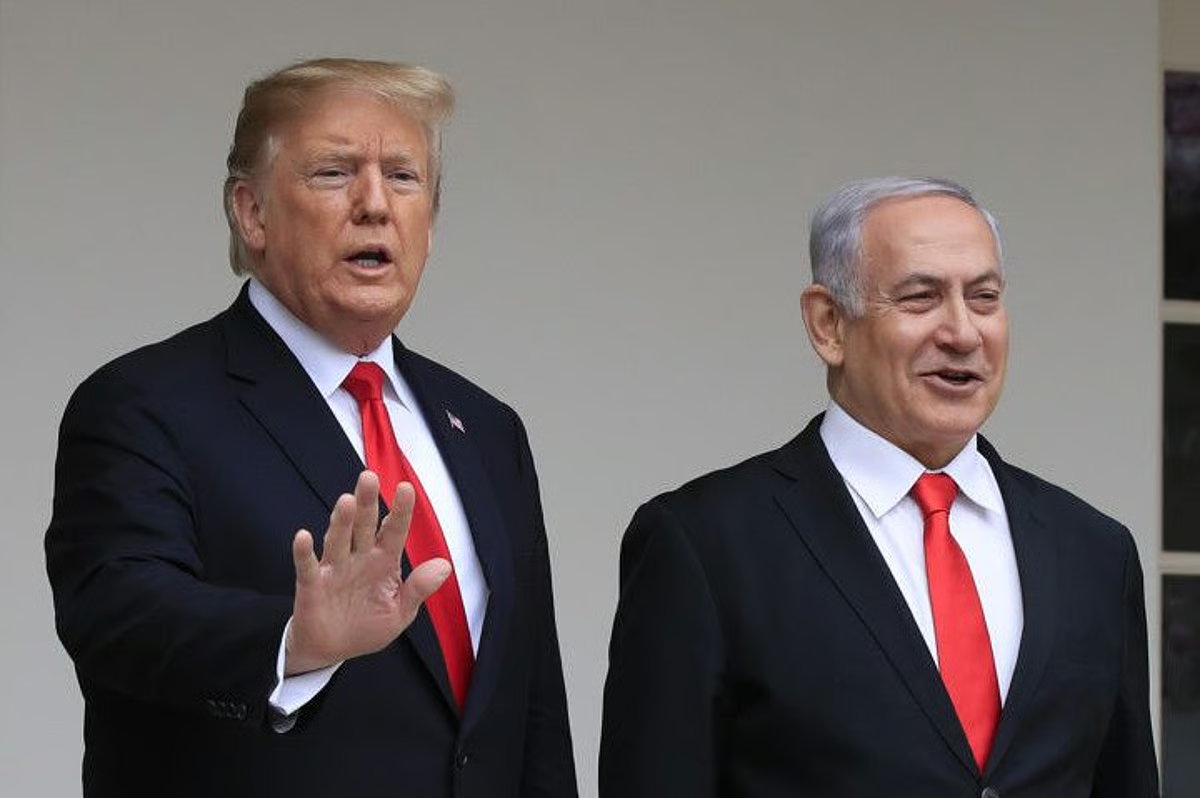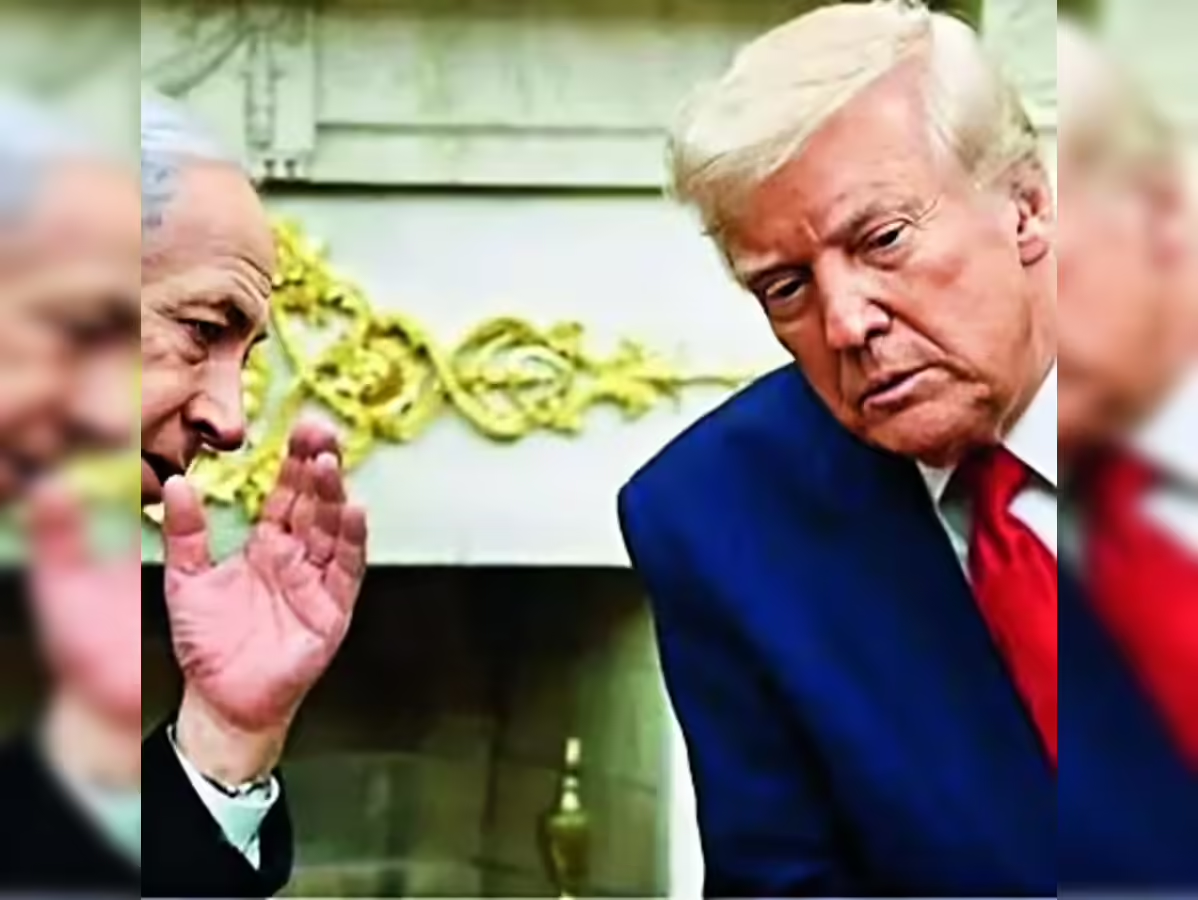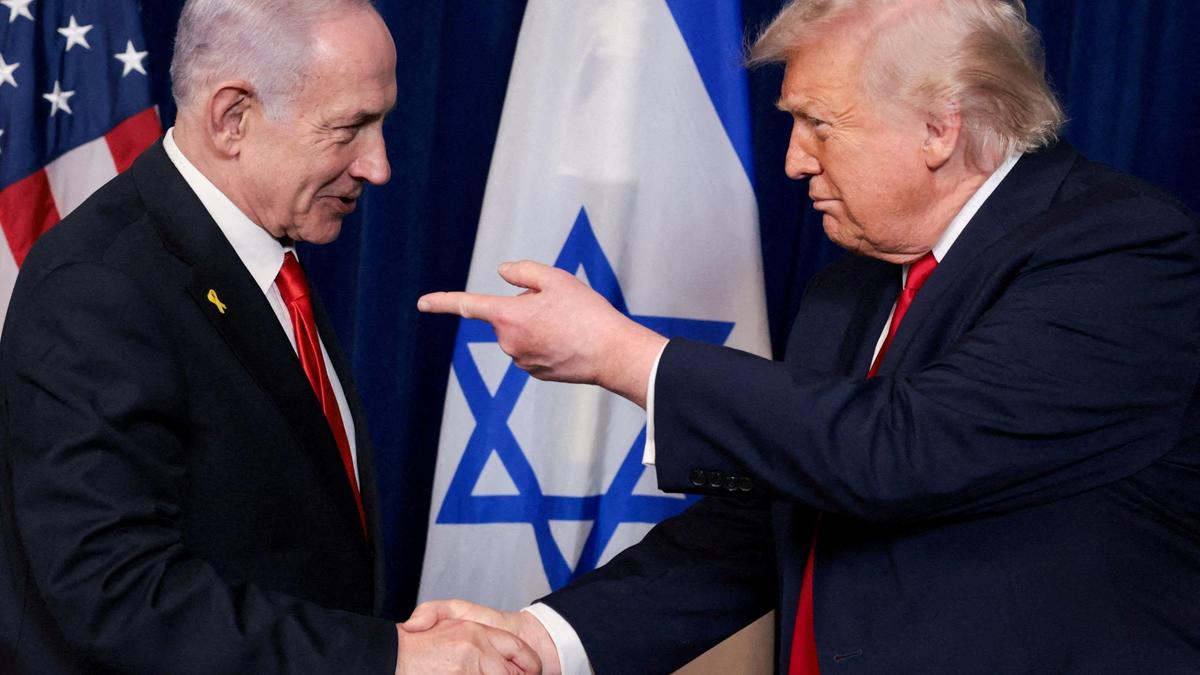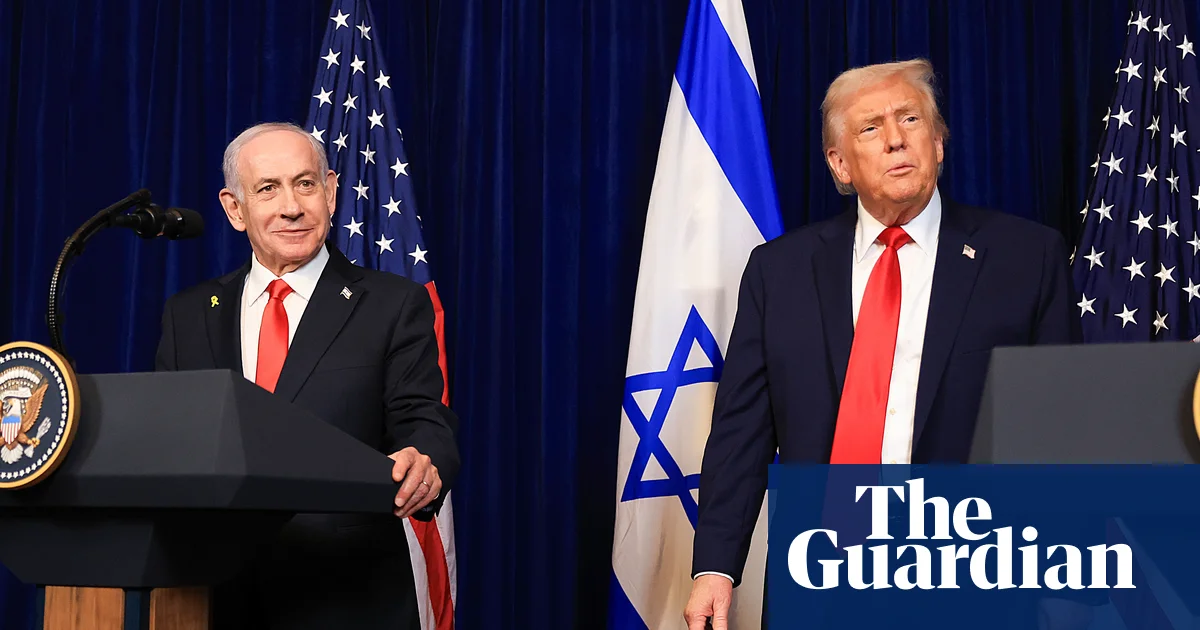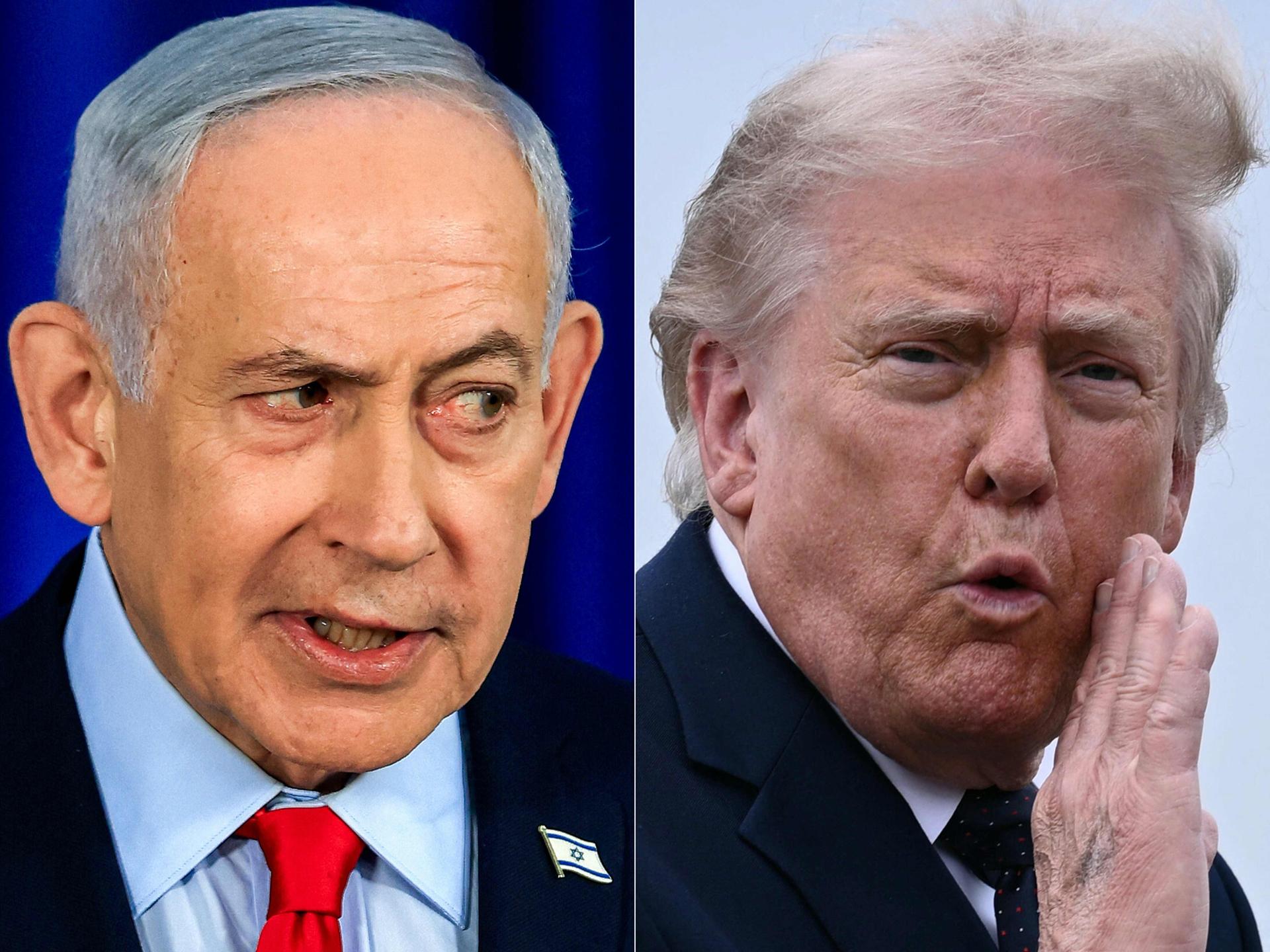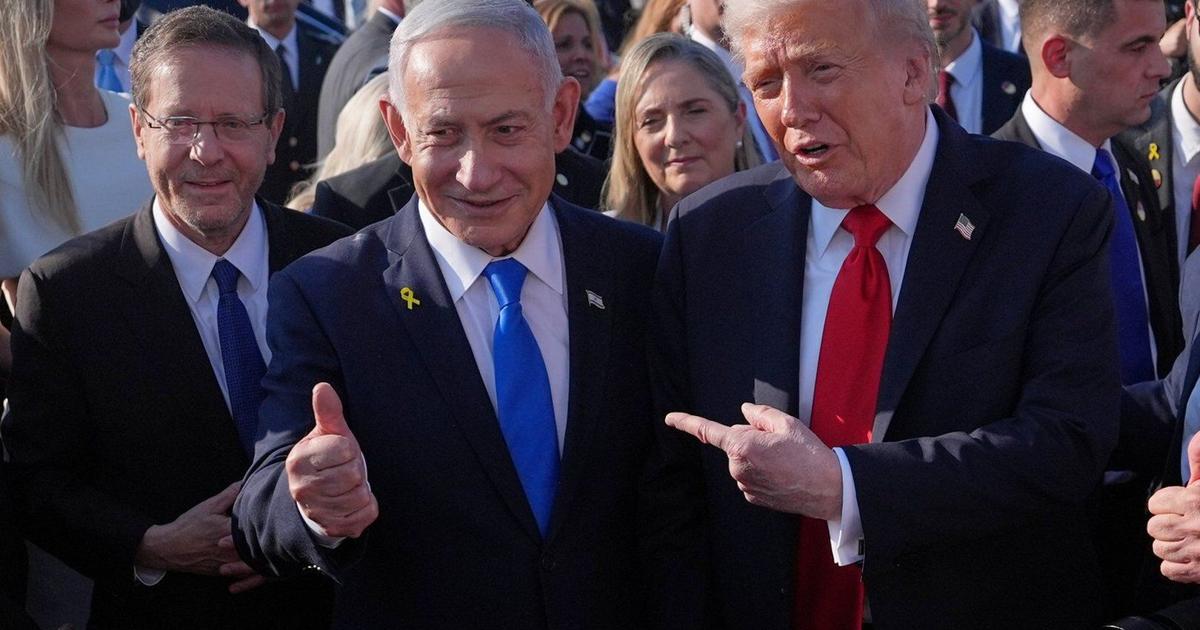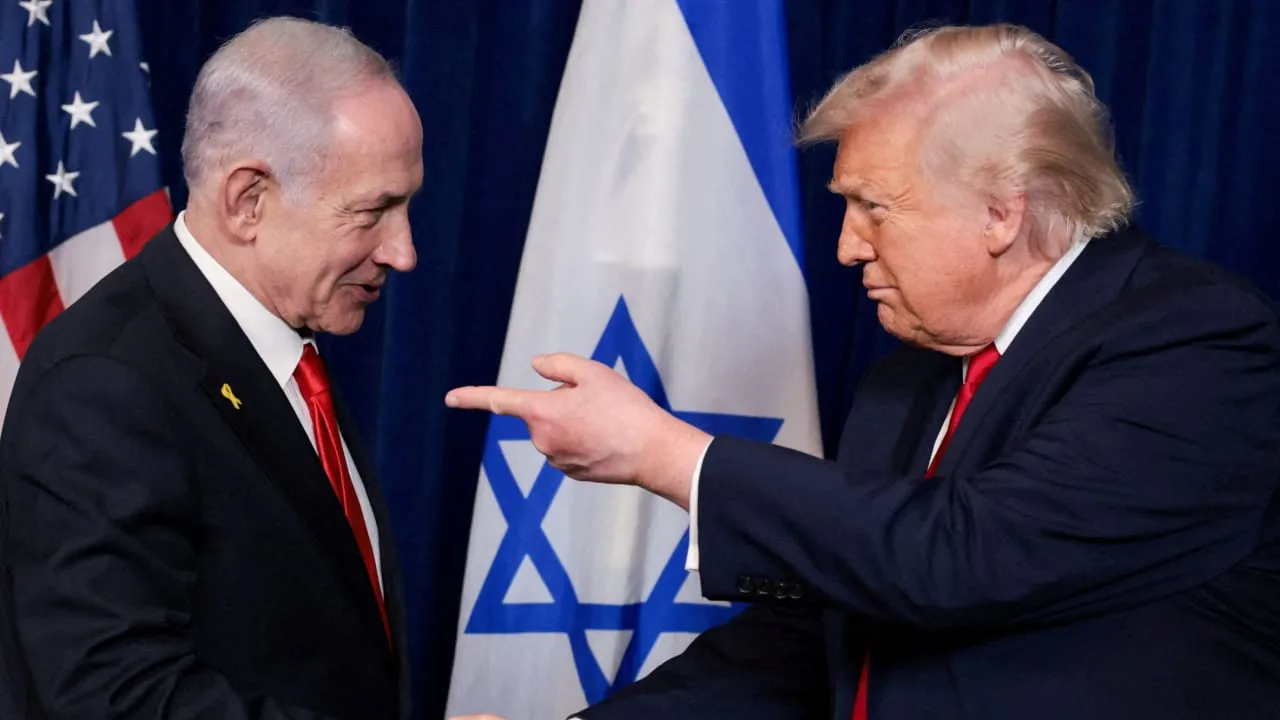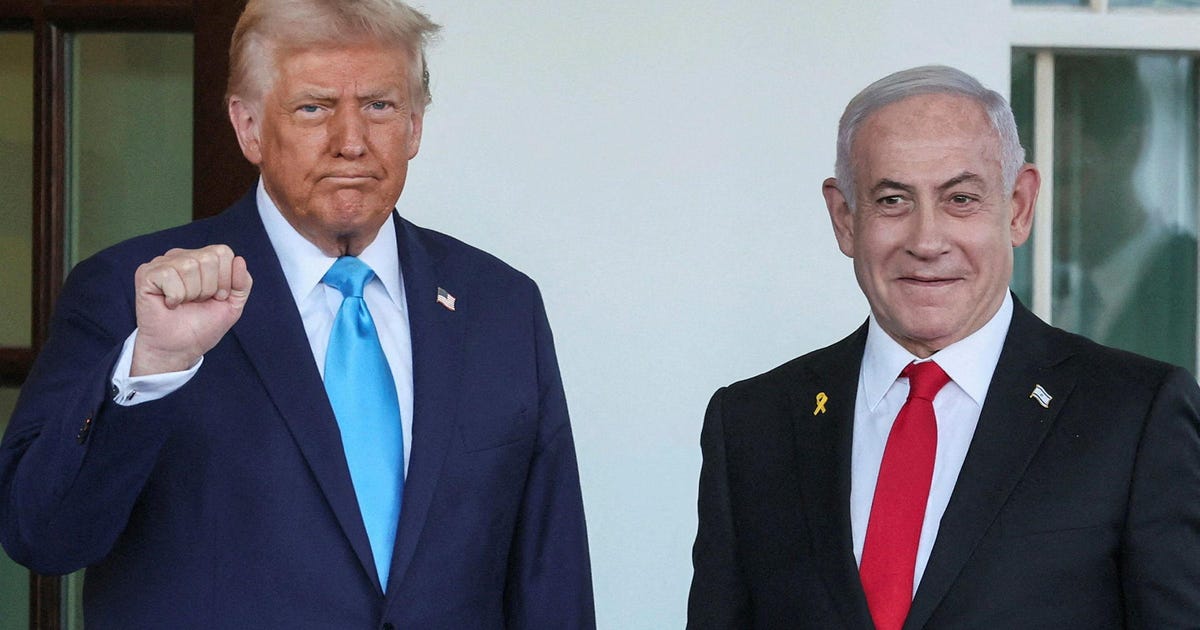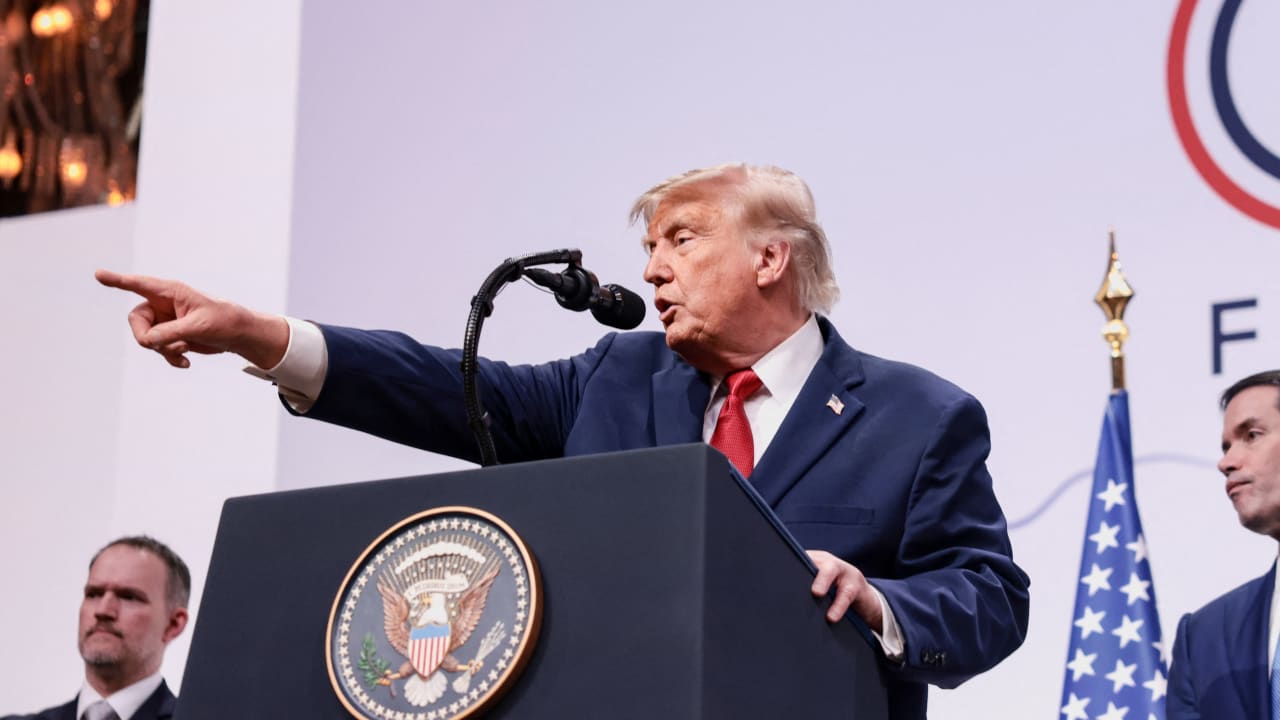
Trump remains popular, powerful, and rhetorically committed to Israel’s survival. But his support now comes with public scolding, transactional accounting, and an unmistakable demand from Netanyahu.Follow us on GoogleUS President Donald Trump, with Commerce Secretary Howard Lutnick and Secretary of State Marco Rubio, holds a press conference during the G7 Summit in Evian-les-Bains, France, June 17, 2026.(photo credit: REUTERS/EVELYN HOCKSTEIN)BySTEVEN GANOT/THE MEDIA LINEJUNE 18, 2026 17:02US President Donald Trump arrived at the Group of Seven summit in France this week with a new US-Iran agreement to sell, a restless Israeli ally to discipline, and a familiar message for the world: He alone had done what others would not.For more stories from The Media Line go to themedialine.orgThe result was a diplomatic week that sounded less like a standard summit communiqué and more like a rolling Trump production - part peace announcement, part grievance session, part loyalty test.The sharpest remarks were aimed at Prime Minister Benjamin Netanyahu, whose latest strikes in Lebanon angered Washington just as Trump was trying to lock down an agreement with Tehran. Speaking in Évian-les-Bains, Trump said Netanyahu “has to be more responsible with respect to Lebanon,” calling the Beirut strike “vicious” and “too much.”Then came the line built for headlines.“Without us, without the United States, there would be no Israel,” Trump said, according to CBS News. “Without me, there would be no Israel, because no other president was willing to do what I did.”US President Donald Trump arrives to attend a musical interlude before a gala dinner as part of the G7 summit in Evian-les-Bains, France, June 16, 2026. (credit: Ludovic Marin/Pool via REUTERS/File Photo)Trump calls Netanyahu 'very difficult'It was not the only sweeping claim. In an interview reported by The New York Times and quoted by Israeli media, Trump described Netanyahu as “a very difficult guy” and said the Israeli leader should be grateful for the Iran agreement. “Because if Iran had a nuclear weapon, Israel wouldn’t be around for two hours,” he said.That remark captured the new tension in the relationship. Trump continues to frame himself as Israel’s indispensable protector, but he is also increasingly willing to speak about Netanyahu as a problem to be managed rather than a partner to be praised.The irritation has been building. Axios reported earlier this month that Trump erupted at Netanyahu in a profanity-laced call over Israeli escalation in Lebanon, accusing him of endangering the US-led Iran talks. CBS News reported that Trump later told Fox News he had asked Netanyahu, “What the f*** are you doing?” after the Beirut strikes.Israel divided on Trump deal Israel’s political class, meanwhile, has been divided not over whether Iran remains a threat, but over whether Trump’s deal restrains Tehran or rewards it. Netanyahu has avoided a full public rupture, saying the decision belongs to Trump while insisting that Israel must protect its own security interests. Far-right ministers were less restrained. National Security Minister Itamar Ben-Gvir said, “Trump’s agreement does not bind us,” while Finance Minister Bezalel Smotrich called the deal bad for Israel and “the entire free world.”The discomfort was not confined to Jerusalem. At the G7, French President Emmanuel Macron was caught on a hot mic telling Ukrainian President Volodymyr Zelensky that he had had a “difficult discussion” with Trump. The moment offered a small but revealing glimpse of how other leaders now work around the American president: carefully, quietly, and with the microphone ideally off.Trump, for his part, presented the Iran deal as proof of leverage, not compromise. He said the memorandum of understanding clearly states that Iran will not obtain a nuclear weapon and that he was open to sending the agreement to Congress for review. He also warned that “all hell will rain down” if Tehran tries to build a bomb.For Israel, the week exposed an uncomfortable reality. Trump remains popular, powerful, and rhetorically committed to Israel’s survival. But his support now comes with public scolding, transactional accounting, and an unmistakable demand that Netanyahu not interfere with the deal Trump wants to call his own.Follow us on Google
US-Iran deal turns into loyalty test for Donald Trump, as he hits out at Benjamin Netanyahu | The Jerusalem Post
Trump remains popular, powerful, and rhetorically committed to Israel’s survival. But his support now comes with public scolding, transactional accounting, and an unmistakable demand from Netanyahu.
671 words~3 min read