The expansion in RBI’s balance sheet has coincided with a sharp increase in currency demand
| Photo Credit:
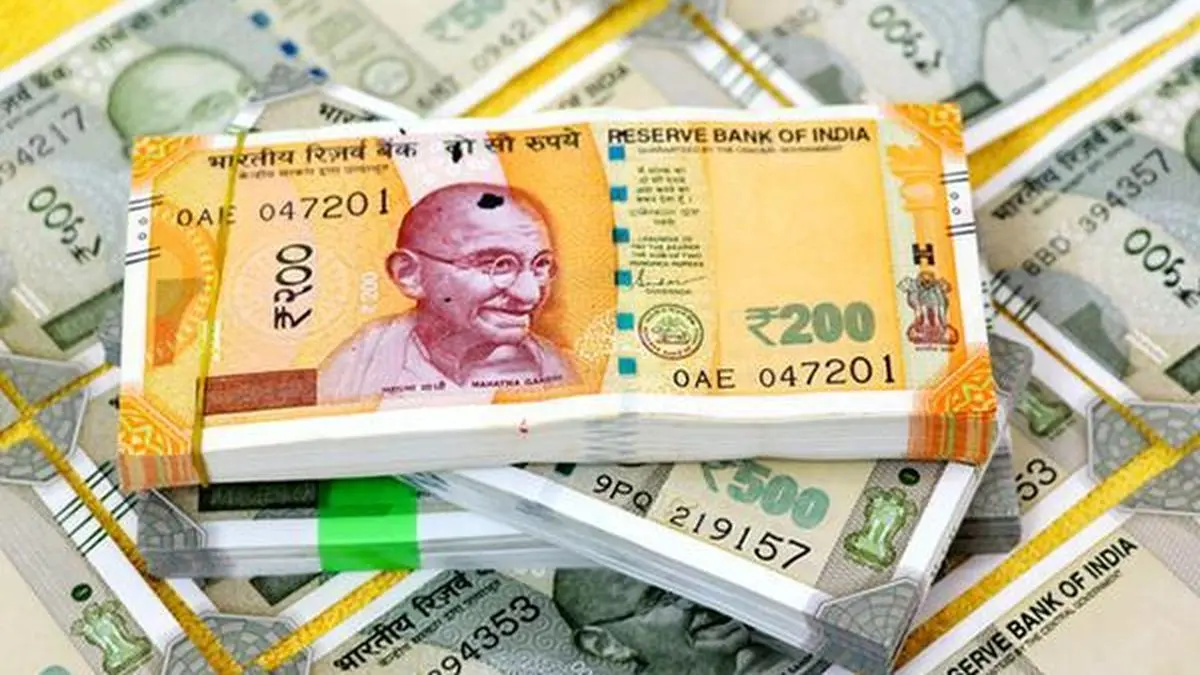
The Reserve Bank of India (RBI) stood out among major central banks in FY26, recording a sharp expansion in its balance sheet even as several developed-market central banks continued to moderate or shrink their assets. RBI assets grew 20.6 per cent year-on-year (y-o-y) in FY26, the fastest pace in six years (since FY20) and significantly higher than the 8.2 per cent growth in FY25. This increase comes at a time when central banks in advanced economies are still unwinding the extraordinary liquidity measures introduced during the pandemic years.Asset growth and money supply diverge across economiesData from central bank reports show a widening contrast between emerging and developed economies. RBI’s assets expansion is much higher than the 4 per cent growth in Indonesia’s central bank assets till December 2025.According to Madan Sabnavis, Chief Economist at Bank of Baroda, there are three operational reasons behind the RBI’s balance sheet growth. “First, the RBI maintains a prudential contingency buffer, typically in the range of 4.5 to 7.5 per cent, which requires it to hold adequate reserves on its balance sheet at all times. Second, the RBI regularly intervenes in the foreign exchange market by purchasing foreign currency to manage rupee volatility, and every such purchase automatically expands the balance sheet. Third, Open Market Operations where the RBI buys government securities from the market to inject liquidity, similarly adding to the asset side of the balance sheet.”In contrast, the balance sheets of the European Central Bank, the US Federal Reserve, the Bank of England and the Bank of Japan either contracted or recorded only marginal changes in recent years as policymakers focused on normalising monetary conditions.The divergence is also visible in money supply growth. RBI’s broad money supply expanded by 13 per cent in FY26, accelerating from 9.6 per cent in FY25. Bank Indonesia recorded 9.7 per cent growth in money supply till March, of 2026. Among developed economies, money supply growth remained much lower, ranging between 2 per cent and 4.6 per cent in 2026.Currency in circulation sees strongest rise in yearsThe expansion in RBI’s balance sheet has coincided with a sharp increase in currency demand. The volume of banknotes in circulation grew by 10.5 per cent in FY26, the highest growth rate since FY21 and almost double the 5.6 per cent increase recorded in FY25.Sabnavis explained, “creating adequate liquidity in the market is a primary mandate of any central bank, and RBI’s expansion simply reflects that duty being fulfilled.”Currency circulation growth had moderated steadily after the pandemic, falling from 7.2 per cent in FY21 to 4.4 per cent in FY23 before recovering to 7.8 per cent in FY24. The latest acceleration suggests a renewed increase in cash usage alongside overall economic expansion.According to Anindya Banerjee, Head of Research, Kotak Securities, “the distinction between the expansion in 2020 and 2026 was apparent. In 2020, the RBI expanded its balance sheet deliberately to prevent financial collapse; that was emergency liquidity with direct inflationary risk. In 2026, the expansion is the natural output of apex body functions, forex management, and liquidity offsetting.”The writer is an intern with businesslinePublished on June 18, 2026