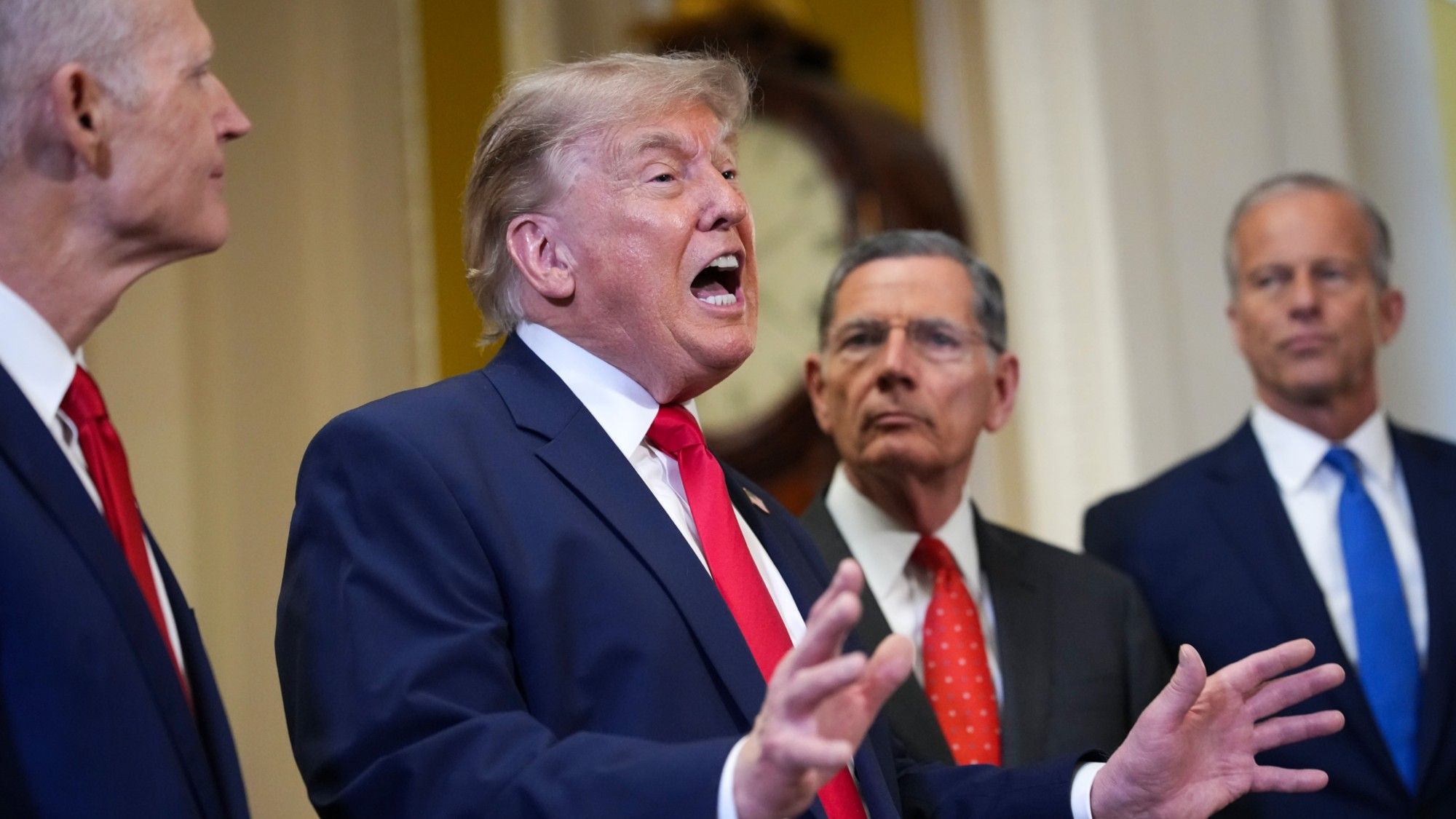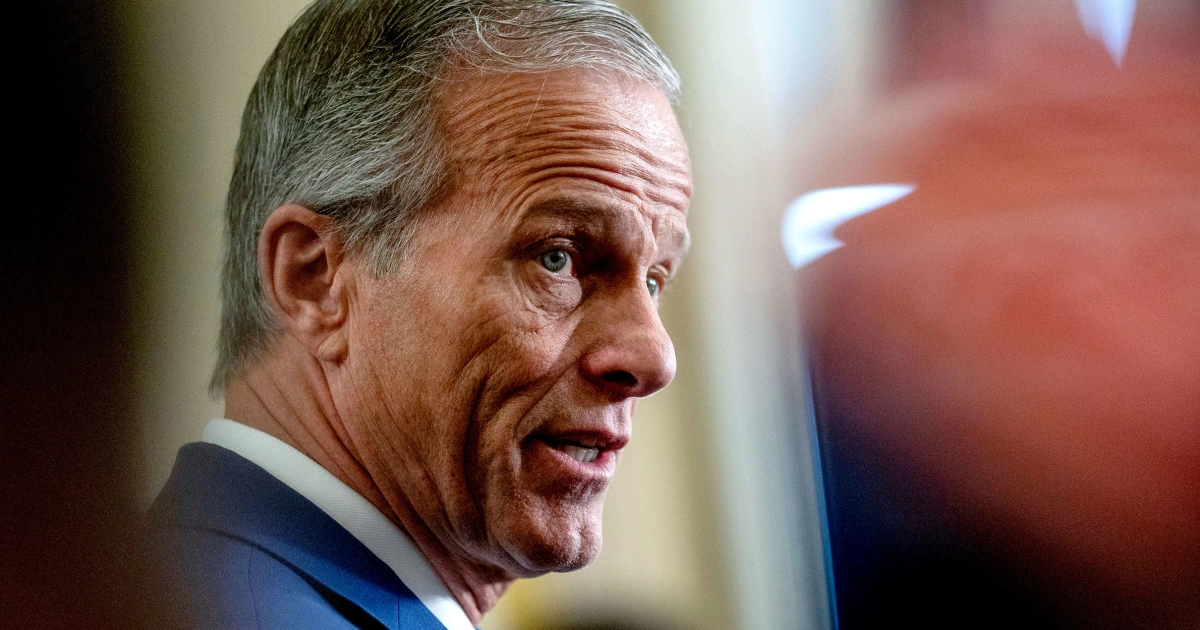
The Republican Party is entering into the summer before the midterm elections split on a number of issues. USA TODAY tallied recent consequential votes in which Republicans rebuffed the president.WASHINGTON – Congress and the White House are going through a relationship rough patch.Make no mistake: President Donald Trump's grip on the Republican Party is as strong as ever.At the same time, his ability in recent months to command functioning majorities in the Senate and House of Representatives has weakened considerably. Gone seem to be the days of Big, Beautiful Bill-type legislation, at least according to some moderate Republicans.Part of the problem stems from Trump's campaign trail retribution. Part of it is Republican candidates trying to appease independent voters. And part of it is Congress' already historically slim voting margins – margins, by the way, that won't be getting any more cushion amid the gerrymandering wars.Whatever the cause, the dynamics on Capitol Hill have rendered some of Trump's key legislative priorities much more difficult ahead of the midterm elections. No matter how many times Trump posts about it, passing more voter ID laws and lowering the Senate's voting threshold seem to be dead-on-arrival propositions.Intraparty infighting has also been fueled by controversial new issues this year: the Justice Department's doomed "anti-weaponization" fund, the new White House ballroom and the Iran war, to name a few.Case in point: On June 4, Sen. Jeff Merkley, D-Oregon, tried to fully ban the use of federal money or private donations for the new ballroom, absent congressional approval. The measure didn't pass, needing 60 votes, but seven Republican senators voted for it alongside Democrats.Add in the fact that Trump has a penchant for throwing political footballs Congress' way at the most inopportune moments, and it has made for a lot of Republican family drama."It's hard to divorce anything that happens here from what's happening in the political atmosphere around us," Senate Majority Leader John Thune, R-South Dakota, told reporters outside his office recently.Congress, he stressed in a Fox News interview, is "bound by arithmetic."Below, USA TODAY compiled a rundown of some recent consequential votes showing Republicans siding with Democrats.Backlash to Justice Department 'slush fund'Of all the issues fracturing the Republican Party in Washington, the straw that has come closest to breaking the camel's back was the Justice Department's doomed "anti-weaponization" fund.In May, Trump announced the nearly $1.8 billion fund as part of a personal settlement with the IRS over the leak of his tax returns. He said the payouts would go to Americans who had been victims of unfair political persecution.Democrats, and even many Republicans, took that to mean convicted Jan. 6 rioters could be compensated."To provide restitution to somebody who assaulted a police officer and pled guilty to it?" said Sen. Thom Tillis, R-North Carolina. "I’ve seen some crazy stuff before, but that’s right up there with crazy."Weeks later, Senate Democrats forced their Republican colleagues to take a public position on the fund."With the whole country watching, Republicans will have to choose: Either support the slush fund or ban it," Senate Minority Leader Chuck Schumer, D-New York, said on the Senate floor. "It's a yes or no."On June 5, Sen. Chris Coons, D-Delaware, introduced a measure that would have prohibited the Justice Department from using taxpayer money for settlement payments to people convicted of assaulting law enforcement officers in the Jan. 6 riot. In a 54-45 vote, it failed (it needed 60 to pass), though eight Republican senators joined with Democrats.On the same night, a separate proposal put forth by Sen. Bill Cassidy, R-Louisiana, would have turned the cash reserve into a compensation fund for Capitol Police officers. It failed in a 52-47 vote. Six Republican senators voted with Democrats.Ultimately, the Justice Department scrapped the fund amid the backlash.Iran war divides GOPThen there's the Iran war.As the conflict in the Middle East has dragged on, pressure has been building on Capitol Hill to intervene. In the past month, both chambers of Congress advanced measures to end U.S. involvement in the war.First it was the Senate. After many quashed attempts to approve an Iran war powers resolution, the chamber advanced one on May 19. The vote was 50-47.On June 3, the House of Representatives followed suit. In a mostly symbolic gesture, it voted 215-208 to end U.S. involvement in the Iran war, marking a new period of congressional unease with the conflict in the Middle East. Not long afterward, the president announced a framework for a peace deal and jetted off the Europe, in part to sell the agreement to U.S. allies.Yet even that tentative agreement isn't sitting well with some of Trump's Republican critics."Reagan is rolling over in his grave," Sen. Bill Cassidy, R-Louisiana, posted on social media June 17. "This is the worst foreign policy blunder in decades."Ukraine aid a sticking pointIran isn't the only foreign policy sticking point for Republicans.Support for Ukraine has divided the GOP for years. On June 4, 18 Republicans in the House of Representatives sided with Democrats to pass the Ukraine Support Act, a bill that would authorize billions of dollars in aid to the country while imposing sanctions on Russia."Standing with Ukraine is a matter of American security, allied strength and moral clarity," said Rep. Brian Fitzpatrick, R-Pennsylvania, one of the GOP lawmakers who backed the measure. "I am grateful to my colleagues in the House who stood with us on the side of freedom."Zachary Schermele is the congressional correspondent for USA TODAY. You can reach him by email at zschermele@usatoday.com. Follow him on X at @ZachSchermele and Bluesky at @zachschermele.bsky.social.Carlie Procell is a data journalist for USA TODAY.Ramon Padilla is the deputy graphics editor for USA TODAY.
Republicans in Congress keep bucking Trump. See who voted against him.
USA TODAY compiled a rundown of recent votes, including on the Iran war and anti-weaponization fund, in which some Republicans sided with Democrats.
942 words~4 min read