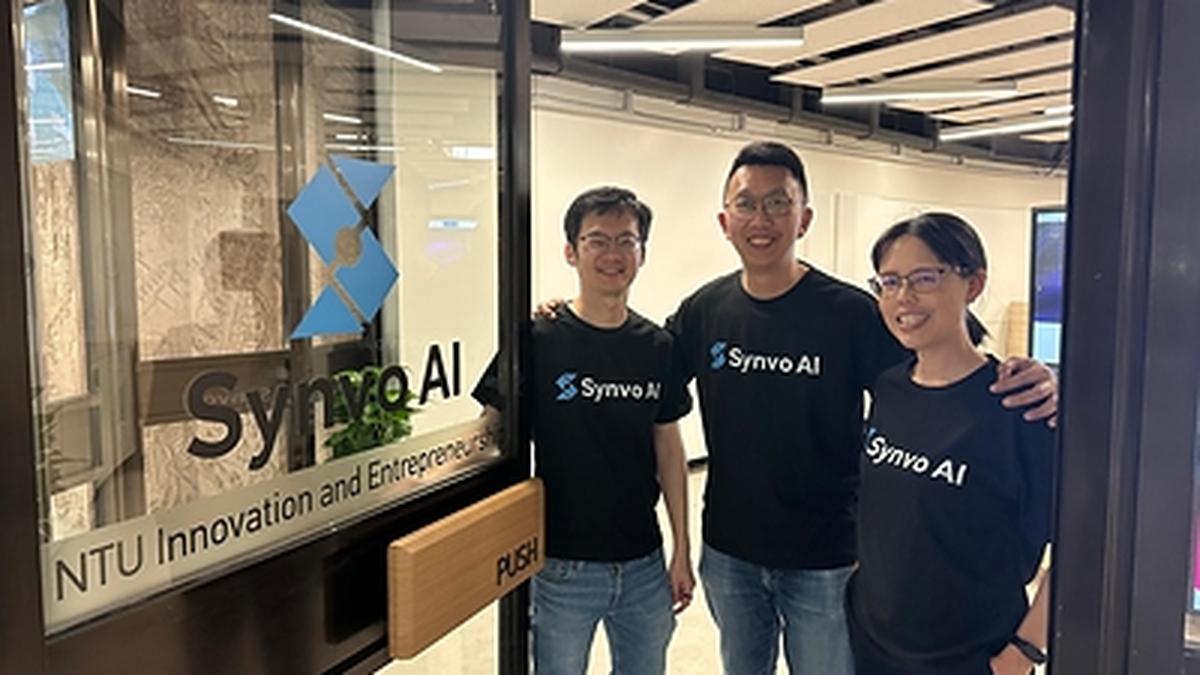
NTU spinout secures seed investment from Fuel Ventures Asia; early deployment cuts a manufacturer’s quotation generation workflow time from 45 minutes to under 5 minutesSINGAPORE, June 18, 2026 /PRNewswire/ -- Enterprise AI has a memory problem. Every session starts blank—with no organisational context, no retained knowledge, and no accumulated understanding.Synvo AI, a Singapore-based deep-tech company spun out of MMLab at Nanyang Technological University (NTU) with institutional support, is building the infrastructure to solve this challenge. Today, the company announced a US$1 million seed investment from Fuel Ventures Asia.The funding will accelerate the commercialisation of Synvo AI’s Enterprise Memory Layer, expand its engineering capabilities, and support enterprise AI deployments across Asia. Synvo AI’s proprietary Enterprise Memory Layer powers AI systems and agents, enabling them to retain, retrieve, and reason across an organisation’s documents, emails, video, audio, and business data. Designed for on-premises and on-device deployment, the technology enables enterprises to keep sensitive information within their own controlled environments while maintaining data privacy, security, governance, and sovereignty.The business impact of giving AI a memory is already being demonstrated. A Singapore-based manufacturer reduced its quotation generation workflow time from 45 minutes to under 5 minutes using Synvo AI’s technology. This single deployment reclaimed approximately 200 hours of sales capacity each month and generated an estimated SGD 120,000 in annual productivity savings.Building on this momentum, the company is progressing multiple enterprise opportunities across Southeast Asia. Through its strategic partnership with Indonesia-based Sobat Bisnis Group (SBG), the technology arm of a billion-dollar family-owned business group, Synvo AI is expanding access to secure, privacy-first enterprise AI solutions in one of the region’s fastest-growing markets.“Today’s AI can answer questions, generate content, and automate tasks, but it still lacks the organisational memory needed to learn, adapt, and build context the way experienced employees do. We are solving that problem. By giving AI an institutional memory, it accumulates value the longer a company uses it. Instead of treating every interaction as a new task, AI can build on organisational knowledge and provide more relevant, consistent, and useful outcomes over time. Our vision is to transform AI from a simple daily tool into a trusted enterprise asset that preserves and compounds organisational knowledge while maintaining full control over sensitive data.”
Synvo AI Raises US$1 Million to Give Enterprise AI a Memory
Synvo AI Raises US$1 Million to Give Enterprise AI a Memory
724 words~3 min read