TL;DRMIT’s DAAAM gives robots long-term memory by attaching language descriptions to 3D maps. You can ask “where did I leave my wallet?” and it knows.
Robots are still surprisingly bad at remembering where things are. You might recall that your keys were on the kitchen counter last night. A robot working beside you would struggle to connect that object and location in a useful way. MIT researchers built a system called DAAAM to fix that.
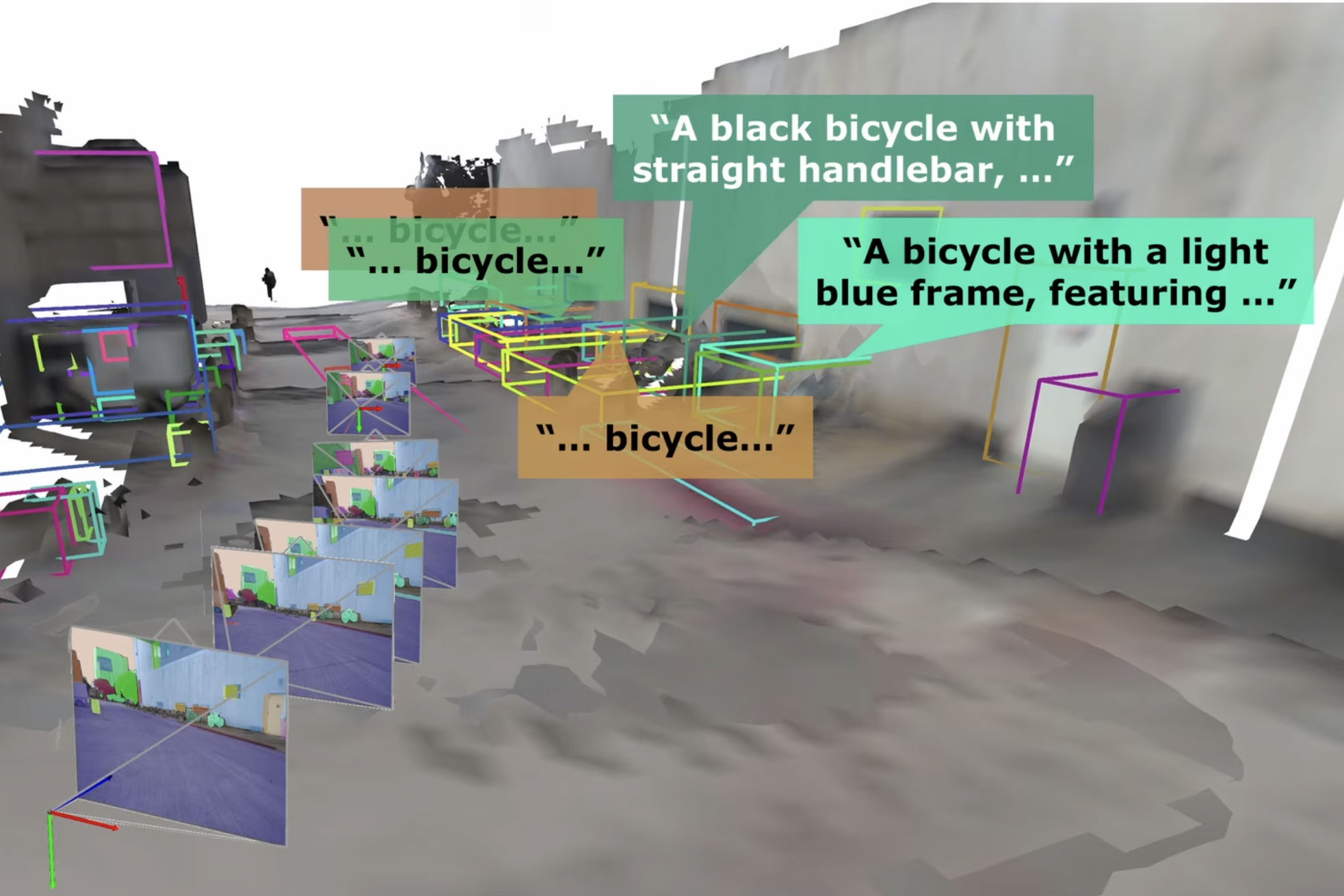
DAAAM stands for Describe Anything, Anywhere, Anytime, at Any Moment. It combines computer vision and 3D mapping to give robots a long-term spatial memory. As a robot moves through an environment, it attaches detailed language descriptions to objects it sees and stores them in a spatial map. Instead of just knowing there is an object at a coordinate, it remembers that there is a red bicycle with a flat tire near a specific building.
A person can then ask natural language questions: “Where did I leave my wallet?” or “Go grab the component we started assembling last night.” The robot searches its memory for the right object and location. The system runs fast enough for a mobile robot to use in real time.
The researchers found DAAAM answered questions more accurately than current methods, depending on the query type. The work was presented at the Conference on Computer Vision and Pattern Recognition (CVPR) and is available as a preprint on arXiv.