(Image credit: Future)
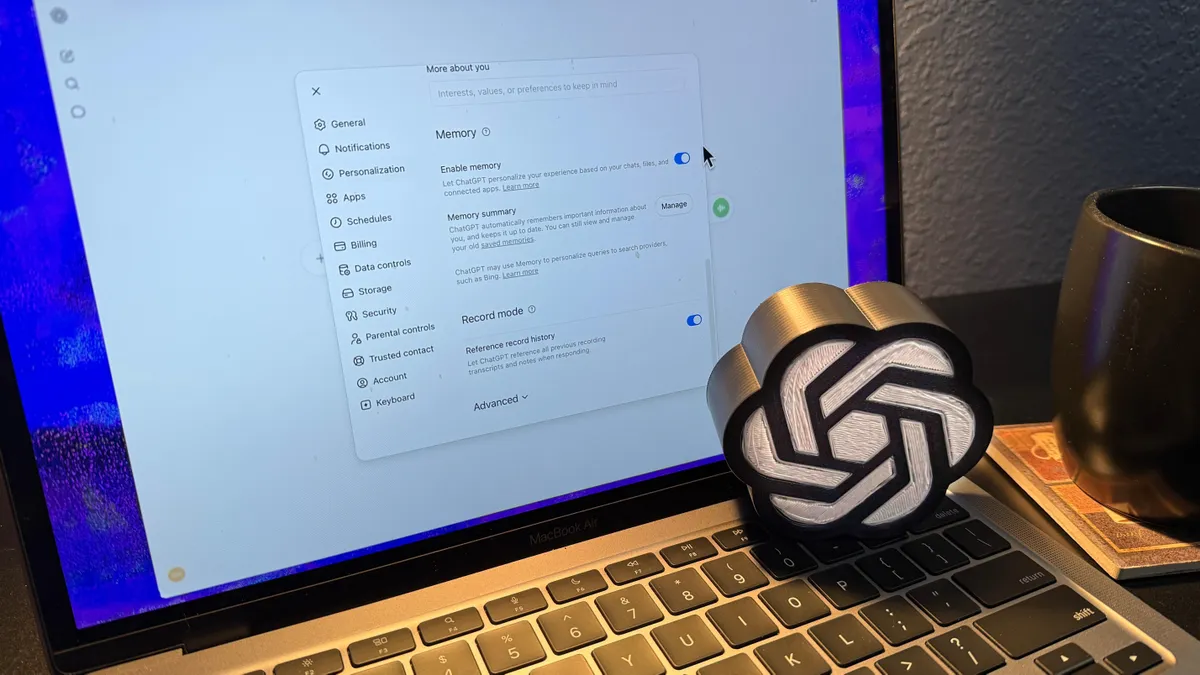
OpenAI recently began rolling out a new memory system called Dreaming, designed to help ChatGPT build a more useful understanding of who you are over time. Instead of relying primarily on facts you've explicitly asked it to remember, the new system synthesizes information from your past conversations and updates those memories automatically as your life changes.The good news for users is that this feature is rolling out in stages. Dreaming reached ChatGPT Plus and Pro subscribers in the U.S. first, with free, Go and international users expected to follow over the coming weeks. So, depending on your plan and region, you may or may not see it yet.As the upgrade rolls out, ChatGPT may be remembering more about you than you realize. As soon as I learned about the update, I checked one setting immediately.The setting to review right now
(Image credit: Future)I recommend doing this right now: open ChatGPT and navigate to Settings > Personalization > Memory > Reference chat historyIf this setting is enabled, ChatGPT can draw on your previous conversations to personalize future responses.For example, if you've mentioned your favorite sports team, dietary preferences, travel plans, writing style or career goals across multiple chats, ChatGPT may use that information later without you needing to repeat it. The goal is to make conversations feel more natural and cut down on the context you have to provide.For many people, that's a feature. For others, it's something worth reviewing.Get instant access to breaking news, the hottest reviews, great deals and helpful tips.What 'Dreaming' actually doesAccording to OpenAI, Dreaming is a more advanced memory architecture that continuously synthesizes information from your conversations and keeps it current as circumstances change. The company's own example: a memory that reads "going to Singapore in July" rewrites itself to "went to Singapore in July 2026" once the trip is over, so the user then no longer needs to input that information.Seems fine, but here's the part that's easy to miss. Previously, ChatGPT's memory worked like a list of notes, in that it mostly remembered what you explicitly told it to. Dreaming shifts that work into the background, so the system now decides on its own what's worth keeping, including things it inferred about you and then quietly revised over time, not just facts you stated outright.That's a meaningful difference, and it makes the record harder to audit: OpenAI acknowledges that the memory summary page may not capture everything ChatGPT remembers about you. Memory is becoming somewhat of an evolving profile.As AI assistants mature, we're moving away from one-off conversations and toward tools that hold context across weeks, months and eventually years. OpenAI says Dreaming was built specifically to make ChatGPT more helpful by forming a more complete understanding of each user.That can be genuinely convenient. But it also means many users will want to spend a few minutes seeing exactly what information ChatGPT is drawing on to personalize its responses.On the bright side, OpenAI still gives you control. You can disable memory, manage or delete stored memories individually, and use Temporary Chat sessions that don't contribute to memory at all.My adviceI'm not turning Dreaming off, and frankly, I don't think most people should. The whole point is that ChatGPT stops making you repeat yourself, and on that count it delivers.But convenience and visibility are pulling against each other here. The old memory was a list you were the one managing every time you wrote. The new one is a profile ChatGPT writes about you, partly from things it inferred rather than things you said, and OpenAI itself acknowledges the summary page may not show all of it.It's a good idea every so often to open your memory summary and actually read it. Don't just check whether memory is on, dive deeper and check whether it's right. A wrong fact you stated, you can spot and delete in seconds. A wrong assumption the system quietly made about you is the kind of thing that shapes every answer you get next, and the hardest to see.Follow Amanda Caswell and stay ahead of the AI curve