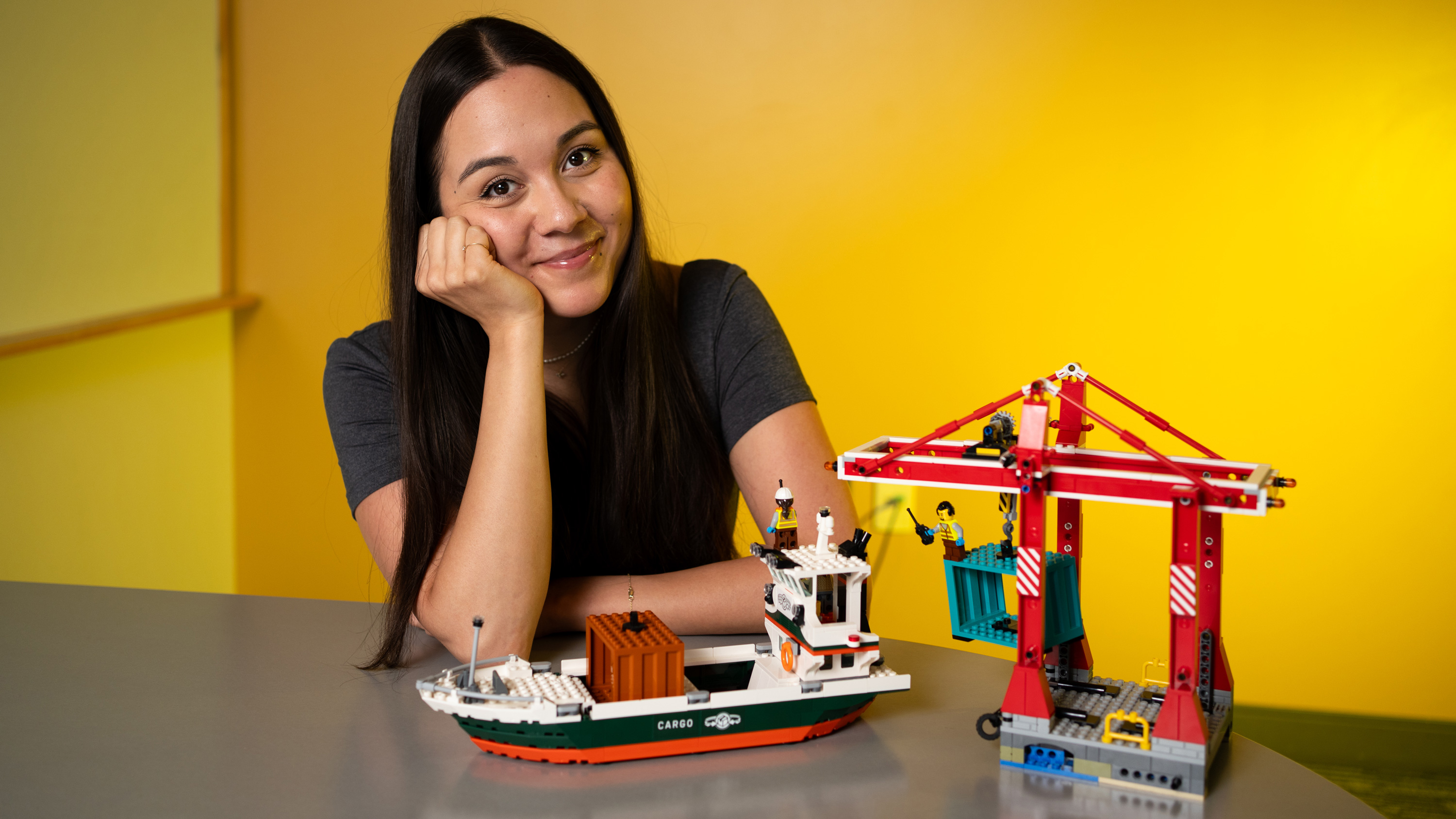
In the small coastal town of Prince Rupert, British Columbia, the port is the backbone of the community.Growing up there, with a father who works as a longshoreman, Chelsea Mitchell witnessed the port’s importance firsthand. From an early age, she understood that the port was essential to the transportation of goods in and out of not only Prince Rupert but all of British Columbia’s North Coast. Disruptions to port operations could have ripple effects reaching from dockworkers’ families to the regional economy and beyond. “The port is central to my hometown’s economy,” Mitchell says. “Having family in the industry gave me visibility into the complexity and the volatility of the shipping industry.”Today, that industry and the forces that shape it are the subject of Michell’s research as a fourth-year PhD student in MIT’s Department of Economics. She studies how ports and shipping companies compete, how goods move through congested terminals, and how disruptions affect global supply chains.“When I was younger, I never would have imagined I would get to conduct research at MIT,” Mitchell says. “Prince Rupert is largely a blue-collar town, so I had minimal insight into the world of academic research growing up. But in high school I realized I thrived in an academic environment, especially studying math, and hoped one day I could pursue a PhD.”
“We can’t ship goods without functioning ports”
Chelsea Mitchell, an MIT PhD student in economics, studies the industrial organization of shipping ports — how ports and shipping companies compete, how goods move through congested terminals, and how disruptions affect global supply chains.
858 words~4 min read