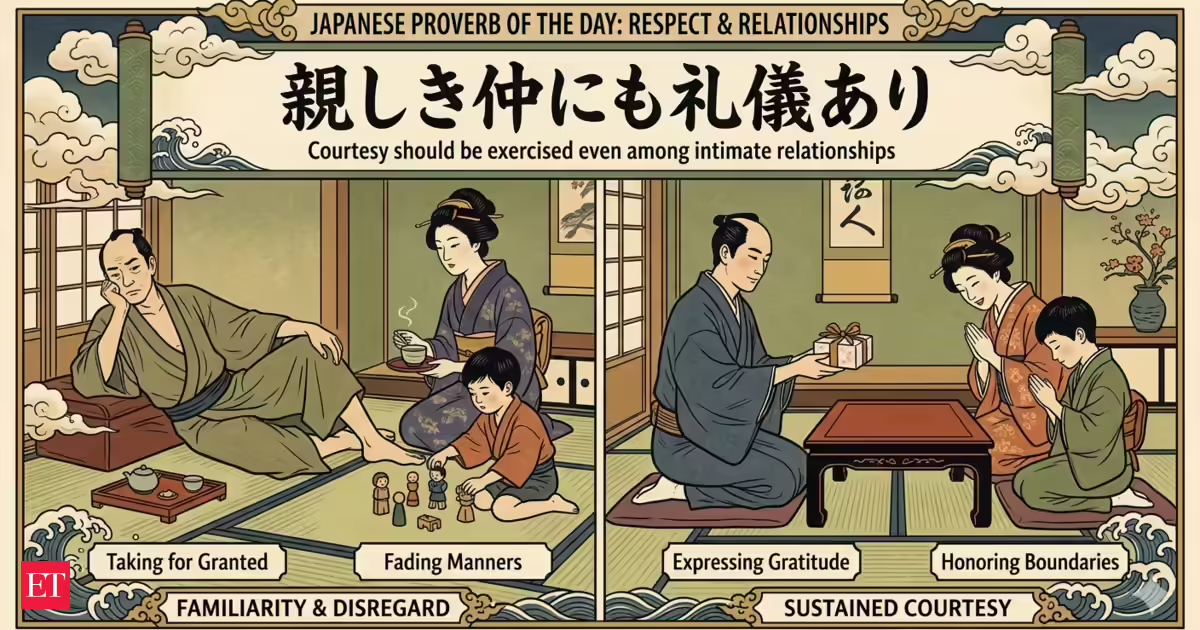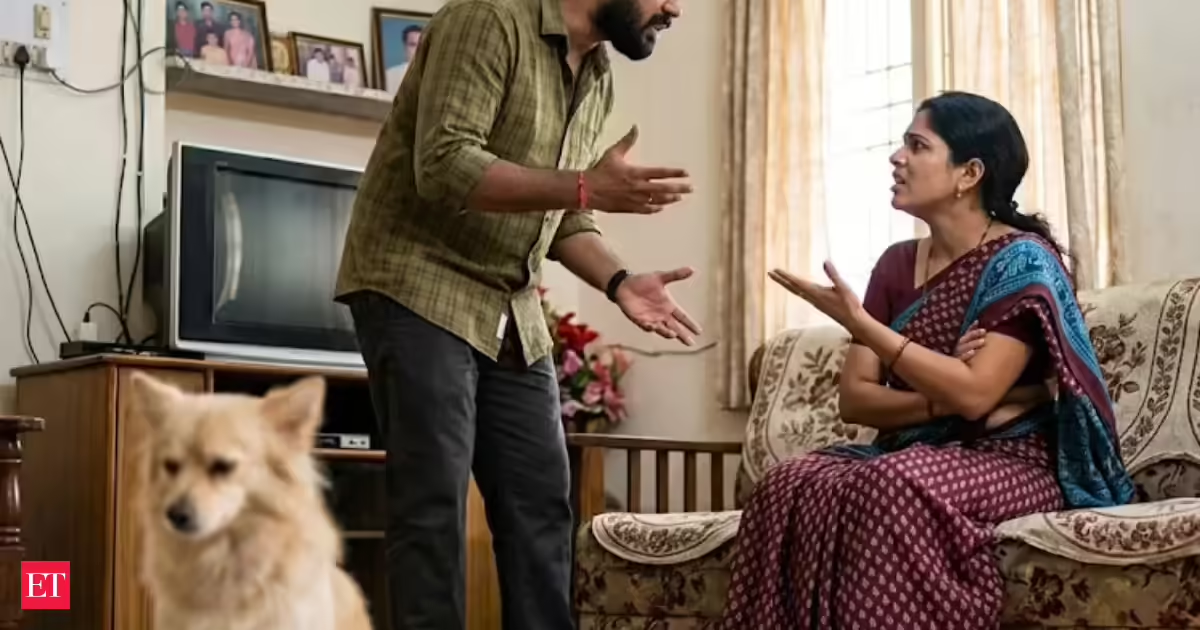
Japanese saying of the Day highlights a traditional saying that reflects the complex nature of marriage, disagreements, and the importance of understanding relationships from within rather than judging them from the outside. The saying, “Even a dog won't interfere in a married couple's quarrel” (夫婦喧嘩は犬も食わぬ), suggests that arguments between spouses are often temporary, deeply personal, and not always understood by outsiders.The saying reminds people that relationships can go through moments of tension, disagreement, and emotional conflict, yet those involved may reconcile quickly while outsiders remain confused about what happened. For generations, this saying has been used to emphasize patience, restraint, and the importance of allowing couples to resolve their differences without unnecessary interference.Also read: Mexican saying of the Day: "Money doesn't buy happiness, but it lets you cry in a Ferrari." A humorous take on people who say money isn't everythingToday, many people continue to find meaning in this saying because it highlights universal themes such as communication, forgiveness, emotional understanding, and the reality that every relationship experiences challenges.The saying highlights a timeless lesson about relationships, conflict, and the limits of outside judgment.The first part of the saying suggests that disagreements between spouses are often temporary and emotionally complex. What may appear to be a serious conflict from the outside can sometimes be resolved quickly by the people involved. The saying recognizes that relationships have their own dynamics that outsiders may not fully understand.The second part emphasizes the idea that not every disagreement requires intervention. It encourages people to be cautious before taking sides or offering opinions on personal matters that may be more complicated than they seem. The saying reflects the belief that some issues are best resolved through direct communication between those involved.Together, the saying teaches that patience, understanding, and respect for personal boundaries are often more valuable than rushing to judge or interfere. It reminds us that strong relationships are not defined by the absence of conflict but by the ability to work through it.Why disagreements are a natural part of relationshipsDisagreements are a normal part of any close relationship because individuals have different experiences, expectations, personalities, and perspectives. Spending significant time together naturally creates situations where opinions may differ.Healthy relationships are not built on constant agreement but on the ability to communicate respectfully, listen to one another, and find solutions. Conflict can sometimes reveal underlying concerns, unmet expectations, or areas where better understanding is needed.Many relationship experts suggest that the way people handle disagreements often matters more than the disagreement itself. Patience, empathy, and a willingness to understand another person's viewpoint can strengthen trust and improve long-term relationships.Life lessons from the sayingThe saying carries practical lessons about communication, patience, and emotional maturity.1. Not every conflict needs outside involvementPeople often feel tempted to intervene in personal disputes, but some situations are best resolved by those directly involved.2. Relationships are more complex than they appearOutsiders may only see a small part of a larger story. Avoiding quick judgments can help prevent misunderstandings.3. Communication is more important than winningSuccessful relationships often depend on honest conversations rather than proving who is right.4. Forgiveness helps relationships move forwardMost long-lasting relationships survive because people learn to forgive mistakes and focus on solutions.5. Patience can prevent unnecessary damageStrong emotions can make conflicts seem larger than they are. Taking time before reacting often leads to better outcomes.Why this saying is still relevant todayIn the age of social media, relationship disagreements are often discussed publicly and opinions can arrive from friends, relatives, and even strangers. This saying serves as a reminder that personal relationships are rarely as simple as they appear from the outside.The saying encourages people to respect privacy, avoid unnecessary judgment, and recognize that those involved usually understand the full context better than anyone else. It also highlights the value of communication and reconciliation in an era where conflicts can quickly become public discussions.Beyond marriage, the saying applies to friendships, family relationships, workplaces, and partnerships of all kinds. It reminds us that not every disagreement requires spectators, and not every conflict benefits from outside involvement.Ultimately, the saying teaches that understanding, patience, and direct communication often solve problems more effectively than interference, assumptions, or taking sides.English equivalent and related expressionsOther English expressions that reflect similar thinking include:“Don't air your dirty laundry in public.”“Never judge a relationship from the outside.”“There are two sides to every story.”“Actions speak louder than words.”“What happens between them is their business.”(Disclaimer: This story is for educational purposes alone and should not be considered as professional advice and does not substitute any advice.)
Japanese Saying of the Day: “Even a dog won't interfere in a married couple's quarrel” — Life lessons on conflict, marriage, boundaries, communication and forgiveness
Japanese saying of the day “Even a dog won't interfere in a married couple's quarrel” explores timeless lessons about marriage, conflict, communication, forgiveness, and personal boundaries. It highlights why outsiders often misunderstand relationship disputes and how patience, understanding, and direct communication can help couples navigate challenges and strengthen family bonds.
752 words~3 min read