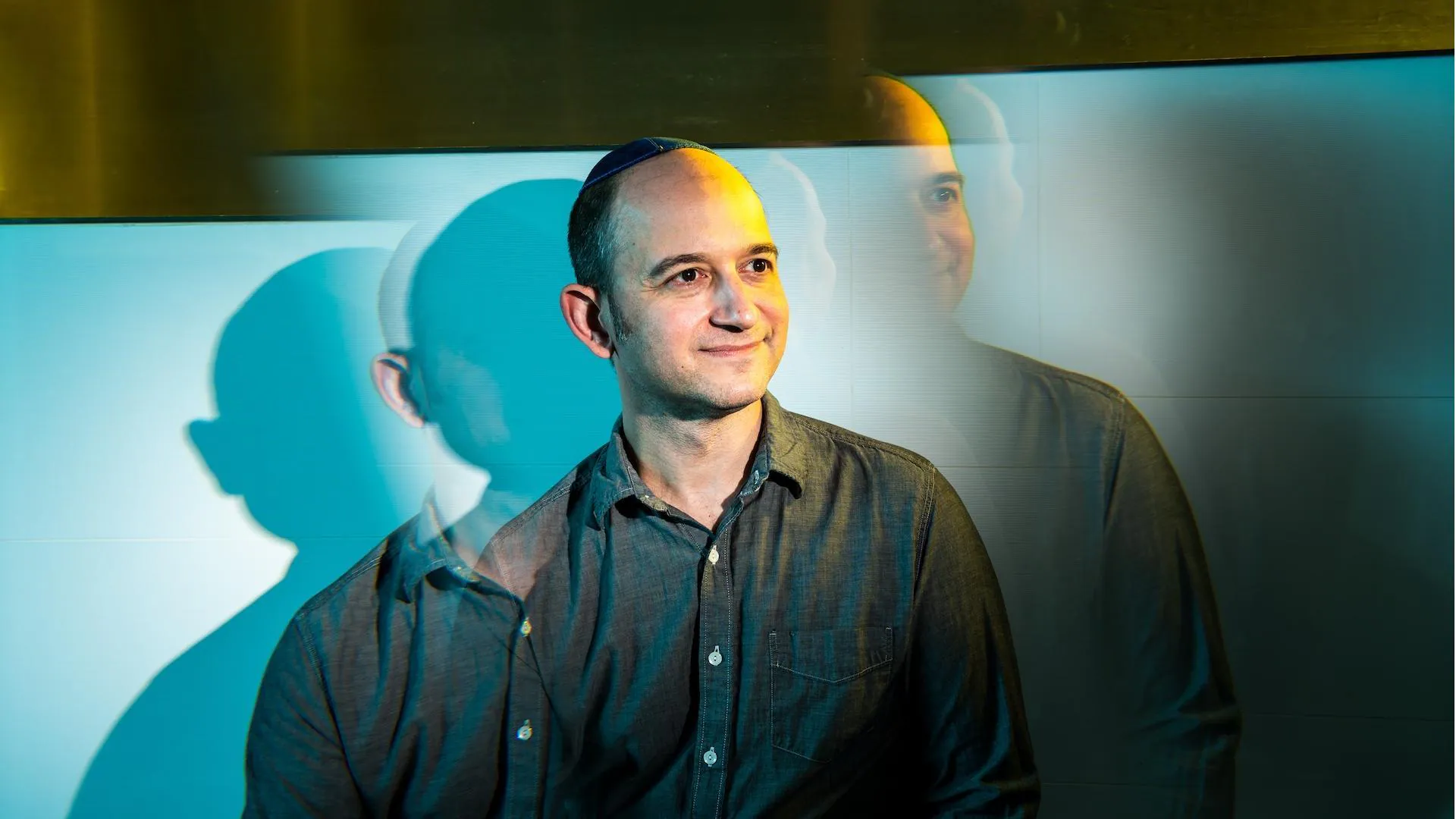
Photo credit: reuters.comOpenAI has added another prominent name to its growing AI talent roster, hiring Gemini co-lead Noam Shazeer from Google. Known for co-authoring the influential Attention Is All You Need paper and later helping lead Gemini. The move comes at a time when OpenAI, Google DeepMind, Meta and Anthropic are increasingly competing for a small pool of elite researchers, highlighting how the battle for AI leadership is shifting beyond models and computing power to the people building them.Key TakeawaysOpenAI has hired Noam Shazeer, the Google executive who co-led Gemini and helped shape some of the industry's most influential AI technologies.Shazeer is among the co-authors of Attention Is All You Need, the 2017 research paper that introduced the Transformer architecture powering modern AI models.The move comes less than two years after Google reportedly spent around $2.7 billion to bring Shazeer and his Character. AI team back to the company.OpenAI has continued to strengthen its research bench by recruiting high-profile talent from Google DeepMind and other leading AI organisations.Shazeer's appointment highlights how the AI race is increasingly becoming a battle for elite researchers, not just models, data and computing power.OpenAI's latest hire signals a new front in the AI warFor much of the past two years, the AI industry has focused on model launches, benchmark scores and computing power. However, behind the scenes, another battle has been intensifying: the fight to attract and retain the small group of researchers capable of building frontier AI systems.Shazeer's move to OpenAI is perhaps the clearest example yet of how valuable these individuals have become. The AI researcher announced the decision in a post on X, saying he was excited to join OpenAI and work with its team.At the same time, he acknowledged the difficulty of leaving Google, writing that he was proud of the team and the work accomplished during his tenure there.His departure represents a notable loss for Google, given his role in Gemini and his broader influence on modern AI research.From Transformer pioneer to Gemini leaderShazeer is widely regarded as one of the most influential figures in modern artificial intelligence.He was among the authors of Attention Is All You Need, the 2017 research paper that introduced the Transformer architecture. That architecture later became the foundation for today's large language models, including products such as ChatGPT, Gemini and Claude.His career has spanned both major technology companies and startups. After leaving Google, he co-founded Character. AI, a startup focused on conversational AI experiences. Google later brought Shazeer and several members of his research team back through a deal reportedly valued at around $2.7 billion.Following his return, he played a leadership role in the Gemini project before deciding to join OpenAI.Given his involvement in some of the most important developments in modern AI, his arrival is likely to be viewed as a major win for Sam Altman-led OpenAI.OpenAI continues to recruit from Google's AI ranksShazeer is not the first prominent Google AI researcher to make the switch.OpenAI has steadily strengthened its research organisation by recruiting talent from Google DeepMind and other leading AI labs. In late 2024, researchers Lucas Beyer, Alexander Kolesnikov and Xiaohua Zhai left Google DeepMind to join OpenAI.The trio brought expertise across computer vision, multimodal AI and foundation models, areas that are increasingly important as AI systems evolve beyond text-based interactions.OpenAI also added Albert Lee in December 2025. Lee previously worked at Google and helped oversee corporate development initiatives spanning Google Cloud and DeepMind.The hiring pattern suggests OpenAI is not only investing in infrastructure and models but also building a roster of researchers capable of shaping future generations of AI technology.Why talent is becoming the industry's most valuable resourceThe significance of Shazeer's move extends beyond a single executive joining a rival company. It reflects a broader shift occurring across the AI industry.Companies such as OpenAI, Google DeepMind, Anthropic and Meta are increasingly competing for a relatively small pool of elite researchers. These individuals possess expertise that is difficult to replicate and often play key roles in advancing foundational AI technologies.According to Reuters, leading AI researchers are now commanding compensation packages worth millions of dollars annually as companies seek to recruit and retain top talent.The value attached to these researchers stems from their ability to develop proprietary models, optimise training methods and make effective use of large-scale computing infrastructure. In many cases, their expertise can directly influence a company's competitive position.The economics behind the AI talent migrationThe movement of researchers between AI companies is also being shaped by economics.Training and deploying advanced AI systems requires enormous computing resources, access to data and substantial financial backing. Startups often struggle to match the scale available at major technology firms and well-funded AI laboratories.This dynamic has led to several high-profile deals in recent years. In 2024, companies including Google, Microsoft and Amazon entered agreements with AI startups such as Character. AI, Inflexion, and Adept, enabling them to bring key researchers and executives into their organisations without acquiring the startups outright.For researchers, joining larger AI companies can provide access to extensive infrastructure, larger engineering teams and opportunities to work on projects that may influence the future direction of artificial intelligence.As the cost and complexity of AI development continue to rise, the industry's most valuable asset may no longer be computing hardware or model size alone-it may be the people capable of turning those resources into breakthroughs.Frequently Asked Questions1. Why is Noam Shazeer's move to OpenAI considered significant?Shazeer helped create foundational AI technologies and played a leadership role in Google's Gemini project, making him one of the industry's most influential researchers.2. What is Attention Is All You Need?It is the 2017 research paper that introduced the Transformer architecture, which powers many of today's leading AI models.3. What was Shazeer's role before joining OpenAI?He served as a vice president of engineering at Google and was a co-lead of the Gemini AI models.4. How does this fit into OpenAI's broader hiring strategy?OpenAI has increasingly recruited researchers and executives from Google DeepMind and other leading AI organisations to strengthen its research capabilities.5. Why are AI companies aggressively hiring top researchers?Elite researchers are seen as essential for developing advanced AI systems, improving model performance and maximising the use of computing resources.6. What role did Character. AI play in Shazeer's career?Shazeer co-founded Character. AI before returning to Google as part of a reported multi-billion-dollar deal involving the startup.7. What does this hiring reveal about the future of AI competition?It suggests that the next phase of competition may be driven as much by access to top talent as by model performance, funding or computing power.end of article
OpenAI lands Gemini architect Noam Shazeer in a major blow to Google
OpenAI has made headlines by recruiting Noam Shazeer, a driving force behind Google's Gemini project. Shazeer's profound knowledge of core AI frameworks, particularly the Transformer architecture, enhances OpenAI's expertise. This development reflects the fierce competition in the AI sector for top-tier talent, suggesting that companies are now channeling their focus on attracting brilliant minds alongside their technological pursuits.
1,093 words~5 min read