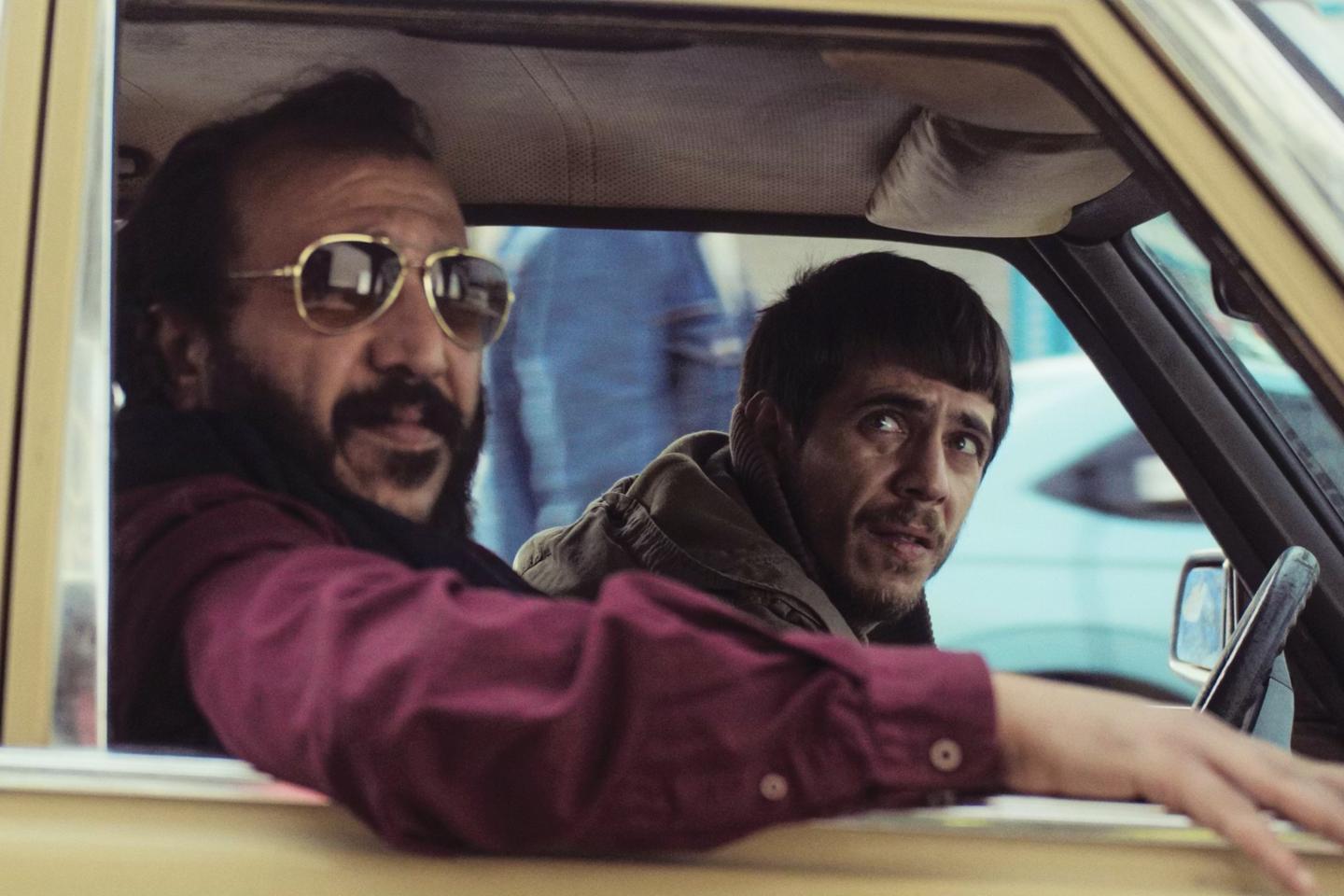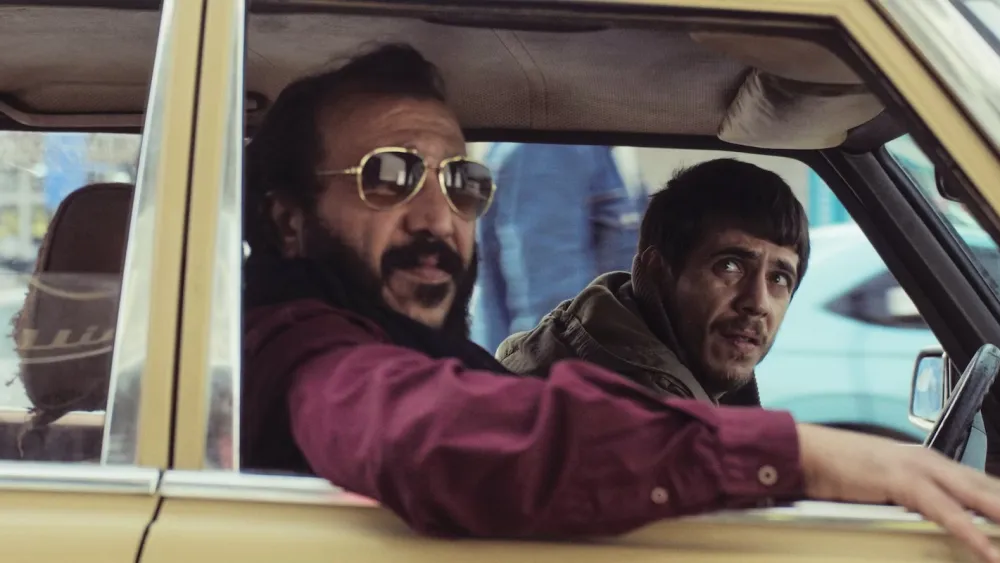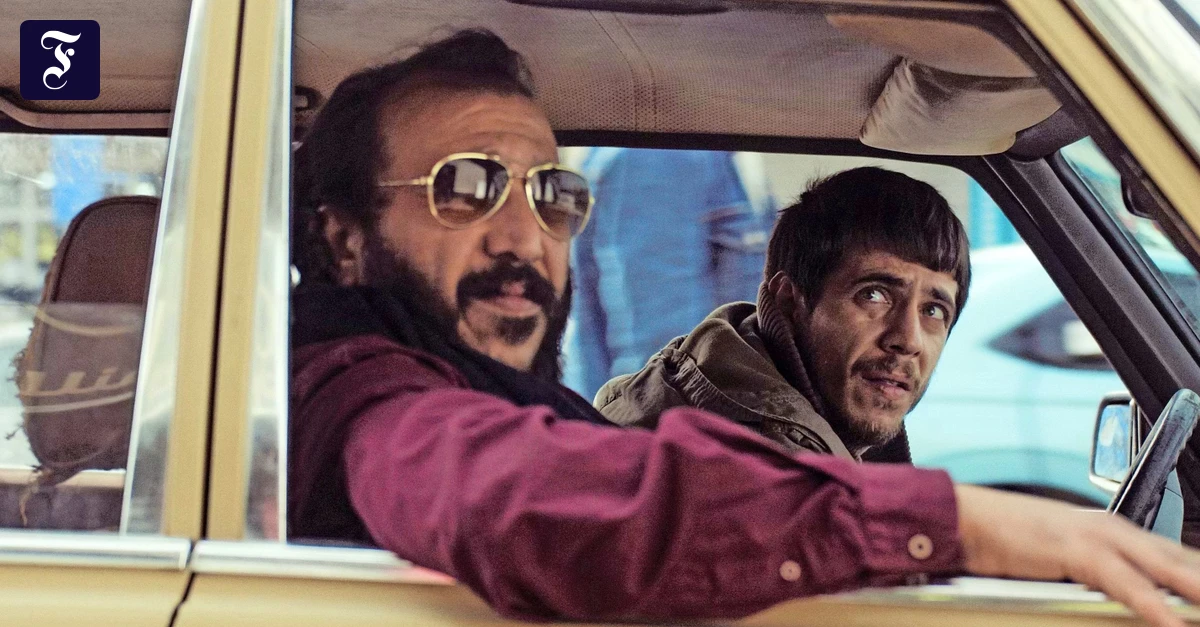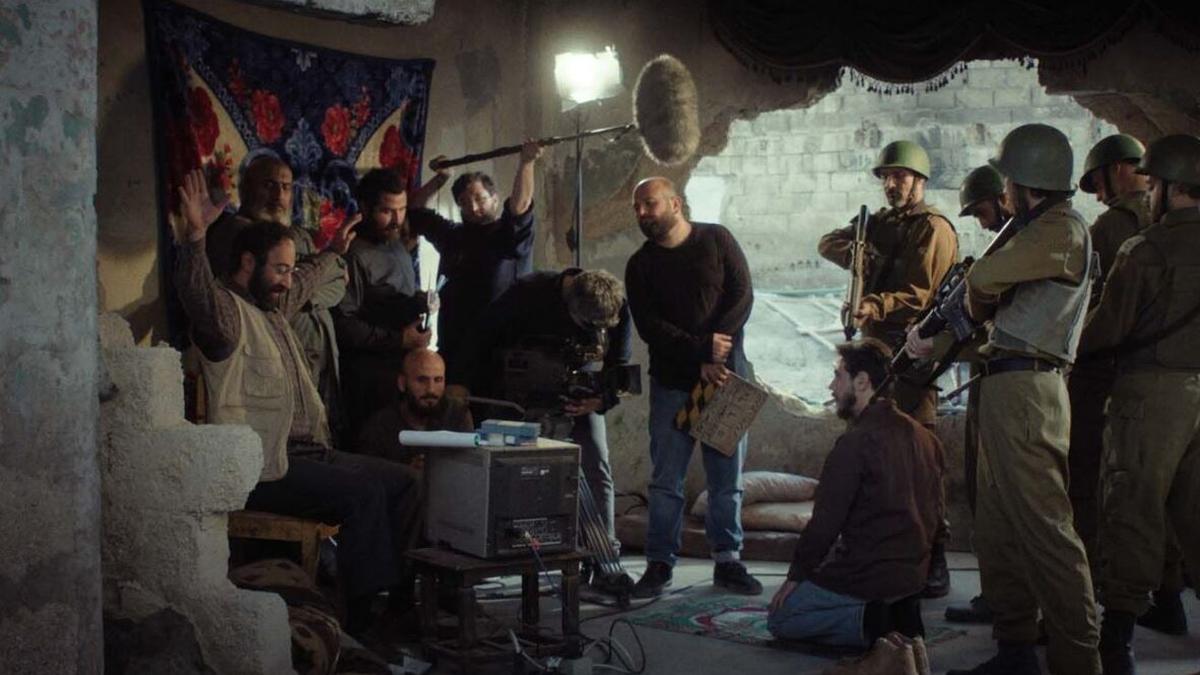
For filmmakers Arab and Tarzan Nasser, twin brothers born and raised in Gaza City before relocating to Jordan in 2012, cinema has provided a means of documenting a reality that much of the world imagines only through the latest updates in death tolls. Their previous features, Dégradé (2015) and Gaza Mon Amour (2020), approached life inside the Palestinian enclave through sharply observed personal stories. And with their latest Once Upon a Time in Gaza, which premiered in the Un Certain Regard section of the 2025 Cannes Film Festival and won the section’s Best Director prize, the brothers expand that project into something considerably more self-reflexive, using the story of a low-budget resistance film to interrogate who gets to create and control images of Palestine. Set between 2007 and 2009, in the years immediately following Hamas’ consolidation of power in the Gaza strip, the film examines how ordinary people navigated a city under blockade whose opportunities and freedoms were steadily narrowing. The title evokes the mythmaking grandeur of Sergio Leone, yet the film is rooted in the densely layered realities of Gaza City.The film opens with Donald Trump’s recent real-estate brochure fantasy, describing Gaza as a future “Riviera of the Middle East” — the antipathy of which feels so detached from the territory’s history that the Nasser brothers scarcely need to satirise it themselves. The early juxtaposition establishes the film’s central conceit from the outset: the gulf between the images projected onto Gaza and the far messier reality experienced by the people forced to live within those narratives. Once Upon a Time in Gaza (Arabic)Director: Tarzan and Arab NasserCast: Nader Abd Alhay, Majd Eid, Ramzi Maqdisi, Issaq EliasRuntime: 87 minutesStoryline: A man seeks vengeance for his friend Osama’s brutal murder in Gaza CityOsama (Majd Eid), operates a cramped falafel shop that doubles as a distribution point for illegally acquired prescription painkillers. His assistant Yahya (Nader Abd Alhay), spends his days stuffing pills inside sandwiches while dreaming of an existence larger than the suffocating geography that contains him. The operation itself is absurdly modest, yet the Nassers seem tuned to how small-scale criminal economies such as these emerge from desperation fueled by political conditions.There is a morbid joke lurking beneath the opening premise that the Nassers are far too smart to spell out. Osama’s great clandestine business is cornering the black market on prescription painkillers inside a territory practically numbed by over 78 years of inconceivable suffering. But everybody involved seems to understand the medication is addressing the least consequential source of pain. There is also something deeply moving about watching characters rip bongs and shovelling falafel into their faces while their city is bombed in real time because it rejects the patronising expectation that people living through history must spend every waking moment performing it. The falafel shop dance sequence is probably the closest the film comes to outright exuberance, immediately recalling Anurag Kashyap’s gift for finding moments of communal release inside stories governed by violence.
‘Once Upon a Time in Gaza’ movie review: A Fistful of Falasteen in Gazawood
By grounding ‘Once Upon a Time in Gaza’ in mundane negotiations of survival and a wicked strain of humour, the Nasser brothers construct a rich, subversive portrait of Gaza, by Gaza and for Gaza
1,108 words~5 min read