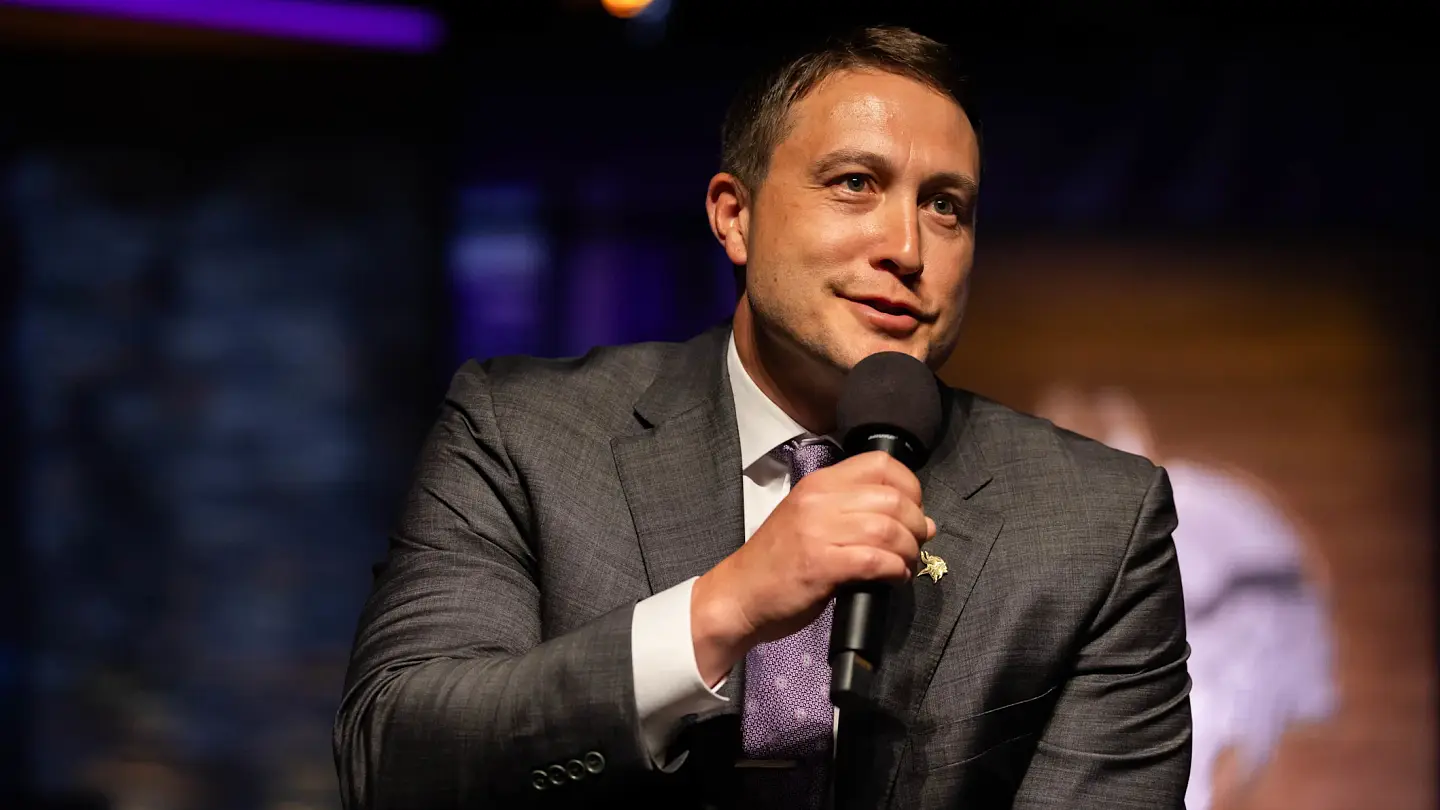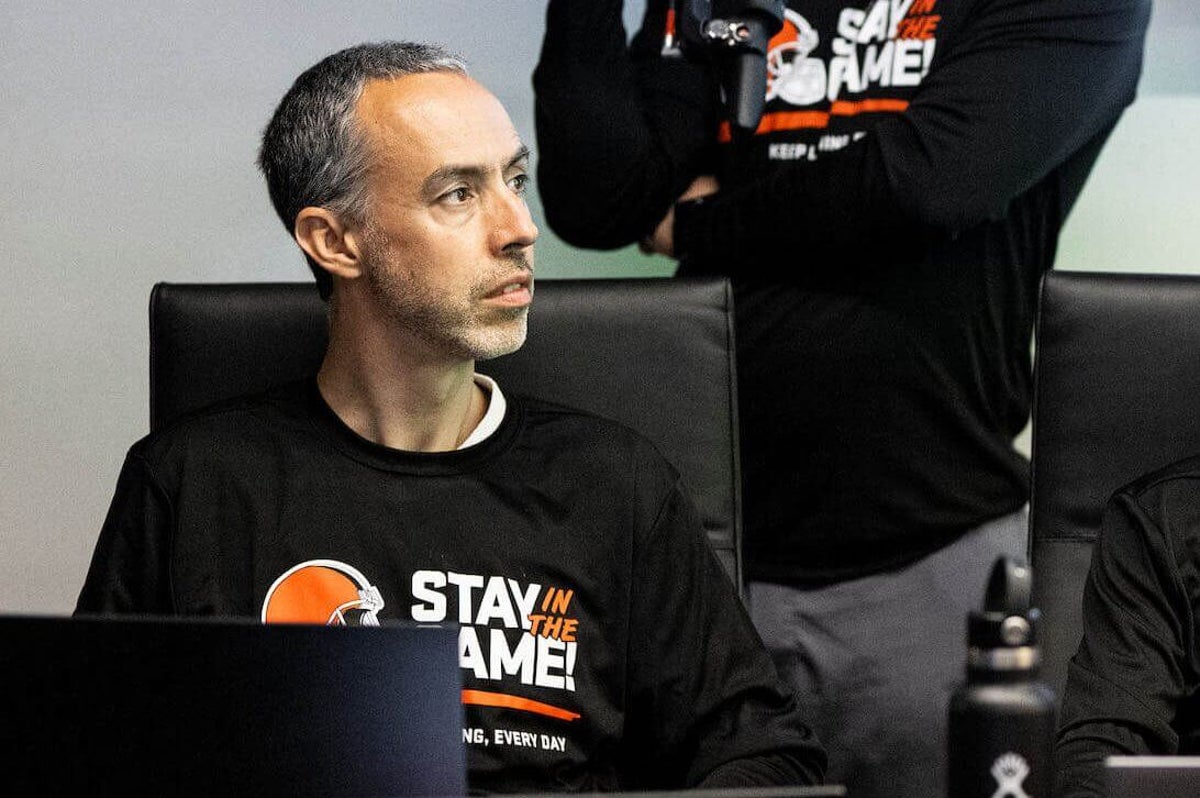
In recent years, the Cleveland Browns began their pre-NFL Draft meetings by calling on an area scout. This person, having crisscrossed a region for months in search of talent, stood up and shared a detailed background: Where the prospect came from, how he thought, who he relied on for support.Afterward, a national scout filled in any missing information before segueing to the player’s on-field abilities. The conversation flowed from one side of the room to the other. Eventually, it found its way to a man with a salt-and-pepper beard named Andrew Healy, someone who spoke like he was just another cross-checker.Great hands, Healy might say if the team was discussing a receiver. Fights through the catch point. Runs into tackles. His yards-after-the-catch ability is below average.“If you weren’t paying attention,” one Browns staffer who worked with Healy said, “it would have sounded just like another scout.”The twist? Healy was reading directly from a sheet of paper with numbers and percentiles. On the fly, without having typed up any analysis, he translated the numbers into a language that everyone in the room understood.What we learned at Nolan Teasley's introductory news conferenceAlec LewisIn his 10 seasons with the Browns, Healy had learned what all the perceptive, nontraditional hires learn when they begin working in football. Making an impact, seriously reaching people, doesn’t take an exorbitant amount of brainpower, a secret formula or a sleek, new artificial intelligence model.Instead, as another Browns staffer who raved about Healy put it, real genius lies in provoking discussion and creating tools that help leaders make better decisions.And that is precisely why new Minnesota Vikings general manager Nolan Teasley poached Healy from the Browns to be his assistant GM.“He was front and center in terms of building out our analytical operation,” Paul DePodesta, the Browns’ longtime chief strategy officer and now the president of baseball operations for the Colorado Rockies, said recently. “But I think more importantly, he was critical to just how we thought as an organization: How we processed information; how we made decisions.”In league circles, the Vikings’ hiring of Healy was praised. Prying him from Cleveland was one layer, but several NFL executives were surprised that the Vikings continued to pursue outside-the-box thinkers after firing former GM Kwesi Adofo-Mensah.Publicly, some fans asked why the Vikings would hire another executive from the Browns. Others wondered who Healy is and why he remained fairly unknown after a decade in Cleveland. What about him would make Teasley want him as the team’s second-in-command football executive?Some answers emerged in interviews with more than 12 current and former Browns employees throughout the organization, as well as others familiar with Healy’s journey. The Athletic agreed to grant anonymity to some sources to allow them to discuss internal matters candidly.“He’s a little bit like a unicorn,” Dom Borsani, a Browns offensive analyst, said. “He has the research background and history and technical aptitude. But he also has the ability to evaluate from a traditional scouting lens. And he understands coaching schemes, so he can see guys in college and interpret their assignments.”“He might be the smartest person working in the NFL,” one Browns employee with an extensive personnel background said. “He truly has the Jacob Misiorowski fastball of minds.”Zach Zelinsky, formerly Cleveland’s senior software developer who is now the director of baseball systems for the Arizona Diamondbacks, went even further: “He is probably the smartest guy I’ve worked with in sports.”Healy graduated from Yale with a bachelor’s degree in applied mathematics and earned a PhD in economics from MIT. However, his education paints only part of the picture.It is one thing to dive more deeply into particular areas of the mind. It is another to translate those complexities so others can understand. This became his life’s work when Loyola Marymount University in Los Angeles hired Healy in 2005 as part of a team to build out the school’s economics department. His title, assistant professor of economics, doesn’t do justice to the day-to-day.Essentially, he and colleagues like Jennifer Pate followed their curiosity and explored questions about how society thinks and operates.The examples are endless. Once, during a game of ping-pong, they collaborated on an idea to study why women were more likely to enter a competition when they signed up as a team with another woman. Another time, Healy visited New Orleans to assist with Hurricane Katrina relief efforts, and the experience sent him down a path of studying the political reasons why the city’s levees hadn’t been replaced.“His skill was always knowing how you could use and manipulate data to better understand whatever you were studying,” Pate said. “It was incredible even then.”Pate and Healy lived one street apart, and football was one of the things she learned from him. An obsessive fan, he could refer to games from the 1970s and ’80s. He adored former New York Giants tight end Mark Bavaro. He spent Sundays in front of the television. Healy played tennis and pickup basketball, but he enjoyed football so much that in the early 2010s, he began writing for a blog called Football Perspective.Aaron Schatz, then the editor-in-chief of Football Outsiders, recognized Healy’s talent. In a move equivalent to an NFL team asking permission to interview another scout, Schatz typed up an email to Football Perspective’s founder, Chase Stuart, to try to hire Healy.In quiet times away from the classroom, Healy produced columns and even revamped a college quarterback projection model called “QBASE,” an amalgamation of college performance, experience and expected draft position. He directed the introductory paragraphs of his 2016 projections at the Cleveland Browns, and they called soon after with exploratory questions about his methodology. DePodesta had been hired to help modernize the organization. He felt Healy had the disposition and awareness to reach people who were naturally going to view a newer realm of thought with a massive dose of skepticism.On-field results in 2016 and 2017 complicated the initial buy-in stage to the point that Pate lobbied the Loyola Marymount deans to keep Healy’s job available if he wanted to return. But by the 2020s, one Browns staffer described the organization’s openness to data as having reached the “earned trust” stage. By then, Healy’s fingerprints touched almost everything in the personnel department.The Browns built an in-house charting system with college and pro scouts, the results of which would funnel up to Healy and weigh prominently in their player evaluations. They created multiple iterations of draft pick trade software that were adaptable in real time. They quantified football character evaluations. They enhanced pre-draft projection metrics, segmented by the traits that scouts preferred at each position. They even converted player value figures to the Browns’ color-grading scale so scouts could better visualize players’ worth.Given Healy’s global view, from player-tracking technology to age curves and injury rates, Browns general manager Andrew Berry conferred with him as a key member of his cabinet on major moves.“Heals was one of AB’s strategists that he relied on,” Tyler Hamblin, formerly the Browns’ director of football operations, said. “He’s not just this guy building models and bringing them to draft meetings. He was a core part of Andrew’s decision-making team.”Teasley said in his introductory news conference that he wanted to be “guided by evaluation” and “anchored by data.” This hire validates the realness in that philosophy.In Healy, Zelinsky said, the Vikings are adding someone who understands how hard it is to quantify 22 interconnected players with different assignments on each play, and how small a sample size there truly is to pull from in hopes of concocting reliable probabilities. Because Healy acknowledges the sophistication and relative novelty of all this, open-ended questions guide the way toward potential revelations.You can ask questions such as: Does the time a quarterback takes from deciding to throw the football to releasing it matter? You can explore the correct receiver investment in an era with abundant talent at the position. You can do what Pate said she still hopes Healy comes back to Loyola Marymount one day to do: Reach other curious minds in ways they never would have thought possible.
Why the Vikings hired Andrew Healy, ‘the smartest guy I’ve worked with in sports’
After 10 years with the Browns, Healy is joining the Vikings as an assistant general manager under Nolan Teasley. He's an intriguing hire.
1,344 words~6 min read