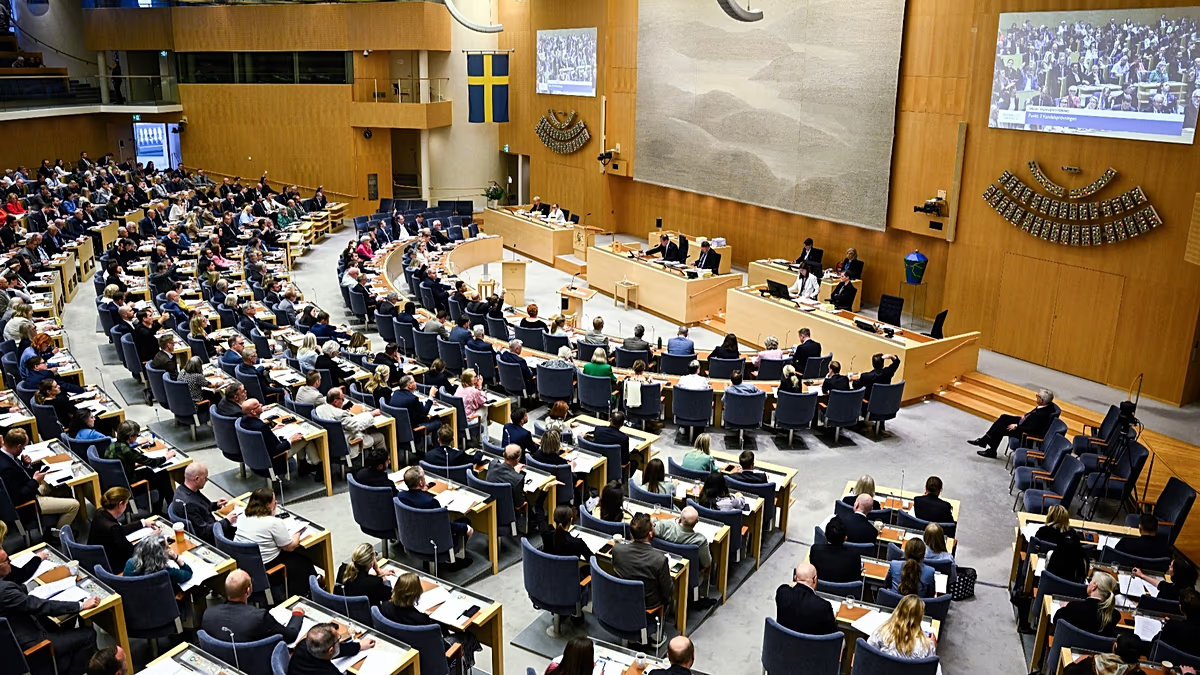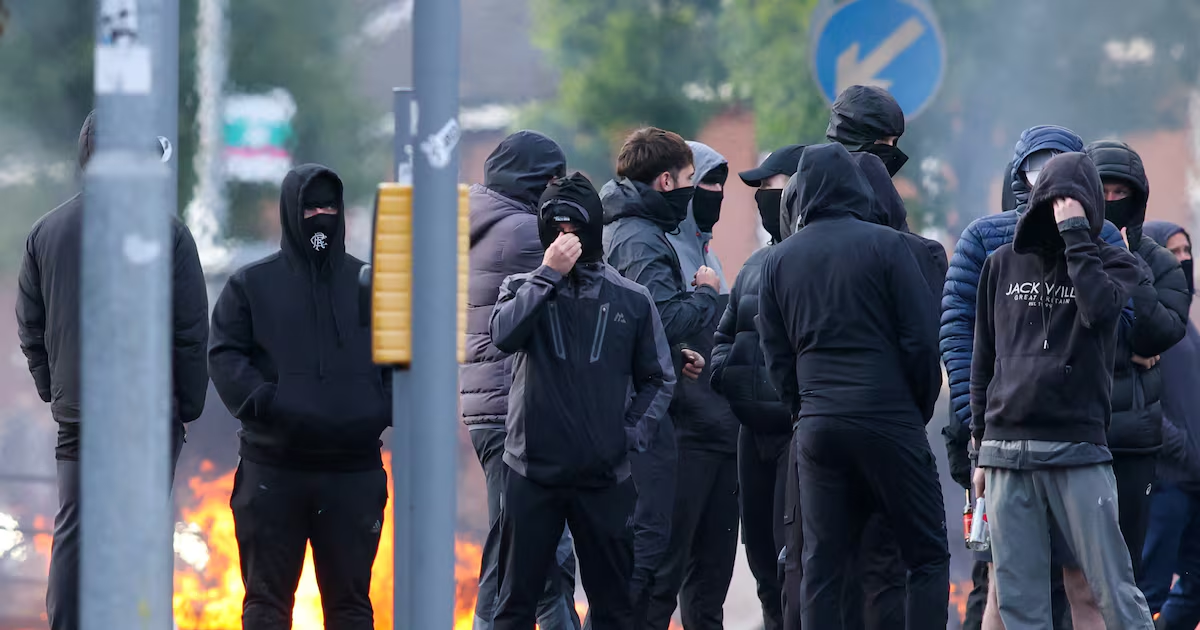
The aftermath of a week of race riots was the worst possible time to try raising the minimum age of criminal responsibility in Northern Ireland. That age stands at 10, the same as in England and Wales and the lowest in Europe.Alliance has spent four years planning to raise the age to 14 via an executive Justice Bill. The plan fell apart on Monday when all three unionist parties blocked it via the assembly’s cross-community veto mechanism, the petition of concern. Unionists cited the young age of the previous week’s rioters as proof the proposal was “dangerous”, “beyond stupid” and a matter of “profound public safety”, to quote Gavin Robinson, the DUP leader.Sinn Féin walked out of the chamber when it was announced a petition had been raised, while Alliance, the SDLP and People Before Profit raged against its use. They all considered it an abuse of a safeguard intended to protect minorities. The Belfast Agreement created the petition “to ensure key decisions are taken on a cross-community basis”. However, it made no attempt to define such decisions. A petition can be raised by 30 assembly members for almost any reason. The matter then has to be approved by majorities of unionists and nationalists. Non-aligned parties do not count, adding insult to injury when an Alliance proposal has been blocked.The DUP, which introduced Monday’s petition, has long been criticised for abusing the process by other unionists. The TUV has only signed a petition once before, on a Brexit issue last December. The UUP has reserved its use for “constitutional” disputes.Most unionist petitions only occurred in the past because the DUP could raise them on its own. But the DUP dropped below 30 seats in 2017 and the rules were changed in 2022 to require signatures from more than one party. So getting the TUV and the UUP on board on Monday was a significant moment, marking the first time all three unionist parties have blocked a social policy issue.The politicking this involved inside the UUP was extraordinary. Recently appointed leader Jon Burrows, a former senior police officer, believed the age of criminal responsibility was important enough to warrant signing the DUP’s petition. Most of his party’s seven other assembly members disagreed but in the end three joined him – just enough to get the petition over the line.Tim Cairns, a commentator and former DUP special adviser, has asked if now is the time “to tease out if evangelicals and Catholics have a different starting point for rights and equality”.“Does that mean each tradition in Northern Ireland may have a different view on things like criminal responsibility?” he asked online. “If this is the case it may well be exactly what a petition of concern was designed for?”While this question may have been somewhat mischievous, it addressed the widespread sense that unionism and nationalism have philosophical differences beyond the constitution. Unionists are often perceived to be more conservative; nationalist more liberal. If these distinctions were seen as community attributes they could justify vetoing social and economic policy, dropping an enormous spanner into Stormont’s already gummed-up works. Removing it would require fundamental reform, as the petition is written into powersharing’s legal foundations.[ Loyalists who burn people out of their homes are firebombing their own political futuresOpens in new window ]The stereotypes of unionism and nationalism rest on surprisingly little evidence. A 2023 survey by Queen’s and Ulster universities concluded the entire population of Northern Ireland leans economically left and socially right, although unionists are to the right of nationalists within this context.A Liverpool University study in 2019 found unionist non-voters are socially liberal, suggesting unionists appear conservative because they only have conservative parties to vote for. The reverse might apply to nationalists, with everything cancelling out.There has been no polling on the age of criminal responsibility, other than a survey of young people a decade ago. Unionist parties presume they are speaking for most of their supporters and the public at large but they cannot be certain. If they do not want to justify use of the petition as protecting unionism, they could say they deployed it to protect everyone from liberalism that has lost touch with the public to an undemocratic degree.Alliance chose the age of 14 based on expert advice, yet this remains a highly ideological subject. There was a bidding war from many of the NGOs consulted, most of which want ages of 16 or 18 – positions the public would probably find extreme.The concept of the vox populi petition of concern would be another enormous spanner to drop into Stormont’s works.Perhaps the greatest significance of Monday’s petition is that unionists, still a plurality in the assembly, have begun to think of themselves as a minority and are acting together on that basis. As the rules stand, they can take any new mood of defensive obstructionism as far as they like.
Newton Emerson: Unionists have begun to think of themselves as a minority
A plan to raise the age of criminal responsibility fell apart when three unionist parties blocked it
812 words~4 min read