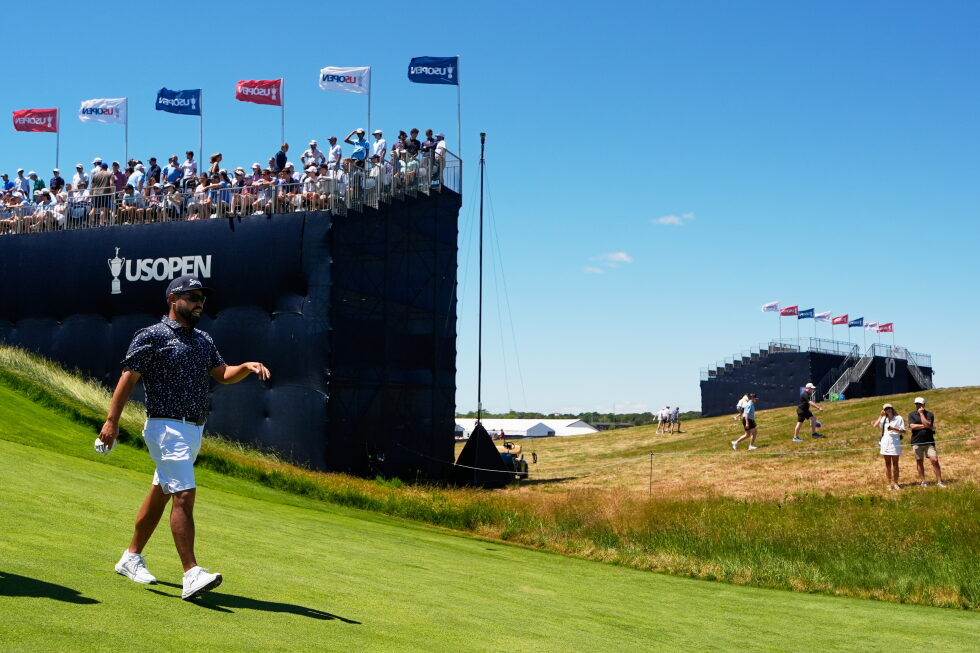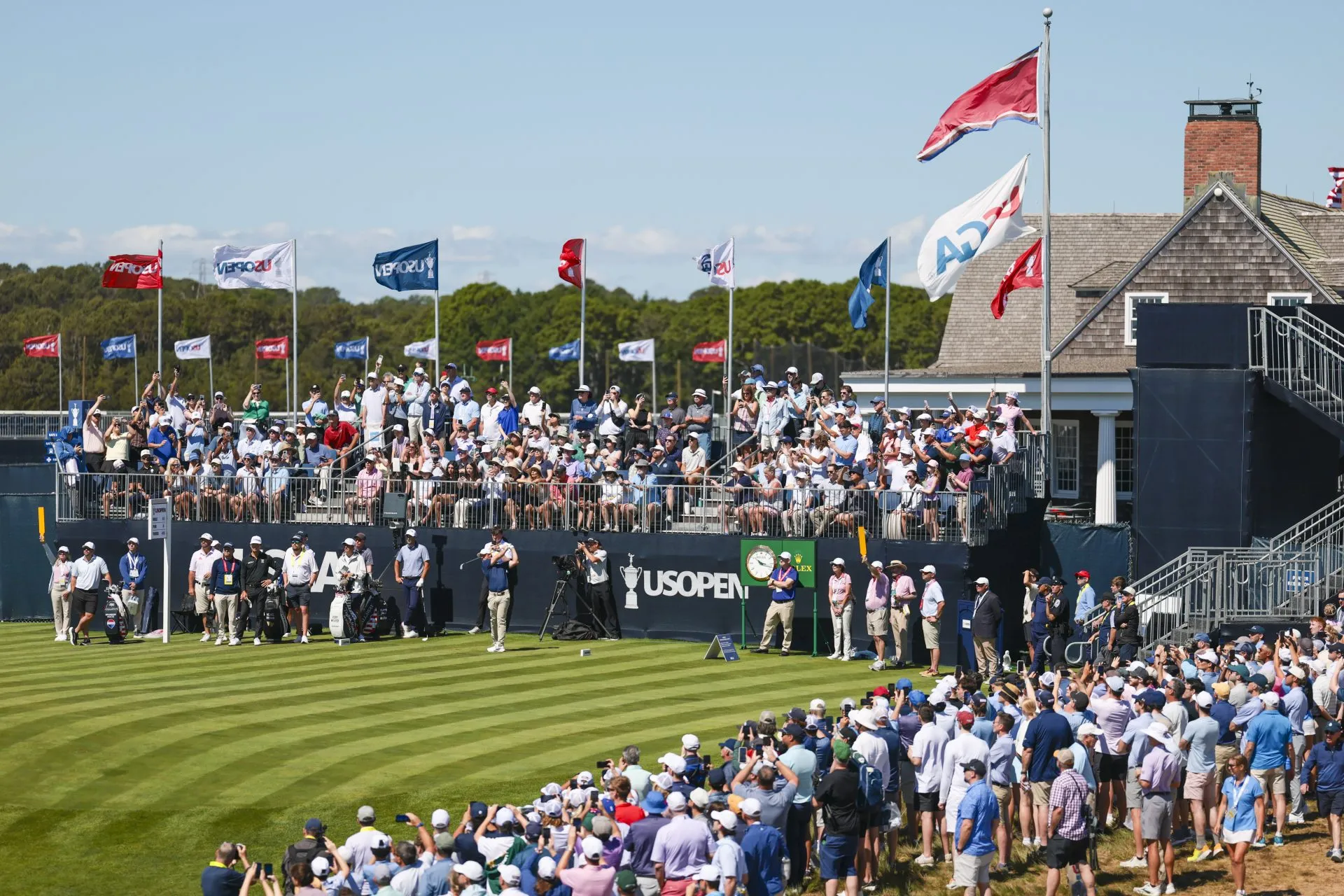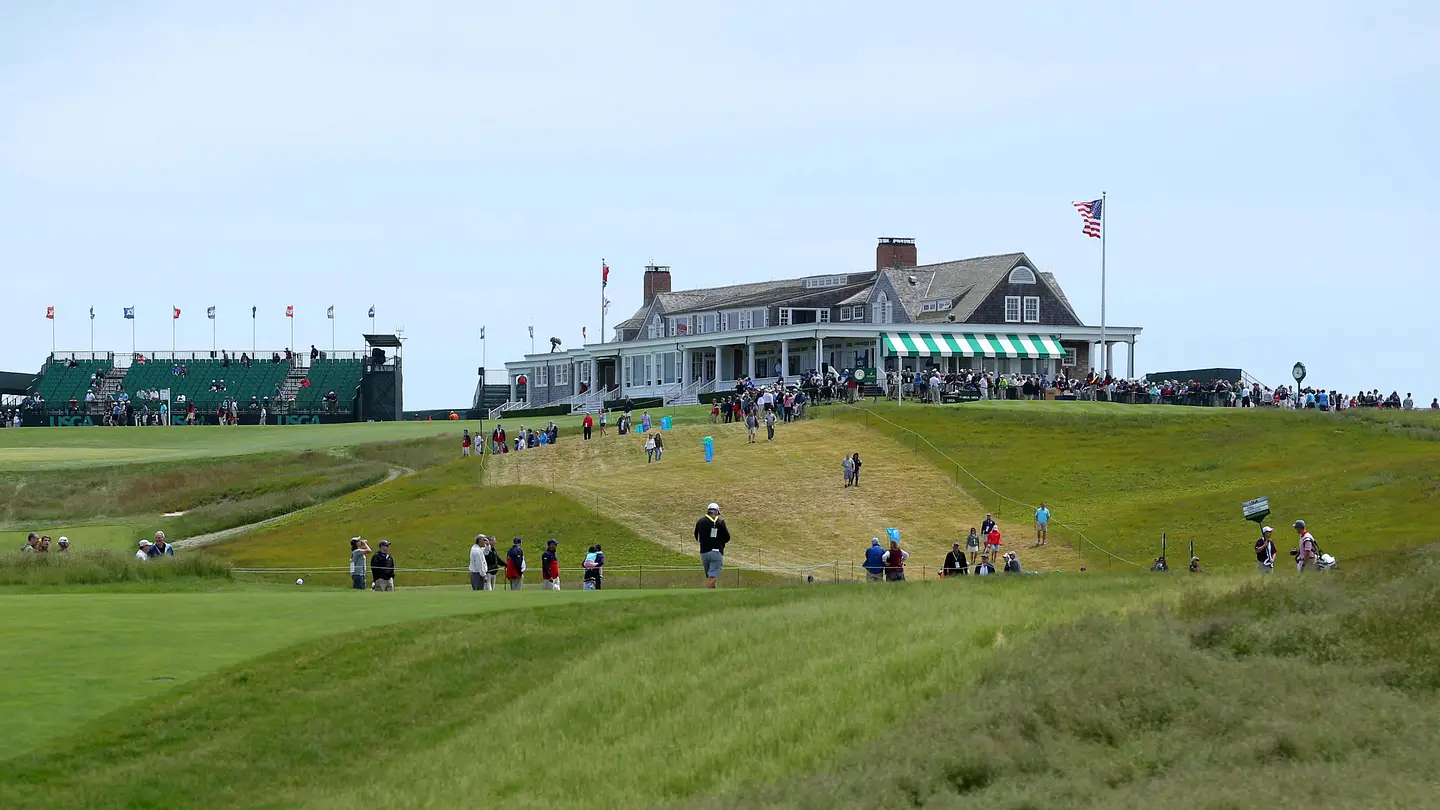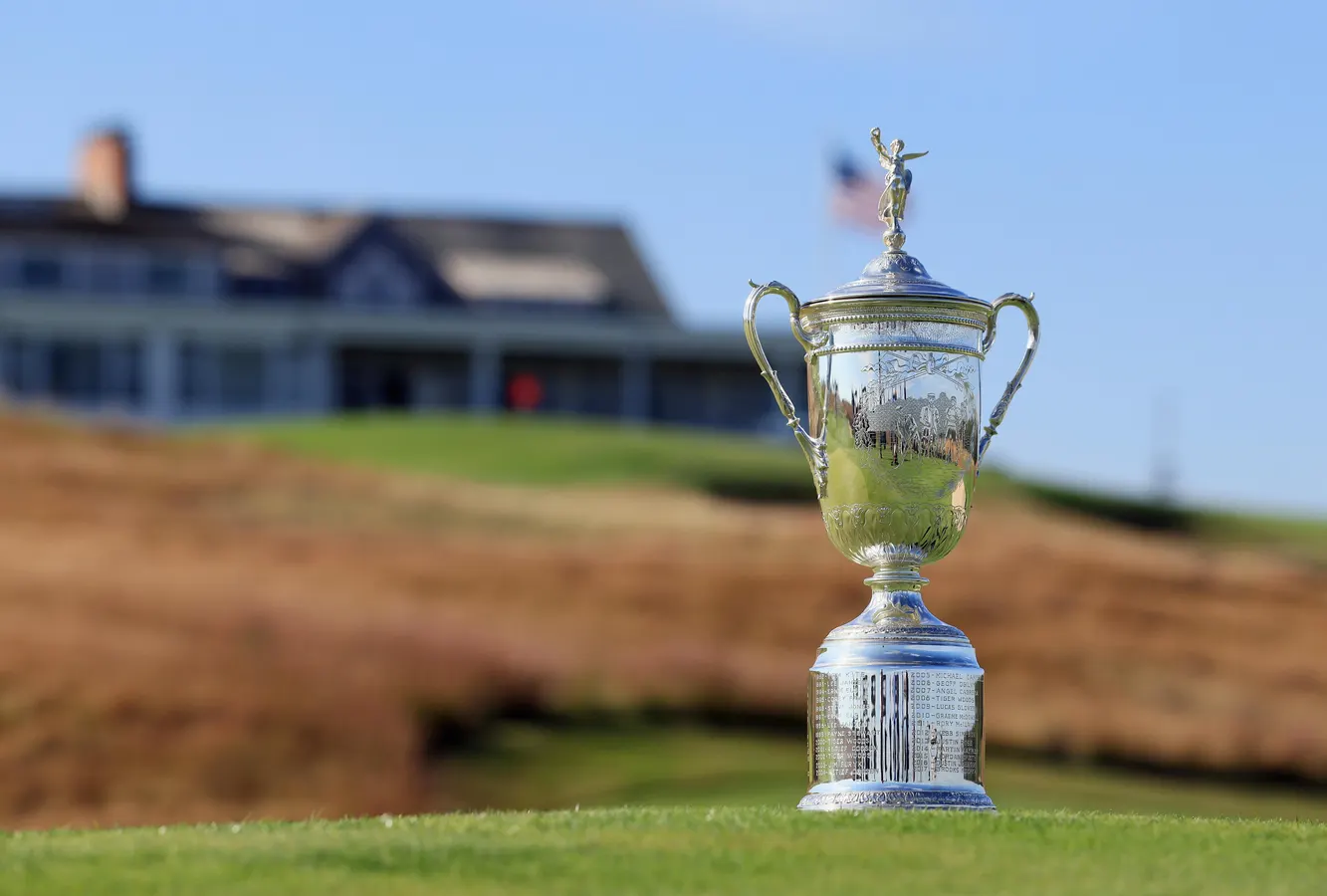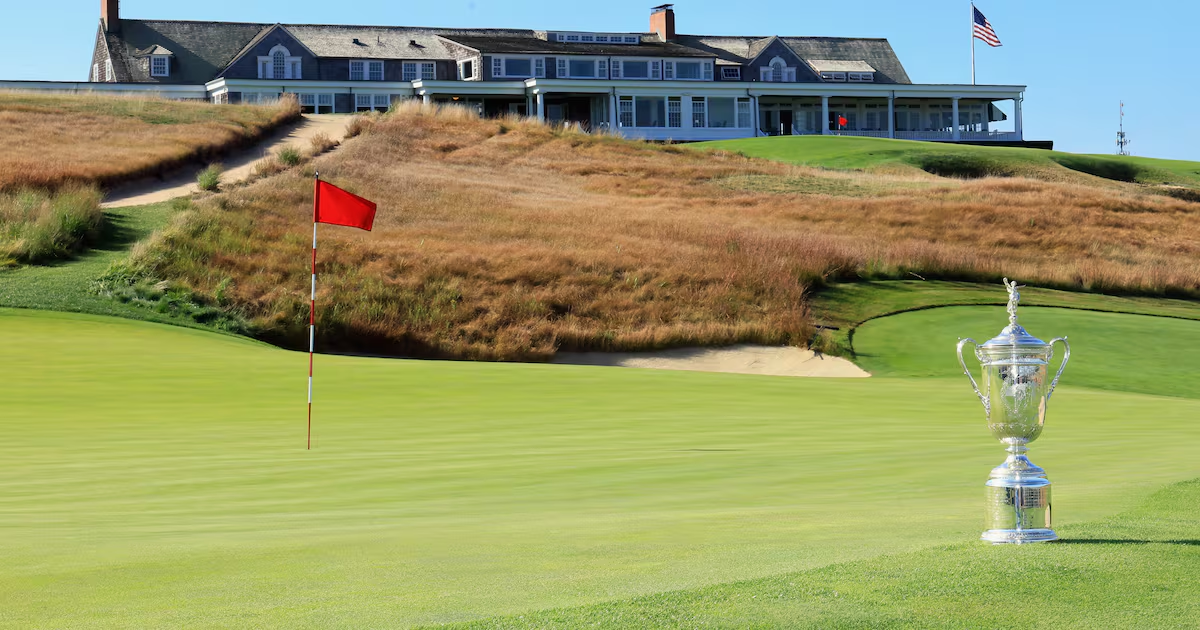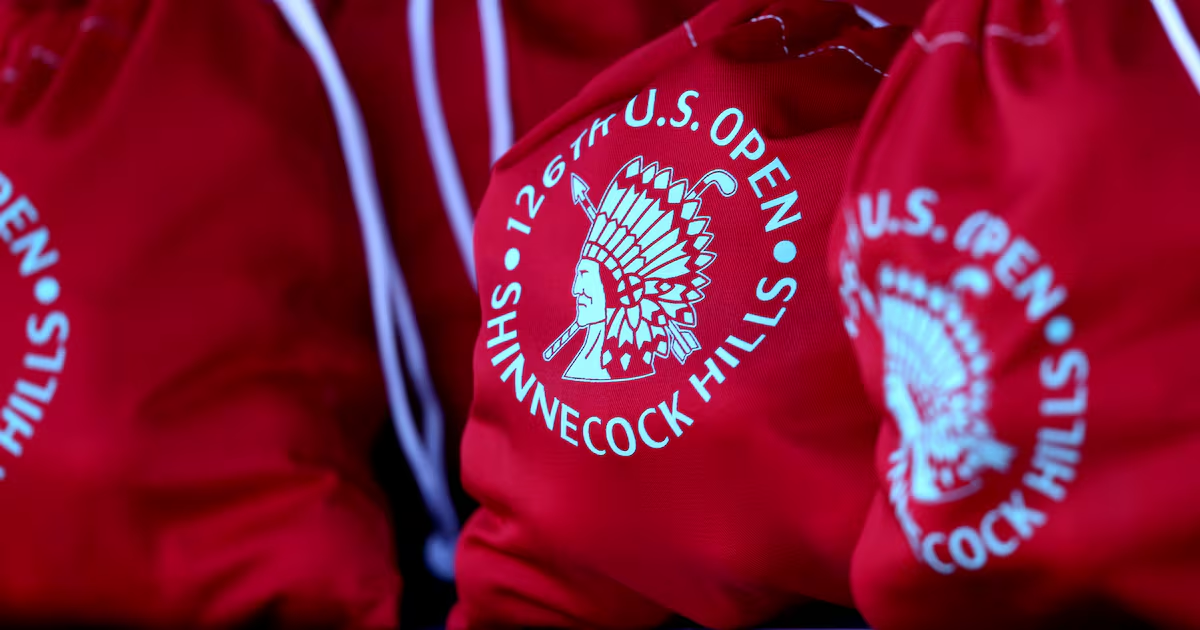
Driving east on Sunrise Highway towards the 126th US Open, spectators cross the Shinnecock Canal; a picturesque waterway sometimes regarded as the unofficial gateway to The Hamptons, the tony, exclusive hangout of the rich and famous that stretches along the south fork of Long Island. Farther out the road, just before the entrance to Shinnecock Hills Golf Club, two gaudy 18m tall digital advertising pillars stand sentry. A pair of technicolour billboards reeking of Las Vegas or Times Square, they are blots on the landscape. They are also eloquent protest monuments about stolen land, desecrated graves and forged documents.“Welcome to Shinnecock Indian Nation,” flashes the message in LED lighting, “Aboriginal Territory … ‘Indian Country’.” The incongruous columns were erected seven years ago as a startling way of reminding beachgoers, residents and the golf community that this was once, and they wish could be again, all Shinnecock territory. Several courts have since ordered the nation to remove these twin symbols of resistance. Several courts have been ignored because judges don’t have jurisdiction here. These pillars are built on the tribe’s sovereign land, a large chunk of which was inveigled from their forefathers shortly before the first sod was turned on the fabled golf course now bearing their name. Not to mention the 18 holes that will captivate the sporting world this weekend were carved out of their sacred burial grounds.[ US Open: Five golfers that can come out on top at Shinnecock HillsOpens in new window ]“I started work with one hundred and fifty Indians from the reservation, the only available labour,” wrote Willie Dunn jnr, the English-born designer, of his involvement in building the course in the 1890s. “Except for several horse-drawn road scrapers, all the work was done by hand. The place was dotted with Indian burial mounds, and we left some of these as bunkers in front of the holes. Others we scooped out and made into yawning bunkers, and sand-traps. “It was in these traps that the Indian workmen would bury their empty whiskey bottles. We did not find out this until later when playing the course. One never knew what an explosion shot out of the sand trap would bring out, a couple of fire-water flasks, or perhaps a bone or two.”A marshal watches on the 18th green prior to the 2026 US Open at Shinnecock Hills Golf Club in Southampton, New York. Photograph: Kate McShane/Getty Images Some of the remains accidentally unearthed by Dunn and others with wayward chipping wedges were eventually transplanted to New York’s Museum of Natural History 145km west. More than a century later, the Shinnecock wish – as per their funereal rites handed down through generations – to repatriate those ancestral bones to their original resting places. The problem is some of those graves now happen to lie beneath world-famous fairways and greens with quaint names such as Ben Nevis, Thom’s Elbow and Westward Ho. Arguing that they have “occupied their aboriginal homelands in and around the Town of Southampton from time immemorial”, the Shinnecock’s troubles began with the arrival of the English in the 1640s. So far, so depressingly familiar. After an initial negotiated settlement involving the bartering of 60 cloth coats, 60 bushels of corn and the promise of military protection, there followed a period of relatively peaceful coexistence. Then the colonists began to usurp more and more of the natives’ territory. The story of America.Min Woo Lee of Australia walks from the first tee prior to the US Open at Shinnecock Hills in Southampton, New York. Photograph: Warren Little/Getty Images The encroachment became so bad that in 1703 the tribe was forced to lease back 3,500 acres (including what is now the golf course) of their own land from burgeoning Southampton which the new arrivals had built. That arrangement was supposed to last 1,000 years but in 1859, the town decided it needed more space, so the New York state legislature abrogated the lease. A replacement agreement was ratified, shoehorning the Shinnecock into a reservation of just 900 acres on a peninsula jutting out into the Atlantic Ocean, where an estimated 750 of them still live today.Who agreed to this? Well, the politicians claimed tribal elders signed off on that controversial reallocation of land. The Shinnecock have always contended those signatures were forged. In every legal action regarding the matter, the courts have, shockingly, always found against the Native Americans. One federal judge stated they had waited too long to file their case. Of course, any sort of victory for them would have spelt serious trouble for the golf club whose membership includes the most influential families in the country.Among the $10 million (€8.6 million) of merchandise that will be shifted at Shinnecock Hills this week, there will be plenty of paraphernalia emblazoned with the club logo of an Indian warrior with a golf club and an arrow crossing through his headdress. Some regard that as a nod to the local heritage, others see it as tasteless and offensive. Members of the Shinnecock Indian Nation hold their flag atop Sugar Loaf Hill in Southampton, New York, to mark a July 20th, 2021, purchase of ancient burial site by the Peconic Land Trust. Photograph: Mark Harrington/Newsday RM via Getty Images But, beyond being neighbours, the tribe and the golf club’s affairs have always been inextricably intertwined. Aside from their crucial contribution to its initial construction, plenty of Shinnecock have worked at the course in various roles, from caddie to course superintendent, since the 19th century.Oscar Bunn was involved in grading the original terrain, carried other people’s clubs as a bagman, then swung his own to such effect that he finished 21st when the US Open first came to Shinnecock Hills in 1896. In honour of the tribe’s most famous golfer, the Oscar Bunn putting and chipping facility was opened on the reservation in 2020. Funded by the United States Golf Association, it was part of a deal done with the Shinnecock the last time the US Open came here two years earlier. A small acknowledgment of their shared and troubled history. Very small.
Grave concern: US Open course carved out of sacred Shinnecock burial grounds
Celebrated venue is built on stolen land, desecrated graves and forged documents
1,014 words~5 min read