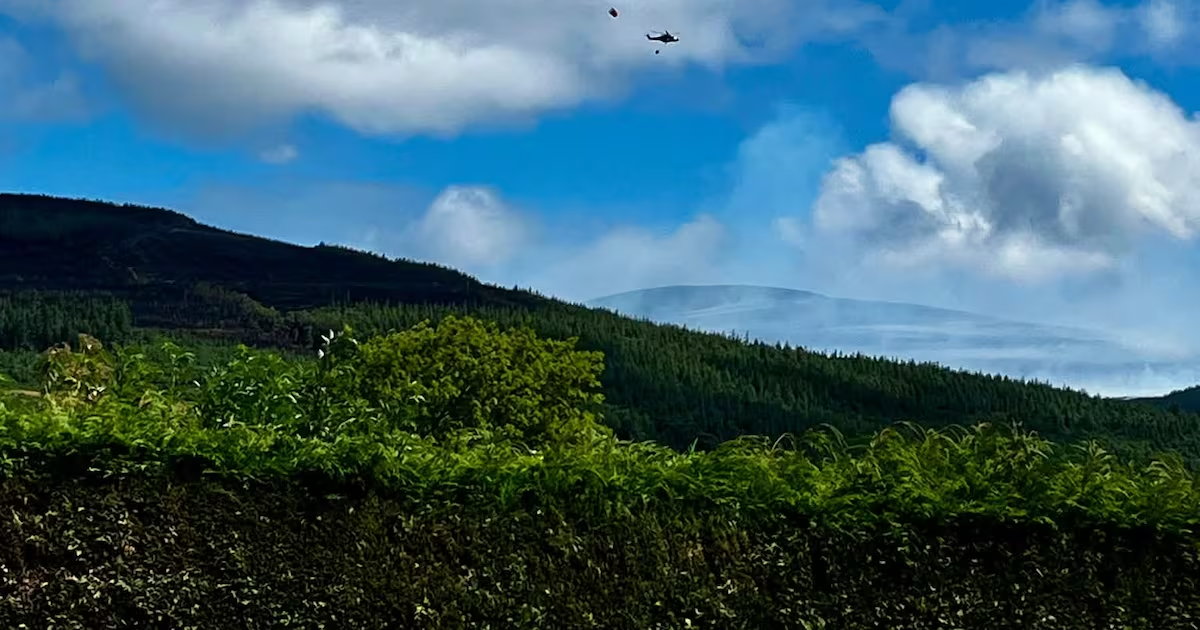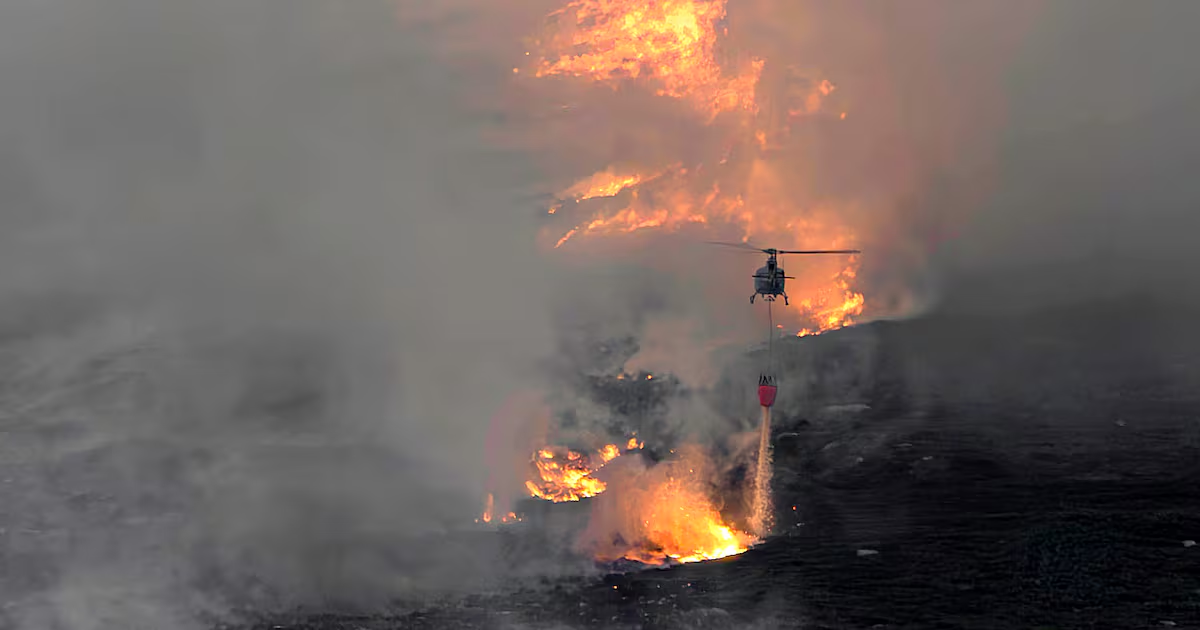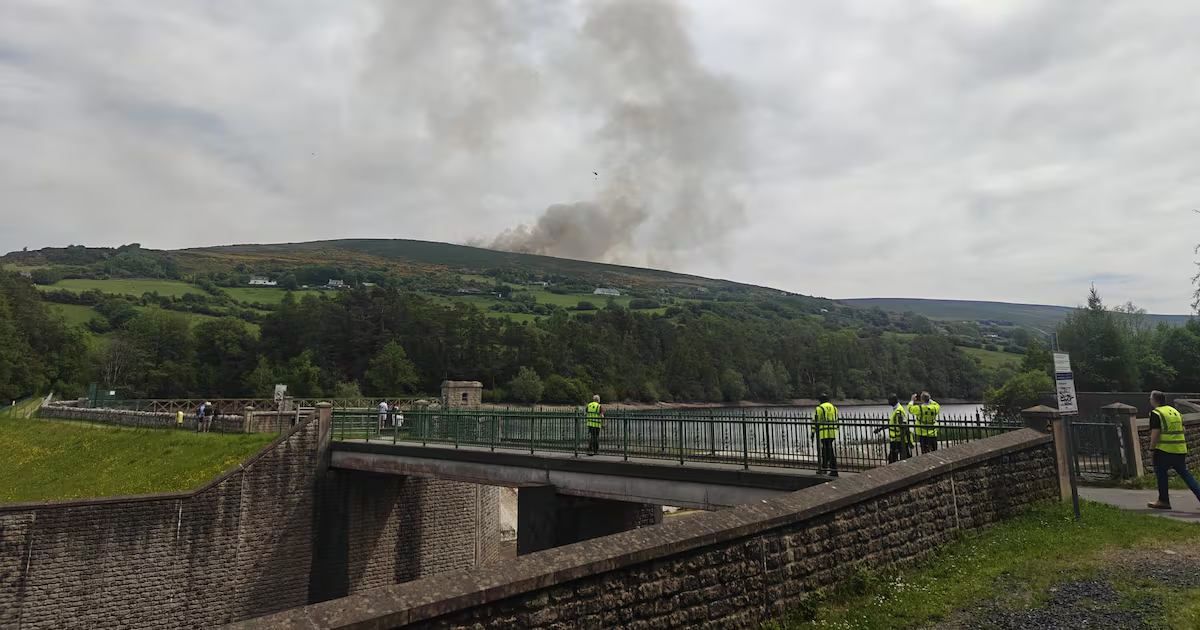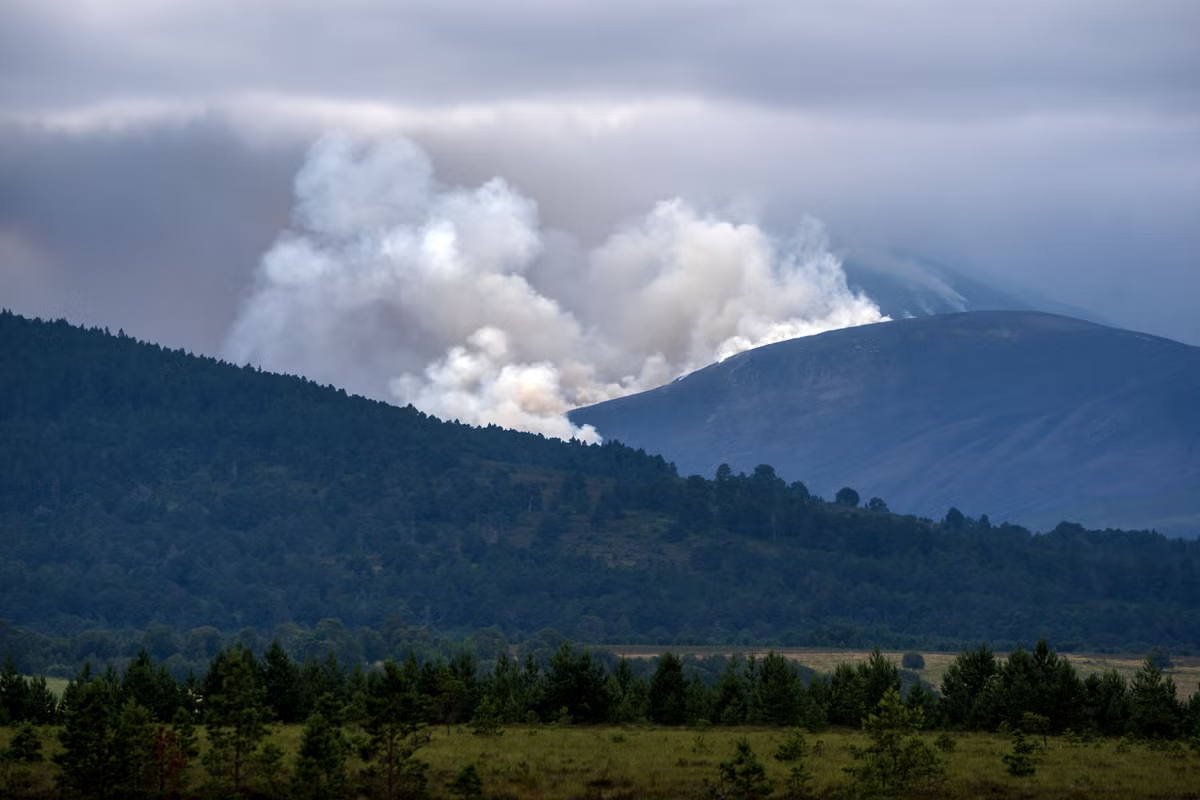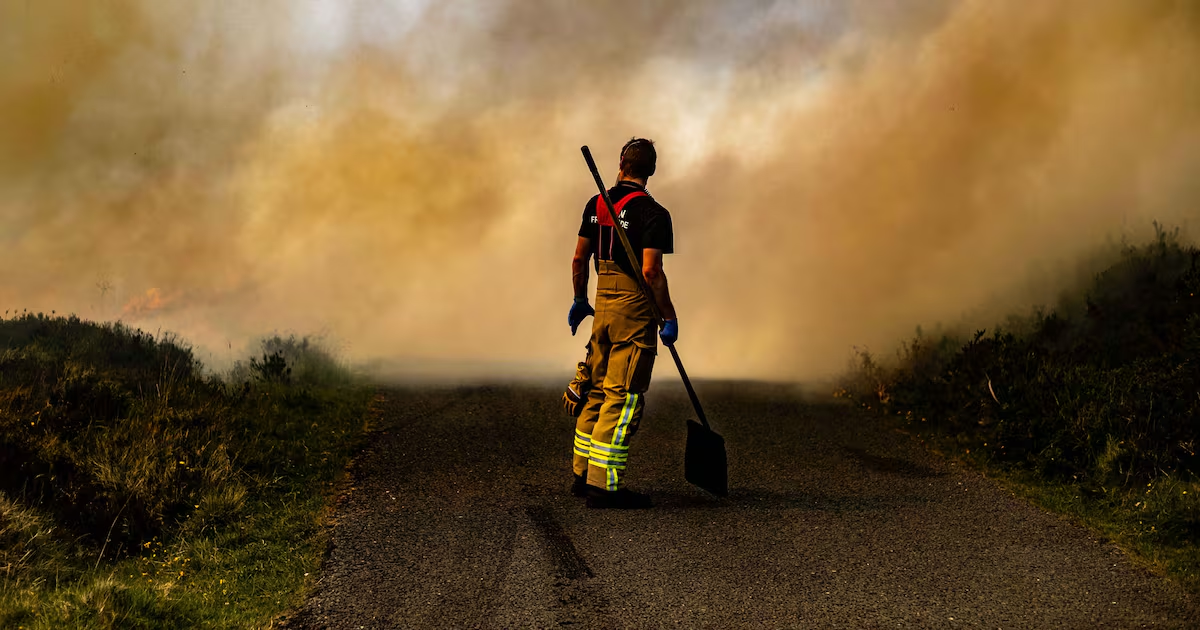
In the early hours of the morning of May 28th, emergency services received a report of a fire in the hillside of Piperstown, near the Glenasmole Valley in south Co Dublin.By the time the fire had been extinguished 24 hours later by the Dublin Fire Brigade, in liaison with the National Parks and Wildlife Service (NPWS) and Coillte personnel, it had destroyed an area equivalent to the size of 50 Croke Parks.Damian Clarke, manager of the Wicklow Mountains National Park, said the recent blaze was the third this year so far, breaking a two-year fire-free period for the area.Two “absolutely deliberate” smaller fires also occurred in the same area of the national park earlier this year. Clarke said: “You got the sense something bigger was building.”Oonagh Duggan, head of policy and advocacy at BirdWatch Ireland, said a fire like this, especially when peat is burnt, is “absolutely devastating to the structure of that habitat”. In the wake of the fire, Minister of State with responsibility for Nature, Heritage and Biodiversity, Fianna Fáil TD Christopher O’Sullivan, said the NPWS has “significantly ramped up” its readiness for “illegal fires”.But what exactly does a ramped-up NPWS look like?Firefighters battle a large gorse fire off Piperstown Road in the Dublin Mountains as crews work to contain the blaze. Photographs: Damien Storan O’Sullivan told The Irish Times the extra deployment of “eyes in the skies” surveillance – helicopter deployment and drone technology – is key to the service’s future in protecting the approximately 100,000 acres of land in its stewardship.The NPWS has a contract in place with Executive Helicopters based in Galway. The contract is operational nationwide for this fire season from June to September.Alongside that aerial surveillance, O’Sullivan said more “boots on the ground” staff, trained “over the last three or four years” to react to events such as wildfires, will be deployed on a “greater scale” this summer. O’Sullivan said training includes “monitoring techniques”, particularly monitoring at night. Under the Wildlife Act, 1976, burning, cutting, or destroying vegetation on uncultivated land or hedgerows is illegal between March 1st and August 31st and could result in a €5,000 fine – something O’Sullivan believes needs to increase significantly to better prevent illegal burning. Another financial penalty O’Sullivan aims to work on with the aid of the Department of Agriculture is disqualifying landowners from future European grants if land is intentionally burned.“The big opportunity to dissuade this activity is the upcoming review of the Wildlife Act,” O’Sullivan said.Though the fire spurred on a reaction from those involved in wildlife protection, the push to upgrade the NPWS’s powers hasn’t come from nowhere.Green Party Senator Malcolm Noonan. Photograph: Nick Bradshaw/The Irish Times Green Party Senator Malcolm Noonan officially launched the Wildlife Crime Unit in 2021 as part of a review of the NPWS which brought the service greater power to investigate reports of wildlife crime.The initiation of an investigation by the NPWS is passed on to An Garda Síochána for prosecution if deemed appropriate.Figures recently obtained by Social Democrats TD Liam Quaide showed reports to the NPWS had doubled in the last five years with no corresponding increase in prosecutions in that time. Last year there was one prosecution for every 21 reported incidents – a total of 28.Of the current state of the service, Noonan said “given additional land purchases and new nature reserves and parks ... NPWS needs to bolster staffing across all areas of its operations and functions”.Budget 2026 provided the NPWS with more than €100 million, almost four times the €28.7 million the service received in 2020. The number of staff across the service, whether it be ecologists or members of the Wildlife Crime Unit, has doubled in that time, O’Sullivan said. The NPWS employs 576 people across the country.Noonan said: “Benchmarked against other jurisdictions, we still don’t invest enough in nature in Ireland.”Firefighters battle a large gorse fire off Piperstown Road in the Dublin Mountains on May 28th, 2026. Photograph: Damien Storan Reason for concern remains for those involved in preserving Ireland’s wildlife, given the current condition of Ireland’s natural habitats.Kieran Flood, chief executive of the Irish Wildlife Trust, said that, broadly speaking, Ireland’s natural habitats are already in a vulnerable state and that fires can be particularly devastating.Flood echoed the recommendations of an April 2026 report from the Independent Advisory Committee on Nature Restoration, established by O’Sullivan.The committee said in the report that to facilitate the management of public lands, the Government should commit to adequately resourcing and, where relevant, restructuring the NPWS.Flood said people may not be aware that protected habitats in the State are “already under a lot of pressure and the quality is declining”.According to a 2025 NPWS report, 90 per cent of habitats in Ireland remain under an “unfavourable” status, with half showing ongoing declines.[ Wild salmon are on the verge of extinction. There is not one fish to spareOpens in new window ]The Independent Advisory Committee noted in its report that figure puts Ireland in the bottom 10 per cent globally for biodiversity intactness.When it comes to bolstering the NPWS, however, Clarke said that while helicopters are the “big thing” for the service, it is really a case of being “vigilant” as there is “no magic bullet” and “all you can do is make the public aware”.Noonan separately noted more “high visibility public awareness campaigns”, with designated funding, would be crucial to the conservation campaign.Clarke said the service had “gained a lot of ground” Wicklow in recent years thanks to increased liaison with other services such as Wicklow Fire Service and Coillte. He said it is important that the situation doesn’t “slip back” to 25 years ago when “at least 20” fires were recorded in the broader Wicklow area every year.Looking to the future, O’Sullivan said a significant increase in funding over the next “seven, eight years” could finance the implementation of a Nature Restoration Fund. That would fund restoration on State land, but could also provide a more significant proportion of that funding into schemes for landowners to commit to restoring their own lands, with the support of conservationists.Whether deliberate fires or not, the NPWS may have its work cut out for it ahead of the summer. Clare Noone, climate scientist and adjunct lecturer at the school of physics at University of Galway, said: “As temperatures continue to rise, Ireland can expect more frequent periods of elevated wildfire risk.”She said there is “certainly reason for vigilance” for this summer as Ireland has already experienced “exceptional warmth” this year.Noone said wildfires do not just pose a threat to habitats and ecosystems in Ireland, “they can also pose serious risks to human health” such as respiratory illness.
‘Eyes in the skies’ and ‘boots on the ground’: Measures to stop wildfires this summer
The recent fire in the Wicklow Mountains National Park shows scale of the problem facing services
1,109 words~5 min read