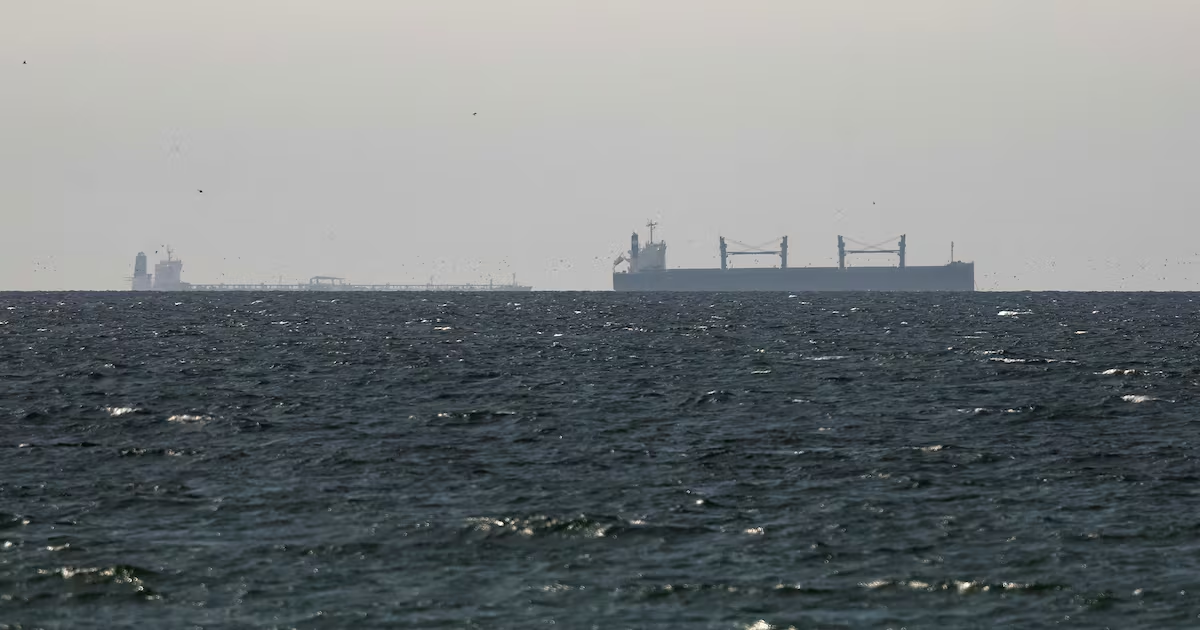
Crude oil futures traded lower on Thursday morning following reports that the US and Iran had digitally signed an interim peace deal to end the war.At 9.32 am on Thursday, August Brent oil futures were at $78.16, down by 1.75 per cent, and July crude oil futures on WTI (West Texas Intermediate) were at $75.26, down by 1.99 per cent. June crude oil futures were trading at ₹7133 on Multi Commodity Exchange (MCX) during the initial hour of trading on Thursday against the previous close of ₹7212, down by 1.10 per cent, and July futures were trading at ₹7078 against the previous close of ₹7158, down by 1.12 per cent.According to reports, both the US and Iran digitally signed an interim agreement on Wednesday to end their war in West Asia. The deal would help reopen the Strait of Hormuz and waive US sanctions on oil produced in Iran. These moves would help ease global oil supply situation.International Energy Agency’s Oil Market Report for June said that an interim agreement between the US and Iran to end the war in West Asia could pave the way for a reopening of the Strait of Hormuz and a lifting of a US blockade on Iranian oil traffic. Prices had already retreated from recent highs as market tensions eased on a surge in Gulf exports at the start of June, an acceleration in IEA government stock releases and weaker demand.If the deal holds, exports and production from the Gulf should see a gradual recovery – not least because Iranian oil exports can fully resume once the US blockade is lifted, the report said, adding, “Overall, global oil supply is expected to fall by 3.9 million barrels a day on average in 2026 to 102.4 million barrels a day.”The report said that global oil demand is projected to rise by a relatively modest 2 million barrels a day to 105.3 million barrels a day. By contrast, oil supplies look set to surge by around 8 million barrels a day to 110 million barrels a day. This may provide a welcome respite to the market and an opportunity to replenish depleted inventories, or to build new strategic reserves, as countries review their energy strategies and policies in response to the crisis.Meanwhile, the weekly petroleum status report by the US EIA (Energy Information Administration) showed a decline in crude oil inventories for the week ending June 12.According to EIA, US commercial crude oil inventories decreased by 8.3 million barrels from the previous week. At 418.2 million barrels, U.S. crude oil inventories were about 6 per cent below the five-year average for this time of year.Total motor gasoline inventories decreased by 0.9 million barrels from last week and were 6 per cent below the five-year average for this time of year. Distillate fuel inventories increased by 1 million barrels last week and were about 13 per cent below the five-year average for this time of year.Total products supplied in the US over the last four-week period averaged 20.6 million barrels per day, up by 3.3 per cent from the same period last year.Over the past four weeks, motor gasoline product supplied averaged 8.9 million barrels per day, down by 1.1 per cent from the same period last year. Distillate fuel product supplied averaged 3.7 million barrels per day over the past four weeks, up by 5.5 per cent from the same period last year. Jet fuel product supplied was down 0.2 per cent compared with the same four-week period last year.Published on June 18, 2026
Crude oil futures decline following reports of digitally signed US-Iran interim peace deal
Crude oil futures fall as reports emerge of a US-Iran interim peace deal, easing market tensions and supply concerns.
588 words~3 min read