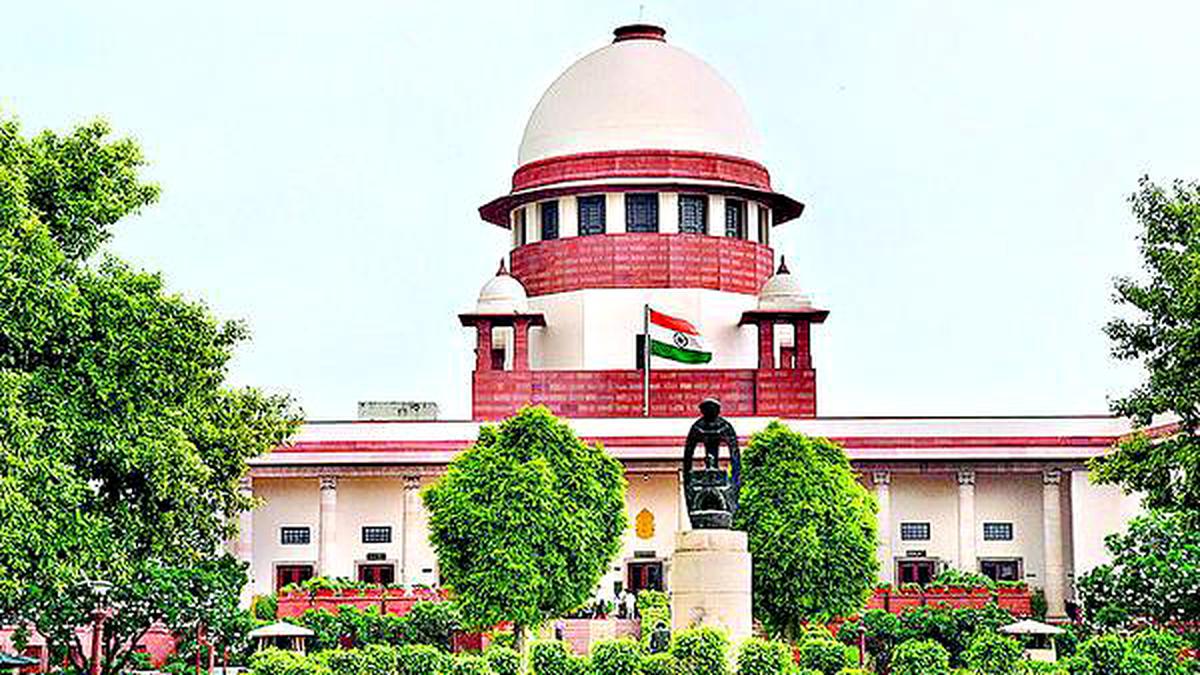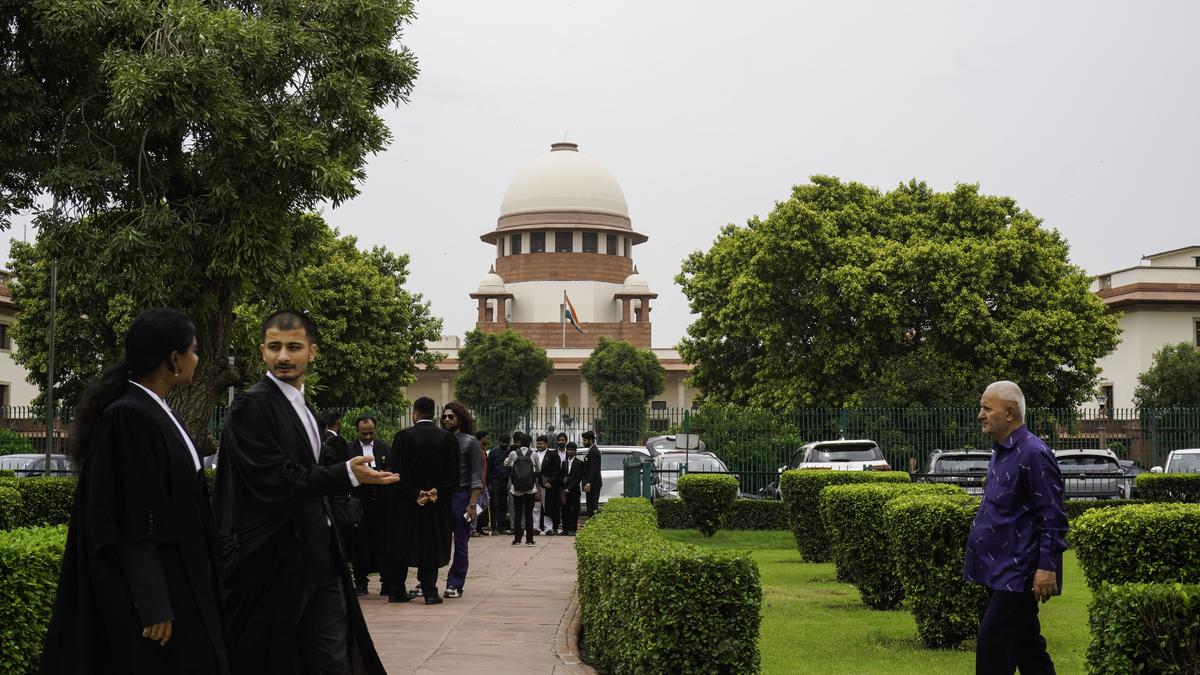
New Delhi: The Supreme Court refused to entertain a petition challenging the income tax exemption given to Scheduled Tribes residing in specified north-eastern states and certain other notifiable tribal areas.The petitioner, Ashwini Kumar Upadhyay, had sought a direction to the Centre to implement a creamy layer system in tax exemption for STs in those areas to ensure that benefit is given to only poor individuals, not the rich and elite class. The blanket tax exemption, without setting any upper income limit, is manifestly arbitrary, irrational and violates various provisions of the Constitution, he argued.However, a bench comprising chief justice of India (CJI) Surya Kant and justice V Mohana gave liberty to the petitioner to approach the Centre and the relevant parliamentary committee on the issue."It seems to us that the relief sought by the instant petition essentially involves formulation/revision/amendment of legislative/public policies. This court may not, therefore, be an appropriate platform for the aforesaid purpose at this stage. The petitioner may approach the Parliamentary Committee by way of a comprehensive petition," the court said.The CJI said Parliament had constituted a Committee on Petitions, before which citizens could seek enactment, amendment or repeal of laws. "The petitioner, if so advised, may approach the committee on petitions, constituted under Rule 306 of the Rules of Procedure and Conduct of Business in Lok Sabha, by way of a comprehensive petition," he said.Similarly, the court said the petitioner shall be at liberty to send a copy of the writ petition, as a representation, to the finance ministry, north-eastern states as well as other authorities concerned.
Supreme Court rejects plea challenging Income Tax break to STs in North East
The Supreme Court has declined to hear a petition questioning the income tax exemption for Scheduled Tribes in certain north-eastern states. The court suggested the petitioner approach the Parliamentary Committee on Petitions or the Finance Ministry. This move allows citizens to seek changes in laws through appropriate channels.
261 words~1 min read