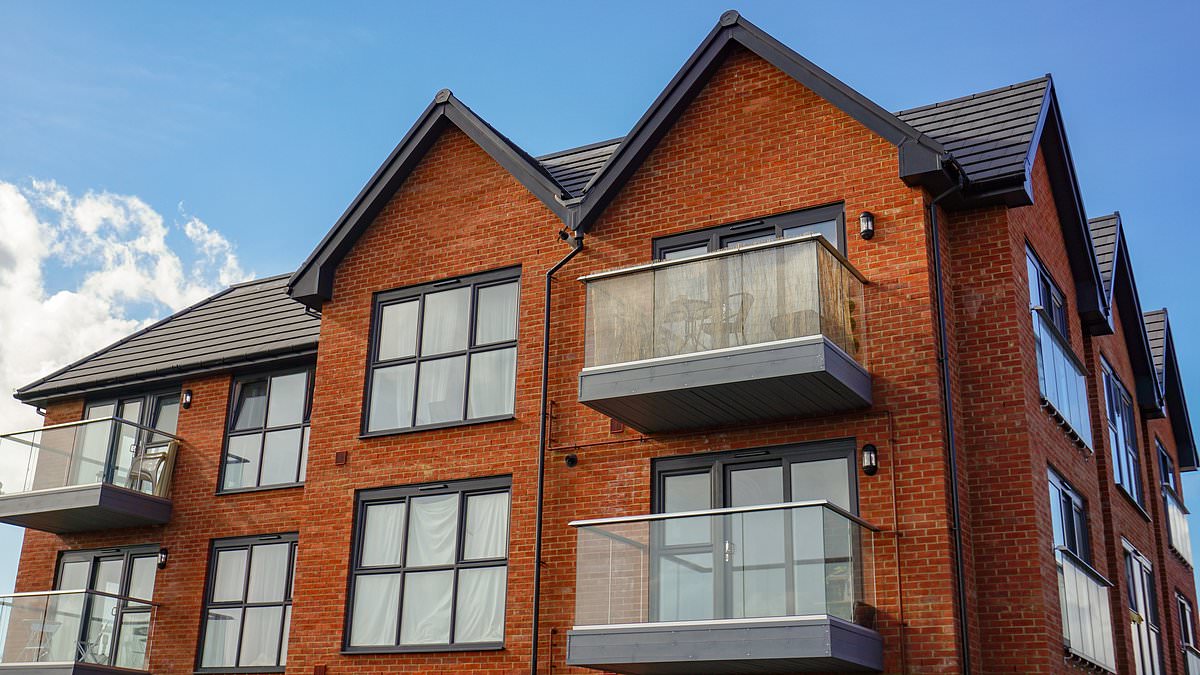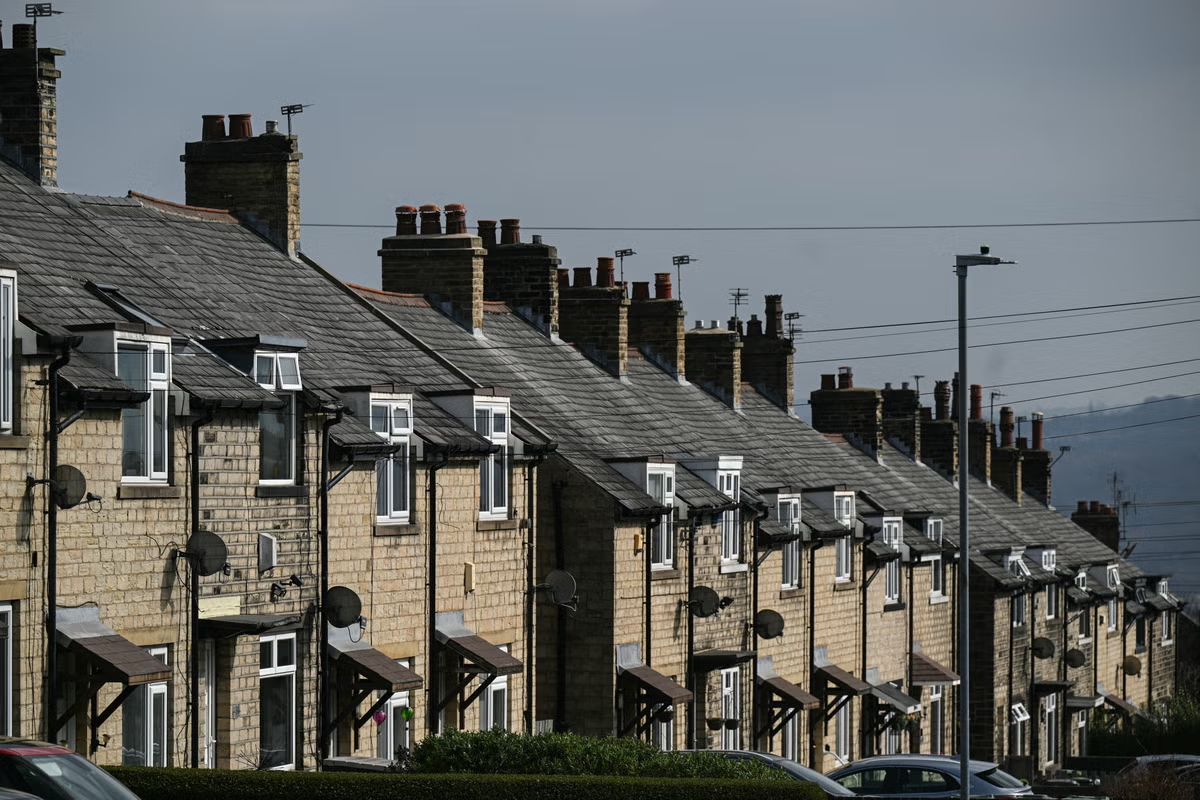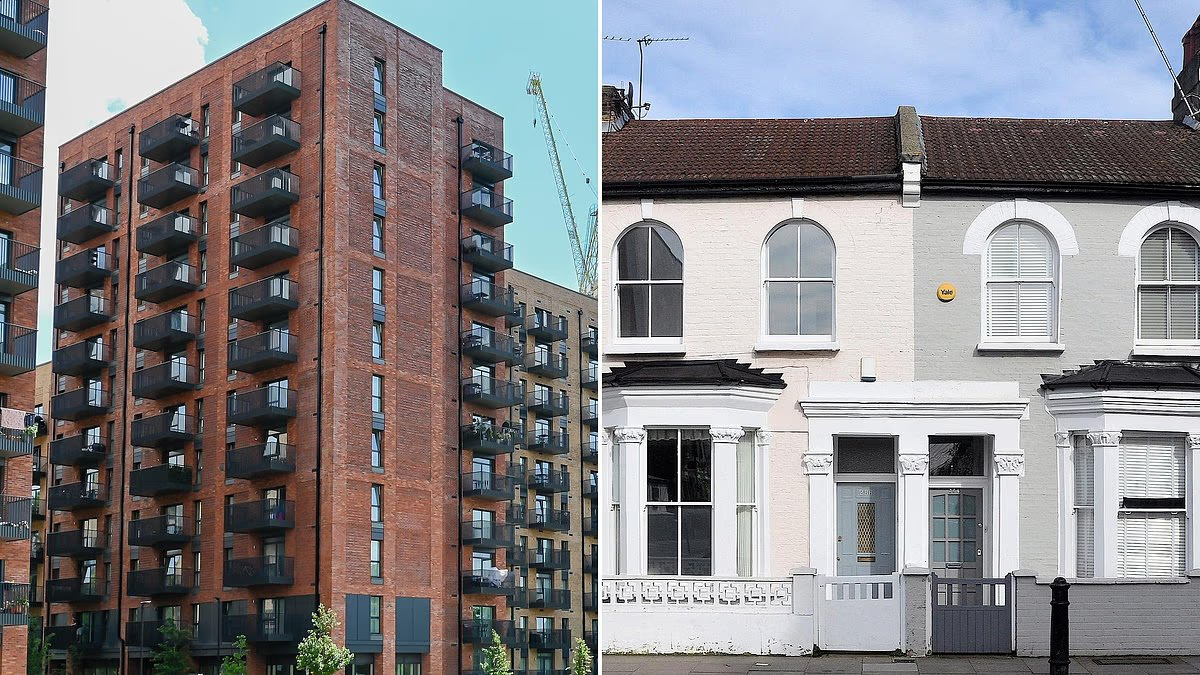
The average house costs 1.7 times the price of a flat in the widest cash gap seen in at least 30 years, according to a property website.Zoopla said that the average price of a house has increased by 43% since 2016, while the typical value of flats has seen a 10% uptick.The difference in the pace of the price increases means the average house now costs 1.7 times the price of a typical flat, up from a multiple of 1.3 times a decade ago.The growing gap could make life tougher for aspiring “second steppers” who have previously bought a flat as their first home and are now looking for a house in order to get more space.Buyers can typically expect to pay £327,000 for a house, £134,000 more than the average price of a flat at £193,000.Zoopla said that, outside London, the average gap is even wider – a house now typically costs 2.3 times the price of a flat, up from 1.8 times in 2016.But in Scotland, the ratio has barely changed in a decade. The average house there is priced at 1.9 times that of a flat, which is similar to the 1.8 multiple seen in 2016.Looking at England, the flat-house price gap is widest in the Midlands and northern regions, where the relative affordability of a house means some first-time buyers skip flats entirely, Zoopla said.Get a free fractional share worth up to £100.Capital at risk.Terms and conditions apply.Go to websiteADVERTISEMENTGet a free fractional share worth up to £100.Capital at risk.Terms and conditions apply.Go to websiteADVERTISEMENTIn the West Midlands, a house typically costs 2.5 times a flat, the highest ratio of any English region, it added.Zoopla used its house price index to make the calculations and its records go back 30 years.Richard Donnell, executive director at Zoopla, said: “Buyers who invest time to research and understand the system and get support can take advantage of the gap between flat and house prices.“A well-managed building with a long lease and stable service charges is a very different proposition from a property with less clarity on service charges and a short lease.”Jen Lloyd, head of mortgage products and propositions at Skipton Building Society, said: “After years of saving a sizeable deposit, many buyers feel more established and are purchasing with longer-term plans already in mind – thinking about a growing family or pets.“They are choosing a home they can truly settle into instead of a flat that they anticipate outgrowing quickly.”Nathan Emerson, chief executive at property professionals’ body Propertymark, said: “Flats continue to offer an important and often more affordable route into homeownership, particularly for first-time buyers.“However, purchasers are increasingly factoring in leasehold arrangements, service charges, building safety considerations and other ongoing costs when making decisions.“The contrast between Scotland and England is particularly noteworthy.“The relative stability in Scotland suggests that simpler ownership structures can help support buyer confidence and maintain demand for flats over the longer-term.“These findings also highlight the significant regional differences that exist across the UK housing market.“While affordability remains a challenge in London and parts of southern England, many areas across the Midlands, the North of England and Scotland continue to offer realistic opportunities for people looking to get onto the property ladder.“Looking ahead, reforms designed to improve transparency and simplify ownership arrangements could help strengthen confidence in the flats market and support greater housing mobility for future buyers.”Here are the average prices of flats, followed by the average prices of houses, followed by the house-to-flat price ratio in 2026, according to Zoopla:London, £416,000, £809,000, 1.9South East, £207,000, £480,000, 2.3Eastern England, £186,000, £396,000, 2.1South West, £174,000, £368,000, 2.1West Midlands, £120,000, £296,000, 2.5East Midlands, £113,000, £264,000, 2.3North West, £120,000, £273,000, 2.3Yorkshire and the Humber, £104,000, £250,000, 2.4North East, £86,000, £202,000, 2.3Wales, £116,000, £248,000, 2.1Scotland, £118,000, £223,000, 1.9Northern Ireland, £139,000, £223,000, 1.6
Gap between flat and house prices is widest for at least 30 years, say experts
The growing cash gap could make life tougher for aspiring ‘second steppers’ trying to move from a flat to a house.
634 words~3 min read