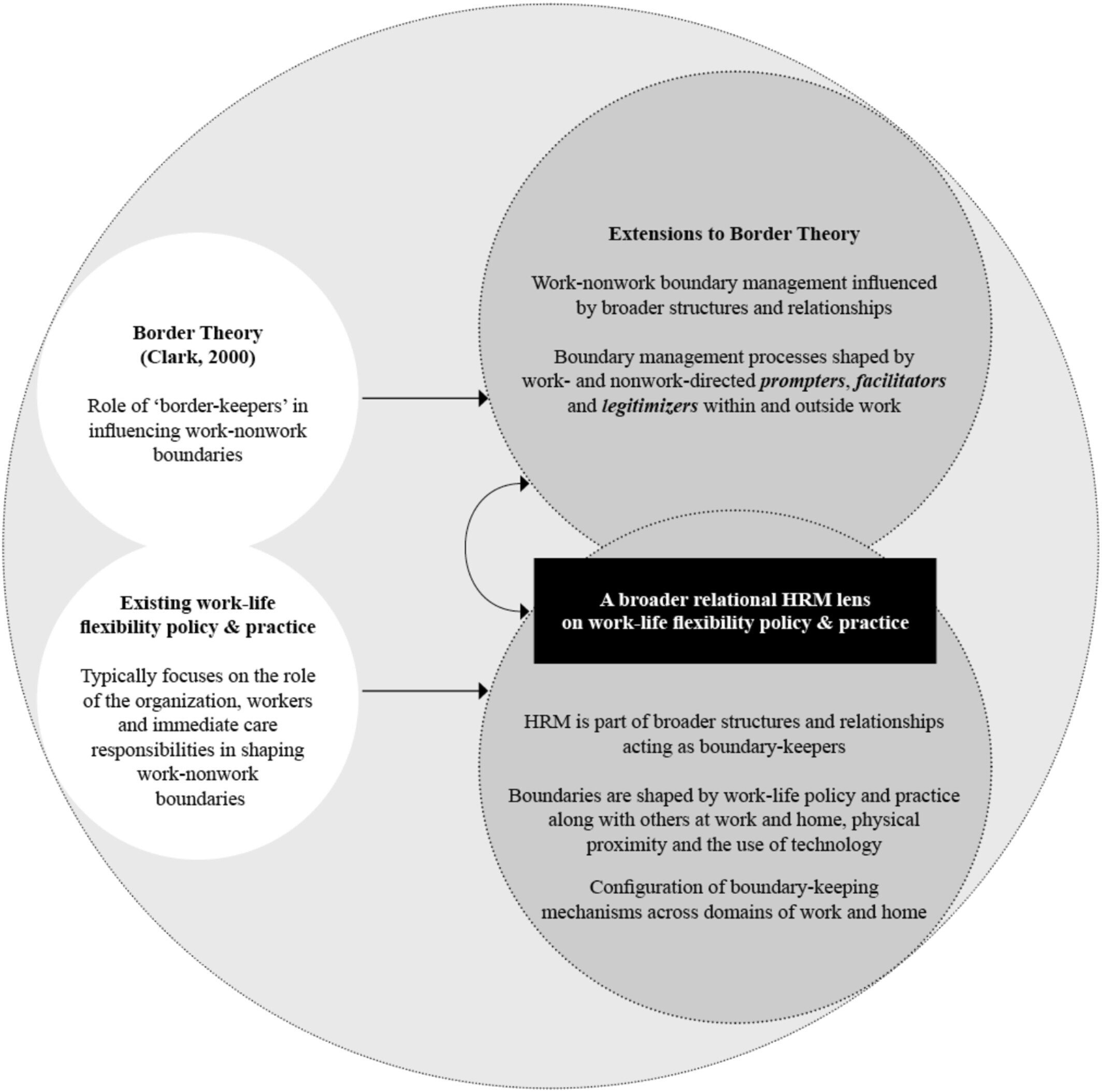
A cross-domain perspective on the varied roles of boundary-keepers in shaping work–nonwork boundaries. Credit: Human Resource Management (2026). DOI: 10.1002/hrm.70081
New research from the University of St. Andrews is calling on employers to rethink flexible-working policies, warning that current approaches fail to reflect increasingly blurred boundaries between work and personal life.
As hybrid and remote working become more common and household structures evolve, simply offering flexibility is not enough. The study finds that whether employees can truly "switch off" depends less on the existence of formal policies and more on how those policies function in practice.
Led by Dr. Giulia Giunti of the University of St. Andrews Business School and published in Human Resource Management, the research draws on "border theory"—the idea that work and nonwork are distinct domains that individuals navigate daily. The study identifies three key mechanisms that shape whether people can disengage from work: prompting employees to stop, enabling them to do so, and legitimizing time away.
However, these mechanisms rarely align. A policy may encourage staff to take leave, while heavy workloads prevent it. Others may support caregiving but overlook leisure, social or personal needs. When these mechanisms are misaligned, support appears robust on paper but fails in reality.