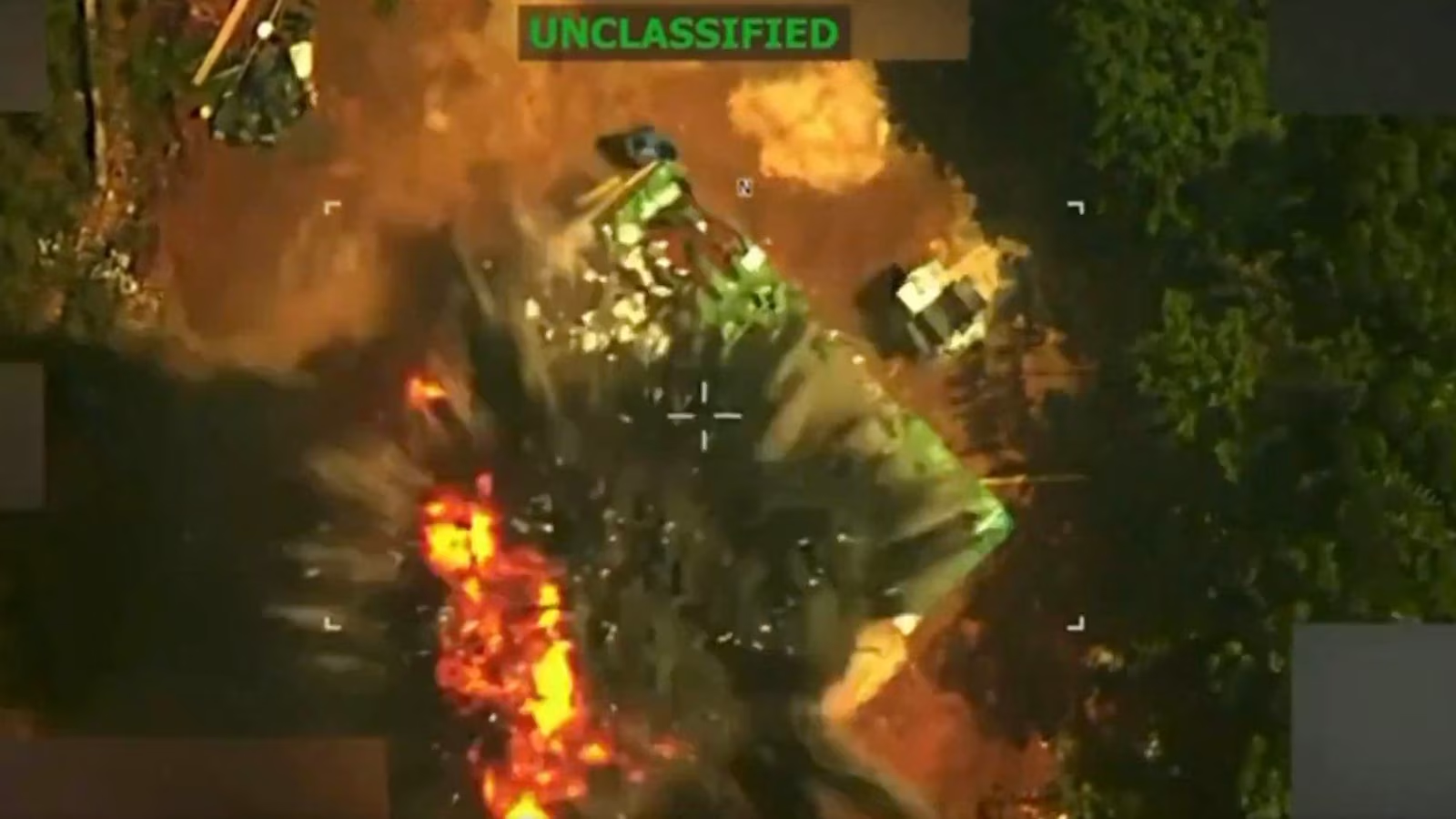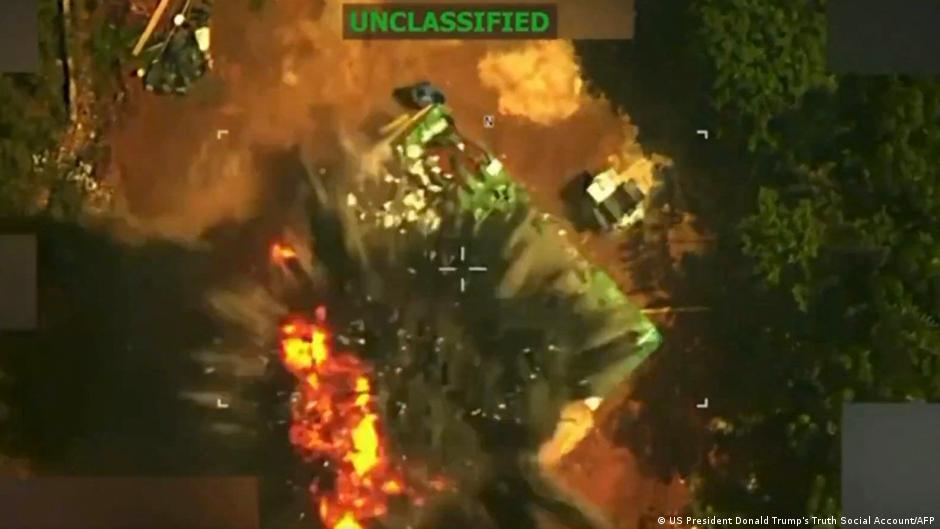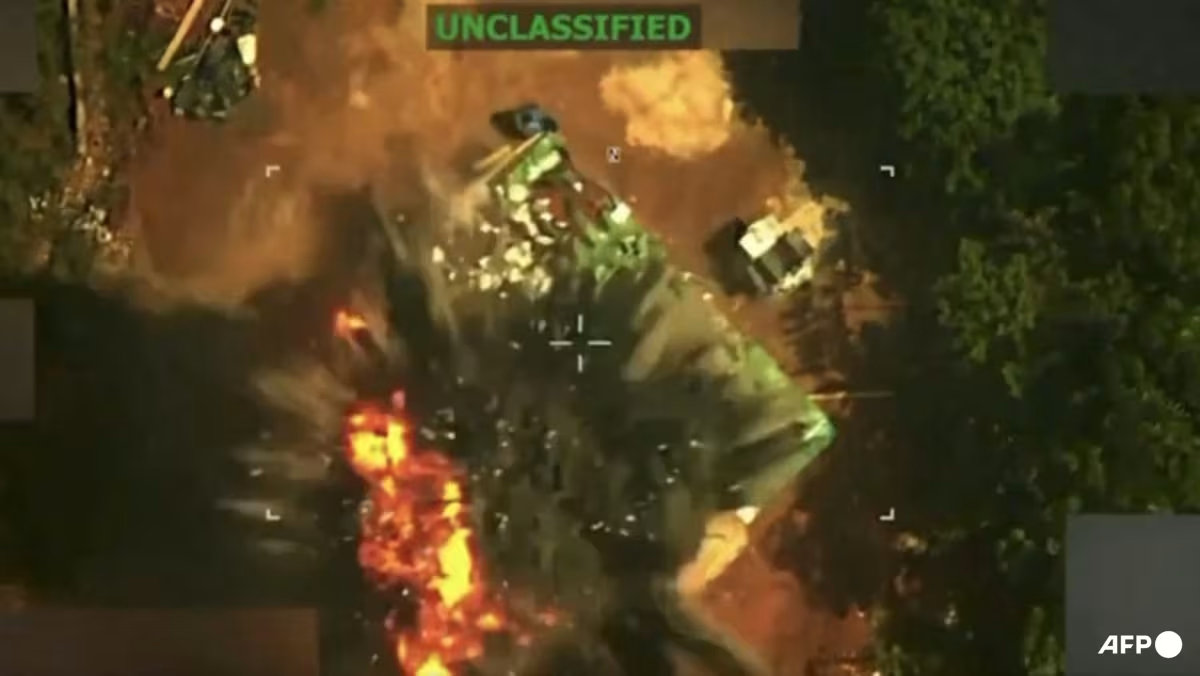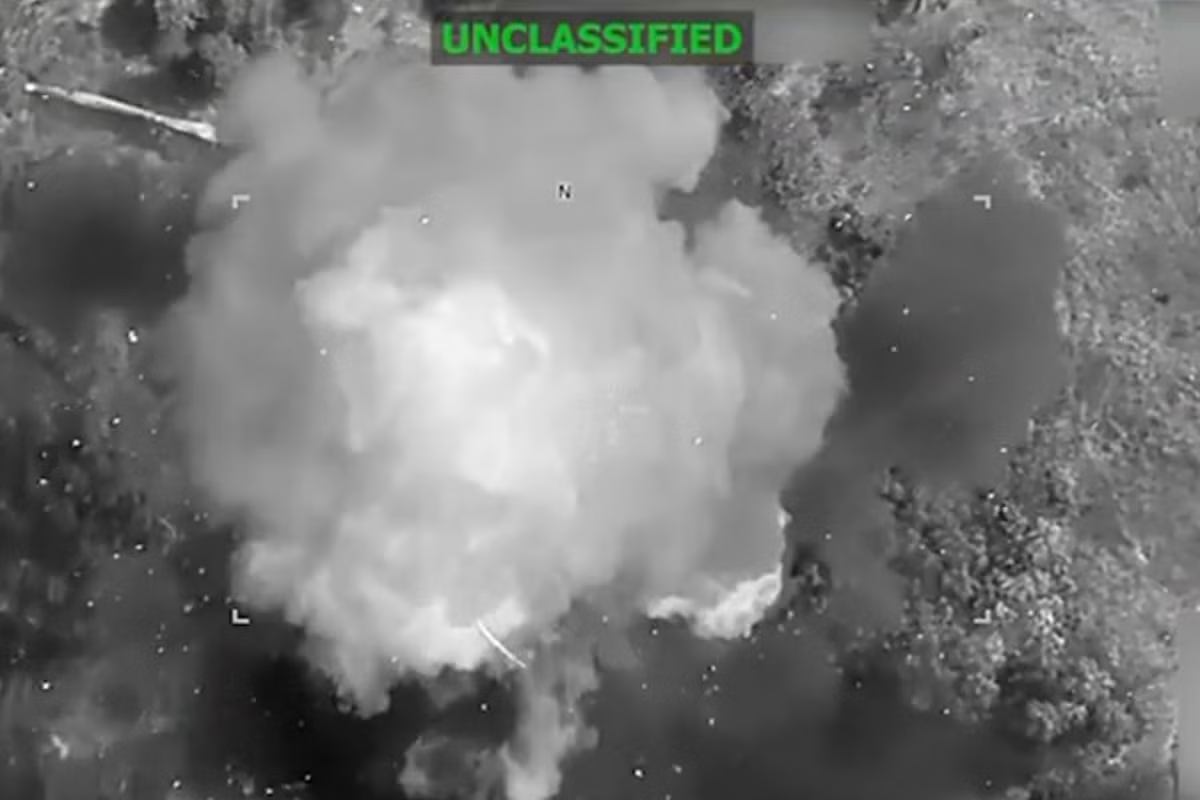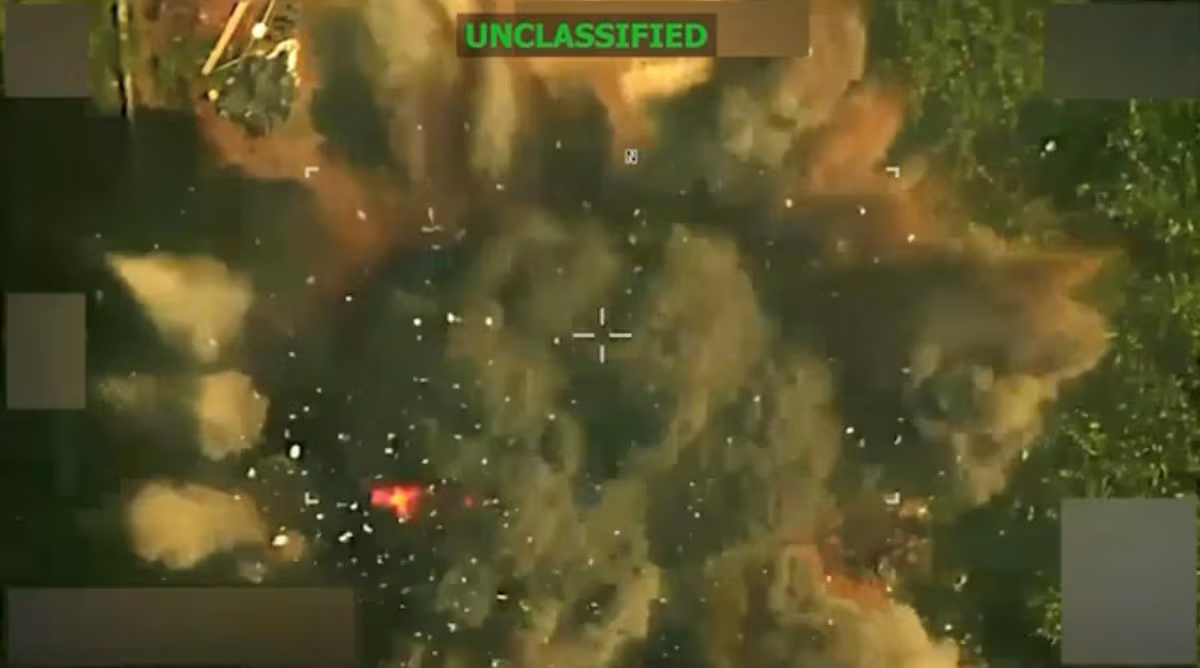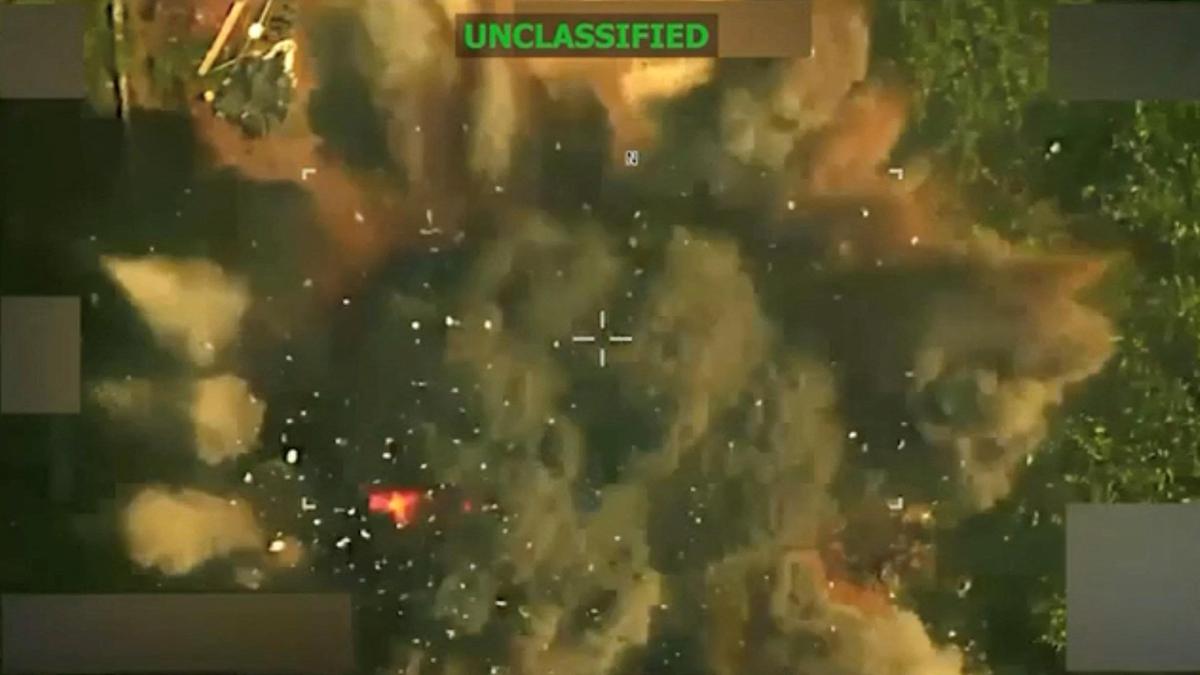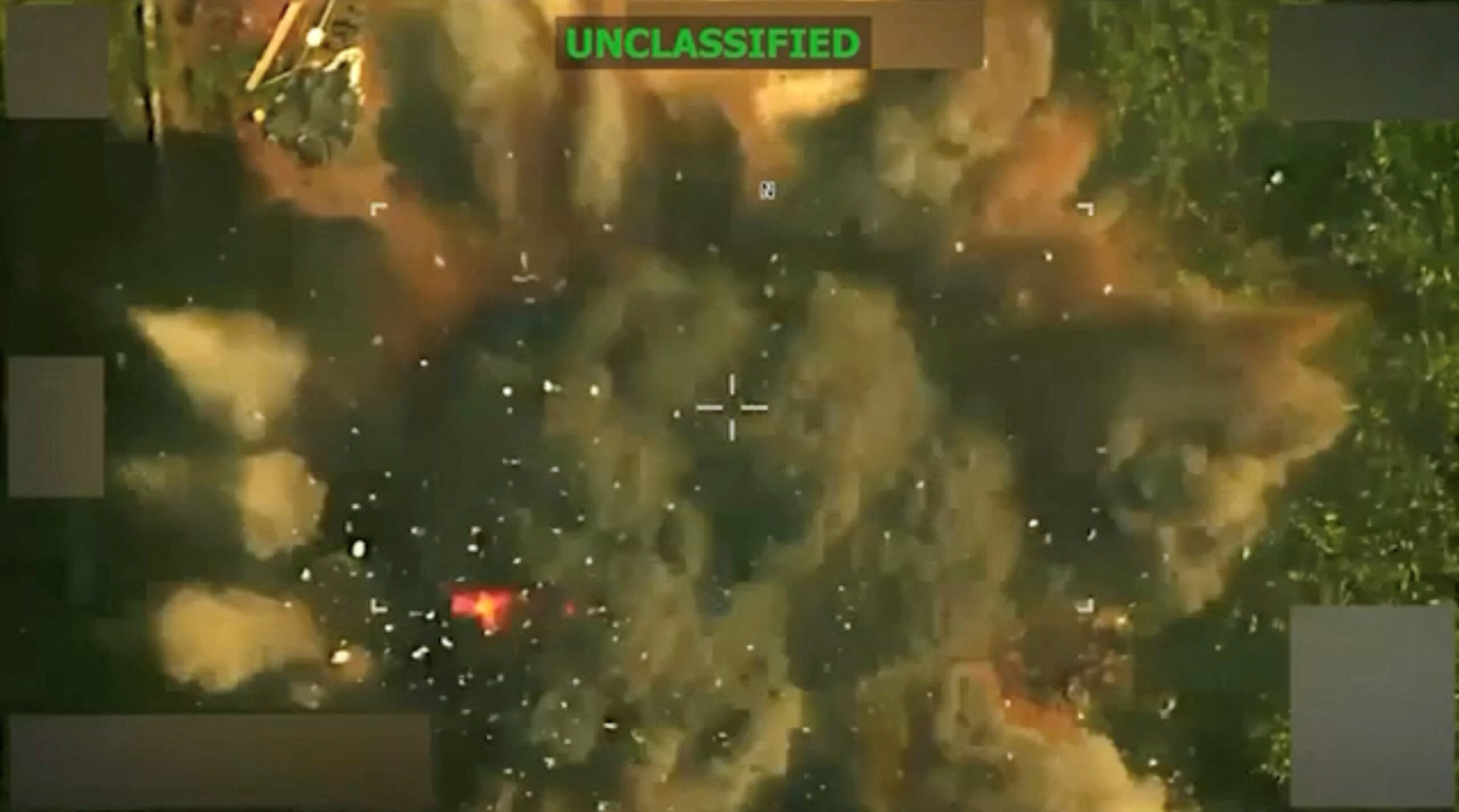
WASHINGTON—A satellite feed with “Unclassified” stamped at the top of the screen shows a building with a green tin roof. The camera circles. Then a missile enters from the bottom left corner. A massive explosion, billowing smoke, particles flying everywhere.
This video showed the June 12 drone strike on Hector Rusthenford Guerrero, alias “Niño Guerrero,” leader of Tren de Aragua, the Venezuelan gang that has become one of the most infamous transnational criminal organizations in the hemisphere.
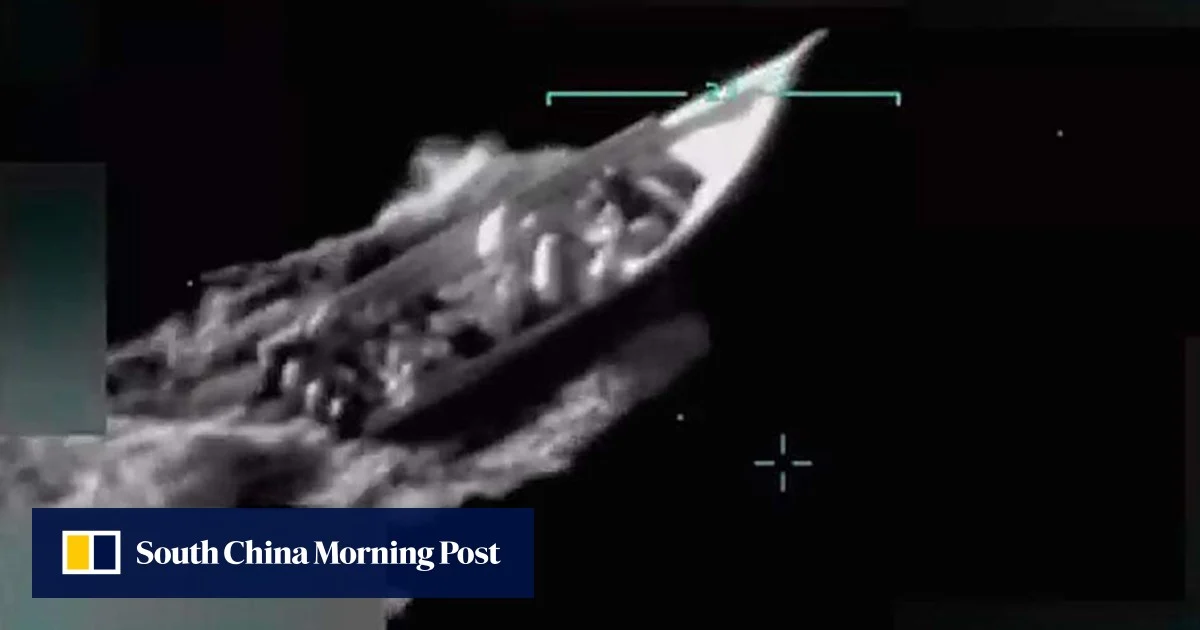
Similar videos but on the high seas have become somewhat commonplace in the past year. US President Donald Trump, Secretary of War Pete Hegseth, and US Southern Command have shared more than sixty videos of drone strikes on boats allegedly transporting drugs as part of Operation Southern Spear.
The videos have become emblematic of the Trump administration’s operational doctrine for its security approach to Latin America: a pairing of deadly force with public proof, increasingly carried out with the cooperation of host governments on their own soil.
The strike on Niño Guerrero, however, marks an escalation of that doctrine. It was reportedly the first time the US has used a missile to eliminate a gang leader in Latin America, and the action was conducted “in full collaboration with Venezuelan security forces,” according to Hegseth, and confirmed by the interim Venezuelan government. That detail matters as much as the strike itself. For years, criminal organizations in Venezuela counted on state protection as their license to operate. That assumption now seems outdated.