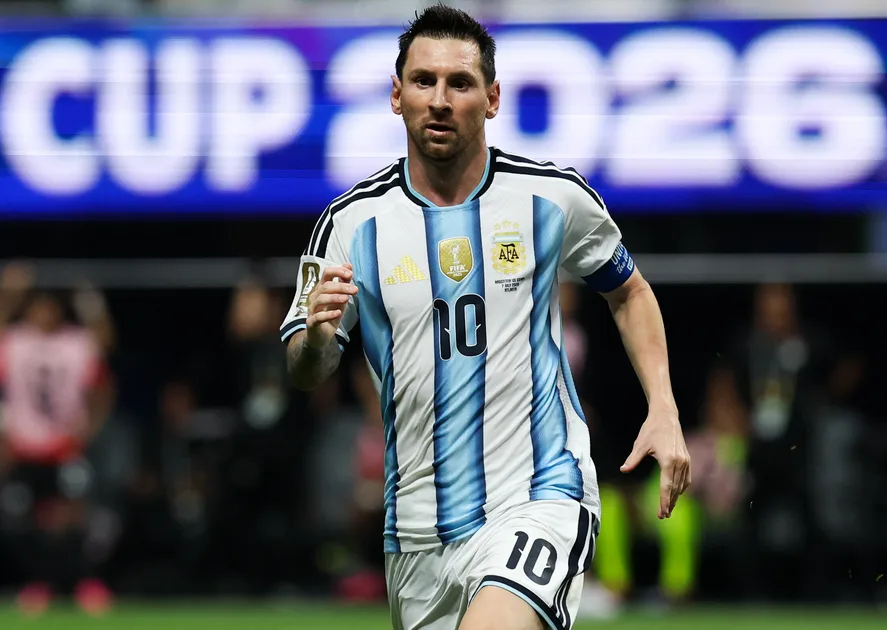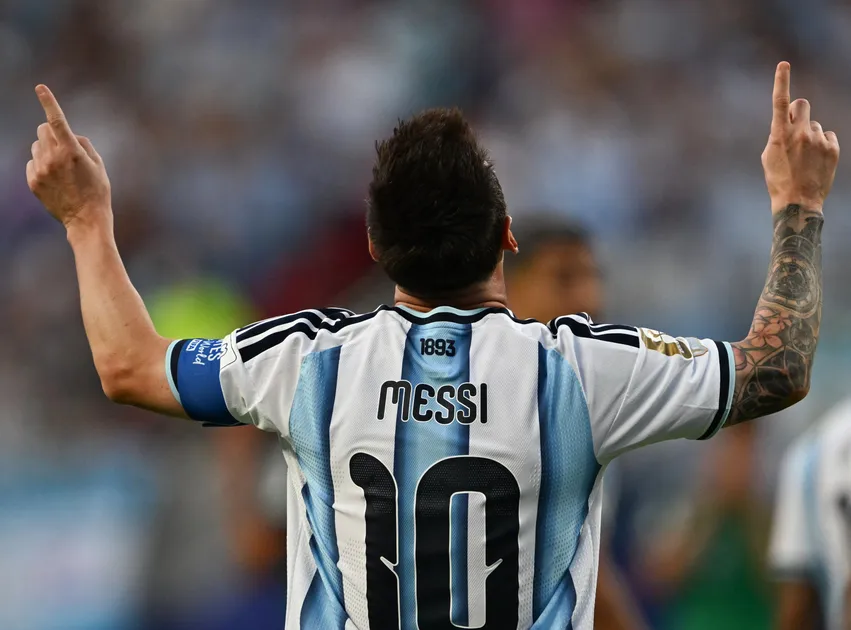
The 2026 FIFA World Cup kicked off last week — and HuffPost is live-blogging every twist, turn and controversy of what’s widely shaping up to be the most political soccer tournament of all time.From the action on the pitch to the potential chaos off it, the storylines are already piling up: Iran’s tough journey to the competition amid Donald Trump’s war, the president’s close relationship with FIFA’s Peace Prize-awarding President Gianni Infantino, and simmering tensions between the U.S. and fellow host nations Mexico and Canada fueled by Trump’s tariffs and divisive rhetoric.Trump’s travel bans have kept some fans and officials out; there’s been fury over soaring ticket prices, and Immigration and Customs Enforcement agents could be present at games as the Trump administration continues its anti-immigration crackdown.Not to mention extreme heat concerns that scorched everyone involved the last time the U.S. hosted the tournament, some 32 years ago, in 1994.President Donald Trump, left, received the FIFA Peace Prize from FIFA President Gianni Infantino, right, in December.Andrew Harnik via Getty ImagesOn the field, the men’s national teams from 48 countries are competing in a record 104 matches across the three host nations in what will be the biggest World Cup in history.The U.S. beat Paraguay 4-1 in Los Angeles on June 12 and will play Australia in Seattle on June 19 and Turkey back in Los Angeles on June 25, in the group games, before potentially competing in the later knockout rounds.The final will be held on July 19 at MetLife Stadium, which is being temporarily rebranded as the New York/New Jersey Stadium for the competition.Current European champions Spain are favorites to lift the trophy. Defending champions Argentina, of Inter Miami’s Lionel Messi fame, along with France, England and Brazil, are also expected to be in the mix.Check out the full games schedule on the FIFA website.Follow along with our coverage below:'Some Difficult Days': Messi Addresses Emotional Moment After First World Cup GoalJune 17 (Reuters) - An emotional Lionel Messi was wiping his tears with his shirt after scoring Argentina's first goal against Algeria in the World Cup, a strike that marked the beginning of a memorable performance where he scored a hat-trickin a 3-0 win.But while his first World Cup treble had many Argentina fans in tears of joy, Messi said he was crying for a personal reason not connected with the sport."Why did I cry? It was something completely unrelated to football. I went through some difficult days," said Messi, who is playing in a record sixth World Cup, after Tuesday's match."But I'm grateful to the entire delegation and my teammates because they were always by my side, giving me a lot of strength to help me get through it."A source close to Messi's family told Reuters his father was dealing with health issues.Local media reported that his father was in hospital in Argentina and that the situation had worried the player in recent weeks.Messi, who turns 39 next week, has equalled Miroslav Klose's record of scoring 16 goals at World Cup tournaments.Argentina will continue their title defense with a Group J game against Austria on Monday. (Reporting by Chiranjit Ojha in Bengaluru and Buenos Aires bureau; Editing by Toby Chopra and Ken Ferris)Latest Live UpdatesDR Congo Holds Portugal To Draw In First World Cup In Over Half A CenturyHOUSTON, June 17 (Reuters) - Portugal and their talisman Cristiano Ronaldo were left frustrated after being held to a 1-1 draw by Group K rivals Democratic Republic of Congo in their World Cup clash in a sodden Houston on Wednesday.Portugal took the lead inside six minutes when Pedro Neto crossed for Joao Neves to head home from 15 meters as one of the pre-tournament favorites made the perfect start, though it would be their only effort on target in the game.DR Congo, appearing at their first World Cup since 1974, grew into the game and were level deep into added time at the end of the first half when Yoane Wissa was left unmarked from a corner to head in at the back post.Cedric Bakambu struck the post for the Congolese in the second period, while Ronaldo twice fired wide from close range as he appeared at a sixth World Cup, a record he shares with Argentina’s Lionel Messi.(Reporting by Nick Said. Editing by Ken Ferris.)Ex-CBS Talk Show Host Gave World Cup Star A New Way To Celebrate Goal. He Used It.French star Kylian Mbappé didn’t need advice on how to score goals at the World Cup on Tuesday. He scored two in France’s 3-1 victory over Senegal.But he did take the recommendation of former “Late Late Show” host James Corden on how to celebrate. Read more below.South Africa Midfielder Hit With Multi-Match BanATLANTA, June 17 (Reuters) - South Africa midfielder Themba Zwane has had his suspension after being sent off in the World Cup opener against Mexico last Thursday extended to a three-match ban, FIFA said on Wednesday.Zwane was dismissed for striking defender Roberto Alvarado's face late in the game, which Mexico won 2-0 at the Azteca Stadium. South Africa finished the match down to nine men after midfielder Sphephelo Sithole had been dismissed earlier.The 36-year-old Zwane, who had come on as a substitute just over 20 minutes before, looked bemused after being red-carded by Brazilian referee Wilton Sampaio, having tried to get past Alvarado on the edge of the Mexico box. The two made contact before Zwane’s hand struck Alvarado in the face.After the match, South Africa coach Hugo Broos said he could accept the sending off of Sithole, who denied a goalscoring chance to Mexico on the edge of the area, but thought Zwane’s dismissal was contentious."The second red card we can discuss," Broos said at the post-match press conference. "It was the Mexican player who was blocking my player. But it's the position of the referee, and we have to accept it also, but I think it was too soft to give that as a red card."The first red card, you have to accept it. Their player was going alone to the goal and Yaya (Sithole) fouled him, so that I can understand."Dismissals at the World Cup earn the offender an automatic one-match ban, but in the case of foul play it can be extended by the FIFA disciplinary committee.South Africa, who play the Czech Republic in Atlanta on Thursday in their second Group A game, can appeal, FIFA said.(Writing by Mark Gleeson in Atlanta; Editing by Ken Ferris)Ivory Coast Forward Caught Up In Betting ProbePARIS, June 17 (Reuters) - Ivory Coast World Cup forward Elye Wahi is at the center of an investigation into suspected sports corruption after unusual betting patterns were detected around a yellow card he received in a Ligue 1 match last month, according to statements from French authorities and the French Professional Football League (LFP).Wahi, who was not immediately available to comment, was not named as a suspect.A spokesperson for the Marseille prosecutor's office told Reuters a 23-year-old Ligue 1 player was taken into custody on May 29 as part of an investigation into suspected organized fraud, organized sports corruption, handling stolen goods and money laundering.The LFP said it had alerted authorities after betting monitoring partners detected an unusually high volume of wagers placed internationally on Wahi receiving a yellow card during Nice's final-day league match against Metz on May 17.The LFP said it had not initiated disciplinary proceedings and would make no further comment.Reuters was not immediately able to reach the Ivory Coast team or Wahi's agent for comment.The Athletic reported on Wednesday that Wahi had been arrested by French police on May 29, little more than two weeks before Ivory Coast opened their World Cup campaign with a 1-0 win over Ecuador in Philadelphia.Sports betting is well-established in France, which made online wagering legal 16 years ago, shortly before the 2010 World Cup.The U.S., which is co-hosting the largest-ever World Cup with Canada and Mexico this year, has seen a rapid expansion of sports betting across the country since the Supreme Court paved the way for states to legalize the practice in 2018.(Reporting by Marc Leras, additional reporting by Amy Tennery and Nick Said, editing by Julien Pretot and Ken Ferris)The World Cup Just Broke A Decades-Old Attendance RecordTuesday's four World Cup matches drew a combined 281,223 fans, breaking the 32-year-old single-day tournament record.The previous mark of 277,070, also for four matches, was set in the United States on June 28, 1994.Tuesday's total came on an action-packed day featuring matches between France and Senegal (80,545 fans in East Rutherford, N.J.), Argentina and Algeria (69,045 in Kansas City, Mo.), Austria and Jordan (68,527 in Santa Clara, Calif.) and Iraq and Norway (63,106 in Foxborough, Mass.)The total attendance through six days sits at 1,309,652 (65,483 average), putting the tournament on pace to smash the 1994 cumulative attendance record of 3.5 million, according to FIFA."Wow! 281,223 fans in FIFA World Cup stadiums today -- the highest attended day in the history of the competition!" said Gianni Infantino, the FIFA president, in a statement."16 June 2026 will go down in FIFA World Cup history! I cannot thank our fans enough for bringing color, atmosphere and emotions to this tournament. The most inclusive FIFA World Cup 2026 continues to show just how much our game is loved and how Football Unites The World!"Tuesday's highlights included a hat trick from Argentina legend Lionel Messi and two goals apiece from superstars Kylian Mbappe of France and Erling Haaland of Norway.— Field Level MediaMexican Fans Say They Feel Sidelined By World CupMEXICO CITY, June 17 (Reuters) - Born in 1986, the last time Mexico hosted a World Cup, Eduardo Marin likes to joke that he’s measured his life not in years, but in soccer tournaments.In 1994, as a young kid, he watched with his family as Mexico crashed out on penalties to Bulgaria. In 2006, by then at college, Marin recalls the heartbreak of Argentina's Maxi Rodriguez smashing home a volley from outside the box in extra time, knocking out one of the best Mexico teams in recent memory. And in 2018, in his early 30s, Marin and eight friends painted a bus in Mexico’s green, white and red and drove from Germany to Russia in support of 'El Tri.' The bus appeared on TV channels across the globe and secured the friend group, for a moment, viral fame.Now, the World Cup has come to Mexico, but Marin is staying home.He's not attending a single game, and the bus is gathering dust. Ticket prices, he said, have soared beyond reach, and the atmosphere feels different from the grassroots, anything-is-possible spirit he remembers from his youth.“It used to be for the people,” he said, describing what he sees as a shift toward a more elite event similar to Formula One racing.Marin said the total cost for his trip to Russia, including tickets to three games, was about $5,000. For this tournament, some fans paid that for a single ticket to Mexico's opening match against South Africa.Across Mexico, Marin's sentiment is widely shared. Despite the World Cup returning to their country for the first time in four decades, many in Mexico said they feel excluded, priced out of stadiums, forced to pay for expensive TV subscriptions and constrained by strict licensing rules that have limited the number of bars — particularly in less well-off areas — showing the games.Tensions have also flared over attempts to beautify host cities for visiting fans. In Mexico City, residents criticized the painting of axolotls, the cute native salamander, on everything from murals to train cars. Around Monterrey, authorities erected walls along roads leading to the stadium and airport, blocking poor neighborhoods from view. “They don’t want anyone to see us,” said San Juanita Barrera, 71, a longtime resident of the Nuevo San Rafael neighborhood.The Nuevo León state government did not immediately respond to a request for comment.SIDELINED AT HOMEMexico will host only 13 of the 104 World Cup matches, with the lion's share played in the United States. For lifelong fans like Ricardo Arafat Garcia Tagle, a 42-year-old graphic animator from the working-class Mexico City neighborhood of Coapa, that imbalance stings."When they made it 13 matches, it felt insulting," he said at his apartment as he watched the group stage tie between Brazil and Morocco. "Of the three countries — Mexico, the United States and Canada — this is the football nation!"The cost of watching games at home has also soared. Unlike past tournaments, widely available on free-to-air television, viewing many matches now requires a paid subscription.At the grounds, things are even more out of reach. For the World Cup opener in Mexico City, fans at the Azteca stadium said they paid between $3,000 and $5,000 for a ticket. That's nearly 10 months' wages of a median Mexican salary. FIFA has defended ticket prices, saying they are in line with other major sporting events. Mexico's next match is June 18 against South Korea in Guadalajara.Mexico's government, when asked about high ticket prices, has said free, public screenings have been put on around the country.LICENSING LABYRINTHFor businesses, barriers are steep too.At Salon Casino, a historic cantina in the Doctores neighborhood of Mexico City, manager Luis Bernot said preparing his bar for the tournament has meant navigating a maze of restrictions imposed by FIFA, the governing body for international soccer.The bar has long relied on sports to draw crowds, but this year, Bernot said, his team had to repeatedly redesign promotional materials as new rules emerged, including bans on using terms such as “World Cup” or images associated with the tournament.Outside the cantina, a banner now reads: “Soccer is lived and drunk,” alongside a soccer ball covered in international flags, a careful use of vocabulary and imagery not prohibited by rights holders. “They want to profit from everything,” Bernot said of FIFA.The fees for bars and restaurants to broadcast the entire World Cup range from about 4,000 Mexican pesos ($233) for businesses with fewer than five tables to 22,000 pesos for bigger establishments with more than 20 tables, according to a Televisa spokesperson.In a response to Reuters questions, the spokesperson said TelevisaUnivision is broadcasting 32 matches for free, including all Mexico games and the final. The spokesperson added that FIFA had "significantly increased the cost of broadcasting rights compared to previous World Cups."Mexico's restaurant organization CANIRAC has warned in a notice on its website that members must pay for a commercial license and that using personal subscriptions for public viewing could lead to fines or sanctions.At Las Delicias de la Obrera, a hole-in-the-wall place in Mexico City's Obrera neighborhood, manager Julio Mendoza said paying for a commercial TV package was never an option. The restaurant will show only the small number of games available for free.On a Saturday evening, while Haiti played Scotland, a TV showed a telenovela instead. Mendoza had hoped the World Cup would boost business, particularly by attracting tourists, but he's been disappointed. "It's not great," he said, as he served up bowls of pozole, a rich Mexican soup.For Marin, who traveled around the world watching Mexico play, it's hard to accept he won't be going to any games in his home country. But it's not just him missing out, he said. The whole tournament has lost something."I feel like it just doesn't have the same energy anymore," he said. "It's not the same."($1 = 17.2143 Mexican pesos)(Reporting by Cassandra Garrison and Diego Delgado in Mexico City; additional reporting by Laura Gottesdiener in Monterrey and Emily Green in Mexico City; editing by Stephen Eisenhammer and Padraic Cassidy)New FIFA Rule Is Being Blamed For Killing Momentum In World Cup MatchesATLANTA (AP) — Curaçao fans went wild. The Germans were in shock.Livano Comenencia had scored a goal for the smallest nation by population to ever qualify for the World Cup against four-time champion Germany.At 1-1 in Houston a famous upset looked possible.Then came the hydration break.Curaçao lost the initiative, conceding two goals before halftime in what eventually became a 7-1 defeat to the Germans.“I actually felt sorry for them,” former England striker Alan Shearer told The Rest is Football podcast. “They scored and then it was maybe 30 seconds after that it stopped. So it’s killed their momentum.”FIFA’s new hydration breaks midway through each half — a novelty for this World Cup — were introduced to help players deal with the summer heat in the United States, Canada and Mexico. But critics say they’re having unintended consequences, ruining the flow of the game and giving coaches a chance to tactically shift momentum in their team’s favor.While player welfare is a real concern with temperatures expected to exceed 90 F (32 C) in the hottest World Cup venues, some say the hydration breaks are just an excuse for broadcasters to go to commercials in the middle of the game.“We’re in America, right? So, it’s like it is a timeout,” former Ireland international Roy Keane said on The Overlap, a podcast that he co-hosts with long-time Manchester United teammate Gary Neville. “We love football because of the pace of the game ... what it’s doing is stopping the flow of the game, the momentum.”A chance for coaches to huddle with the playersRather than players merely taking on fluids, coaches have been seizing the opportunity to pass on in-game tactical instructions that would normally not be possible. And early indications are that it is having an effect.“You can use the break to tell the players what they need to improve or what is good or what they should do better,” Netherlands coach Ronald Koeman said. “So you can use it in different ways to your advantage, and this is what we will be doing.”In eight of the first 16 games there were goals scored within 10 minutes of the rehydration break.Curaçao never recovered after the restart against Germany.Morocco paid the price against Brazil in New Jersey, having dominated the game from the start and scored just before the first break. Less that 10 minutes after play resumed the game was level with Vinicius Junior equalizing.Canada, the U.S., Australia, Scotland, Sweden and Iran have all benefited with goals soon after the break.Momentum maps have shown how games have shifted after the new stoppages in play.The hydration breaks also affect the experience of fans watching at stadiums. There were boos from the crowd for the first one in the game Tuesday between Iraq and Norway in Foxborough, Massachusetts.Breaks will be implemented regardless of the weatherReferees pause the games 22 minutes into each half, with players given three minutes to rehydrate.FIFA stipulated that the breaks would occur regardless of the weather, venue or location, meaning the Spain vs. Cape Verde match in Atlanta on Monday was interrupted despite being under a roof and in an air conditioned stadium.The governing body said it was to “ensure equal conditions for all teams, in all matches.”Spain coach Luis de la Fuente said the breaks make sense in “extreme” heat conditions but questioned whether they were necessary at every match.“Pause, freshen up and continue. Tomorrow, when the temperature that we’ll have in this stadium is chill, maybe these breaks are not so needed, but we need to abide by the rules," he said.Norway coach Staale Solbakken agreed.“I can understand it when it’s like it’s been in Greensboro (North Carolina), when it’s been 35 degrees (95 Fahrenheit) and a really hot climate and there’s a bit vibration in the air – then I think it’s fine. But I don’t like it otherwise. I think it’s unnecessary," he said.Broadcasters cutting to commercialsAside from the sporting impact on games, the stoppages have been criticized for damaging the spectacle for fans, with broadcasters using the opportunity to take commercial breaks.In the United States, Fox immediately goes to commercials during the hydration breaks. Telemundo, a Spanish-language U.S. broadcaster, does not.Unlike in U.S. professional sports like baseball, basketball and football, commercial breaks have not been a common feature in soccer except during the half-time break.“Every time going to a commercial is a bit ... not really (something) that I like,” said Netherlands captain Virgil van Dijk, who watched World Cup games on TV before the Dutch began their campaign with a 2-2 draw against Japan. “I think for the neutral watchers on TV it’s also not great.”France coach Didier Deschamps, however, said this is the changing face of soccer.“It’s not two half times, it is four quarter times basically that we’ve got. This is what’s been decided and so the players and the coaches adapt to this new reality,” he said.It is not known if FIFA will implement hydration breaks at all future World Cups, but the English Football Association said it was unlikely to be in place for the European Championship, hosted by the U.K. and Ireland in 2028.___AP Sports Writers Kyle Hightower in Foxborough, Massachusetts; Ron Blum in New York, Maura Carey in Atlanta and Stephen Hawkins in Dallas contributed to this report.___James Robson is at https://x.com/jamesalanrobson___AP World Cup coverage: https://apnews.com/fifa-world-cupMother Of Breakout World Cup Star Gets Visa To Attend Next MatchThe mother of Cape Verde star goalkeeper Vozinha has been granted a visa to enter the United States in time for her 40-year-old son's next World Cup match, House Democratic Leader Hakeem Jeffries announced Wednesday.Vozinha became an early sensation of the World Cup after making key saves in a 0-0 draw with Spain, one of the tournament favorites that was expected to rout tiny Cape Verde.After the match, Vozinha said his mother had not been able to secure a visa to enter the U.S. to see him play.Jeffries said he spoke to U.S. Secretary of State Marco Rubio and “asked the State Department to do everything in their power to ensure that his mother can attend Cabo Verde’s next match.”Jeffries said all fees have been waived and travel arrangements are being made to get her to Cape Verde's next game Sunday against Uruguay in Miami.“I thank Secretary Rubio, U.S. State Department officials, the government of Cabo Verde and FIFA for working together to make this possible,” Jeffries said.Vozinha made seven saves against Spain as Cape Verde delivered a stunning World Cup debut. Afterward, Vozinha said his mother had been unable to gather the money in time to secure a visa to enter the U.S.Cape Verde is among 50 countries whose citizens face bonds of up to $15,000 to secure a U.S. visa, part of President Donald Trump’s broader crackdown on travelers from countries that officials said had high rates of visa overstays. The Trump administration last month suspended the requirement for ticket-holders from Cape Verde and four other World Cup nations, but critics said it was too late for many fans.The State Department had said it had no record of her ever applying for a visa, but that it was working on resolving the situation with Cape Verde authorities. The department said it had notified all players from World Cup countries affected by the $15,000 visa bond requirement that they and their families would be exempt from posting the bond.A person familiar with the situation said that the State Department believes that Vozinha’s mother did not apply for a visa because she did not hold a valid Cape Verde passport, but that she is now in the process of getting one.The person spoke on condition of anonymity to discuss confidential visa deliberations.___AP Diplomatic Writer Matthew Lee contributed reporting from Washington.___AP World Cup: https://apnews.com/fifa-world-cupU.S. World Cup Coach: 'American Sports Reward Losers'U.S. soccer coach Mauricio Pochettino declared Tuesday that “American sports reward losers” after being asked an innocuous question about his World Cup team’s style of play. Read more below.Announcer Removed From World Cup For Wild On-Air MistakeTurkish state broadcaster TRT has removed a commentator from its World Cup roster after he mixed up Iran and New Zealand teams. Read more below.See All Updates
'Some Difficult Days': Messi Addresses Emotional Moment After First World Cup Goal
Follow along for the latest news from the 2026 FIFA World Cup.
3,955 words~18 min read