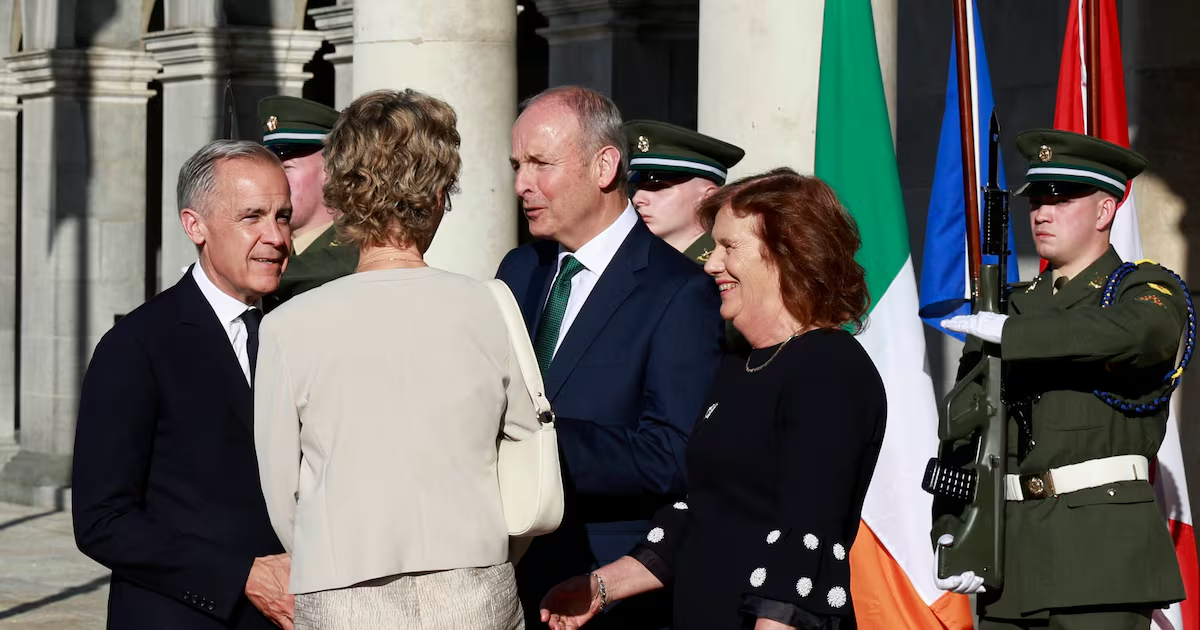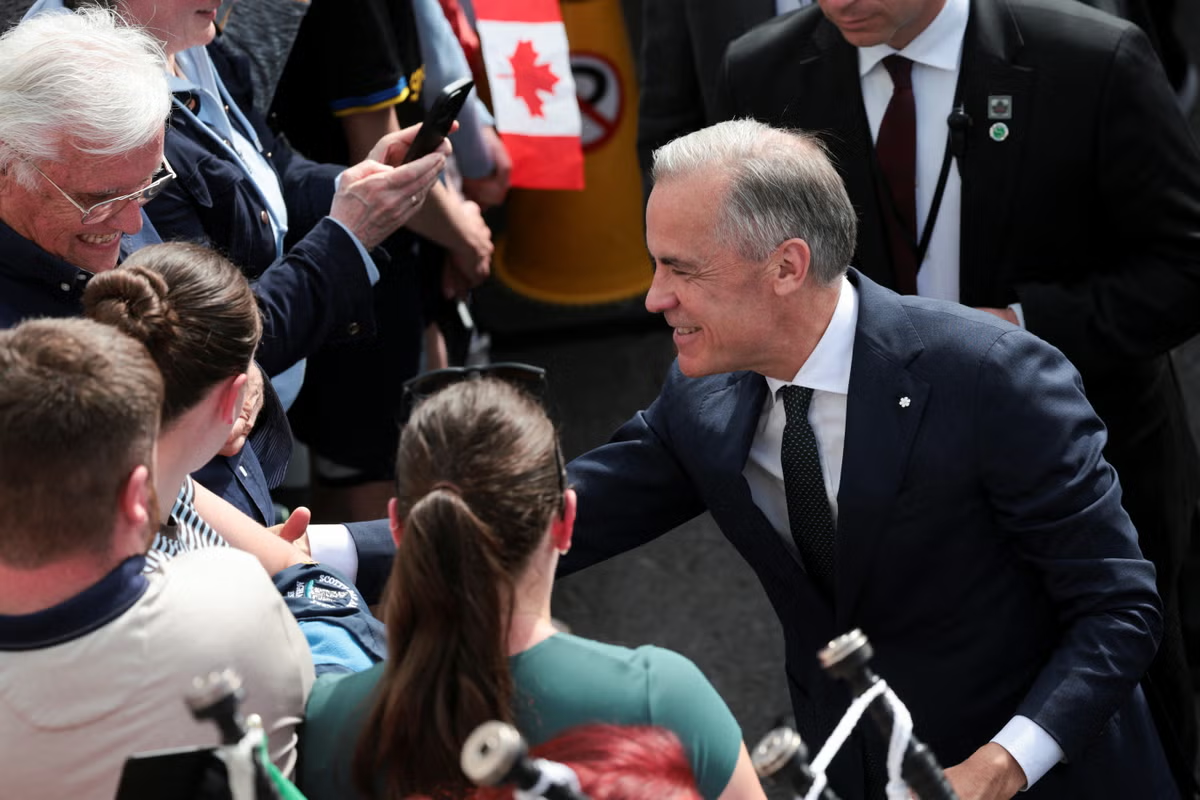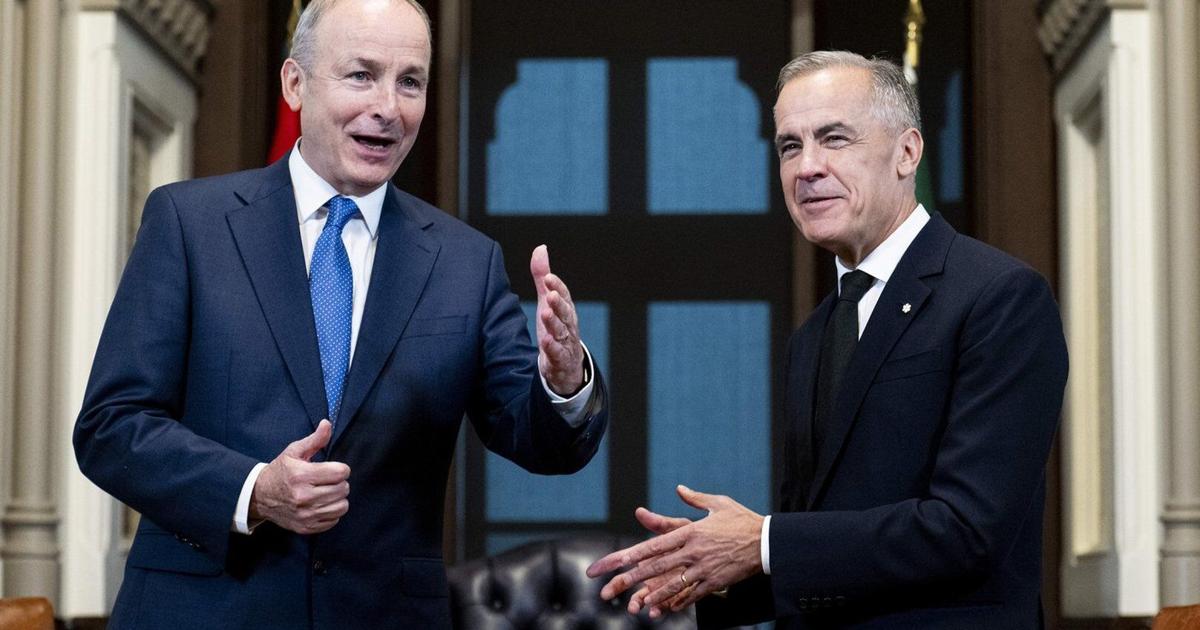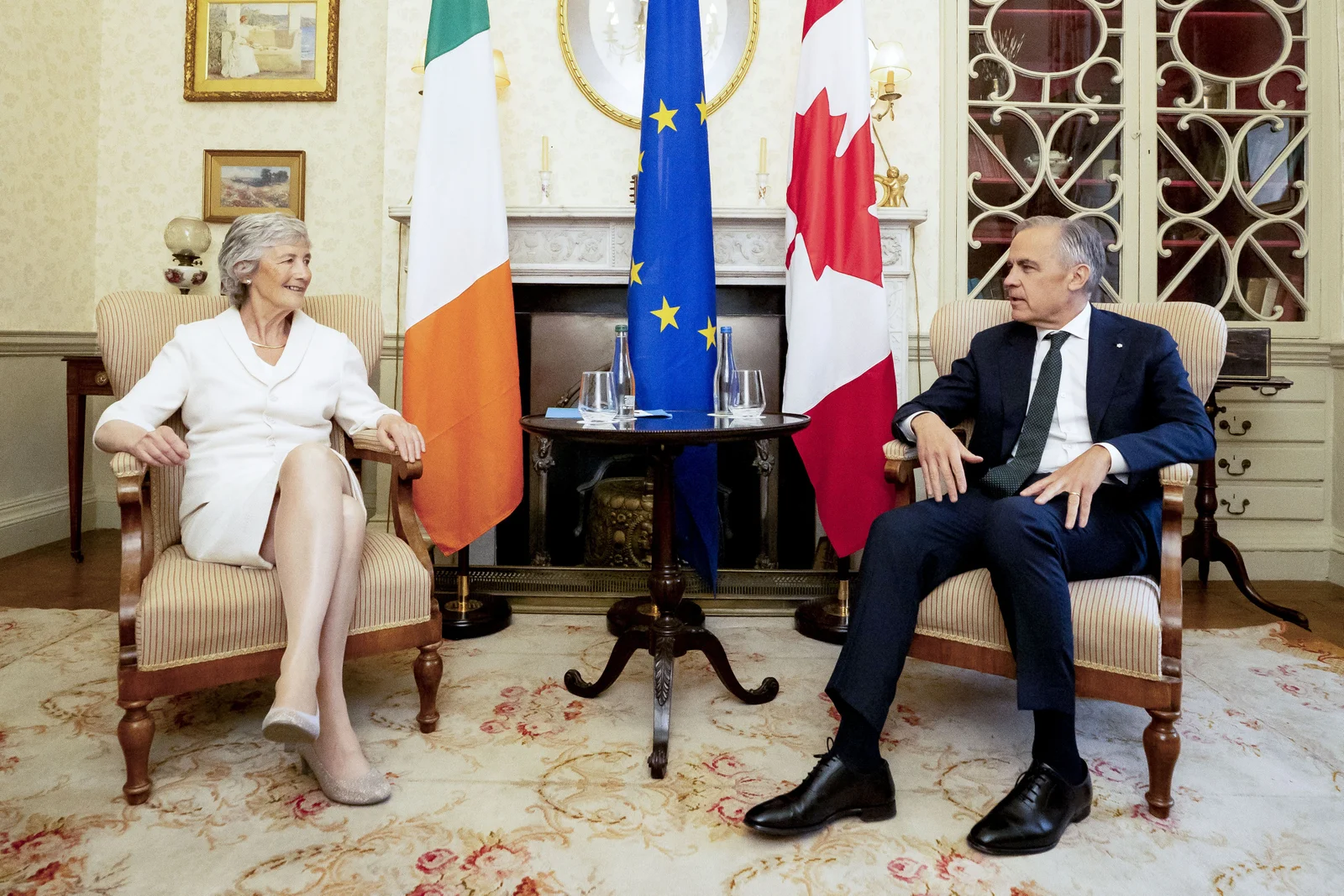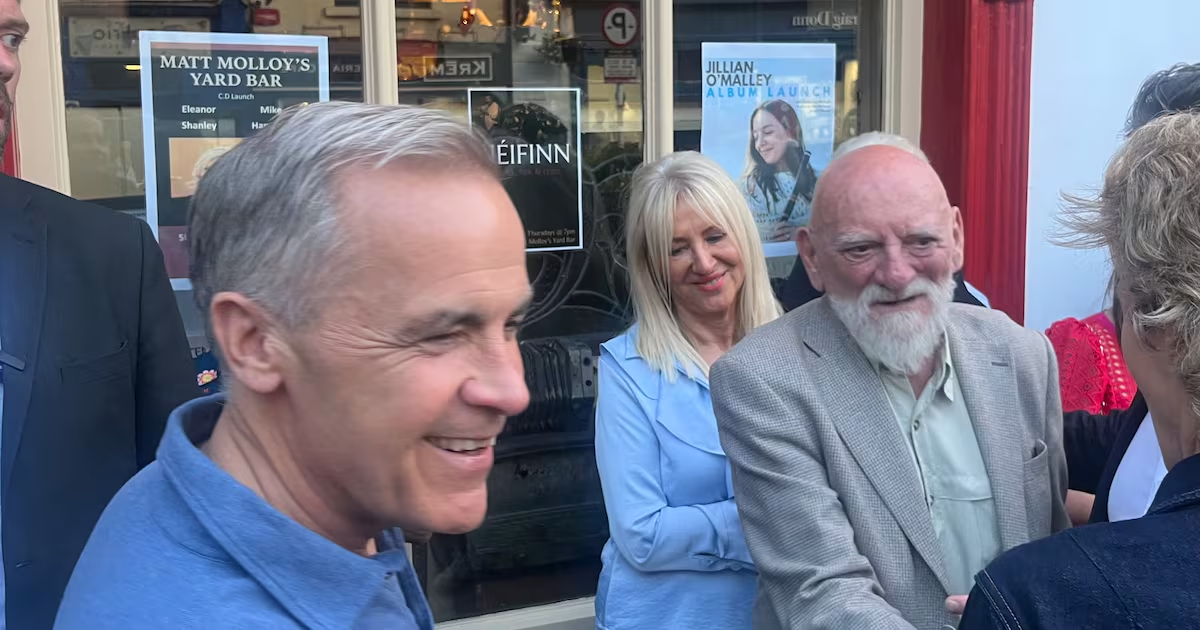
After filing my front-page colour piece about Canadian prime minister Mark Carney’s visit to Westport last Sunday, I ran – literally – to catch the 6.30pm train back to Dublin. But, arriving at a deserted station, I realised that the 6.30pm train’s existence was confined to a treacherous phone app that, on closer inspection, had been referring to weekdays only. In fact, the last Sunday service had departed 40 minutes earlier, while I was still struggling with my closing paragraph. So, with a sigh, I resigned myself to another night in Westport (not a great hardship at the worst of times). Then, over dinner in a local restaurant, I reread in more detail the excellent booklet – Aughagower to Canada – that the town’s historical society had compiled to commemorate the Carney visit. It featured a brief account of the “Aughagower Land War”, including a “great cattle drive” from 1911, in which one Pat Carney – ancestor of Mark – took part. Intrigued, I searched the Irish Times archive for 1911. Where, sure enough, there was a long report of the resultant court case, which I resolved to study later.Post-dinner, as one does in Westport, I adjourned to Matt Molloy’s pub for a pint, having failed to gain access the night before when Westport in general was hopping and Molloy’s was full. There, I renewed acquaintance with the affable Harry Hughes, one of the family that now owns Westport House (where Carney had met President Connolly earlier), who insisted on introducing me to the great Matt himself.[ https://www.irishtimes.com/ireland/2026/06/14/sun-shines-on-canadian-prime-minister-as-aughagower-welcomes-world-leader/Opens in new window ]But as we stood chatting on the footpath, news emerged that the prime minister and his wife, their official engagements over, were also on the way to the pub, in search of Irish music. Minutes later, Matt was ushering the now T-shirted Carney and guests into the back room, for a command performance of the best local musicians and dancers the town had to offer.Getting back to the 1911 cattle drive, by the standards of the Irish land wars it was a remarkably polite affair. There was great poverty in Aughagower at that time, and, to pay rents, most tenants of Lord Sligo (then owner of Westport House and estate) had to supplement incomes from their tiny land holdings with seasonal labour in England and Scotland.Many fell into arrears even so. The 1911 protest was in response to the impounding of livestock by the estate’s bailiffs and in support of demands that large grazing areas near Westport be made available to the tenantry. To this end, up to 300 people took 83 cattle from other parts of the estate and drove them four miles to Lord Sligo’s office, where rousing speeches were made. One Patrick O’Malley was heard to shout: “Give out the cattle you stole, and we will give up yours, you daylight robbers.”Another of the protest leaders, Owen Hughes (Harry’s grandfather, it turns out), told the court hearing there was no intention to harm livestock. As The Irish Times reported, even police witnesses agreed the animals had been driven “slowly and quietly”. It was also conceded that the tenants were all “respectable, industrious men”.As for suggestions they had been carrying sticks, which were intimidating, a solicitor for the men countered that the police carried batons. Hughes and Carney were among 12 protesters arrested. But the gist of the defence was that the cattle drivers had themselves been driven to extremes by dire economic circumstances. At the end of the hearing, after bail was posted, a Mr PJ Doris suggested to the judge that the accused should be “left to their leaders, and the police should stand aside”, in which case “he guaranteed there would be peace”.A “Mr Walsh, JP” then went to the courthouse steps and assured the crowd there that a “speedy settlement” was promised. As the newspaper report concluded: “The people, having cheered, dispersed for their homes.”[ ‘He looks awful like Gramps Carney’: Mayo relatives set for visit of Canada’s PMOpens in new window ]A lot has happened in the intervening 115 years, not least that one of the Carneys emigrated to Canada, where his grandson would one day lead that country. Grandsons of Owen Hughes, meanwhile, were building and expanding the family’s clothing company Portwest (the name is itself a kind of reversible jacket, created by turning “Westport” inside out), which had started as a small drapery shop.Then, a few years ago, in a development as dramatic as anything in Canada, Westport House and estate found itself in deep financial trouble, forcing the descendants of Lord Sligo to sell out. And who should have acquired the place, two generations on? Yes, it was the Hughes brothers. “As far as I know,” Harry says, “we are the only descendants of a tenant farmer to buy the estate.”I’m told the Carneys greatly enjoyed their visit to Molloy’s pub on Sunday. So did I mine. Unplanned as it was, it was clearly fate that I should miss the train back to Dublin and instead spend an evening among the risen people of Westport.
How the Westport was won: Frank McNally on an unscheduled but educational night in Mayo
An ancestor of visiting Canadian prime minister Mark Carney took part in a ‘great cattle drive’ in defiance of landowner Lord Sligo
846 words~4 min read