Show Caption
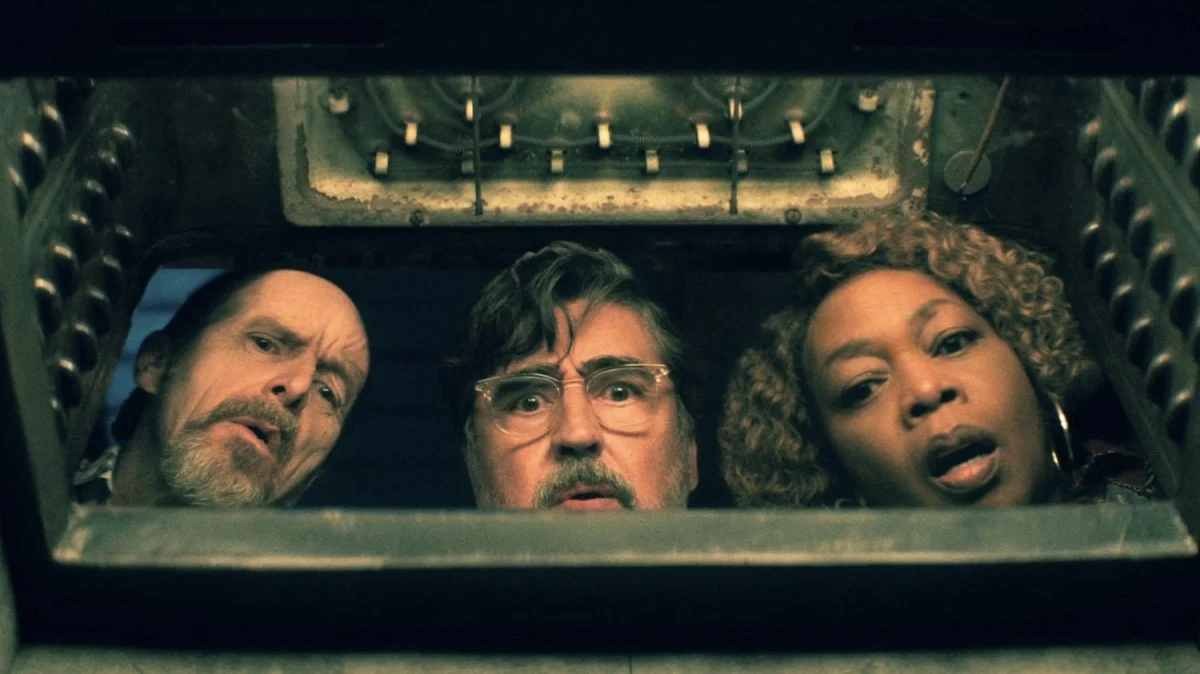
If you turn on Netflix these days, you might think moving to a retirement community would include espionage, murder-solving and alien invasions. Plus really nice facilities with great food.Because in the worlds of popular shows and movies on the streamer like "A Man on the Inside," "The Boroughs" and "The Thursday Murder Club" (all currently streaming), senior living facilities are places of adventure, discovery and community. They are bright, shiny and expensive buildings with vibrant residents, ready to either solve crimes or fight aliens. They are like any other fictional setting on TV, from high schools to hospitals to 1980s suburbia: Ripe for compelling storytelling and great characters.But are they accurate portrayals of the nearly 30,600 assisted living facilities in the U.S.? Is this the life being led by the 9.5 million Americans living in a long-term or post-acute care facility (minus the aliens)?Older populations have been left out by a youth-obsessed Hollywood for decades. Now that this population is finally getting highlighted more directly in media, what should these shows and movies be portraying?"The fact that there are shows like 'Man On the Inside' or 'The Boroughs,' that are highlighting this population of people, it's a very positive thing," says Julia Glassman, founder of INSIDE Nature, a company that helps connect senior populations with green spaces. "It's all about representation, right? And there are quite a lot of people who are afraid of the elderly or afraid of aging; they're afraid of what they don't know."In "Man," "Borroughs" and "Murder," the characters may be part of fantastical genres (spy, sci-fi and murder mystery, respectively), but the heart of all three is the relationships between the characters, who meet and form bonds in the facilities in which they choose to spend their golden years. In many real facilities, there are true relationships like these."I witness this almost daily through my experience working with the elderly population," says Dr. Manu Sehgal, a geriatric physician in Delaware. "Close friends develop strong bonds around routine and shared interests, and these types of supportive social connections have proven to be beneficial to a person’s overall mental and physical health. Loneliness is a serious threat to older adults’ health, and having meaningful relationships helps alleviate this."The sense of community and joy portrayed by Helen Mirren, Pierce Brosnan and Ben Kingsley solving murders in the British countryside in "Murder" or Alfred Molina and Geena Davis fighting the supernatural in "Boroughs" is all in stark contrast to the ways retirement, nursing and care homes are often portrayed in media. From "One Flew Over the Cuckoo's Nest" to an episode of "The X-Files," nursing homes can often be places of abuse, fear, decrepitude and depression."Historically, nursing homes have often been portrayed as gloomy places where seniors are isolated and unhappy," says Ali Ahmad, spokesman for Virginians Advocating for Seniors.He praises more positive portrayals, but feels like they're all missing the true scope of these facilities, particularly what the realities are in assisted living and skilled nursing facilities. "What these TV shows and movies usually miss is the complexity of medical issues impacting facility residents [who are cared for by] highly skilled nurses, their assistants and staff."Minor characters in these shows and films require more advanced medical care, whether that's Memory Care for dementia or other conditions, but their stories are often defined by that need for care.Ahmad notes that there are many residents who both live full social lives and require a lot of medical attention. "Positive portrayals can help reduce the uncertainty and stigma around aging and elderly care. This needs to be balanced with honest portrayals of skilled nursing facilities, which includes how residents live their lives while receiving necessary care."Another key point these pop culture portrayals miss is the sheer economic burden of living in a facility."My biggest critique of 'A Man on the Inside' is that it's portraying a very wealthy senior living facility," says Glassman, who often visits facilities with far less funding in her advocacy work. "Even some of the ones that are considered to be lower income or more affordable are still really expensive. There's a facility in Ithaca, N.Y., where rent is $4,000 per month per person, and that's just for assisted living. Imagine what kind of job and salary you would have had to have to be able to pay $4,000 a month for assisted living care [for life]. And that's not even the highest level of care."Ultimately, experts believe there is great value in these shows offering a bigger picture of life in old age, but that picture is not quite filled in just yet."The most significant contrast between 'reality' and what is typically shown on television is that 'real-life' rarely depicts as much drama, but also offers far greater meaning," says Sehgal, the physician. "Older adults continue to evolve, grow, and show curiosity about the world. [But] there are those who feel that by the time an individual reaches age 70, their life has become emotionally flat. This could not be further from the truth."