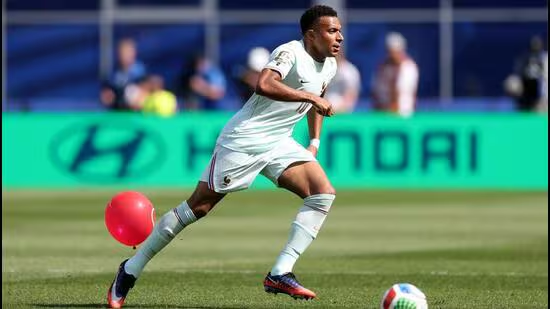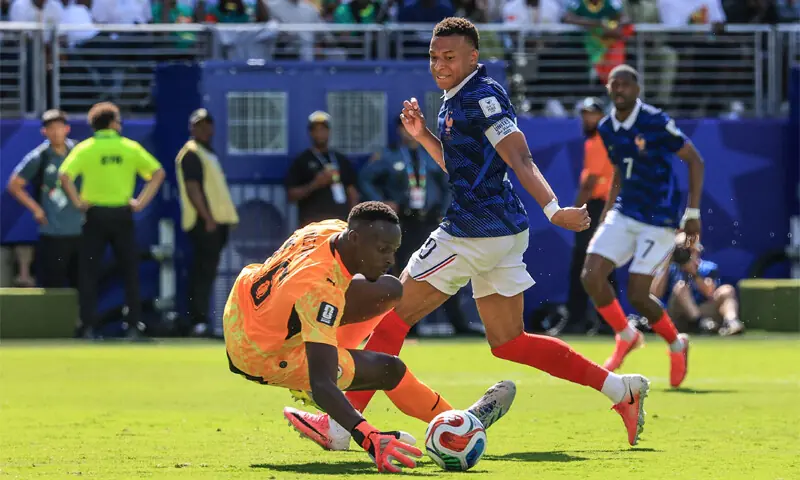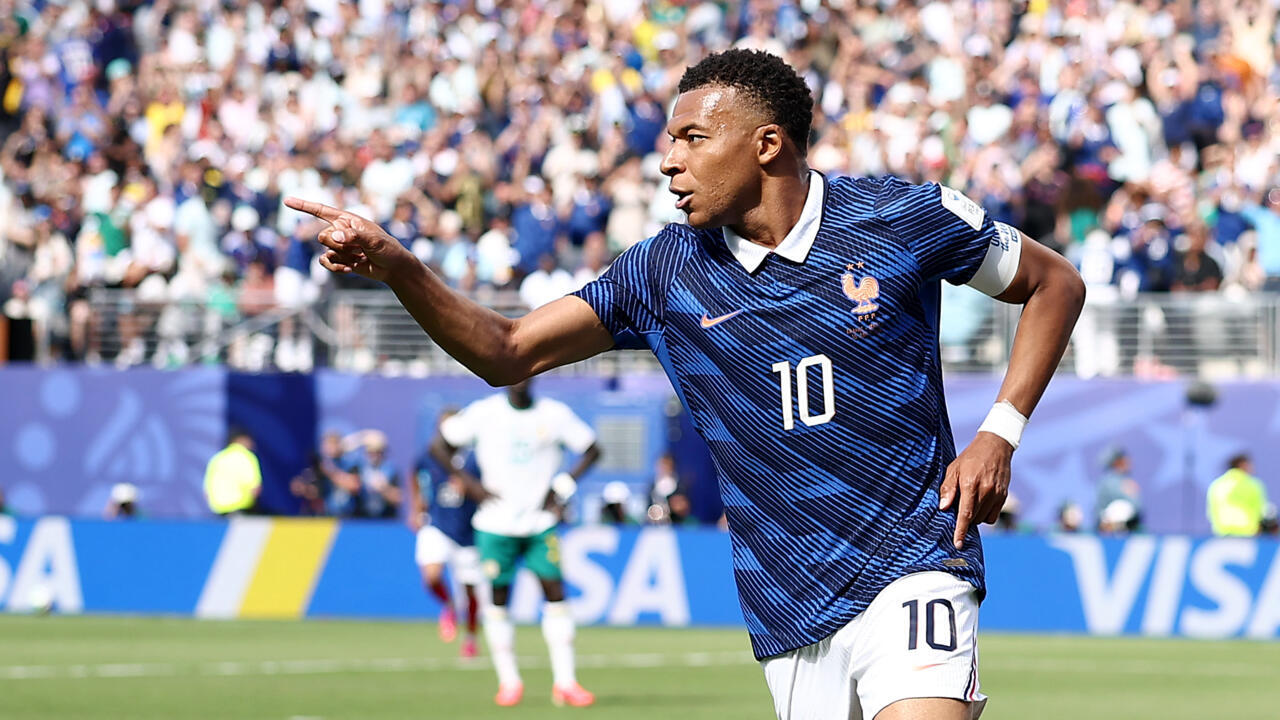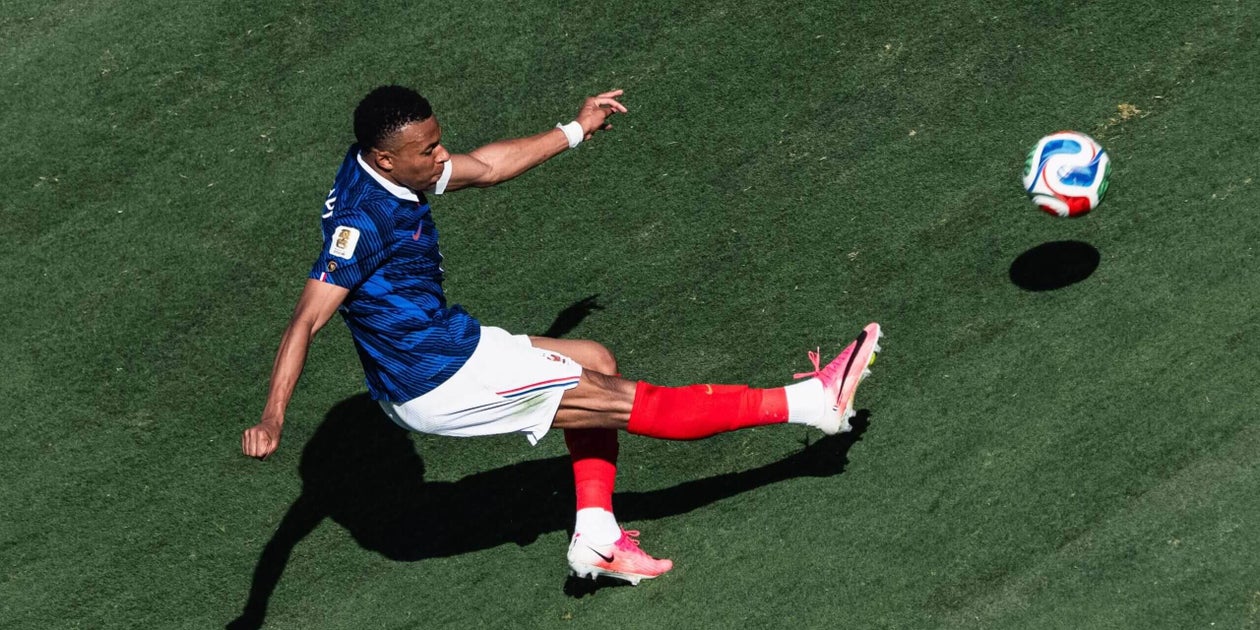
The Athletic has live coverage of Ghana vs. Panama at the 2026 FIFA World Cup.At first glance, Kylian Mbappe looked as though he should have fallen — a fraction of a second later, he had produced a finish that seemed to defy biomechanics.France had just had their 2-0 lead against Senegal halved in added time when the ball broke to Mbappe 30 yards from goal. Balanced awkwardly on his standing leg, he looked up and unleashed a shot that Edouard Mendy could only flap at as it sailed into the net to complete a 3-1 win.It was his second goal of the game, his 58th for France and his 14th in 15 World Cup appearances. Yet it was the image captured immediately before contact with the ball that stood out.The photograph taken by Lampson Yip at the MetLife Stadium offers an insight into what elite force production looks like, according to the experts.A bulge in the quadriceps muscle just above Mbappe’s right knee is visible at the point of maximum contraction. Along the outside of the thigh, the iliotibial (IT) band — which works in conjunction with the tensor fasciae latae (TFL), a muscle involved in hip flexion and stabilisation — is visible beneath the skin. Nearby, the biceps femoris and vastus lateralis muscles are clearly defined.For Archit Navandar, assistant professor of biomechanics at the Technical University of Madrid, the image offers a rare glimpse into what happens when one of the world’s leading athletes generates power at full speed.Mbappe from front-on as his strike flies towards goal (Image Photo Agency/Getty Images)He says every joint movement has the potential to lose energy, meaning force generated by the lower body never reaches the ball. The best athletes minimise that loss, coordinate the hips, trunk and striking leg so that energy flows through the body.
Kylian Mbappe and the biomechanics of elite force
The France forward underlined why he is world class against Senegal. He is a footballer in peak condition
862 words~4 min read