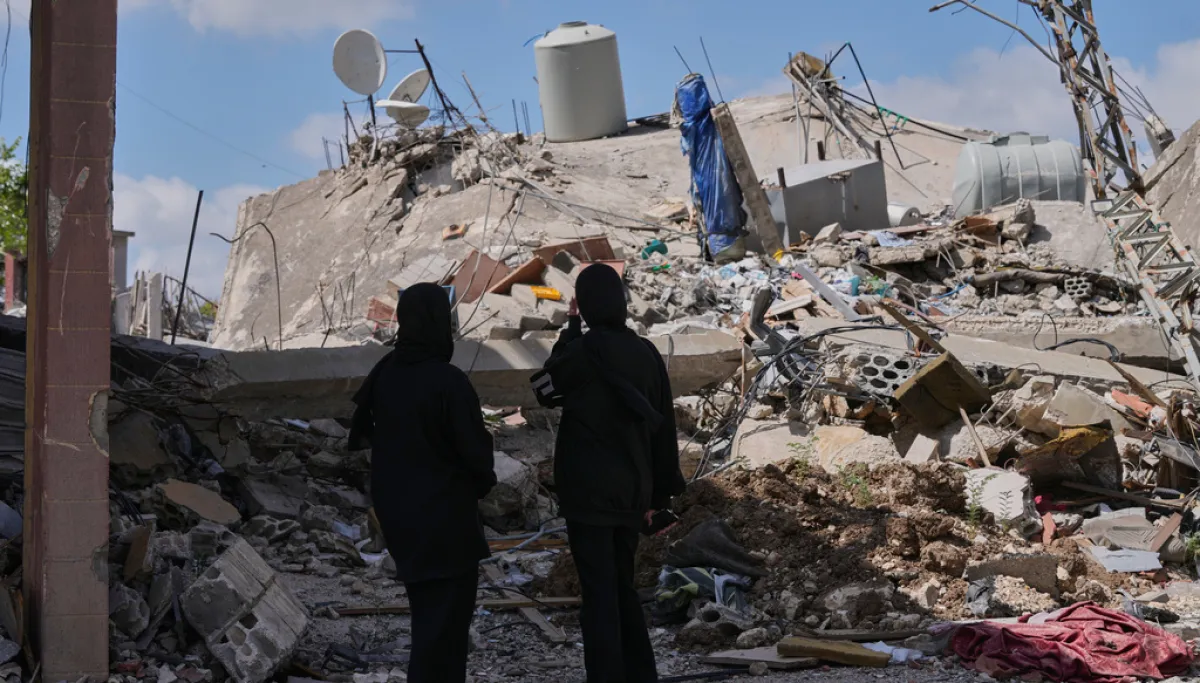
In the run-up to the second Iraq War, then-Secretary of State Colin Powell allegedly told President George W. Bush: “If you break it, you own it.” Powell and his deputy Richard Armitage privately called this the “Pottery Barn rule.” In the ensuing years, politicians and commentators alike have used the phrase to describe the idea that what the U.S. military destroys, it is obligated to rebuild and, if need be, occupy. The phrase is meant to have a deterrent effect. It was used to discourage American military action against Bashar Assad’s Syria, for example. But it’s also been employed to castigate, like when a journalist recently argued that Trump is now responsible for restoring the status quo ante to the Islamic Republic of Iran.
But an important corollary should be added to this font of conventional wisdom: says who? Where is it written that the United States must rebuild the ruins of those it fights or defeats?
The U.S. did precisely that after World War II. America helped rebuild both Germany and war-torn Europe. It reconstructed Japan from the ashes of a devastating fire bombing campaign that culminated in the first use of nuclear weapons.
However, both Nazi Germany and Imperial Japan unconditionally surrendered after losing great-power wars. And restoring both made strategic sense, as well.