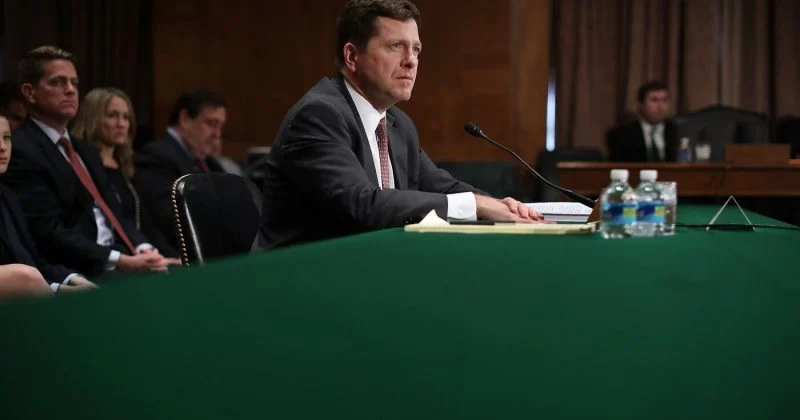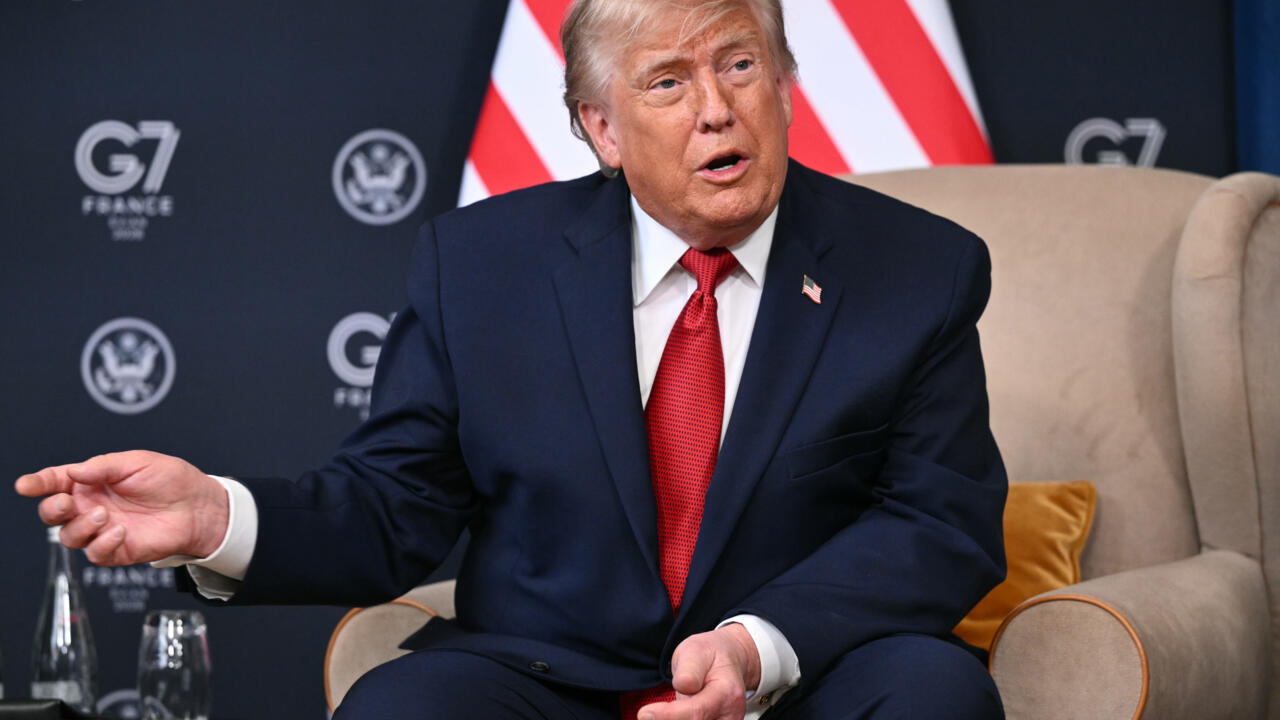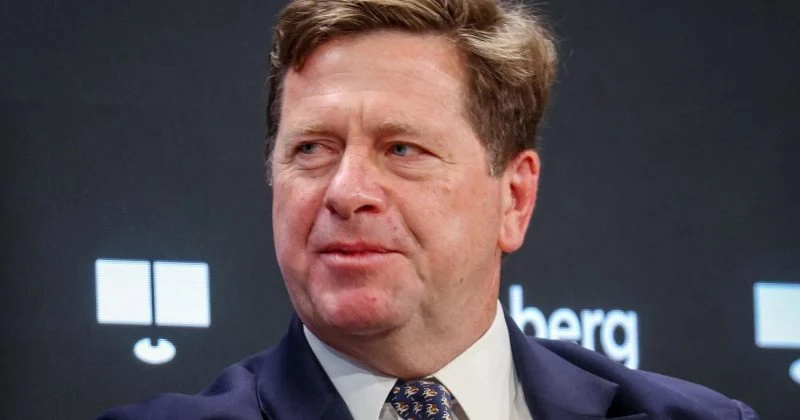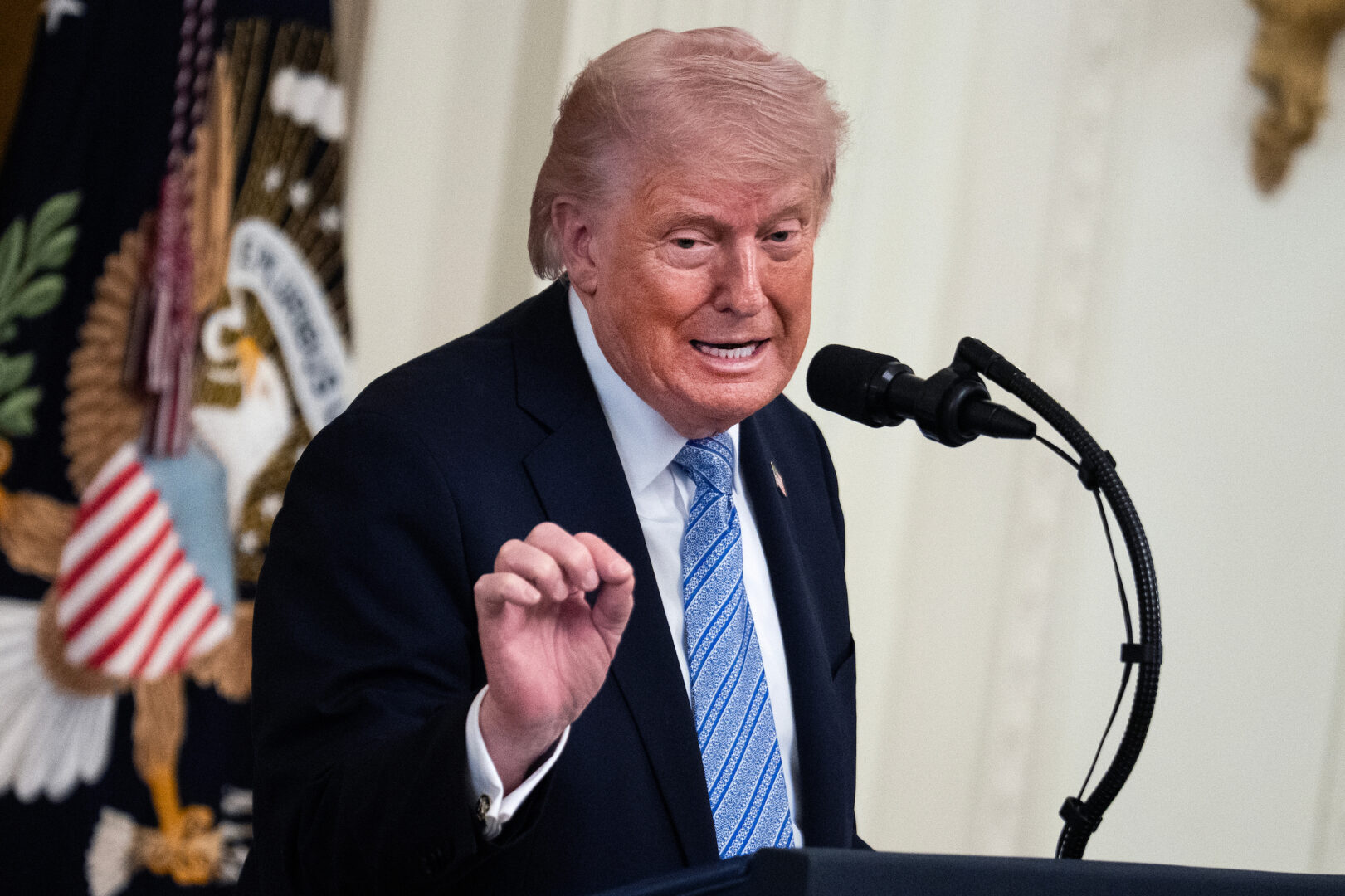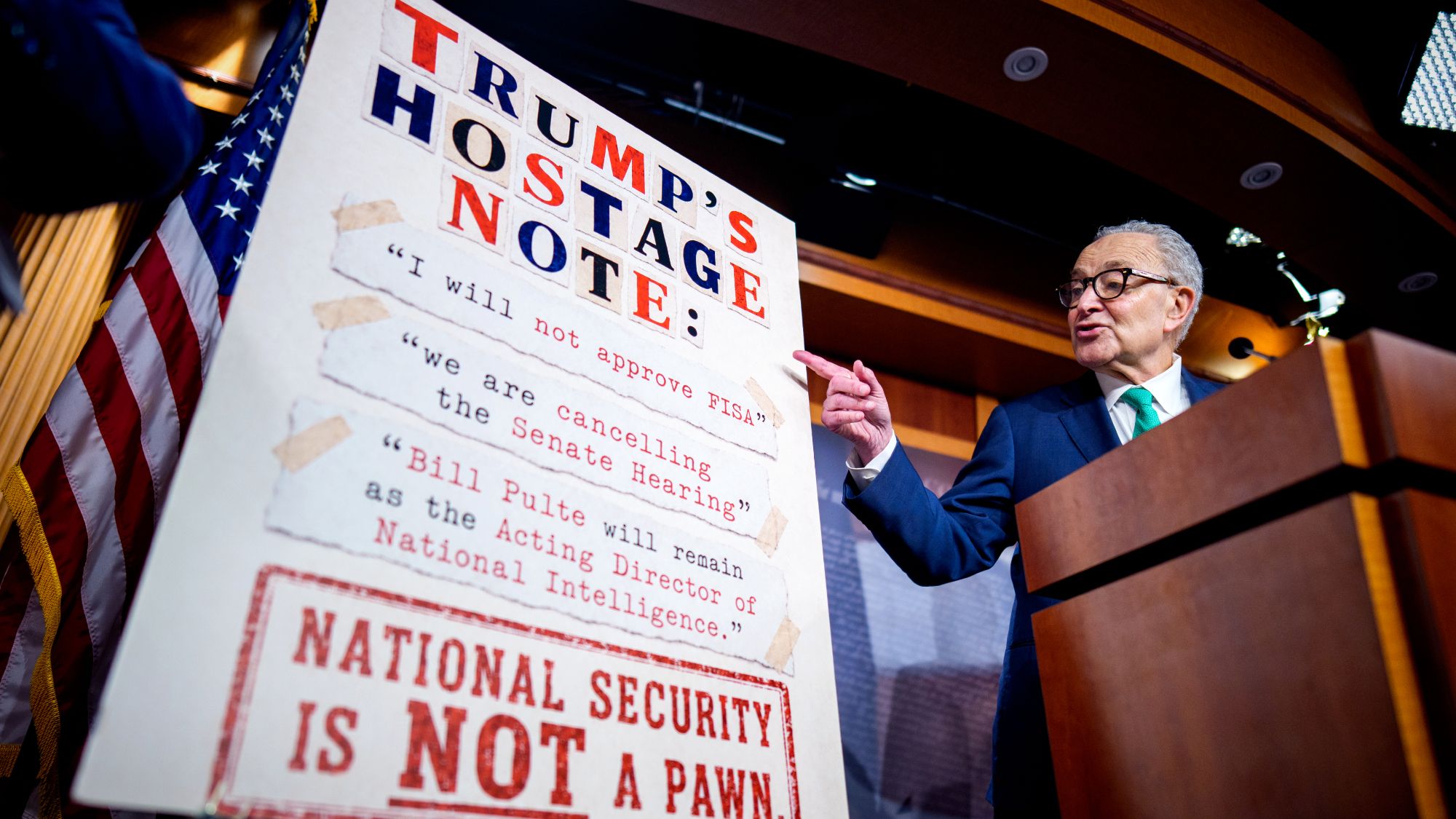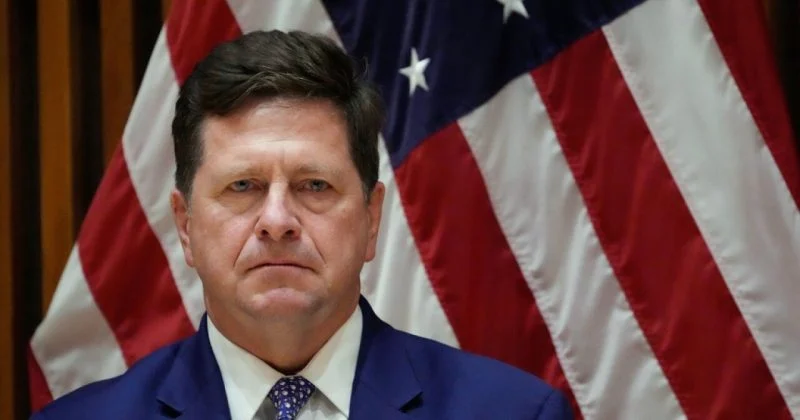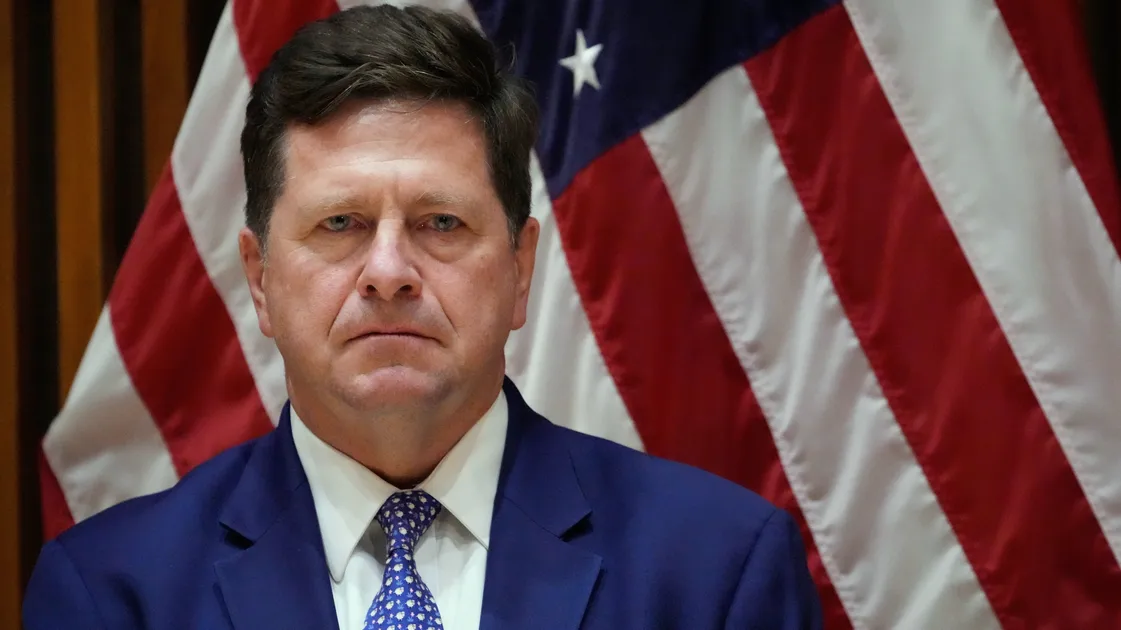
The president just scrambled the last week of negotiations in Congress to abet his dead voter ID bill.Donald Trump cancelled the Senate confirmation hearing for Jay Clayton via a Truth Social post Wednesday, just hours before it was set to take place. Trump had tapped Clayton earlier this month to run the Office of the Director of National Intelligence, in place of acting Director Bill Pulte. Democrats had argued that even temporarily appointing Pulte, a housing regulator, was illegal, since he had no national security experience to bring to the job. (For the record, neither does Clayton.)As a result, Democrats completely stalled negotiations over FISA Section 702, a statute that allows federal agencies such as the NSA and the CIA to surveil foreigners on U.S. soil without warrants. But even without Pulte’s name in the mix, negotiations had stalled over the FISA section as both chambers failed to pass an extension.And Trump has undoubtedly only made matters worse by involving himself in the process. In a lengthy rant Wednesday, Trump baselessly lamented that Republicans had advanced Clayton’s nomination without any concrete assurances from Democrats. He then hitched the FISA section’s renewal onto his Save America Act, which Republicans have warned him dozens of times has no chance of passing the Senate. That legislation hinges on Trump’s conspiracy theory that noncitizens are voting (against him) in U.S. elections.“Now, the Dumocrats are saying they will vote against FISA—So, the Republicans wound up having fulfilled their commitment, but Dumocrats broke the Deal,” Trump wrote. “Therefore, to add a slight bit of intrigue but, for the Good of the Nation, and the People of our Country, I will not approve FISA without THE SAVE AMERICA ACT going along with it. Not complicated, actually, the Republicans fell into a trap.” The Save America Act sparked nationwide controversy earlier this year, particularly over a detail in the bill that would have made it more difficult for married women to vote. The backlash on Capitol Hill was grave, so much so that it gummed up efforts to fund Homeland Security for several months. Republicans eventually had to bail on the package to end the congressional gridlock.The Save America Act suggests numerous amendments to the National Voter Registration Act of 1993, including line items that would abolish mail-in voting, require voters to bring proof of citizenship and proof of residency to register to vote, require voter ID, and mandate voter roll purges every 30 days, an enormous bureaucratic task that would place undue burdens on local election officials. The measure would also add a federal law to prevent men from competing in women’s sports, and a ban on “transgender mutilation surgery.”Trump noted that the pause on Clayton’s Senate confirmation would also interrupt the rest of the pipeline: in the meantime, Pulte would remain as the acting DNI, while Jamie McDonald—a litigation partner at law firm Sullivan & Cromwell—would wait to replace Clayton as the U.S. attorney for the Southern District of New York.Senator Tom Cotton, who chairs the chamber’s intelligence committee, ignored the president’s bluster. He noted on his X account that the president’s influence did not extend to the Senate confirmation hearing process.“Jay Clayton is a pending nominee before the Intelligence Committee,” Cotton wrote. “We will proceed with his hearing as scheduled unless the president directs him not to appear or withdraws his nomination.”This story has been updated.Read about why Trump might want Pulte to stay:White House officials are trying to claim that a leaked draft of the peace agreement between Iran and the U.S. isn’t real.CNN reported Wednesday that the deal consists of a 14-point memorandum of understanding, which it obtained from a U.S. official. The points include the terms of the ceasefire, the reopening of the Strait of Hormuz, and details about billions in financial relief for Iran.However, White House Director of Communications Steven Cheung denied the CNN report’s accuracy, posting on X that “The supposed text of the MOU that was obtained by CNN does not reflect the language of the actual MOU.” President Trump also issued his own denial Wednesday when reporters asked about the inclusion of a plan for the U.S. and Gulf allies to “ensure financing of at least $300 billion” in reconstruction funds.“It’s false. People, you can invest if you want. What am I gonna do, say nobody’s ever allowed to invest? We’re not invest[ing]—we’re not putting up 10 cents. People can decide to do that, but that’s up to them,” Trump said at the G7 summit in France, seated alongside Egyptian President Abdel Fattah El-Sisi. “We are not investing in it, and we do not have a fund.”Trump also denied that Gulf countries were investing in the fund, and added that the CNN report was a “false story that got picked up incorrectly from a statement that was pretty well made, I think.”Q: It's been reported the MOU includes a $300 billion reconstruction fund funded by Gulf allies.TRUMP: It's false. You can invest if you want. We're not putting up 10 cents.Q: Are you asking Gulf countries to--TRUMP: No I'm not. If they do it, that's fine. Don't forget --… pic.twitter.com/2TmhtR8eW6— Aaron Rupar (@atrupar) June 17, 2026 Bloomberg also obtained a copy of the draft memorandum, which U.S. officials are not attacking, although an unnamed Iranian official told the country’s Tasnim news agency that parts of it were inaccurate. It contains similar language regarding $300 billion in reconstruction funds for Iran. Both versions also promise that the U.S. will release additional billions in frozen Iranian assets.Until the official terms are released to the public, we won’t know for sure if any funds will be transferred, or what assurances are being made to ensure that the war doesn’t resume. Trump could easily clear this all up by releasing the signed agreement in full, but for now, he’s content to attack the media and leave everyone guessing.Editor’s Pick:President Trump is threatening to drop “bombs on their head” if Iran doesn’t abide by the guidelines established in their memorandum of understanding, which has still not been publicly released.The president made the hawkish comments while touting the agreement at the G7 summit in France on Wednesday morning.“Is the text of the agreement final?” a reporter asked.“No, it’s not final. It’s a memorandum of understanding. And if I don’t like it, we’ll go back to shooting at ’em—dropping bombs on their head. If I don’t like it, if they don’t behave, we’ll go right back to dropping bombs right smack in the middle of their head,” Trump replied. “Because they’ve misbehaved for 47 years, alright?”Q: Is the text of the agreement final?TRUMP: No, it's not final. It's a memorandum of understand, and if I don't like it, we'll go back to shooting at them, dropping bombs right smack in the middle of their head pic.twitter.com/F7JHHNfGDC— Aaron Rupar (@atrupar) June 17, 2026 Then he began to gloat about how great the deal was, just seconds after threatening to inflict more violence on Iran.“Nobody could’ve made this deal. The JCPOA done by Obama … he gave ’em $1.7 billion in cash—green cash, from banks—into a Boeing 757 and flew it into Iran,” he continued. “He tried to bribe his way out. I didn’t do that.… And you know what the Iranians did? They laughed at Obama and they said he’s a stupid son of a bitch.”Leaked versions of Trump’s memorandum of understanding suggest the U.S. has promised Iran access to $300 billion in reconstruction funds and billions more in currently frozen Iranian assets.In return, Iran will reopen the Strait of Hormuz and commit to no nuclear weapons development—two points that already existed before Trump went to war in February. And what does it say about Trump’s belief in an eventual deal if he’s already threatening to drop bombs if the whole thing falls through? Editor’s Pick:The Senate is moving to officially green-light Donald Trump’s expensive rebrand for the Department of Defense.Buried deep in the Senate Armed Services Committee’s annual defense authorization Tuesday was a measure to redesignate the Department of Defense as the “Department of War.” The measure would also change the titles and acronyms for the secretary of war, assistant secretary, and under secretary, as well as the names of other programs and offices that use the word “defense.” Another clause would ensure that all laws, documents, and records referring to the department or secretary of defense would be understood to apply to the secretary of war. Of course, the Trump administration has already been using its own made-up name for months. So Pete Hegseth is sure to have his new desk placard already.The Congressional Budget Office previously estimated that a statutory name change implemented throughout the department could cost up to $125 million in taxpayer dollars. Trump has made it clear he’s willing to spend millions to make the United States look tough—but in reality, the president appears to be caving to our country’s purported enemies. As The New Republic’s Indigo Olivier pointed out: Trump’s rebrand may be stupid and expensive, but at least it’s honest. Read about the Department of War:Details of the Iran peace deal are still under wraps, even for America’s strongest ally in the Middle East.i24NEWS correspondent Guy Azriel reported Tuesday that Israel was denied access to the informal agreement, which he called a “remarkable and highly unusual development between close allies on an issue of such critical national security importance.”The White House and Tehran signed a peace deal on Sunday, though the exact specifications of the agreement are not yet public and are still being hashed out.The final draft reportedly proposes the immediate reopening of the Strait of Hormuz under Iran’s direction, a commitment from the U.S. not to interfere in Iranian affairs, and a reiteration of Iran’s commitment not to produce nuclear weapons, echoing language included in the 2015 Joint Comprehensive Plan of Action, according to a senior Iranian official who spoke with Reuters.One component of the plan has become the subject of much debate: a $300 billion reconstruction fund for Iran, which was originally understood to be provided at cost to U.S. taxpayers. Vice President JD Vance has wavered several times on that particular issue. He first claimed on Saturday that Iran would receive no money at all. He seemingly reversed course on Monday, when he all but confirmed the reconstruction fund to CBS’s Ed O’Keefe. Within hours—and after some monumental backlash from his party—Vance seemed to change his tune again, telling Fox News’s Sean Hannity that Iran would not receive a “single dime of American money.” Instead, Vance claimed that the U.S. would allow Iran to receive foreign aid from its Gulf State neighbors so long as the “Iranians behave.” Vance has not yet elaborated on how the administration plans to manage or gatekeep foreign aid packages intended for Iran.The murky arrangement does not seem to include details on whether Iran will stop enriching its uranium—a highly anticipated component and one of the White House’s most pressing demands.Vance told Hannity that the particulars of the enriched uranium depletion would be figured out over the next two months, “but the basic structure is they can get a lot if they comply with the United States’s demands.”Donald Trump has pledged since the beginning of the war that any peace deal he signs would end Iran’s uranium enrichment program. But now that the deal is actually being negotiated, Trump seems to have lost his bluster, even disengaging from the idea of collecting Iran’s nuclear dust.“You could make the case, ‘Why even bother?’ Because it’s not really valuable, it’s probably half a million dollars’ worth,” Trump said Tuesday while at the G7 summit in France. “It’s not very valuable stuff. But I think, psychologically, we want to get it.”Failing to obtain commitments regarding Iran’s nuclear program would make the deal far weaker than the Obama administration’s JCPOA. Iran lacked a single bomb’s worth of uranium in 2018, three years after former President Barack Obama brokered his deal to limit the country’s enormous uranium stockpile. But that changed when Trump withdrew the U.S. from the pact and imposed a series of tough economic sanctions against the Middle Eastern country. By 2025, Iran had curated an 11-ton stockpile of enriched uranium, the whereabouts of which remain largely unknown. The total stockpile could create as many as 10 bombs if fully enriched, according to a 2025 assessment by the International Atomic Energy Agency.Read more about the deal:
Trump Blows Up His Own Nominee’s Hearing Over Conspiracy Theory
Donald Trump has likely killed efforts to renew a key piece of intelligence legislation in the process, too.
2,064 words~9 min read