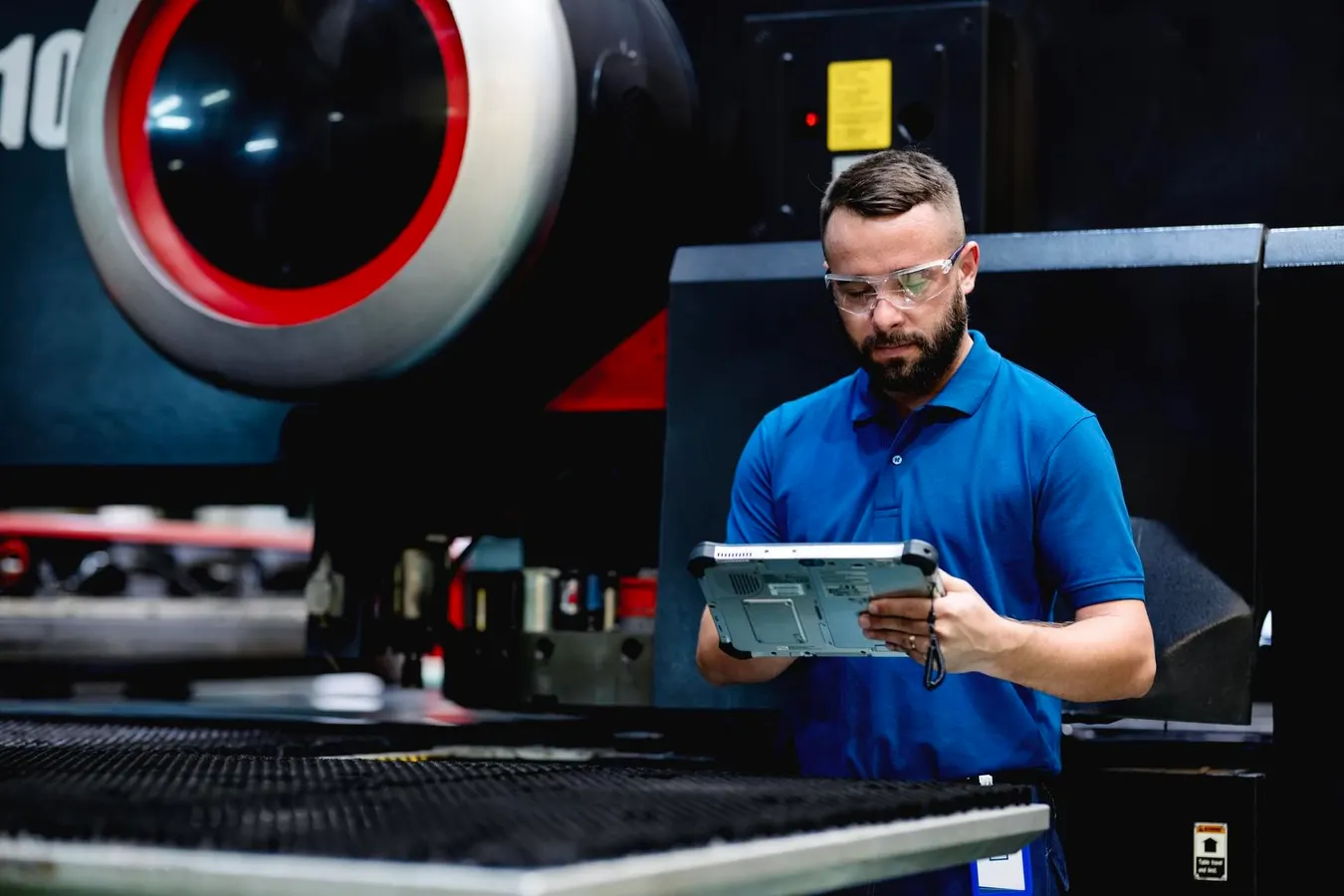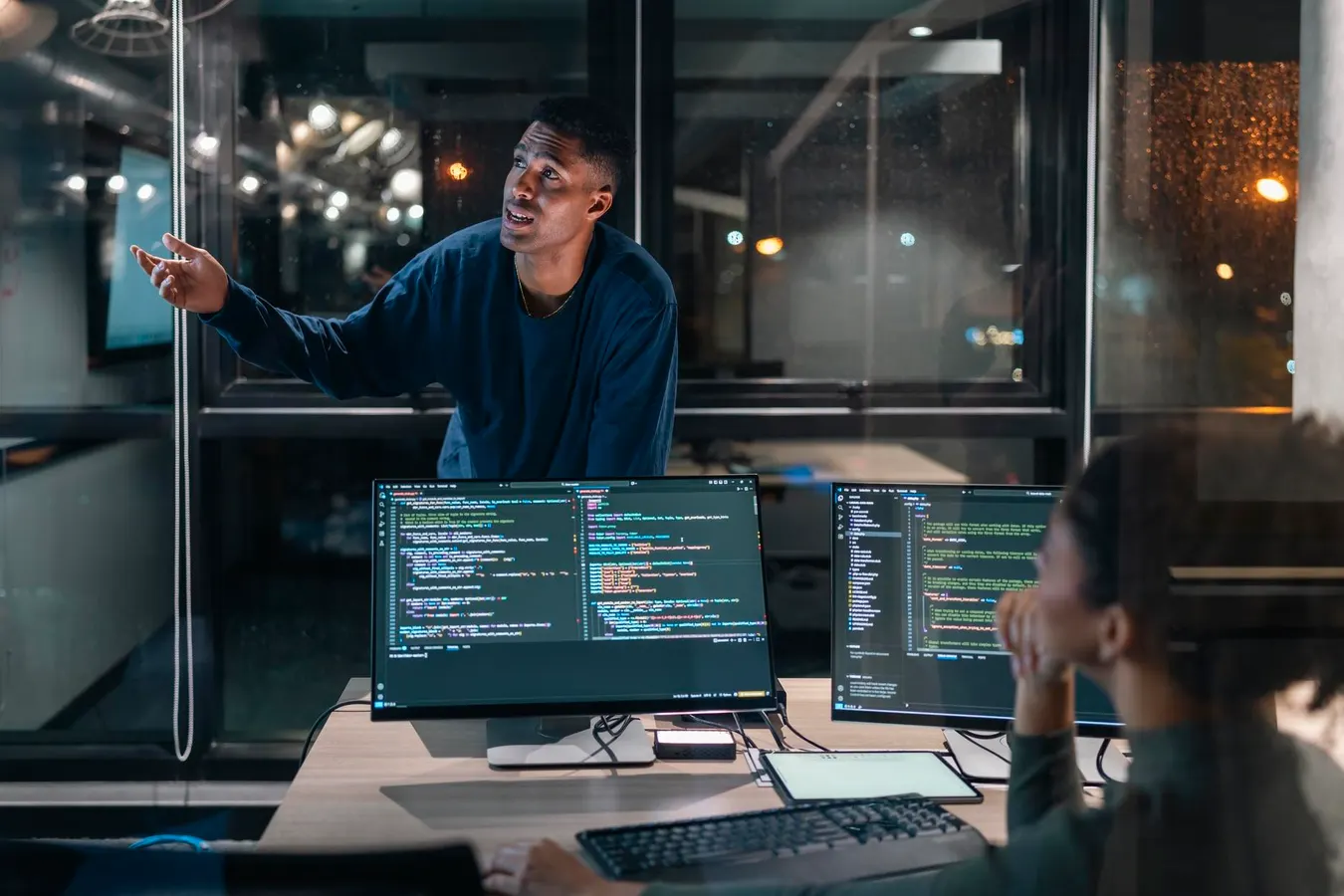
Kriti Sharma is CEO of IFS Nexus Black, which deploys AI-powered products in manufacturing, field service, energy, aerospace, and defence.gettyThe industrial world is facing its toughest talent transition in generations. Across factories, utilities and supply chains, experienced engineers and operators are retiring, taking with them decades of tacit knowledge. Whether it’s recalibrating a faulty pressure sensor by instinct, rerouting a networked control loop during a grid surge or interpreting a vibration chart by feel alone, that operational fluency is disappearing fast.I’ve spent over 10 years leading AI product teams in sectors ranging from law and finance to heavy industry, always focused on how technology reshapes work. Now, I work up close with the engineers and technicians who keep our factories and power systems running, joining them on ride-alongs or out in the field in hard hats. That’s shaped how I approach the talent crisis. I see how much critical knowledge lives in people’s heads, how quickly businesses lose it when they retire and how exposed systems become when expertise is lost. This transition will force organizations to act fast and preserve what they know.To get ready for this mass exodus, industrial leaders need to find a new method to preserve knowledge, a method I refer to as expertise coding. Essentially, you draw on the expertise of veteran engineers and technicians and embed it into industrial-grade AI solutions—so that new generations of engineers can benefit from it.The stakes are high, and companies are racing to preserve tacit knowledge before it’s too late. That’s what expertise coding makes possible; it pairs human judgment with scalable, dependable intelligence.AI As A Decision PartnerIndustrial operations depend on machinery and human judgment working in tandem. Right now, a small set of seasoned workers holds an outsized amount of knowledge. Meanwhile, data is scattered across spreadsheets, aging databases and handwritten logs. When a system goes down or a key expert is unavailable, the fragility is obvious. You learn how much critical knowledge lives in people’s heads and in disconnected systems that rarely speak to one another. The challenge is not that humans can’t make good decisions but rather that the information they need to do so is hard to find. AI can unify those scattered data streams and flag emerging risks in real time, delivering insights you can act on in hours.Expertise coding treats AI as a decision partner, not an autopilot tool. Platforms built for expertise coding use specialized AI agents that write and run code against real data and constraints. This can reduce errors and reflect how humans break down complex work. The result is decision intelligence rooted in real‑world physics, engineering and operations.Turning Risk Into Encoded IntelligenceIndustrial work is full of trade-offs and judgment calls. Should you repair the asset so it works for three more years or replace it now? Should you shut down now for preventative work or risk running into failure? That’s where AI can bring together signals from maintenance logs, sensor readings, demand forecasts, market conditions and environmental risk into patterns humans can act on quickly.With expertise coding, it’s the experienced technicians who are encoding how the systems make decisions. A master operator’s instincts are captured as a set of logic, checks and workflows that agents execute reliably. The result? Safer decision‑making, less downtime and the preservation of tacit knowledge. AI doesn’t replace the human; it becomes a continuous extension of their judgment.Getting Started With Expertise CodingYou need to start where knowledge concentration and operational risk are highest: outage response, faulty diagnostics and maintenance decisions. These are environments where experienced operators already rely on structured judgment under pressure—and where failures have the biggest financial and safety impacts.First, you need to capture how experts think in practice. How do they interpret signals, sequence decisions or respond to changing conditions? I’ve seen operators detect a failing bearing by sound alone—or explain why a production line behaves differently in winter. That reasoning can be encoded into systems that reflect how decisions are actually made.Second, deployment needs to happen alongside the workforce. Systems must be introduced in live environments and refined through real use. This will surface constraints early. Trust and adoption can then move together. When experienced operators see their judgment reflected in the system, they will be more likely to stand behind it and use it to bring others up to their level.This model is repeatable: Capture expert reasoning, encode it into real workflows, deploy it in context and refine continuously.AI Is Opening The Factory Floor To A New GenerationYounger workers are usually among the first to fully realize the benefits of AI because they want tools for meaningful, skilled work.With AI, onboarding can be accelerated, and experience gaps can be reduced. New hires can tackle complex diagnostics from week one (not year one, two or five) because they’re backed by decades of knowledge. AI can reduce the time spent hunting for information across legacy systems and free workers to focus on technical and rewarding work. We’re already seeing this shift in education and career choices. Vocational college enrollment jumped 16% in 2025, showing that Gen-Z is open to skilled trades. Deployed thoughtfully, AI can reshape what trade and technical careers look like for the next generation.AI As A Workforce Asset And A Closing WindowIndustrial AI is only beginning to enter mainstream conversations, powered by record data center investment and AI infrastructure build‑outs. There’s a narrow window of one to two years to capture the most valuable industrial knowledge in AI‑backed systems before a generation of experts retires. Miss that window, and we risk losing a critical layer of institutional intelligence.The path forward is clear: Treat AI as a workforce asset and a long‑term mentor, not a replacement strategy. Encode expertise, elevate judgment and make complex systems easier to understand, whether someone has been on the job for four weeks or 40 years.The combination of human knowledge and industrial‑grade AI is, in my view, the only way to sustain both the workforce and the infrastructure society needs to function.Forbes Technology Council is an invitation-only community for world-class CIOs, CTOs and technology executives. Do I qualify?
Can We Code Our Way Out Of The Industrial Talent Crisis?
The path forward is clear: Treat AI as a workforce asset and a long‑term mentor, not a replacement strategy.
1,013 words~5 min read