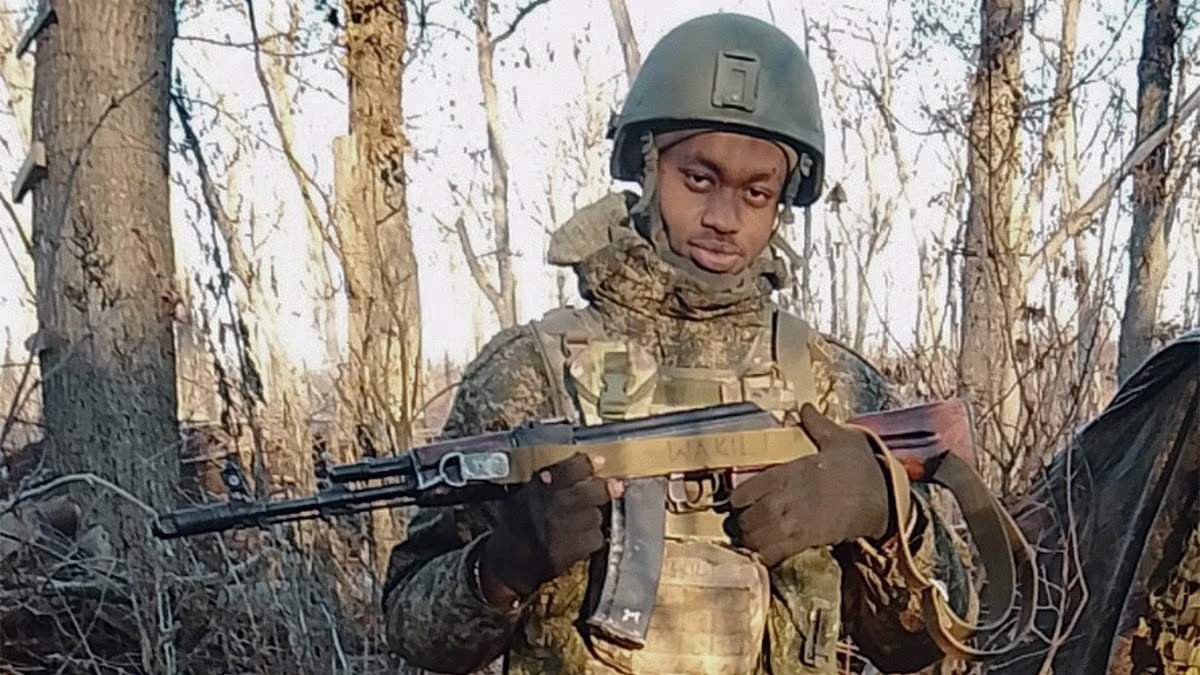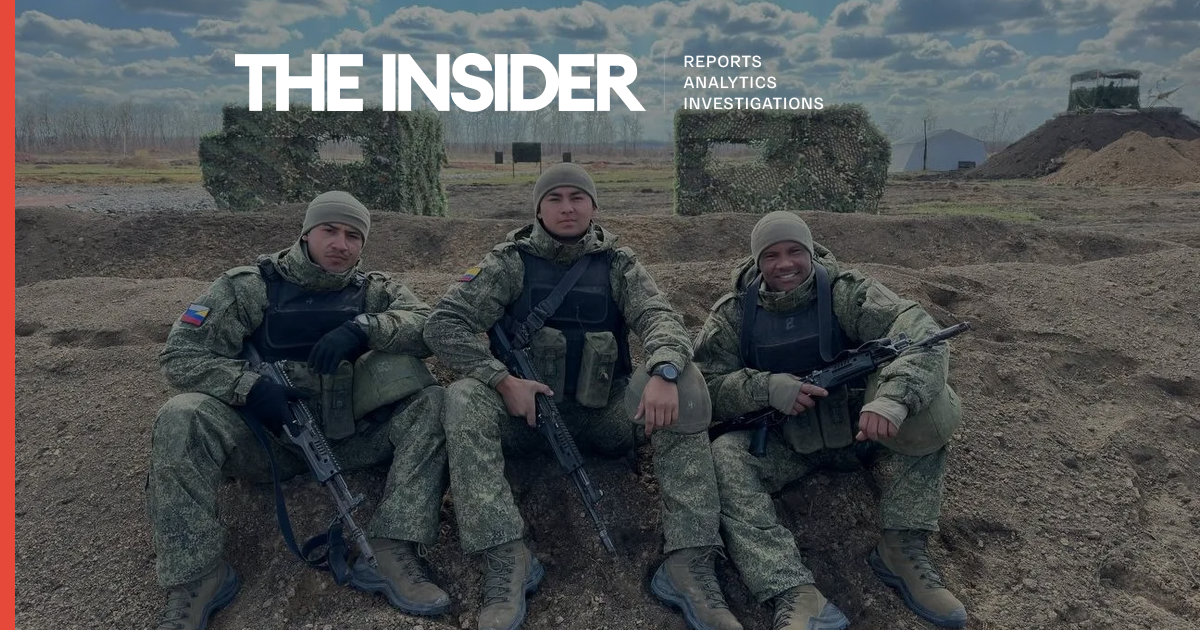
Two Brazilians used social media to convince their fellow countrymen to sign up for service in the Russian military. When their victims ended up at the front in Ukraine, the fraudulent recruiters pocketed the payments owed to them. Exploiting their targets’ ignorance of Russian, the two con men convinced more than ten Brazilians to sign up. Some went missing or were killed at the front. After the Russian military prosecutor's office opened a criminal case, the recruiters vanished. However, their accomplice — a Brazilian-born “Donbas veteran” — remains free and is working to defraud the relatives of missing soldiers. Contents1.A notary posing as a psychologist2.“The war will be over before you complete training!”3.Assistance with the contract “in cooperation with the government”4.A Brazilian from Donbas5.From reality show to military recruiter6.“They don't even talk to us”7.“Russian propaganda is at work”A notary posing as a psychologistIn August 2025, CNN Brasil reported on the disappearance of 25-year-old São Paulo resident Anderson de Oliveira Ferreira. That February, he had traveled to Russia, telling his mother, Helade de Oliveira Medeiros, that he was going to work in private security. By summer, she had learned that her son had in fact gone to fight in Ukraine — on the Russian side. His fellow soldier told Medeiros that Anderson had not returned from a combat mission. He left behind a five-year-old daughter.Anderson Ferreira in Russian military uniformAnderson Ferreira was a victim of fraudsters who recruited Brazilians into the Russian army, then misappropriated the payments owed to them. Brazilian nationals Arthur Michel Kreff Avalone and Antonio Vicente de Aguiar Neto offered assistance to Brazilians interested in signing military contracts. Then, upon their arrival in Russia, volunteers were taken to a notary under the pretext of visiting a “military psychologist.” There they were forced to sign a document in Russian: a power of attorney form granting the recruiters access to their bank accounts. As The Insider established, more than ten Brazilians fell for the scheme run by Avalone and Neto.Helade Medeiros sent The Insider photographs of her son’s military identification tag, along with copies of his passport, military ID, contract with the Russian army, and documents proving that in February 2025 her son had signed a power of attorney in favor of a person named Arthur Michel Kreff Avalone, registered in Moscow at 2 Bolshaya Tulskaya Street, room 95.The address matches the Shelterz Hostel, which accommodated arriving military volunteers, according to one of the victims of the fraud. The Insider also has screenshots from a banking app proving that Avalone withdrew approximately 2 million rubles ($27,600) from Anderson Ferreira’s account.Anderson Ferreira’s “dog tag”Alfredo, another Brazilian who signed a contract with the Russian army through the mediation of Avalone and Neto, said that the fraudsters had stolen $34,500 from him. He provided screenshots from his banking app showing withdrawals made in the name of Avalone, as well as a card registered to his account under the name A DE AGUIAR NETO. Money was also stolen from six more of Alfredo’s fellow soldiers — two of whom, including Anderson Ferreira, were killed in combat.Russian military recruitment centerAnother victim of Avalone and Neto was 44-year-old historian Fabio Santos. According to his sister, Terezinha Sedei, Santos went to war “because he always had a great interest in issues of war and geopolitics.” Before his departure, Santos also corresponded with Avalone and Neto. In May 2025 he posted photos from Russia on Instagram, including pictures of him together with Neto. “While cowards flee, the noble seek glory! Mother Russia,” Santos wrote. The recruiter commented: “We’re together, brother!”Santos last contacted his family on July 11, 2025. According to his relatives, his phone has been in someone else’s possession ever since. Attempts to get a response from the recruiters were similarly unsuccessful.“The war will be over before you complete training!”According to Alfredo, he contacted the recruiters through a private Telegram chat that foreigners looking to join the Russian army used in order to exchange information among themselves. The chat was set up in early December 2024.Alfredo forwarded The Insider voice messages from Avalone in which the recruiter claimed that he and Neto planned to enlist before Dec. 20 of that year, suggesting that all foreigners who could make it to Russia before that date go to the recruitment center together. He also offered to take care of those who arrived later, promising that those who had already enlisted would ask their battalion commander to help the newcomers.Arthur Avalone, Antonio Neto, and Rodolfo Cordeiro with Brazilian recruitsAvalone assured everyone that the war was about to end and that those who came now might not even have to fight: “All you need to do is come to Russia, sign the contract, and the money will come — 100,000 reais [$19,700]. Training starts right away. It's quite possible that while we’re in training, a peace agreement will already have been signed. So let's take advantage of the situation, guys.”Neto, for his part, spoke about the prospects of obtaining Russian citizenship. “For those willing, there is an opportunity to get citizenship right away. Russia is, in my opinion, the most protected country. One of the best places in the world to live. Russia has a significant advantage in the number of soldiers and artillery. We will be well protected,” he assured everyone.Visa problems held up Alfredo until February 2025, when he finally reached Russia along with several other Brazilians. Upon arrival, Avalone and Neto immediately took the group to a bank, where Alfredo was issued two bank cards. As it later turned out, a third card had also been linked to his account — and remained with the fraudsters. After the bank, the recruits were taken to the fake “military psychologist,” where their phones were taken away before they were pressured to sign powers of attorney in favor of the recruiters.“Once we signed the contracts, Avalone and Neto told us we had to pay a million rubles each [$13,800] to be sent to a good location at the front,” Alfredo recalls. “We agreed so as not to quarrel: in a few hours we were supposed to leave for the training center.”“We were told to pay a million rubles each to be sent to a good location at the front”
“This propaganda works”: How two Brazilian TikTokers got rich recruiting for the Russian army
Two Brazilians used social media to convince their fellow countrymen to sign up for service in the Russian military. When their victims ended up at the front…
2,740 words~12 min read