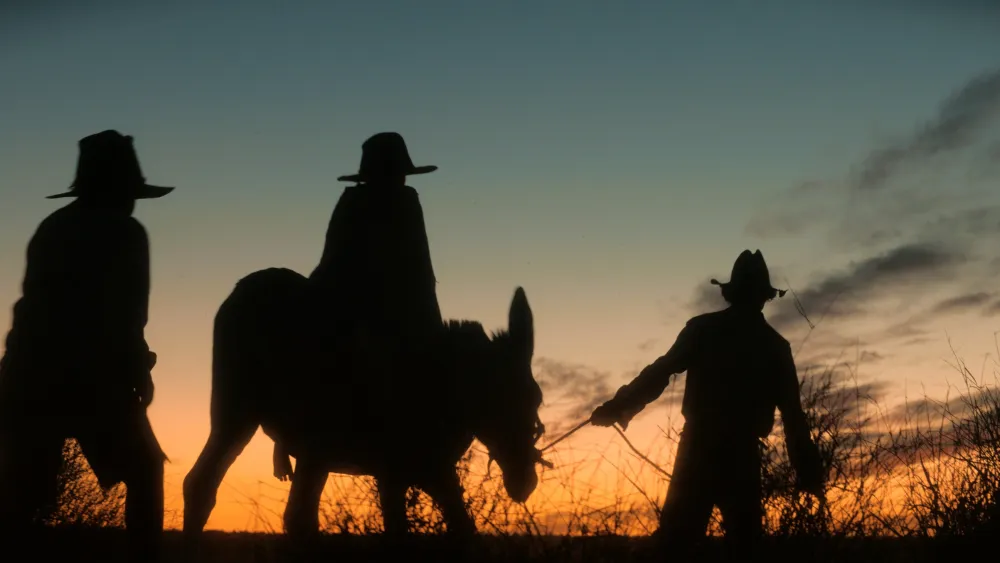
Australian auteur Warwick Thornton attended a post-screening event at the Shanghai International Film Festival following the Chinese premiere of “Wolfram,” his latest feature, which was in the main competition of the Berlin Film Festival earlier this year.
Set in a 1930s Australian mining town, the film follows two Aboriginal siblings, Max and Kid, who are forced into child labor. When fugitives abduct Max, Kid sets off alone to find her brother, while their mother Pansy – newborn in tow – crosses the desert with her partner and a Chinese miner named Zhang in a bid to reunite her family.
The project draws on Thornton’s personal history. Both his great-grandmother and his grandmother, who co-wrote the screenplay, were child laborers once compelled to dig for ore in the desert.
“This story matters a lot to me. It speaks to my roots, to who we are and where we come from, and it carries universal resonance for audiences worldwide,” Thornton said. His stated aim was to shed light on a chapter of Australian history that mainstream narratives have long neglected.
The director also spoke to the parallel suffering of Indigenous Australians and Chinese migrant workers under colonial rule. “Back then, Australia’s Indigenous peoples suffered brutal oppression under British colonizers, while Chinese migrant laborers faced equally harsh hardships at the same time,” he said. “If both communities endured such suffering side by side, why not tell a story about them standing up to it together?”