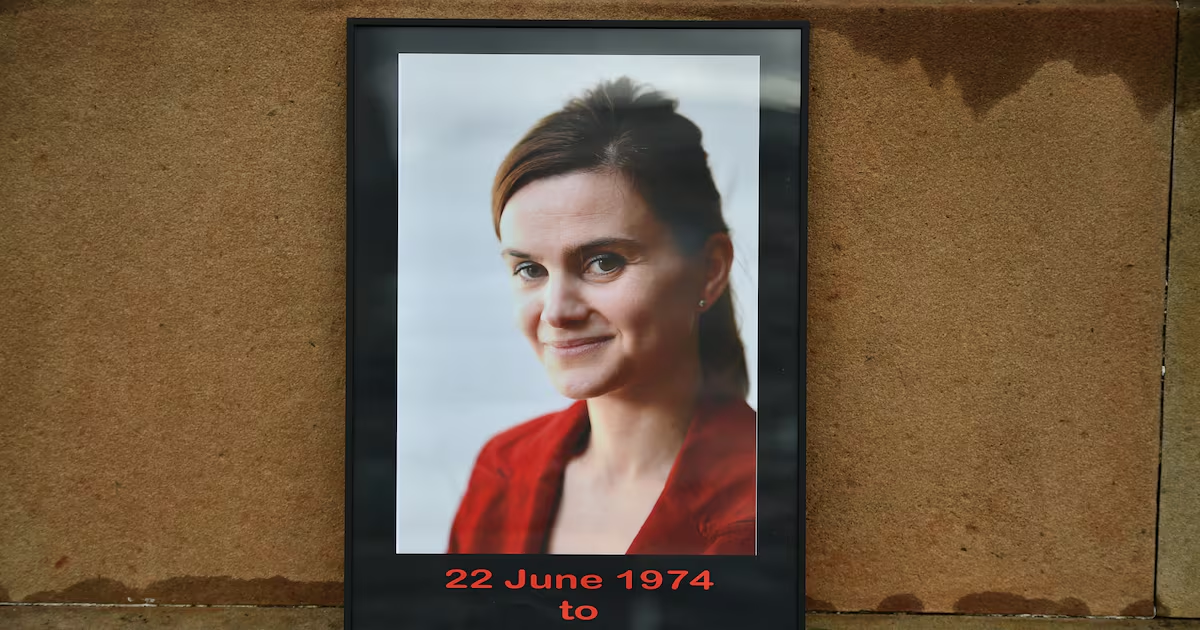
Ten years ago this week, the British MP Jo Cox was murdered. In his post on social media platform X marking the anniversary of that horrifying crime, Keir Starmer writes, in his very first line, that her killer was ‘a far-right terrorist’. Quite reasonably. It is obviously legitimate, indeed important, to identify the worldview motivating acts of political violence.
The problem is that those, like Starmer, who are quickest to invoke ideology in some cases consistently refuse to do so in others. Specifically, when the ideology in question is Islamist in nature.
The problem is that those, like Starmer, who are quickest to invoke ideology in some cases consistently refuse to do so in others
After another MP, Sir David Amess, was murdered by an Islamist fanatic in 2021, Starmer did not describe the killer in the same ideological terms, instead speaking about the ‘poison of extremism’ more broadly.
In another post on the anniversary of Amess’s death he made no reference whatsoever to the worldview motivating the murder. Instead, he stated, in far vaguer terms, that ‘violence and threats to our democracy will never prevail’. Note the difference in the language used: ‘far-right terrorist’ versus generalised, abstract ‘violence’. These are, obviously, deliberate choices.