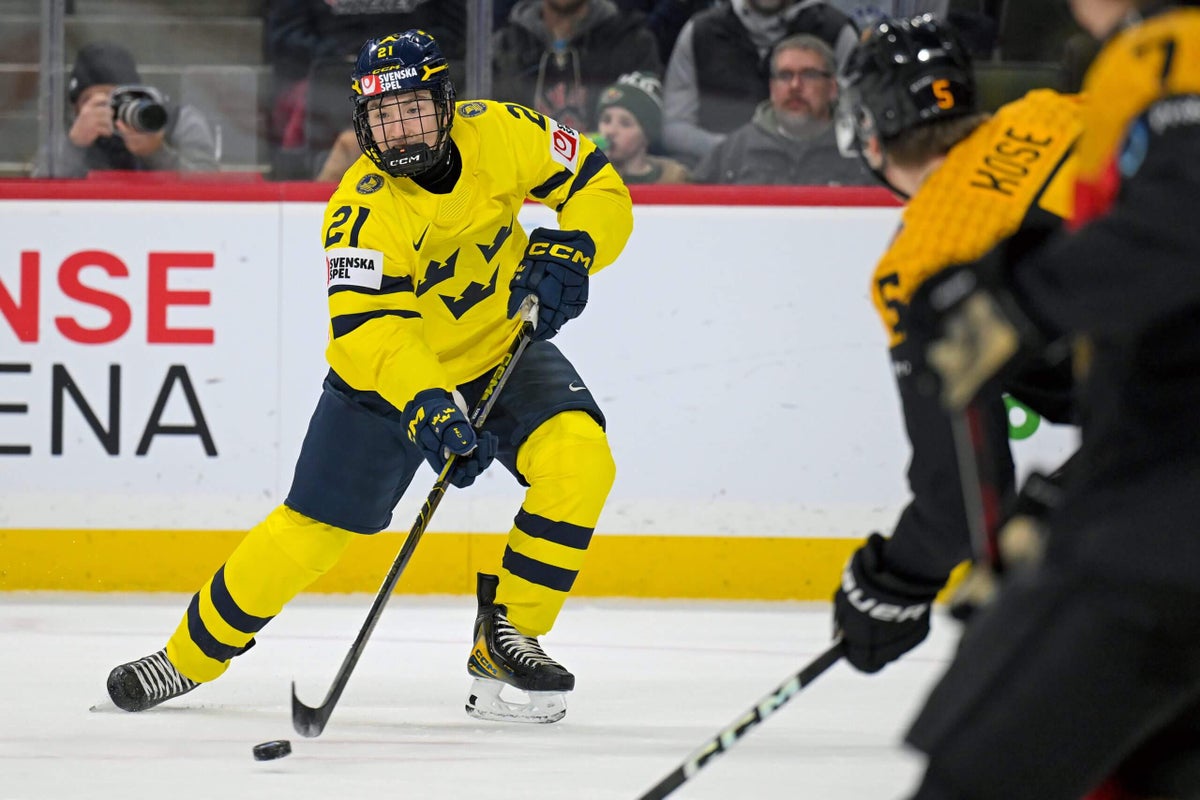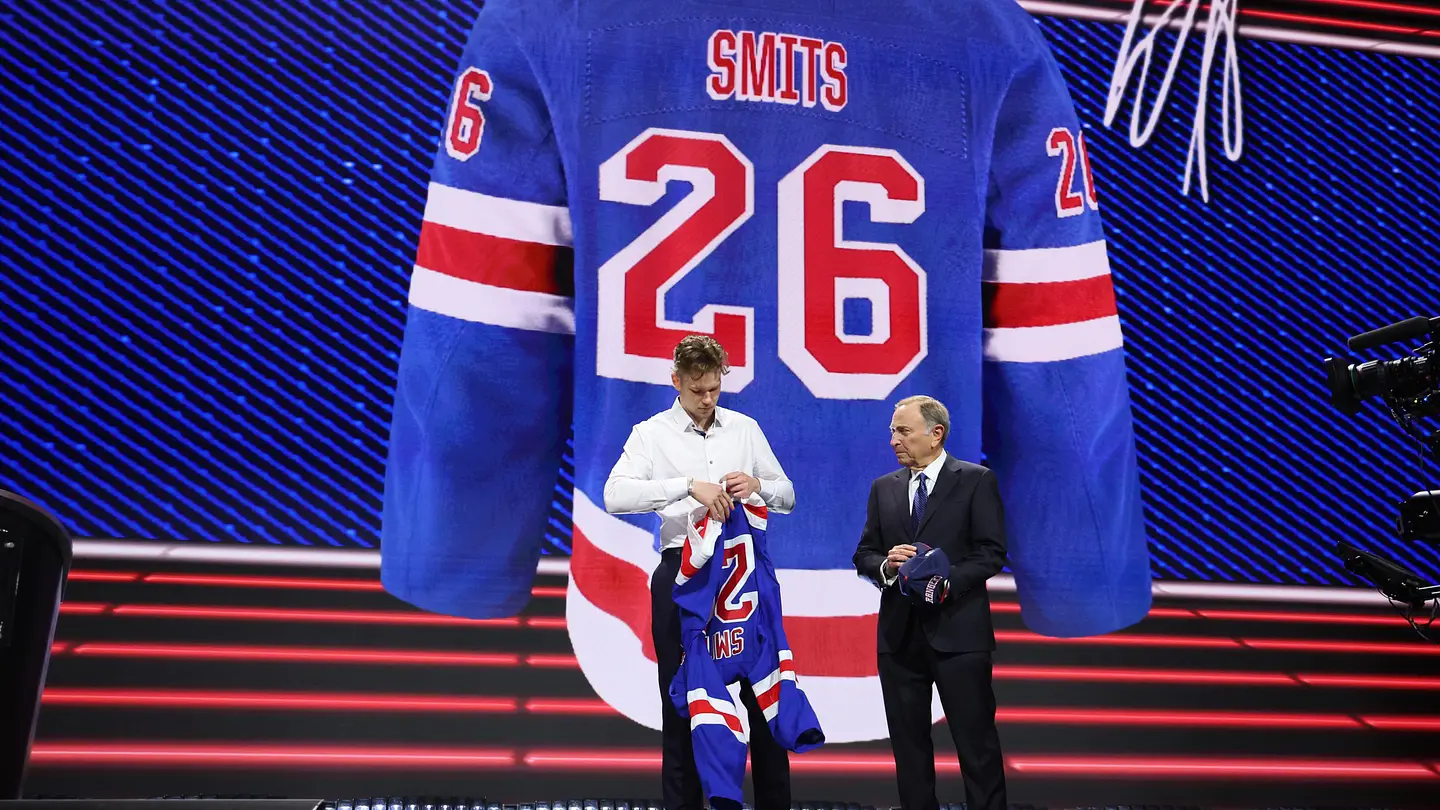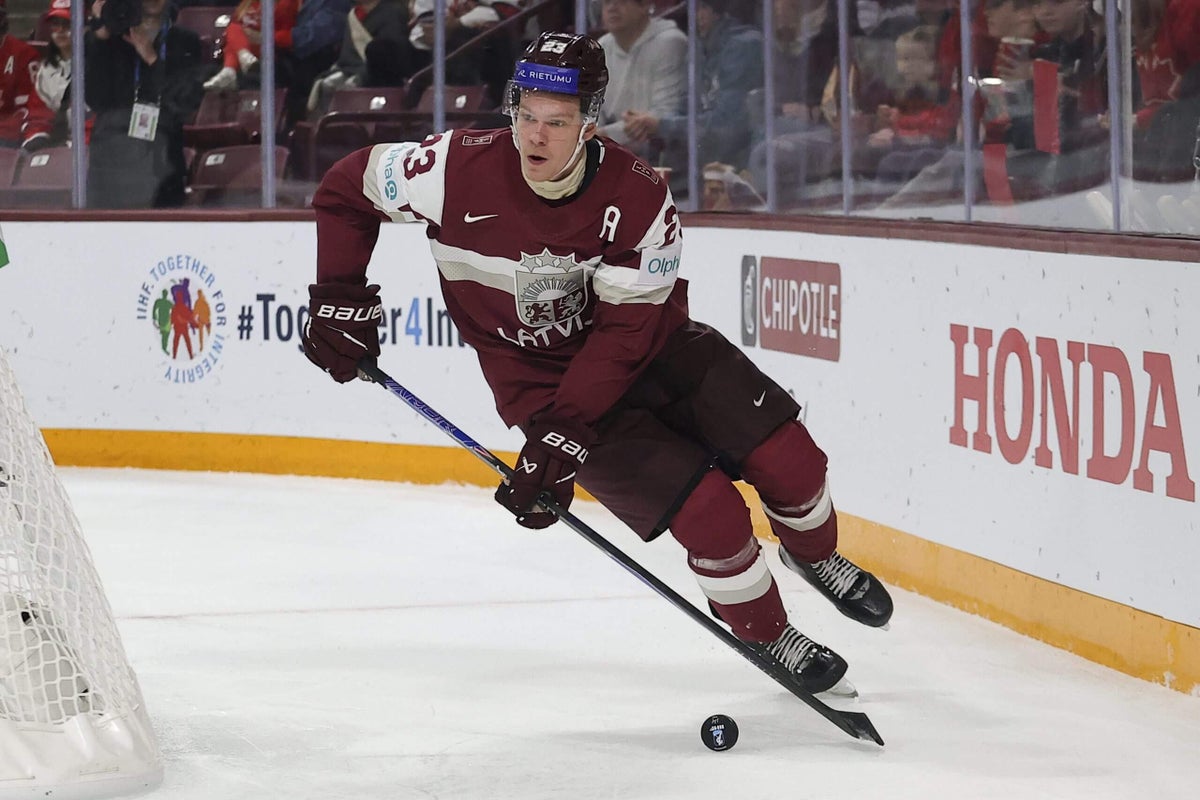
Editor’s note: This is the third story in a week-long series looking at prospects under consideration for the New York Rangers with the No. 5 pick in the upcoming NHL Draft. Read about University of North Dakota defenseman Keaton Verhoeff and Soo Greyhounds defenseman Chase Reid.Oliver David only coached Alberts Šmits for 16 games after EHC München (Germany) acquired him this season, but it didn’t take long for the two to develop a running joke. The defenseman, a projected top pick in this summer’s 2026 NHL Draft, is reserved and serious. So every once in a while, when David saw him around the rink, he gave the player a reminder.“Hey, it’s time to smile,” the head coach would say. “You haven’t smiled yet today.”The 6-foot-3 Šmits would acquiesce.“He couldn’t hold it back,” David said. “He would laugh a real laugh.”Who can the Rangers draft at No. 5?Peter BaughThe 18-year-old Latvian, on loan from his Finnish club, Jukurit, arrived in Munich in February. He registered one assist in five regular-season games, but then he scored two goals and put up six points in 11 playoff contests.“He showed up and went right to work — no complaints — and did his thing,” said David, who describes Šmits as mature beyond his years. “He’s got a high belief in himself. He doesn’t shy away from anything, including being (loaned) to another country where you don’t speak the language.”Šmits moved by himself from his home country to Finland shortly before turning 14. Since then, he’s developed into an Olympic standout and potential target for the Rangers, who have the No. 5 pick in this summer’s draft.The case for ŠmitsŠmits probably has the highest defensive upside of any of the top defensemen prospects, a group that also includes Chase Reid, Carson Carels and Keaton Verhoeff. One Western Conference scout pointed out that Šmits’ game also has an old-school element to it. That could have some appeal to a Rangers front office that has frequently stressed a desire to deploy players who are hard to go against.“He plays hard-nosed hockey,” said the scout, who was granted anonymity to speak freely. “He’s fearless. He plays with emotion and I like that about him.”“Kind of a throwback,” said an Eastern Conference scout who was also granted anonymity to speak freely. “He’s got some wild side to him.”David described Šmits as unafraid.“He has no issues going into battles and he does not shy away from net-front scrums or confrontation or combat,” he said.Šmits doesn’t have the eye-popping numbers of other top defensive prospects like Carels and Reid, but they were playing junior hockey. Šmits was going against men in the top Finnish and German leagues, as well as at the Olympics, during which he laid a massive hit on Team USA captain Auston Matthews. David, an American who previously coached in the USHL, said that if Šmits were facing kids his age in North America, he would have been “a world-beater.”The Western Conference scout projects Šmits as a “two-way, hard-nosed, minute-eater D-man.”“Last year at the U-18s, he was a stud,” the Eastern Conference scout added. “Latvia has to defend a lot in the international competition, so he doesn’t get to show his offense that much until they play easy opponents. That’s when he showed it. He’s got enough of it.”This scout compared Šmits’ skill set to that of Utah’s Mikhail Sergachev.David was impressed with Šmits’ stick on defense, saying that he’s good at getting out of defensive zone corners in different ways. Šmits can also play on both special teams units and, in David’s eyes, showed the ability to handle pressure both at the Olympics and during the German league’s postseason.“Size is not an issue, speed is not an issue,” the coach said. “Playing within a system, he can adjust.”Off the ice, David was also impressed with the prospect.“Manages his day to day as good if not better than any 18 year old that I’ve been around, and I’ve been around thousands in 12 years of junior hockey,” David said. “His age told one story but he was a man in many senses of the word.”The case against ŠmitsThe Western Conference scout projects the other top defensive prospects to have more offensive ability than Šmits, though different evaluators might not share that outlook. Colleague Corey Pronman, for example, ranked Šmits the No. 2 prospect in this draft and forecasts him as having “quality amounts of offense at the top level.”David said the Munich coaches talked with the young player about improving his first pass on breakouts.“He instinctively joins the offense and is mobile off of the offensive blue line, and he does it really well,” David said. “He can hold onto a puck really well, so I think passing also as he moves through the neutral zone and in the offensive zone when he’s in motion are just things that he can continue thinking about and adding once he has a bit more experience in those situations at a higher level.”The Eastern Conference scout also mentioned observing some stiffness in Šmits’ hips when skating, though he didn’t seem to consider it a major red flag.“(Carels and Reid) are slightly more agile when they transition from forward to backward and pivot against rushes,” the scout said. “Šmits is a little bit more linear, but not one of them has (skating) as an issue.”At the recent NHL Draft Combine, Šmits told The Athletic he wants to get stronger this summer.“It’s just filling out his body,” David said. “He has a huge frame. … He’s tall, wide and skinny at the moment. So putting on mass, probably strength to go along with that.”Does he fit with the Rangers?Of all the top defensemen the Rangers could potentially take at No. 5, Šmits appears perhaps the closest to being able to step into the NHL. He is expected to come to North America for 2026-27 and could play a mix of NHL and AHL games.“I think he can play next year in the AHL full-time,” David said. “I watched two hours of AHL playoffs (recently) scouting players. He can play.”And if he plays full-time in the AHL, he’d likely get NHL looks, too.Long term, Šmits projects as a top-pair left-shot defenseman, which would fit nicely with the Rangers, who already have Adam Fox on the right side.— Vincent Z. Mercogliano contributed to this report.
Scouting the Rangers’ NHL Draft options: Alberts Šmits, throwback with a wild side
Of all the potential defensemen New York could take with its top pick, Šmits is perhaps the closest to being able to step into the NHL.
1,060 words~5 min read