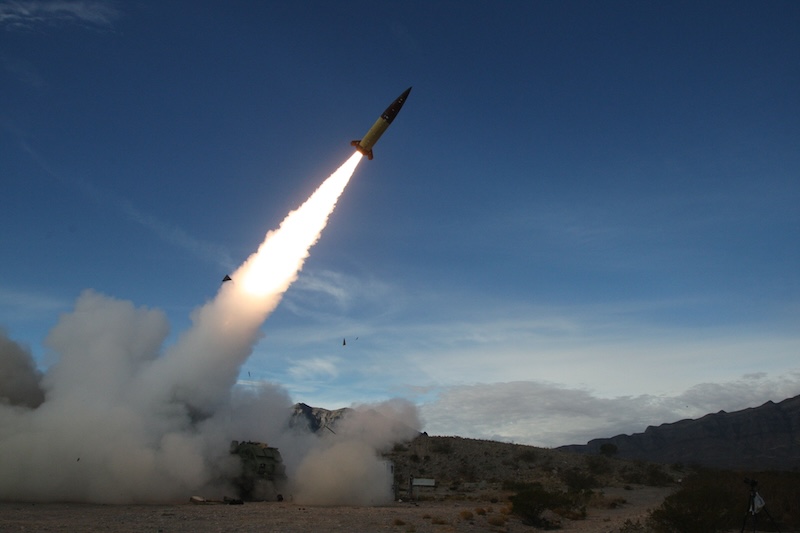
Colin DemarestAdd Axios as your preferred source tosee more of our stories on Google.A Precision Strike Missile, fired at White Sands Missile Range, New Mexico, in 2025. Photo: Christopher Bohn/DVIDSLockheed Martin plans to quadruple its output of Precision Strike Missiles, used for the first time in the Iran war.Why it matters: Questions about production capacity and stockpile health haunt the U.S. military, especially as its offensive alongside Israel breaks the one-month mark. And PrSM's first-ever employment has already drawn scrutiny.U.S. Central Command on Tuesday night denied reports from outlets including the New York Times and BBC that the missile was used in an attack that hit a sports hall and elementary school near an Islamic Revolutionary Guards Corps complex in southern Iran, killing around 21 people.Driving the news: Lockheed and the Defense Department announced the production ramp-up last week.The company is planning "targeted investments" in advanced tooling, facility upgrades and testing equipment "to slash production lead times," according to the department. No dollar figure was provided.There is also potential to negotiate a multiyear contract, should Congress authorize it.State of play: PrSM, pronounced "prism," is a short-range ballistic missile. It's compatible with the popular High Mobility Artillery Rocket System, and it's meant to replace the Army Tactical Missile System.The baseline version of PrSM can hit targets hundreds of miles away.An anti-ship option, dubbed Increment 2, is also in the works. A successful flight test was announced March 12. Additional tests are expected this year.Go deeper: Lockheed plans to triple output of coveted Patriot interceptors
Lockheed plans Precision Strike Missile production boost
The short-range ballistic missile is compatible with HIMARS and is meant to succeed ATACMS.
253 words~1 min read