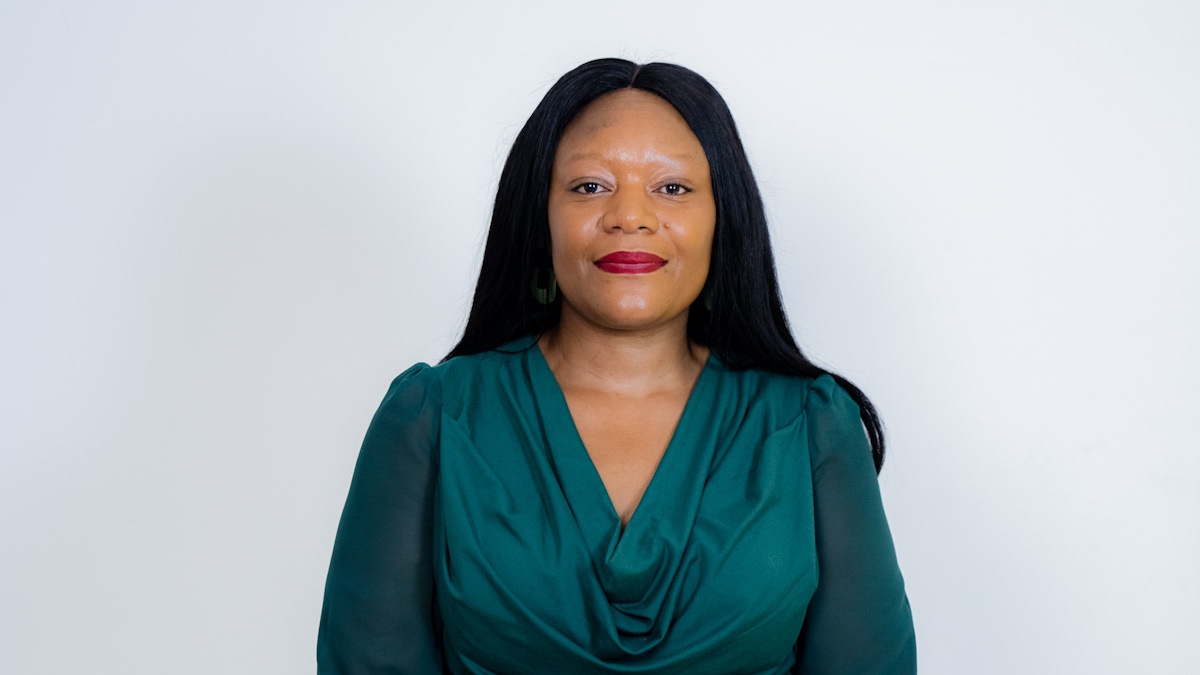
Lungile Mginqi, digital transformation strategist. In May 2026, Amsterdam-based news publisher NL Times reported allegations that Microsoft shared the names of Dutch civil servants working for regulatory agencies with the US House of Representatives. The lesson is immediate and uncomfortable: the issue is not only where data is hosted, but who can compel the provider.That is the test South Africa must apply to AI sovereignty.South Africa's AI policy debate is intensifying but circular. Most of it still focuses on familiar infrastructure layers: energy, chips, data centres, compute, data, foundational models, applications, skills. That debate matters. It is also incomplete.Every major AI power has already placed its sovereignty bet. The US staked dominance across the entire stack. India targeted compute leverage through 38 000+ GPUs via the IndiaAI portal, making compute access its strategic advantage.China focused on reducing foreign technology dependence through hard tech substitution in strategic systems, ensuring operational independence. Europe bet on federated data governance and trusted spaces, prioritising data-flow control and regulatory oversight.Each region is choosing its own higher-return layer based on capacity, risk tolerance and strategic ambition.South Africa must now make the same choice. The question is not whether it can own every layer. It cannot. The question is which single layer it can control deeply enough to make every other dependency safer when suppliers change terms, prices move, support channels close or geopolitical weather changes.Sovereignty does not live in the layer that looks most impressive. It lives in the layer that remains controllable when strategic workloads come under stress.That layer must deliver operational control, not contractual comfort. The answer is sovereign cyber security.This is not cyber security as risk function, compliance checklist or imported toolset. Sovereign cyber security means owning, or enforceably governing, the control architecture around strategic AI workloads: key custody, telemetry visibility, audit rights, local assurance, exit rights and the South African-controlled cyber engine room that prevents black-box dependency.Procurement is where sovereignty becomes enforceable or collapses into aspiration.South Africa will use Microsoft, Amazon, Google, Huawei, Alibaba, open-source models and foreign cyber security firms. That is not the problem. The problem is using them for strategic workloads while the control engine sits elsewhere.If the keys, telemetry, software dependencies and continuity levers lie outside South Africa's effective jurisdiction, local hosting buys comfort, not sovereignty.South Africa is not starting from zero. President Cyril Ramaphosa's 2026 State of the Nation Address cited 55 data centres built and more than R50 billion in expected digital infrastructure investment over three years.That is real capacity progress. But a workload running in Johannesburg while key management, telemetry and support sit abroad is not control. The data is local; the engine room is not.AI workloads are not passive archives. They act on data, trigger decisions and support public infrastructure. The real question is not where the server sits. It is who controls the workload when it comes under stress.Compliance is necessary but not sufficient. POPIA, data residency and cloud compliance can tell you whether data processing is lawful. They cannot tell you who holds the keys, sees the telemetry, approves changes, inspects the logs, recovers a workload or moves a critical service when the provider relationship or geopolitical context changes.Once workloads are classified by risk − ordinary commercial, regulated, high-risk public service, national-critical − the sovereign cyber control architecture resolves into three control domains.The first is cryptographic control: For high-risk workloads, sovereign key custody cannot be optional. If South Africa cannot control the keys, its sovereignty is conditional. This means South African-controlled HSM vaults, local cryptographic key rotation rights, zero-trust vault architecture and escrow provisions for critical AI systems.The second is operational visibility: Telemetry, security logs, audit rights, model-behaviour insight and data-flow visibility determine whether oversight is real or decorative. This requires telemetry residency in-country, sovereign SIEM deployment, real-time log access rights, model-behaviour monitoring and incident-response authority under South African control.The third is strategic exit: Portability, recovery rights and exit provisions determine whether a workload can move under supplier failure, legal conflict, pricing shock or geopolitical pressure. If it cannot move, dependency is embedded into the architecture irreversibly.For national-critical workloads, these controls cannot come from contract clauses alone. South Africa must build or co-build an OEM-grade sovereign cyber engine room: key-management platforms, telemetry controls, audit mechanisms, 24/7 local SOC capability, national threat-intelligence feeds and assurance layers with the source-code or configuration access needed to inspect the rules, hold the vault keys and enforce its own standards.This does not mean owning every platform end-to-end. Ordinary workloads can run on commercial terms. Hyperscalers often provide stronger security than local alternatives. Sovereign cyber security does not dispute that. It argues something narrower and harder: strategic workloads require sovereign terms for global capability.That is not isolation. It means building complementary local capability: supporting South African AI models, African-language capabilities and domain-specific applications as supporting layers while ensuring all strategic workloads − whatever their provider − operate under South African control conditions.The principle is clear: local capability is not a replacement for global access, but a foundation for control. Partnership with hyperscalers is essential. Partnership without enforceable control is not sovereignty.Digital trust already has rand-denominated consequences. SABRIC reported that digital banking fraud cases rose from 31 612 in 2023 to 64 000 in 2024, with losses climbing from R1 billion to more than R1.4 billion.These are not hypothetical risks; they are current losses in digital systems that lack sovereign control and real-time oversight.When AI sits inside identity, tax, grants, health, policing, finance, logistics and energy systems serving 60 million South Africans, the control architecture stops being a technical function and becomes national resilience.A breach, lock-out or jurisdictional compromise in a strategic AI system is no longer a cyber incident. It is a sovereignty incident with economic, social and political consequences measured in billions of rands and millions of citizens.The difference between a managed incident and a cascading failure is control.South Africa should declare sovereign cyber security a national AI-stack layer in its own right, not a control buried inside contracts.Procurement is where sovereignty becomes enforceable or collapses into aspiration. For strategic AI, cloud and platform contracts, the same diagnostic questions must apply: Who holds the keys? Who sees the telemetry? Who audits? Who recovers? Who moves the workload when the supplier relationship, legal context or geopolitical weather changes?The mistake is calling partnership without enforceable control sovereignty. If the AI strategy says sovereignty but procurement buys dependency, the policy has failed before the workload goes live.Here is the diagnostic that matters: if your provider changes terms, restricts support, raises prices, throttles workloads, limits access or exits under geopolitical pressure, can you keep the workload running, preserve access to your data, rotate your keys, recover the service and maintain operations without foreign permission?This is a national policy question. But it is also an enterprise-control question. Government must set the procurement floor and classify strategic workloads. Regulators must enforce auditability and control standards. Public sector CIOs must translate policy into architecture. Private sector CEOs and CIOs must apply the same discipline to enterprise AI strategy.If the answer to the diagnostic is no, the issue is not cyber risk. It is loss of control dressed up as digital strategy.South Africa does not need another sovereignty slogan, and neither do its enterprises. Both need to co-build an OEM-grade sovereign cyber platform, enforce it through procurement and design control into the architecture, the discipline that makes unavoidable AI dependency governable.Data centres create capacity. Sovereign cyber security creates control.
AI sovereignty fails without sovereign cyber security
If the keys, telemetry, software dependencies and continuity levers lie outside SA's jurisdiction, local hosting buys comfort, not sovereignty.
1,234 words~6 min read