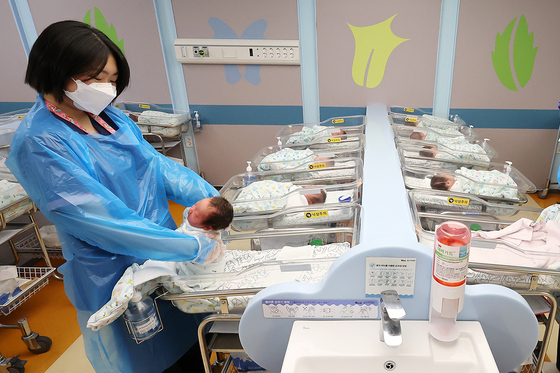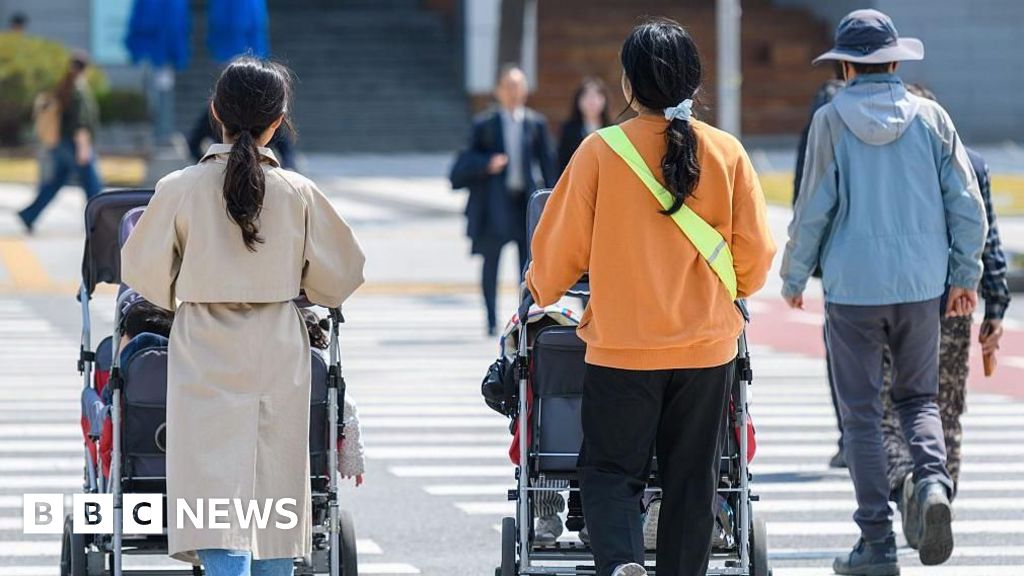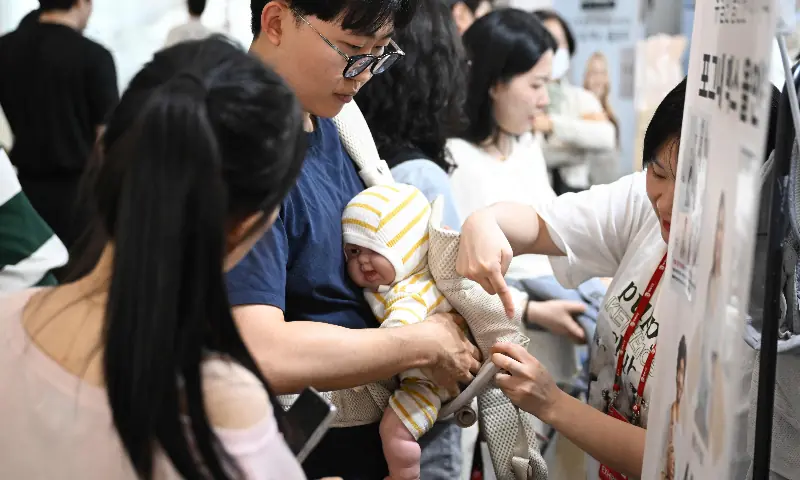
South Korea's facing a demographic crisis — and it's trying everything from playing cupid to offering cash incentives to try to reverse course. For years, the country has had the lowest total fertility rate in the world. By the early 2070s, South Korea's total population is expected to dwindle by about a third. About half the population will be 65 or older, while the working age population (15-64) will decrease by more than 20 million. The country has spent more than 360 trillion won — roughly $360 billion Cdn — on programs and demographic policies to boost birthrates over the past 20 years. Yet for years, birthrates continued to plunge.That may be changing now. The fertility rate, which measures the number of children a woman is expected to have over her lifetime, rose slightly in 2024 and 2025, as it has done so far this year. In 2023, South Korea's birthrate was 0.72 per woman. As of January 2026, it's 0.99.Now, researchers around the world — including here in Canada — are taking a close look at what South Korea might be doing right. Mayor plays cupidIn some parts of the country, the government is playing matchmaker to try to boost birth rates.Jung Ye-Eun, 31, and Jin Hyun Gu, 38, say they wouldn't have met if not for a matchmaking event set up by their local government, in the Dalseo district of the city of Daegu."It would have been difficult for us to meet [without this event,]" said Jin.Now, they're married and thinking about kids. Jung Ye-Eun, 31, and Jin Hyun Gu, 38, met at a government matchmaking event. They're now married and thinking about kids. (Kim Chul-Joong/CBC)It's the kind of outcome Lee Tae-Hoon — district mayor-turned-matchmaker — was hoping for. He launched a campaign in 2016 to encourage young people to get hitched and have kids — building a park where he hopes they'll go on dates, even commissioning mascots for the program.Lee compares population decline with the climate crisis."We educate children on global warming so they know why it's happening and what to do about it," he said."I want to teach young people that it's important to have kids, too.… Otherwise, our future will be dim."Lee Tae-Hoon, the district mayor of Dalseo in Daegu city, launched a campaign in 2016 to encourage young people to get hitched and have kids. (Kim Chul-Joong/CBC)In other parts of Korea, local governments offer housing benefits. In the city of Incheon, the municipal government offers housing for newlyweds and new parents for about $1 a day. The idea is that young people living in these apartments will be able to focus on making babies instead of rent.That's on top of cash benefits from the national government, such as a lump-sum payment of about $2,000 for new parents (which increases to $3,000 for subsequent children), as well as a monthly allowance of about $100.There's also medical aid. In Seoul, a woman can try IVF up to 25 times per child born — most of it covered by the government. In comparison, only some provinces cover the costly process in Canada — and only one fully funded cycle per lifetime. The company giving its workers $100,000 per childIt's not just the government encouraging young people to have more babies. Companies are also stepping in.At Krafton, a video game company based in Seoul, employees receive about $100,000 per child — about $60,000 as a lump sum, then $40,000 spread out through the child's early years. There are also other benefits — a free company daycare, open from 8:30 a.m. until 9:30 p.m., up to two years of parental leave and an automated hiring process to backfill those on leave, so new parents don't feel guilty for taking time off or pressured to come back earlier.At Krafton, employees receive about $100,000 per child, along with other benefits. (Kim Chul-Joong/CBC)It's a matter of survival, says Jaekeun Choi, Krafton's head of general operations."If the birthrate continues to plunge the way it has for years, ultimately all of South Korean society, including our business, will find it hard to survive," he said.The effort may be paying off, as the company says more workers have had kids since the program began. Krafton is now working with researchers at Seoul National University to confirm if that's because of the program.Do pronatalist policies work?Queen's University professor Maxwell Hartt is among the researchers paying close attention to what's happening in South Korea. Canada's birthrate is also at a historic low: 1.25. Statistics Canada says more women are choosing to remain childless, delaying motherhood or facing barriers to having children.Generally, researchers have found pronatalist policies aren't the most effective way to tackle population decline, says Hartt, a population decline researcher based in Kingston, Ont.In Korea, for instance, it's hard to say if the policies are what moved the needle in the past two years considering they didn't appear to be working for decades prior. There could be other factors at play, said an official from the Ministry of Data and Statistics, like a larger number of people in their early 30s or changing attitudes about marriage. WATCH | South Korea's plan to avoid population decline :How South Korea is trying to incentivize people to have kids9 hours ago|Duration 6:58South Korea had the world’s lowest birthrate for years. After billions of investment from the government — including cash incentives and matchmaking programs, the situation appears to be turning around. For The National, CBC’s Jennifer Yoon breaks down South Korea’s unconventional methods and whether similar measures could work in Canada.And while there are some negative reasons driving the declining birthrates in some countries — economic instability or uncertainty — Hartt says there are also some good reasons."Women's educational attainment," he said. "Freedom, contraceptives or sanitation — these are not things we want to turn around."What policies like those implemented in South Korea can unquestionably do, Hartt says, is make a meaningful difference in people's well-being, social cohesion and even economic development, everything from affordable housing to expanded benefits to building more romantic public spaces. Generally, researchers have found pronatalist policies aren’t the most effective way to tackle population decline, says Maxwell Hartt, a population decline researcher at Queen's University. (Craig Chivers/CBC)Hartt thinks those goals are as worthwhile as trying to increase the population — especially as the global population is set to decline before the end of the century."This is the reality, [so] what's the best we can do with this? What are the good things that are happening, and what are the untapped resources?"
Cute, tiny and in short supply: What can Canada learn from South Korea's birthrate turnaround? | CBC News
Canada also faces a record-low fertility rate, and experts are looking to South Korea to see what they're doing right after years of plummeting birthrates.
1,088 words~5 min read