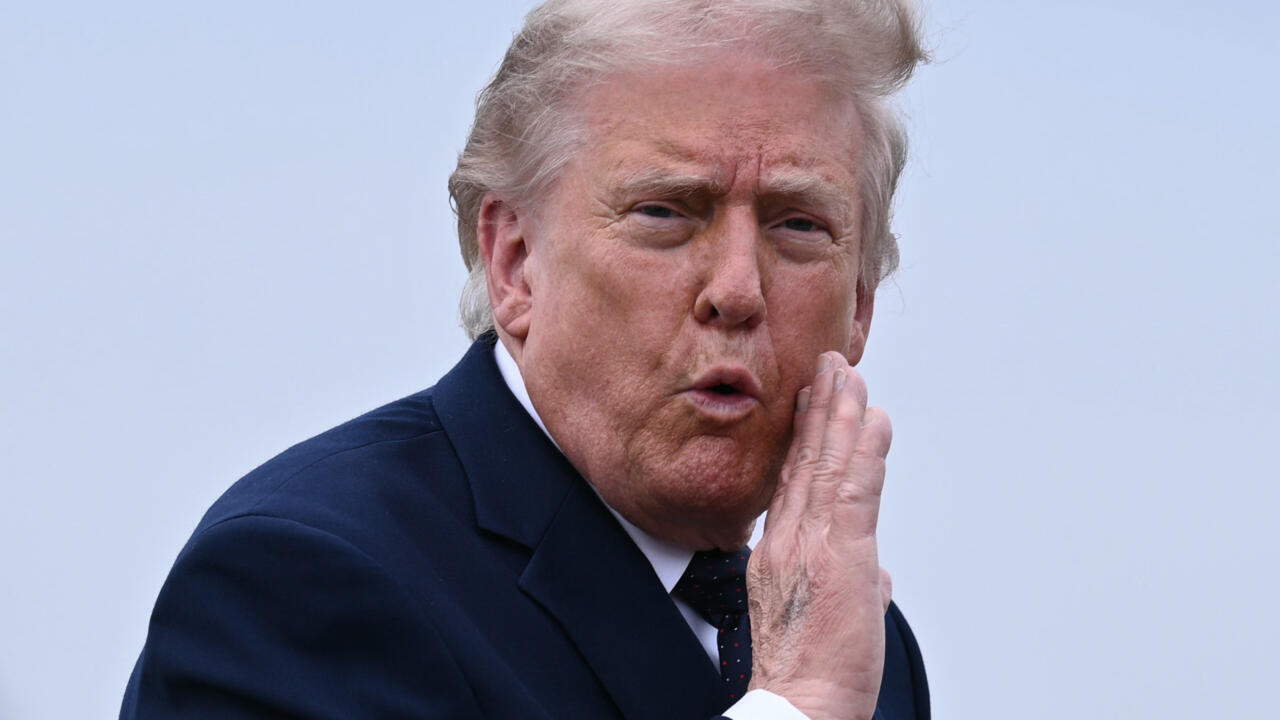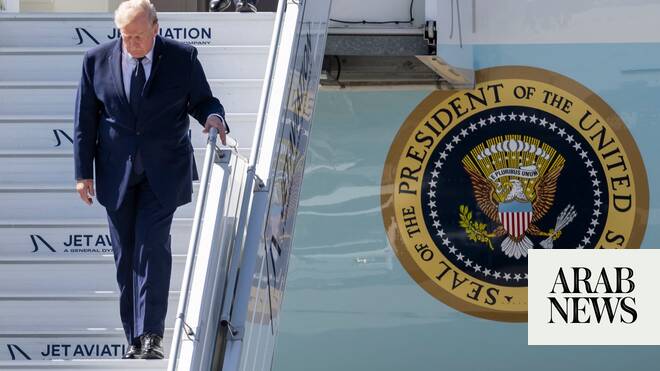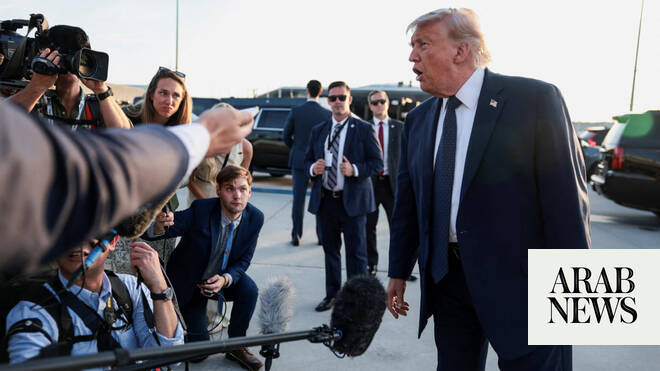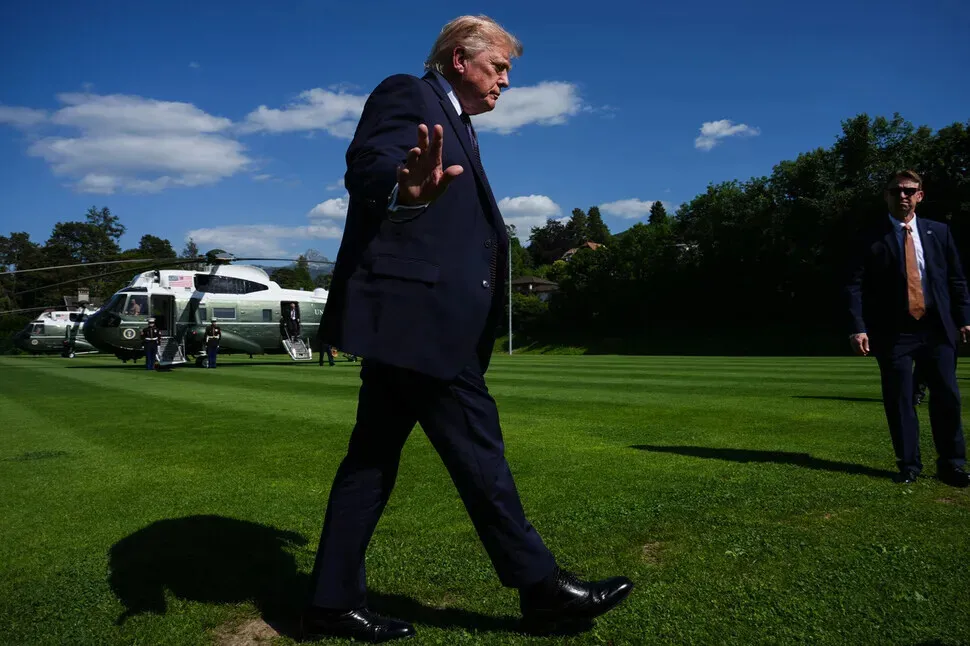
US President Donald Trump waves to reporters after arriving in Evian, France, for the Group of Seven summit on June 15, 2026. (AP/Yonhap)
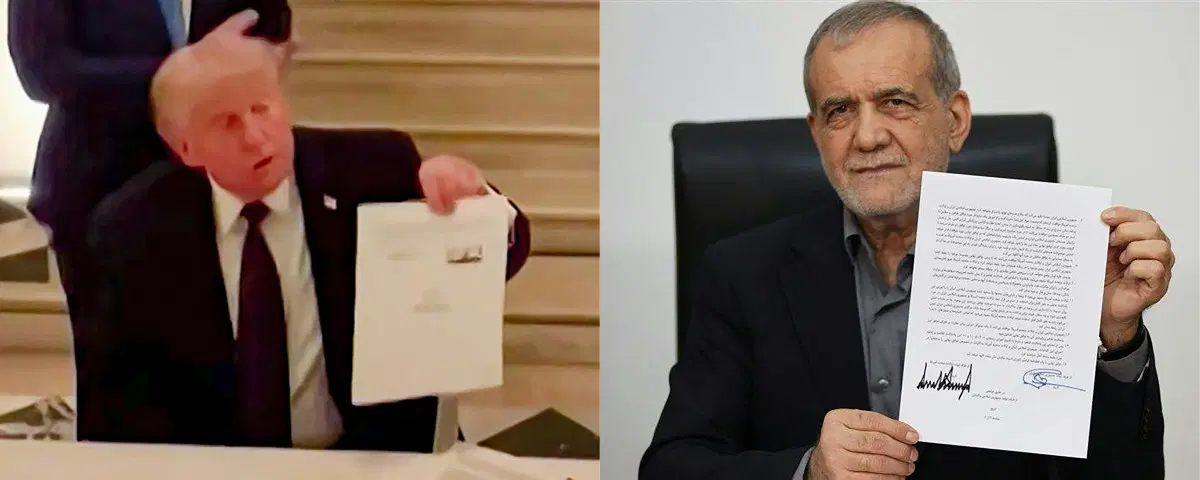
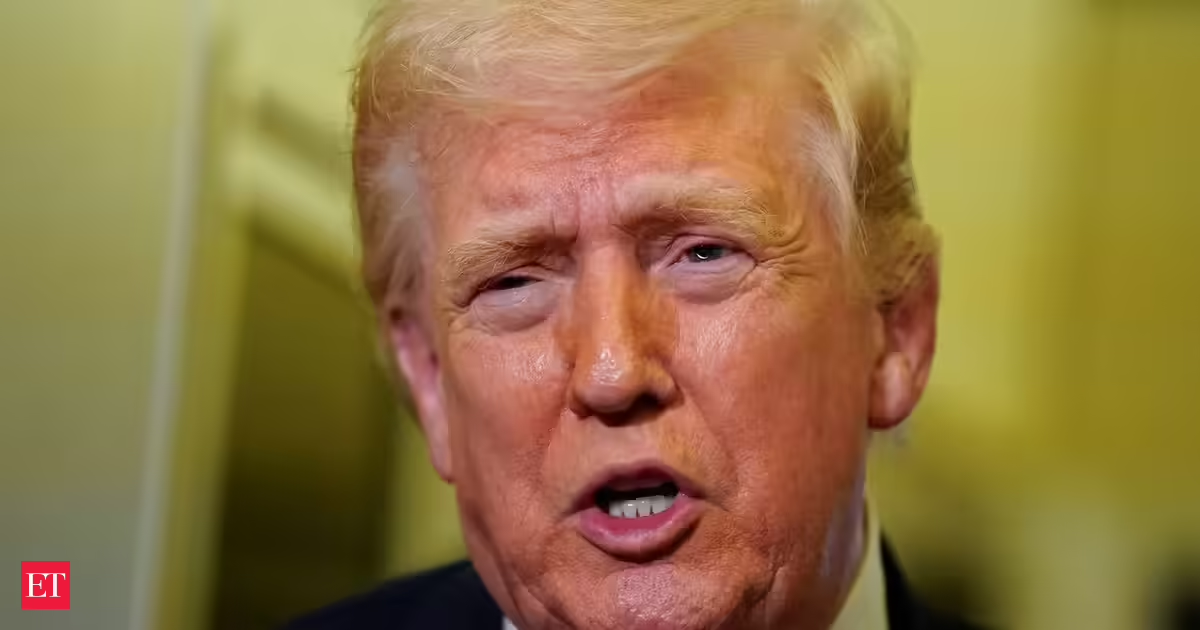
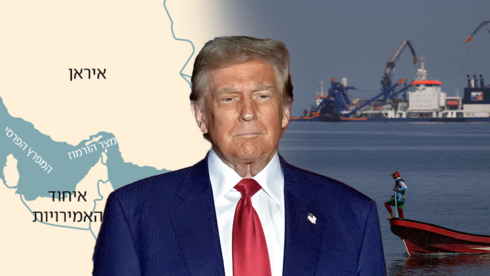
After the US and Iran inked a memorandum of understanding outlining a framework for ending hostilities and follow-up negotiations, criticism of the deal is mounting among hard-line Republicans and conservative allies of US President Donald Trump. The backlash centers on concerns that the agreement may not sufficiently reflect the administration’s original goal of curbing Iran’s nuclear program, with critics arguing it could instead open the door to economic relief for Tehran.Multiple high-profile members of the conservative camp expressed concern following reports that a deal with Iran had been reached. “Trump has surrendered to Iran,” Erick Erickson, a conservative commentator, said bluntly in a post on the social media site X on Monday (local time). “Those who kill Americans love this deal.”Marc Thiessen, a former Bush administration official who has reportedly advised Trump, told Fox News that same day that Trump’s deal bears a remarkable likeness to the 2015 Iran nuclear deal pursued by the Obama administration — a pact that Trump has long panned.“I’m anxious to see what the details of the deal are and what gets negotiated,” Thiessen said, “but I’m concerned.”The editorial board of the National Review, a conservative outlet, called it “discouraging” that Trump mentioned he would allow Iran to enrich uranium for non-military purposes, and criticized the MOU for its failure to address Tehran’s ballistic missile program. Fox News anchor Mark Levin expressed disgruntlement over the fact that the full text of the agreement had not been made public. Trump has said that the MOU will be made public after Friday’s signing ceremony. In an editorial, The Wall Street Journal called the ceasefire deal a “strategic retreat” that was more focused on reopening the Strait of Hormuz than achieving any of the objectives Trump set out at the beginning of the war.It then criticized that Iran could retain its uranium enrichment capabilities and broader nuclear capacity while still securing potential relief from sanctions, and said that a “strong deal” would set out prohibitions on uranium enrichment and plutonium reprocessing, dismantle all relevant nuclear facilities, and enforce complete disclosure and inspections. The newspaper further pointed to the omissions regarding Iran’s missile program and its proxy forces in the region as a shortcoming of Trump’s deal. Sen. Lindsey Graham, a long-time Iran hawk in the Republican Party, stressed the need for the deal to be reviewed by Congress. “I am somewhat concerned that Iran’s view of the agreement seems different than what the American negotiating team is claiming,” the senator wrote on X, noting that any final deal would need to be presented to Congress by Vice President JD Vance and his negotiating team for a review before being put to a vote. There has also reportedly been skepticism within the administration itself over how likely Iran is to keep to its promises. Citing multiple anonymous sources, Axios reported that CIA Director John Ratcliffe told Trump that intelligence collected by US agencies has raised serious doubts about whether Iran is prepared to accept the nuclear concessions Washington is seeking in any final agreement.The intelligence in question showed that Iranian officials were discussing the deal amongst themselves in a way that was “inconsistent with what they were telling the mediators and the US,” according to the sources. US Secretary of State Marco Rubio and US Secretary of Defense Pete Hegseth are said to have also expressed concerns and raised questions about the MOU during internal discussions. By Kim Won-chul, Washington correspondentPlease direct questions or comments to [english@hani.co.kr]