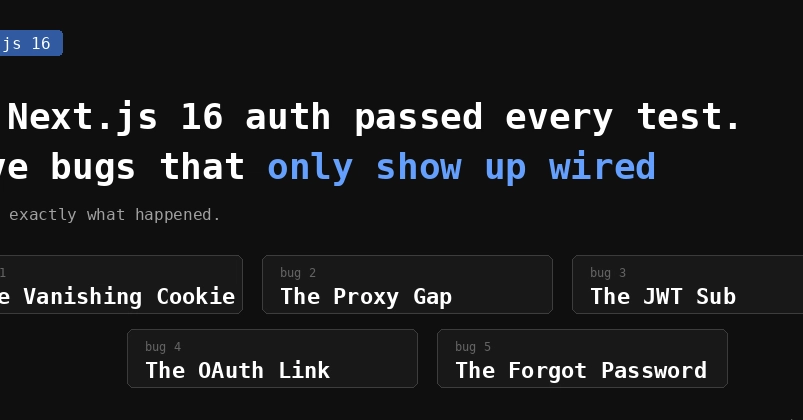
A few days ago I published a post about the three-layer auth model and the invoice incident that made me rebuild how I think about Next.js 16 auth. More people had hit the same thing than I expected.
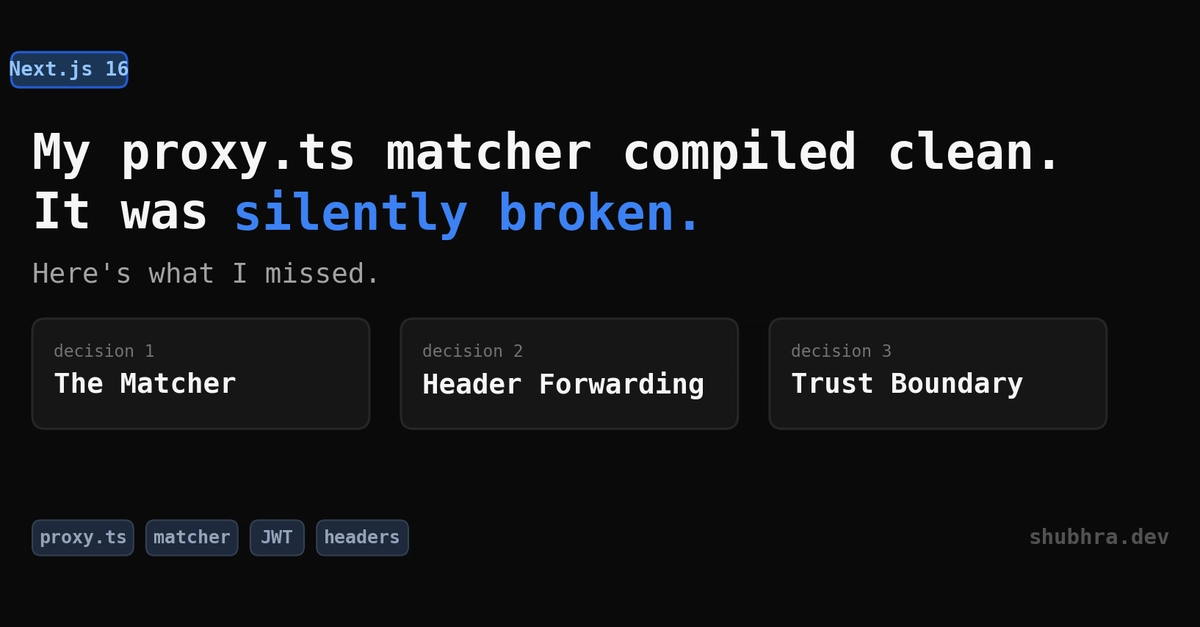
One comment stopped me. Someone pointed out a real gap in how the forwarded headers work when the matcher misses a route. They were right, and I want to cover it properly here. But before that, I want to go through proxy.ts end to end, because in my experience the matcher is where most auth setups quietly break first, and it breaks in the worst way, no error, no warning, nothing in the logs.
Why the Name Changed
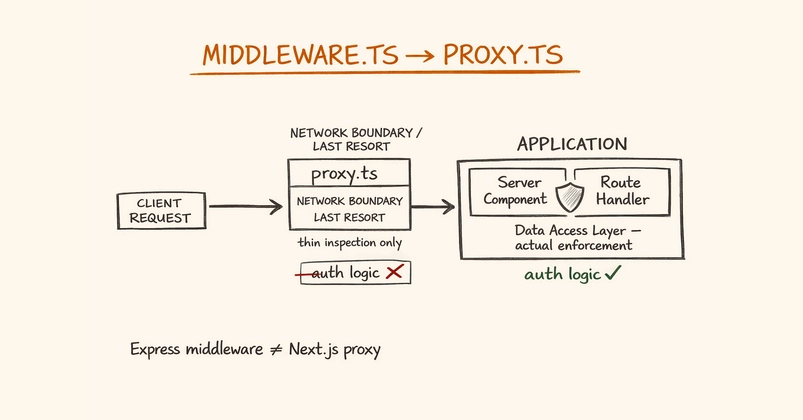
If you've been building with Next.js for a while, the rename felt arbitrary at first. middleware.ts to proxy.ts. Same location in your project, different filename, different export.
The Next.js team has been direct about why. The word "middleware" created real confusion. Developers coming from Express thought of it as a pipeline, stack things up, run them in order, app.use everything. That's not what this is and it led to people using it for things it was never meant to do: database calls, heavy business logic, session management.