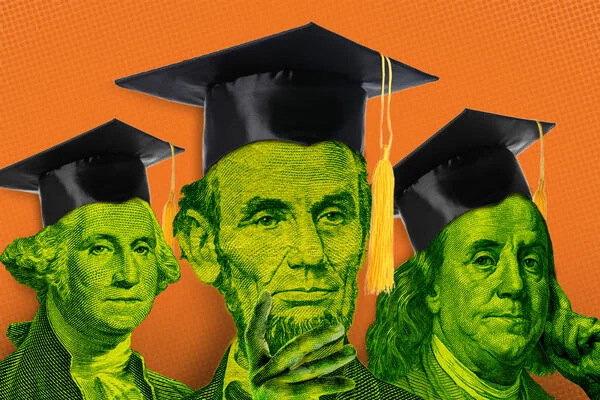
Meet three Americans with student loan debt.
The first is a newly minted Harvard MBA. He owes $300,000. He just signed an offer for $350,000 a year. He will pay off his loans in roughly the time it takes most people to pick a paint color.
The second got a four-year degree in a “studies” field from a school whose career-services office turned out to be a fiction. She owes $20,000, works as a retail clerk, and has no clear path to earning the kind of income that would retire the debt. She defaulted years ago and has been hounded by collections ever since.
The third is the unemployable graduate of a for-profit college that was shut down by the Justice Department for fraud. She owes $3,000. The training she paid for prepared her for a career that didn’t exist the way the brochure described it.
When you read that 42.8 million Americans hold roughly $1.7 trillion in federal student debt, you are reading a sentence that mashes those three people together. You are also reading a sentence that can be used to argue for almost any policy you like—from forgiving the MBA’s $300,000 because debt forgiveness is “popular,” to expanding federal lending so the next round of students can pay even higher tuition at schools designed to capture the loans.