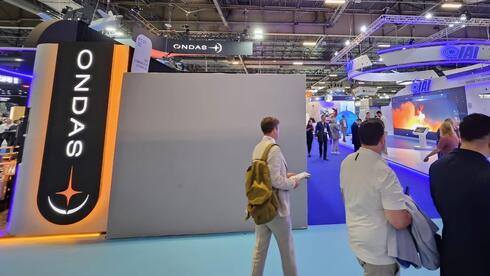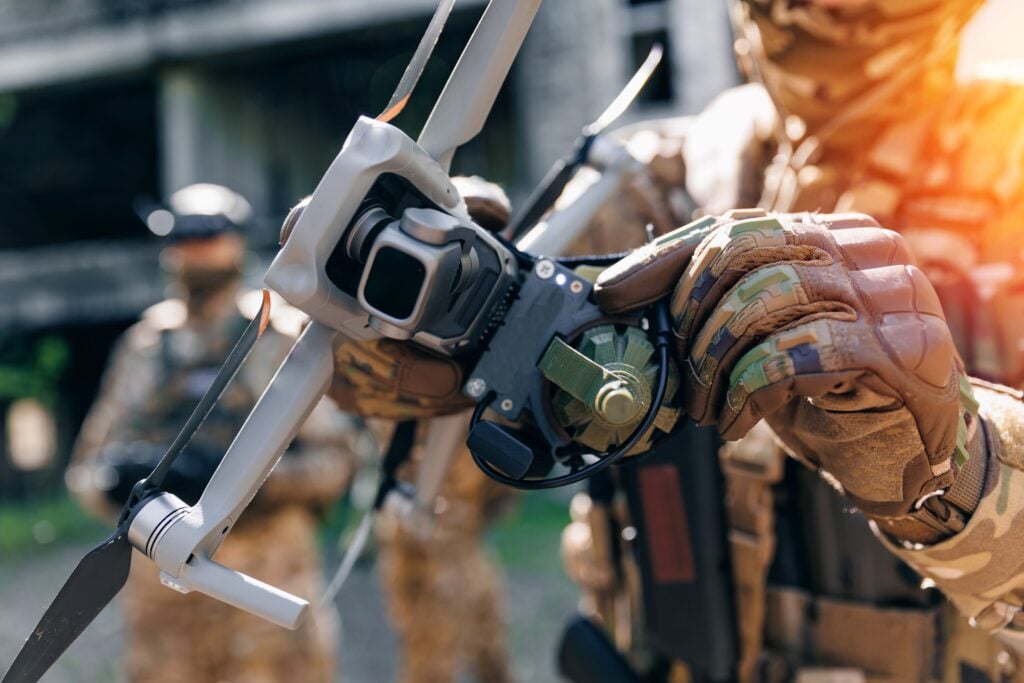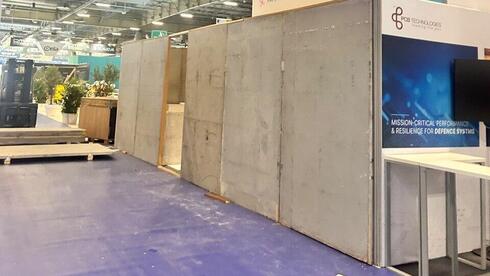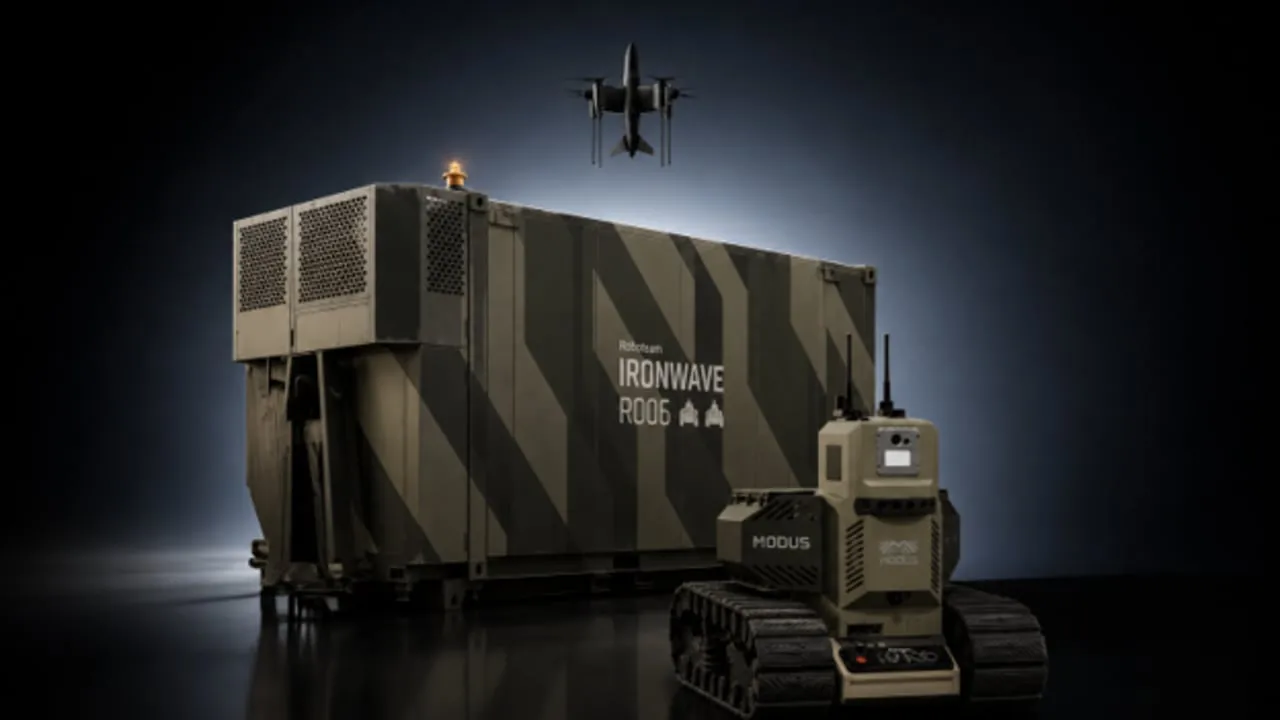
ByANNA AHRONHEIMJUNE 17, 2026 08:38Ondas is pushing deeper into the autonomous defense market and has unveiled a broad suite of systems designed to link air, ground, and AI‑driven capabilities into a single operational network.As militaries confront faster, lower‑flying, and increasingly unmanned threats, the company says that it is positioning autonomy as the first layer of engagement.Ondas says that it is not building standalone platforms for a bygone battlefield, but one where autonomous systems that are integrated into one unified system-of-systems will allow technology to be the first contact with the enemy, before troops are exposed.The company’s unified architecture is built to connect air‑defense assets, aerial intelligence platforms, ground robotics, loitering systems, sensors, and AI‑powered command software, with the goal of creating an autonomous force able to sense, decide, orchestrate, execute, and assess across multiple domains without waiting for human operators to process every step.Iron Wave is built around unmanned ground vehicles and containerized deployment modules, combining ground and air defense for forward‑deployed units. It is designed to give frontline forces an autonomous buffer before personnel are exposed.Ondas manages to complete acquisitions swiftly, sometime within just three weeks (credit: Courtesy)Dual Shield brings a truck‑mounted counter‑UAS system for maneuvering forces, offering mobile layered protection against drones in contested environments. MODUS adds a modular low‑altitude sensing and response layer for dismounted troops, extending autonomous protection to the tactical edge.Scout Cyber‑over‑RF provides a mobile counter‑UAS capability for small teams that need rapid, flexible protection against hostile drones. Iron Arrow, the company’s new long‑range interceptor, is designed to scale autonomous air defense against unmanned platforms.At the center of the architecture is LADOS, a newly unveiled orchestration system that links sensors, autonomous systems, communications, and effectors into one operational ecosystem. It is built to enable synchronized mission execution and real‑time situational awareness across air and ground environments.The rollout follows a series of moves by Ondas to expand its defense technology base and integrate acquired autonomous capabilities. With European militaries accelerating investments in counter‑UAS and autonomous ground systems, the company is positioning its unified architecture as a way to manage increasingly complex threat environments.Growing footprintOndas is also using its European joint venture, ONBERG, to anchor its presence in a region that is rapidly scaling up autonomous defense procurement. ONBERG is a joint venture between Ondas and HD Advanced Technologies and focused on autonomous drone defense systems.The joint venture, which began operating in April in the German city of Brandenburg, is intended to provide local manufacturing, deployment, and support for customers across Europe, a market the company describes as central to its long‑term strategy.“Europe is a central pillar of our long-term growth strategy, and we believe the region’s defense forces, homeland security agencies, and critical infrastructure operators require sovereign, scalable, and mission-ready autonomous systems to address rapidly evolving threats,” said Eric Brock, Chairman and CEO of Ondas.“Through ONBERG, our European joint venture, we are strengthening our local industrial foundation and customer support capabilities while bringing Ondas’ integrated autonomous defense technologies to one of the world’s most important allied defense markets.”Last week at ILA Berlin 2026, Onberg signed a Memorandum of Understanding (MoU) with the Ukrainian UAV company Skyeton to scale production and deliver NATO-compliant Raybird UAV (a long-range reconnaissance platform) to support Europe’s readiness requirements.Founded over a decade ago in the United States, Ondas has been on a buying spree of Israeli defense companies over the past year, acquiring around 10 companies in the fields of military robotics and drones – most recently Bird Aerosystems, which develops airborne defense systems for transport aircraft and helicopters operating in combat zones, in addition to airborne intelligence and surveillance technologies.EurosatoryThe new systems introduced this week at Eurosatory outside the French capital of Paris expand the company’s architecture across the mission layers.Close to a dozen Israeli companies recently acquired by Ondas are currently participating at Eurosatory, one of Europe’s largest weapons exhibitions. Their solutions include unmanned aerial systems (UAS) and counter-UAS systems, ground robotics, mission management software as well as mine-clearing solutions. On Monday, at least 14 Israeli companies had their booths covered by wooden walls prior to the opening of the exhibition, similar to what happened two years earlier at Eurosatory 2024 when France prevented the attendance of dozens of Israeli defense companies.At the time, the French Defense Ministry said that “the conditions are no longer right to host Israeli companies at the Paris show, given that the French president is calling for the cessation of IDF operations in Rafah.”The decision, which was later overturned by the Paris Commercial Court, which found that the order would lead to discrimination, was due to France’s increasingly hostile diplomatic moves towards Israel.Citing the humanitarian toll of the Gaza War, French President Emmanuel Macron halted the flow of weaponry to Israel in late 2024. France’s decision to formally recognize a Palestinian state further underscored its changing stance.According to a report in Le Monde, while the 2024 exhibition may have been based on Israel’s maneuvering in the Gazan City of Rafah, this year it is due to Israel’s actions in Lebanon-from where Hezbollah continues to fire missiles and drones towards civilian areas in Israel. In an interview with Haaretz, French Foreign Minister Jean-Noël Barrot- published one day before Eurosatory began-said that while Israel would be present at the exhibition, there would be no offensive weapons on display at Israeli booths. "This is not a boycott. I oppose boycotts and bans. We have consistently said that we cannot allow the display of offensive weapons while the Israeli government is carrying out operations that we believe violate international law,” he said.Follow us on Google
Ondas unveils AI‑driven autonomous 'system-of-systems' at Eurosatory | The Jerusalem Post
Despite over a dozen Israeli booths boarded up at Eurosatory, several Israeli companies acquired by Florida-based Ondas systems are showcasing their systems
926 words~4 min read