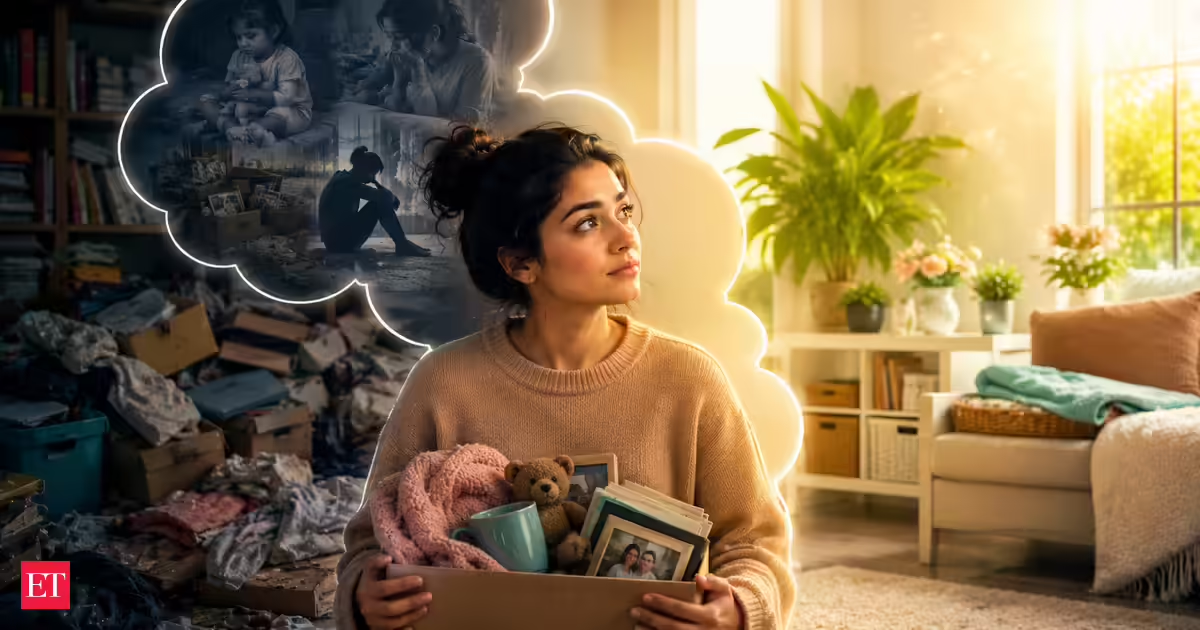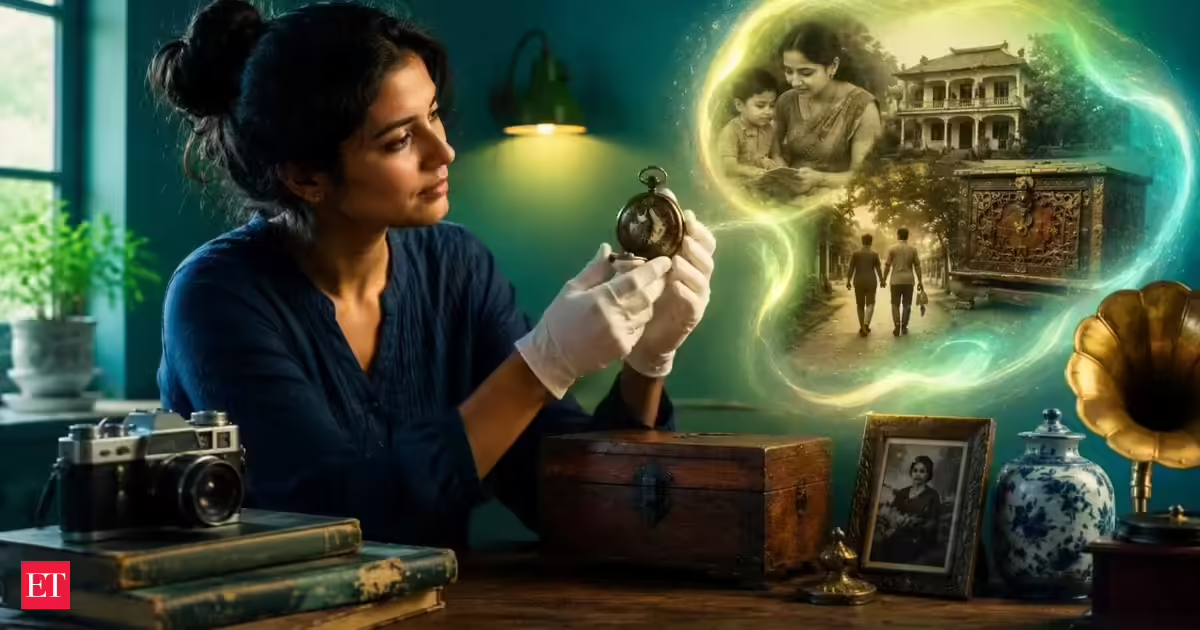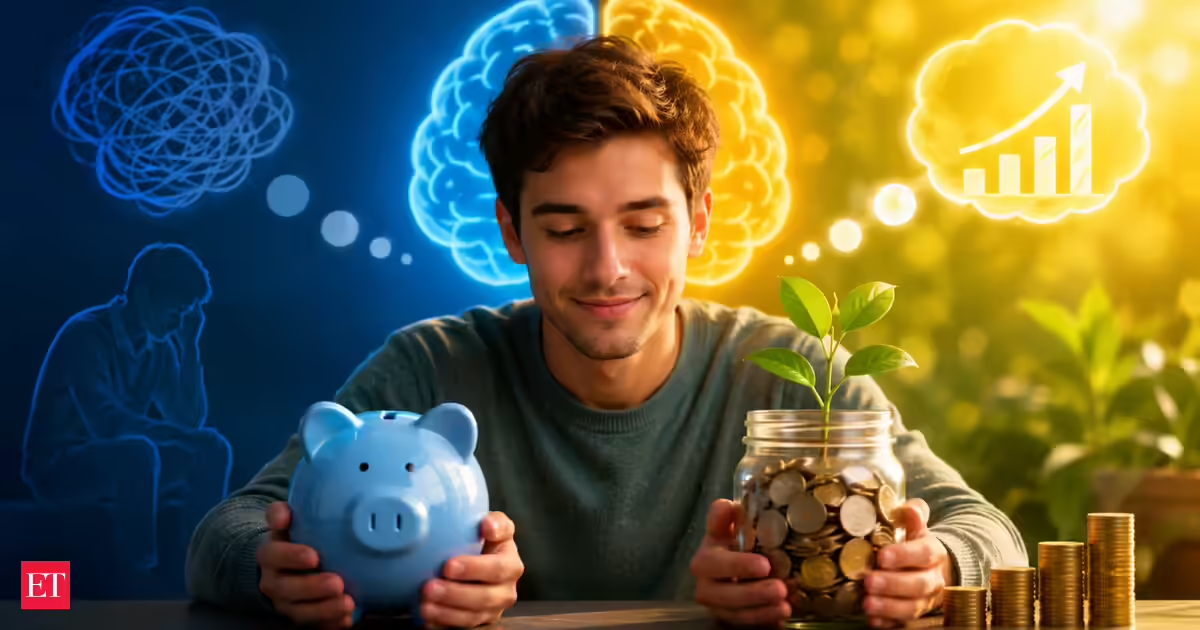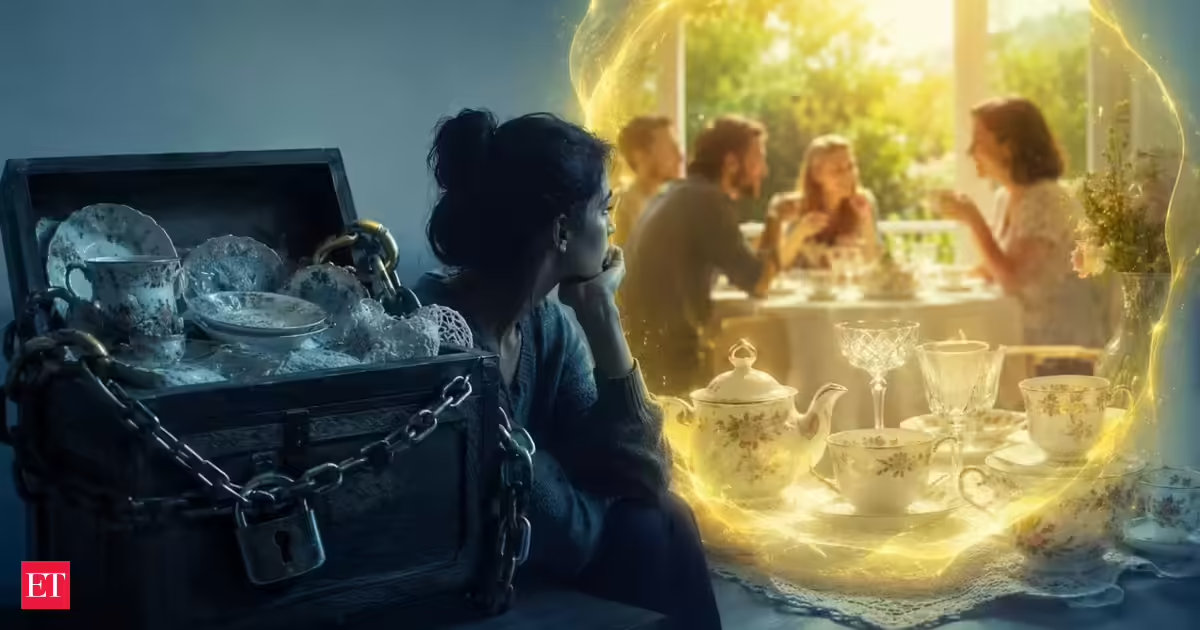
Almost everyone has something they refuse to use. It could be an expensive perfume, a beautiful notebook, a fancy dinner set, a luxury candle, a gifted dress, premium chocolates, or even a pair of shoes sitting untouched in a box. Ask them why they are saving it, and the answer is usually similar. "I'm waiting for the right occasion." Months turn into years. Sometimes the item expires, goes out of style, or is forgotten altogether. Psychology suggests this habit is not simply about being careful or practical. In many cases, it reveals something deeper about how humans think about happiness, scarcity, and the future. People who save special items are often trying to protect joy itself. Ironically, that attempt to preserve happiness can sometimes prevent them from experiencing it.Why The Brain Treats Special Things As Limited ResourcesOne explanation comes from Scarcity Mindset. Psychologists have found that people who have experienced periods of financial insecurity, uncertainty, or resource-conscious environments often develop habits centered around preservation.The brain learns an important lesson early in life: "Good things are rare, so don't waste them." Even when circumstances improve later, this mindset can remain. An expensive candle no longer feels like an ordinary object. It feels like a limited opportunity.Using it today may feel like losing something valuable. As a result, people postpone enjoyment.You Might Also Like:Why People Keep Waiting For The ‘Perfect Moment’Psychologists also point to Maximizing Theory, introduced by psychologist Barry Schwartz. Maximizers constantly search for the best possible outcome instead of accepting a good enough one. This mindset can quietly influence everyday behavior.People begin thinking: "Today isn't special enough." , "I'll save this for a better day." , "Maybe there's a more meaningful occasion ahead."The problem is that life rarely announces the perfect moment. The brain keeps moving the finish line. Tomorrow replaces today. Next month replaces tomorrow. Eventually, the opportunity disappears altogether.Why Saving Things Creates A False Sense Of SecurityAnother explanation comes from Prospection Theory, which studies how humans imagine and prepare for the future. Humans are naturally future-oriented creatures. We constantly plan ahead because anticipating future needs once improved survival. Special items often become emotional insurance policies.You Might Also Like:A beautiful notebook may become: "I'll use it when I finally start my dream project." A luxury perfume becomes: "I'll wear it when something important happens." The object transforms into a symbol of an ideal future version of ourselves. Using it now can strangely feel like wasting potential.Why Nostalgia Makes The Habit StrongerPsychologists also connect this behavior to Emotional Attachment Theory. People do not always value objects because of their price. They value the emotions attached to them. A gifted mug is no longer just a mug. A perfume purchased during a vacation becomes a memory capsule. A dress bought during an important milestone becomes a symbol of a meaningful period in life.The stronger the emotional meaning, the harder it becomes to use the item casually. People start protecting the memory instead of enjoying the object.Social Media Has Quietly Changed Our Relationship With Special MomentsModern culture has intensified this behavior. Social media often presents life as a collection of extraordinary events. Birthdays, vacations, anniversaries, promotions, engagements, and celebrations dominate online platforms.Ordinary days begin to feel less important. As a result, people reserve beautiful things for picture-perfect moments. For example, someone may avoid wearing an expensive outfit because they think it deserves a more memorable event.Others may save luxury skincare products for future occasions. The irony is that everyday life makes up most of our existence. If joy only becomes acceptable during rare events, happiness becomes unnecessarily delayed.Why This Habit Is Sometimes Linked To AnxietyPsychologists also point to Loss Aversion Theory, developed by Daniel Kahneman and Amos Tversky. Humans dislike losing something more than they enjoy gaining something. Using a special item means it will eventually disappear. The candle will burn out. The perfume bottle will empty. The notebook will fill up. For some people, preserving the item feels emotionally safer than accepting its temporary nature. This is not always about the object itself. It is often about avoiding the discomfort that comes with endings.Why Younger Adults Are Increasingly Experiencing ThisModern economic uncertainty may also play a role. Many younger adults are growing up during periods of rising living costs, unstable job markets, and financial unpredictability.Psychologists have found that uncertainty often increases preservation behaviors. People become more cautious with both money and experiences. This explains why some individuals delay using expensive gifts or luxury purchases. The future feels uncertain, so saving resources feels logical.The Bigger Psychological TruthPsychology suggests adults who save special things are rarely being irrational. Most are trying to protect something precious: security, , comfort, possibility, hope. The problem is that the brain sometimes forgets an important truth: many special things were created to be experienced, not preserved forever.The most important insight is that people are not always saving the item itself. They are saving a version of happiness they believe will arrive someday. But life rarely becomes perfect enough to justify endless waiting. Sometimes the special occasion is not a future milestone. Sometimes it is an ordinary Tuesday evening, a quiet cup of tea, or a random dinner with people you love. Perhaps that is the deeper psychological lesson. Using beautiful things does not shorten their value. It often fulfills their purpose.FAQs:Why do people save special items for the future?Psychology suggests many people associate them with scarcity, future happiness, and emotional significance.Is saving things for later a sign of anxiety?Not always, but uncertainty and fear of waste can strengthen this behavior.
Psychology says people who save ‘special’ items for the future are not being practical: Why the brain delays joy, waiting for the perfect moment
Psychology suggests that adults who hold on to special items are rarely acting irrationally. More often, they are trying to preserve something meaningful, such as security, comfort, possibility or hope. The challenge is that the brain can sometimes overlook an important reality: many treasured things are meant to be enjoyed and experienced, not saved indefinitely.
922 words~4 min read