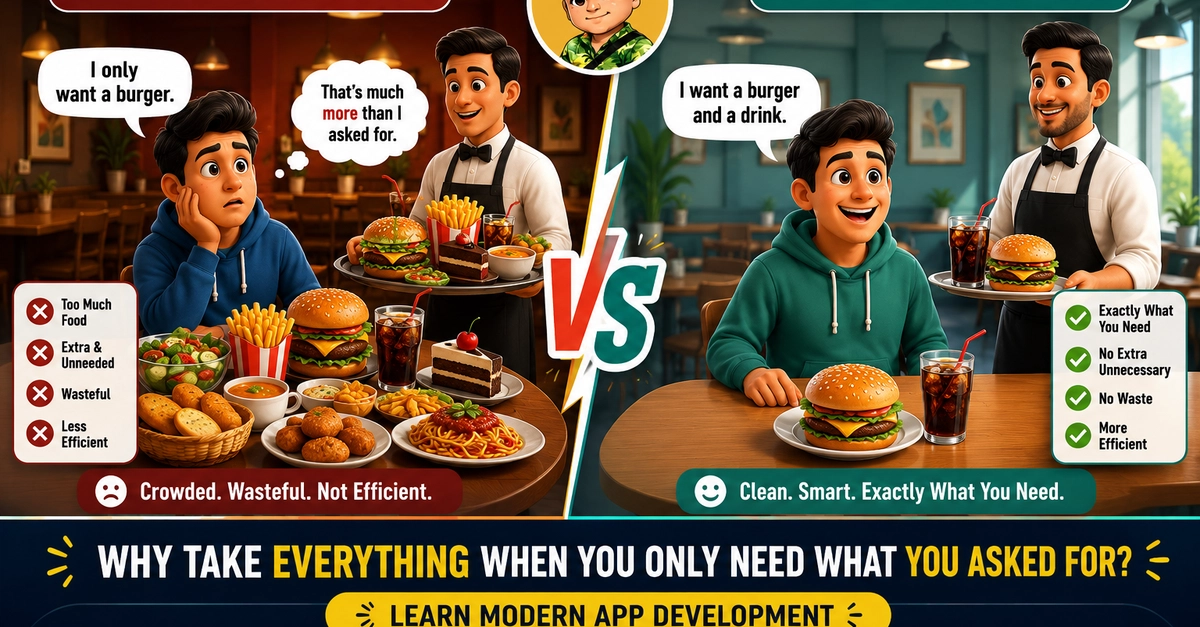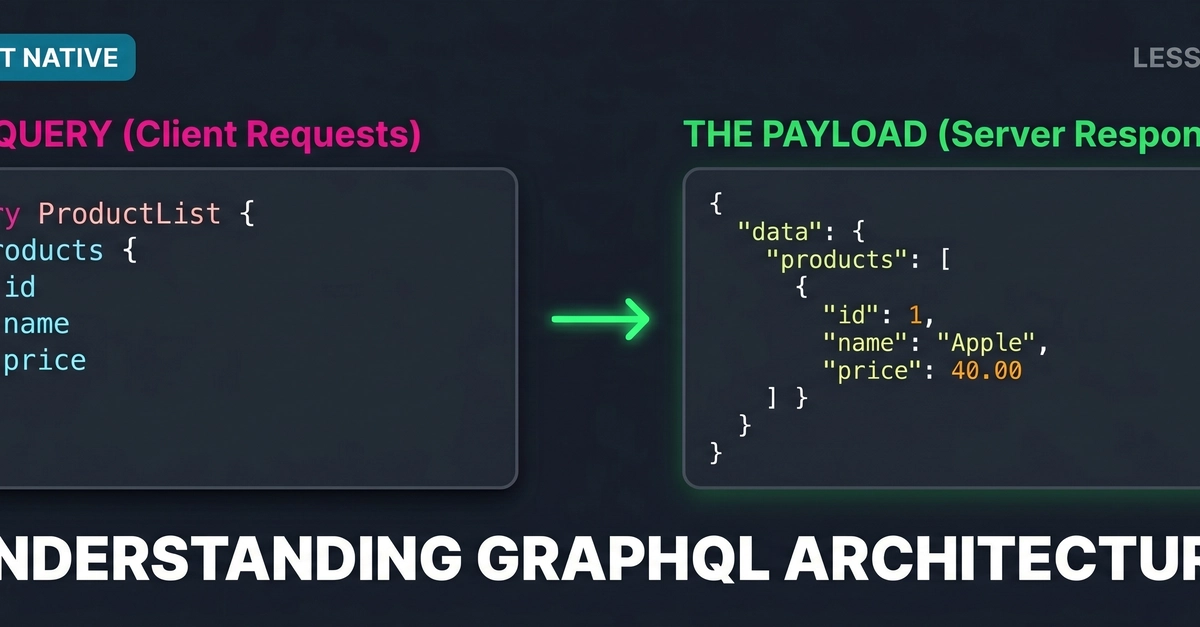
Good morning, class! Welcome back. In our last lesson, we explored how GraphQL fundamentally addresses the issues of over-fetching and under-fetching.
Today, we are going to connect those architectural concepts directly to real-world React Native screen complexity. Our Goal today is to understand how GraphQL simplifies your codebase when a screen demands multiple data sources, when different screens require entirely unique variations of the same resource, and when your mobile application changes and evolves over time.
1. Problem One: Codebase Complexity via Multiple API Calls
Making multiple API calls is not inherently wrong, but from a mobile product engineering perspective, it introduces a significant amount of state-tracking boilerplate inside your components.
In a traditional React Native screen driven by REST, managing multiple endpoints often forces you into a state management pattern that looks like this: