Wednesday 17 June 2026 5:00 am
| Updated:
Tuesday 16 June 2026 9:45 am
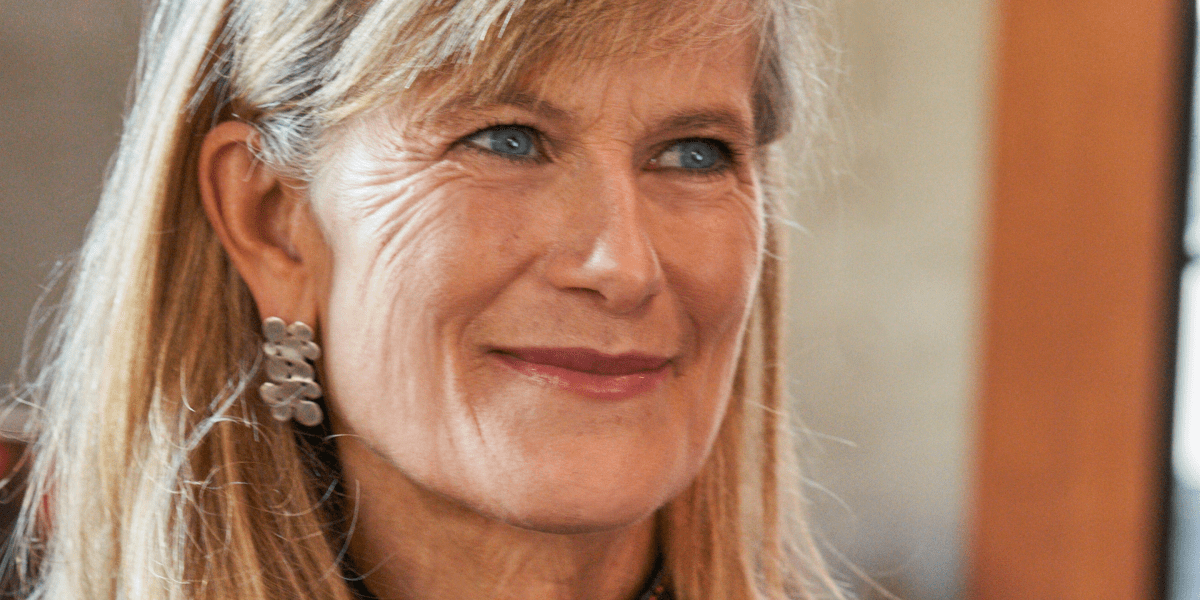
Increasingly, philanthropists and the businesses and investors who think like them are asking how we move beyond responding to crises and start addressing their causes? says Jane ThompsonAs the UK enters one of the largest intergenerational wealth transfers in its history, a new generation of business leaders, investors and entrepreneurs has an opportunity to rethink what philanthropy actually means.For too long, giving has been framed in binary terms: you either write a cheque or you don’t. In reality, philanthropy sits on a spectrum. At one end is traditional charitable giving. Organisations such as the British Red Cross do vital work responding to immediate need, supporting refugees, helping communities recover from crises, and assisting people facing isolation and hardship. This work alleviates suffering and restores dignity when people need it most.But increasingly, philanthropists and the businesses and investors who think like them are asking a different question: how do we move beyond responding to crises and start addressing their causes?I’m delighted to be speaking at the UK’s Giving and Impact Summit tomorrow. One of the most important lessons I will share having learned it from years supporting the British Red Cross is the value of trust as a strategic asset, not a soft one. Like many donors, I initially wanted to track exactly where every pound went. Over time, I realised that organisations closest to a problem usually understand it better than those funding it, and that backing their expertise, rather than trying to control every outcome, produces greater impact.Charities are also uniquely placed to reveal where systems are failing. Loneliness isn’t simply an individual problem. Homelessness isn’t simply a housing problem. Economic exclusion isn’t simply an income problem. These outcomes emerge from interconnected social, economic and community structures. If we want different results, we need to change the conditions that produce them.This is where philanthropy starts to evolve into something closer to investment. The most effective philanthropists now recognise that money is only one form of capital at their disposal. Human capital, social capital, expertise, networks and influence can all be deployed, not just to alleviate need, but to build solutions. That shift has given rise to social enterprise, impact investing and, most interesting of all, catalytic capital.Catalytic capital deliberately accepts a different balance of risk, return and time horizon in pursuit of social outcomes that conventional finance overlooks. Its purpose isn’t simply to fund activity, but to unlock possibilities, taking early risk, proving new models and attracting further capital to create solutions that neither pure philanthropy nor commercial investment could achieve alone.Between charity and marketsIn effect, it occupies the space between charity and markets. Traditional philanthropy is highly effective at responding to urgent need, and commercial investment excels at scaling proven opportunities, but many of society’s most pressing challenges sit in the gap between the two. Catalytic capital is designed to bridge it.My own interest in this approach came from a simple observation: communities are the fundamental unit of resilience. When people face hardship, they turn first to neighbours and local networks. Yet across the UK, many of the spaces that enable those relationships, community centres, village halls, local shops, pubs, are disappearing, fuelling a quiet epidemic of loneliness and isolation.This insight is the foundation for CommonGround Capital, which addresses a clear market failure: community assets generate enormous social value, but struggle to attract the capital needed to preserve them. Traditional investors often can’t make the economics work, and traditional philanthropy can’t fund every acquisition.CommonGround uses catalytic capital to help communities acquire and protect the assets that hold them together, not simply to save buildings, but to strengthen the social infrastructure that helps communities thrive, become more resilient, and solve problems before they require costly intervention.The future of giving won’t be defined solely by how much money changes hands, but by how effectively donors, investors and business leaders deploy every form of capital available to them to create the conditions for lasting change.As the great wealth transfer accelerates, my message to the new generation of givers is simple: don’t overcomplicate it. Start somewhere. Support organisations you trust. Use your skills, networks and influence and think beyond what you can give to what you can help build. The question is no longer whether we can afford to contribute. It’s whether we can afford not to.Jane Thompson is a tech entrepreneur and senior executive, and has held leadership roles at Match.com and IAC. She is an active philanthropist in start ups and social enterprises such as Common Ground Capital