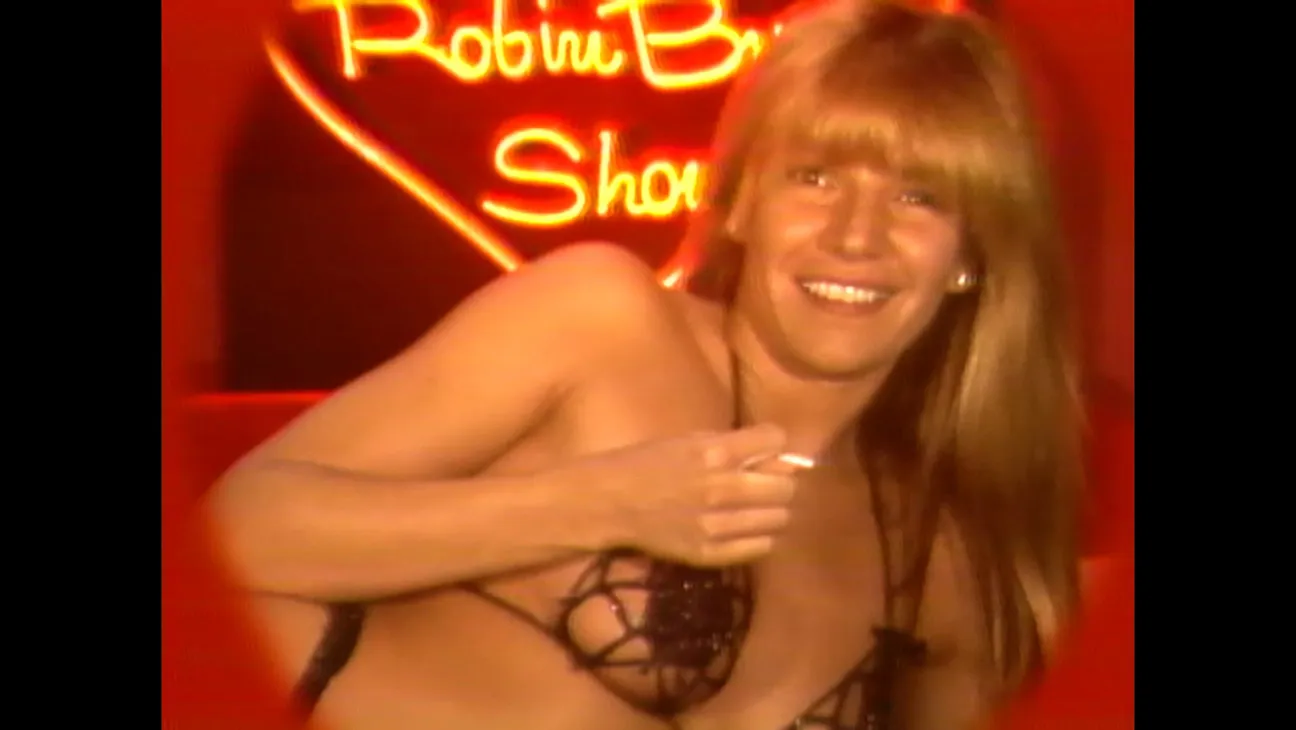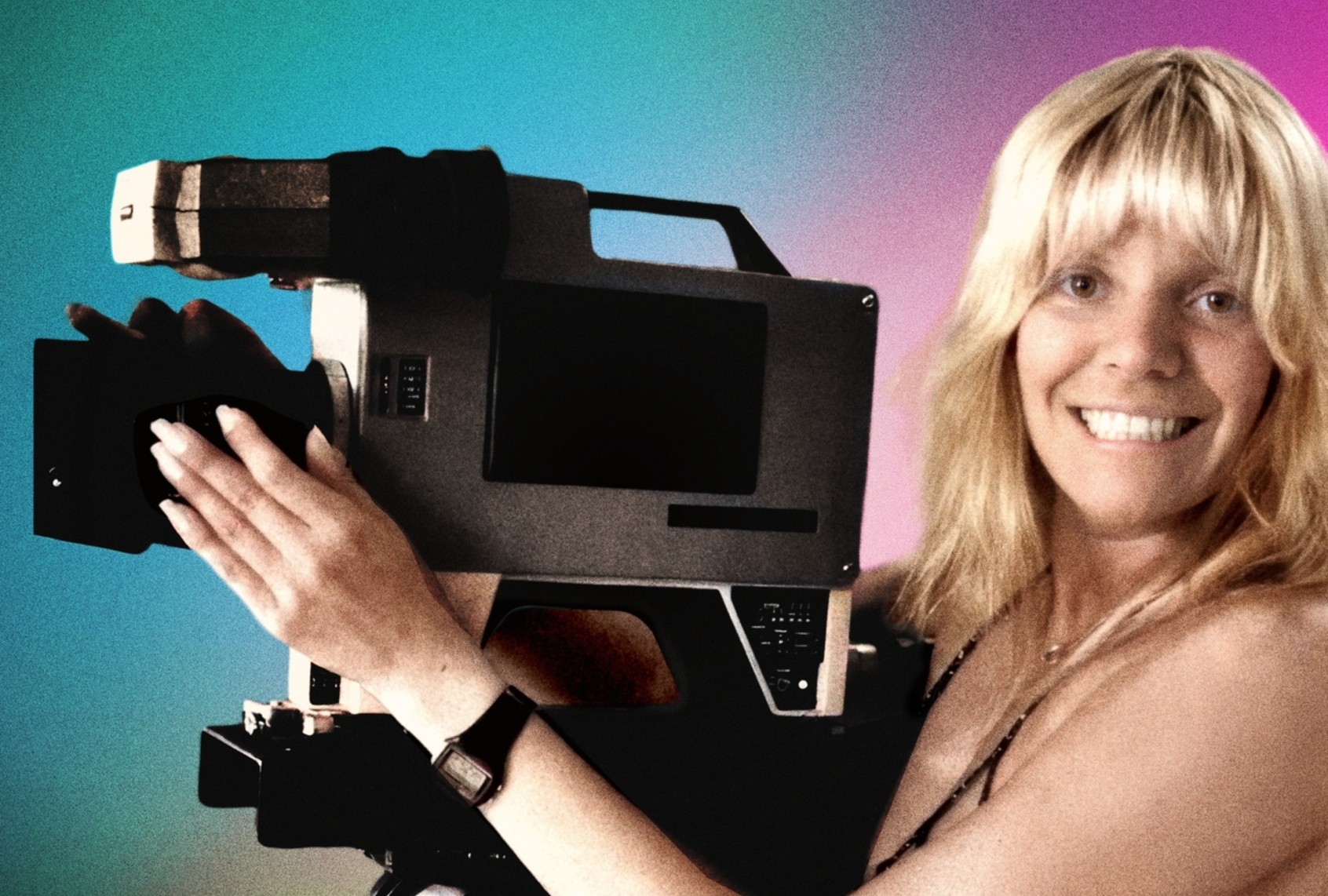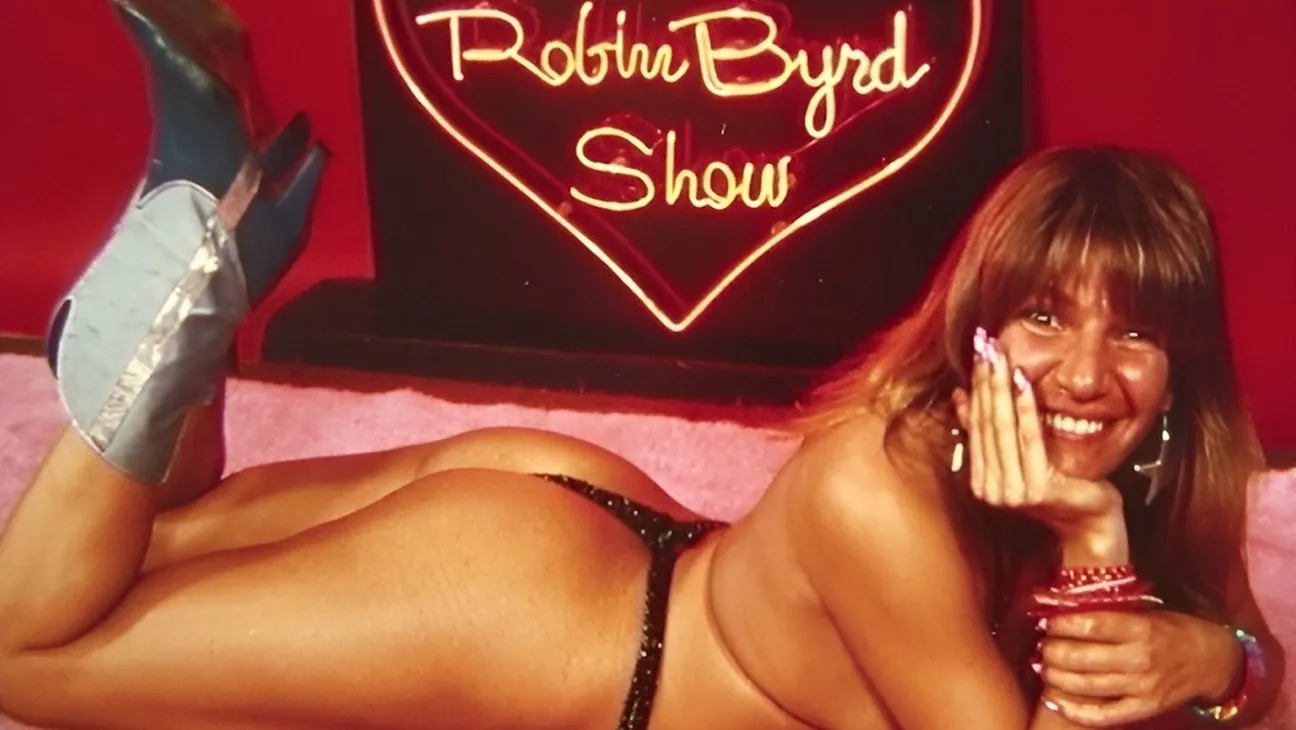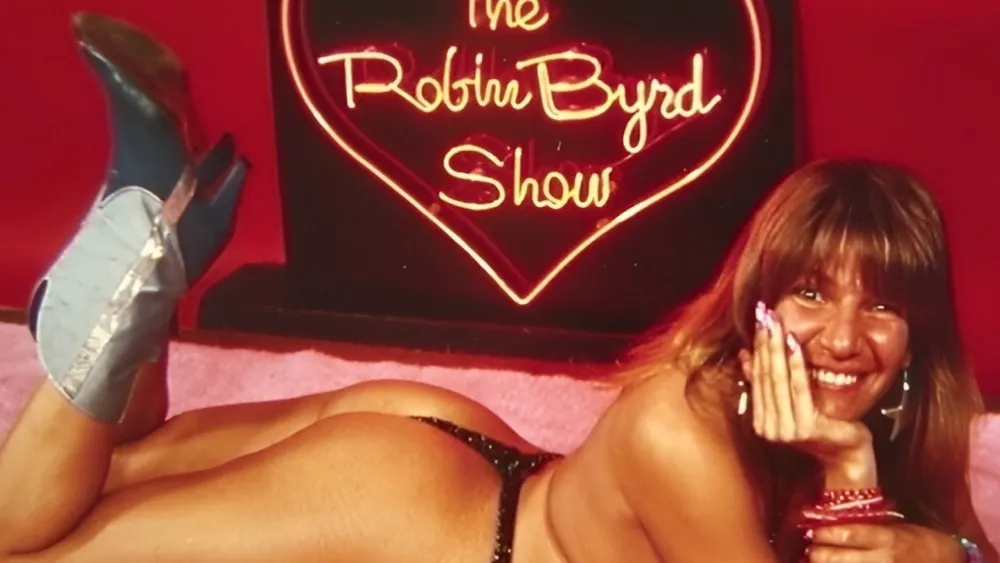
With Robin Byrd, you kind of had to be there. There, in this case, being the red-orange dank no-man’s land of late-night Manhattan public-access cable TV in the ’70s and ’80s. That’s where Robin Byrd, in her black-crochet bikini, with her caramel-blonde hair and white-as-Elmer’s-glue fingernails and spaced-out grin, was the beckoning host of her own proudly tacky and sex-positive showgirl and showboy fantasy kingdom.
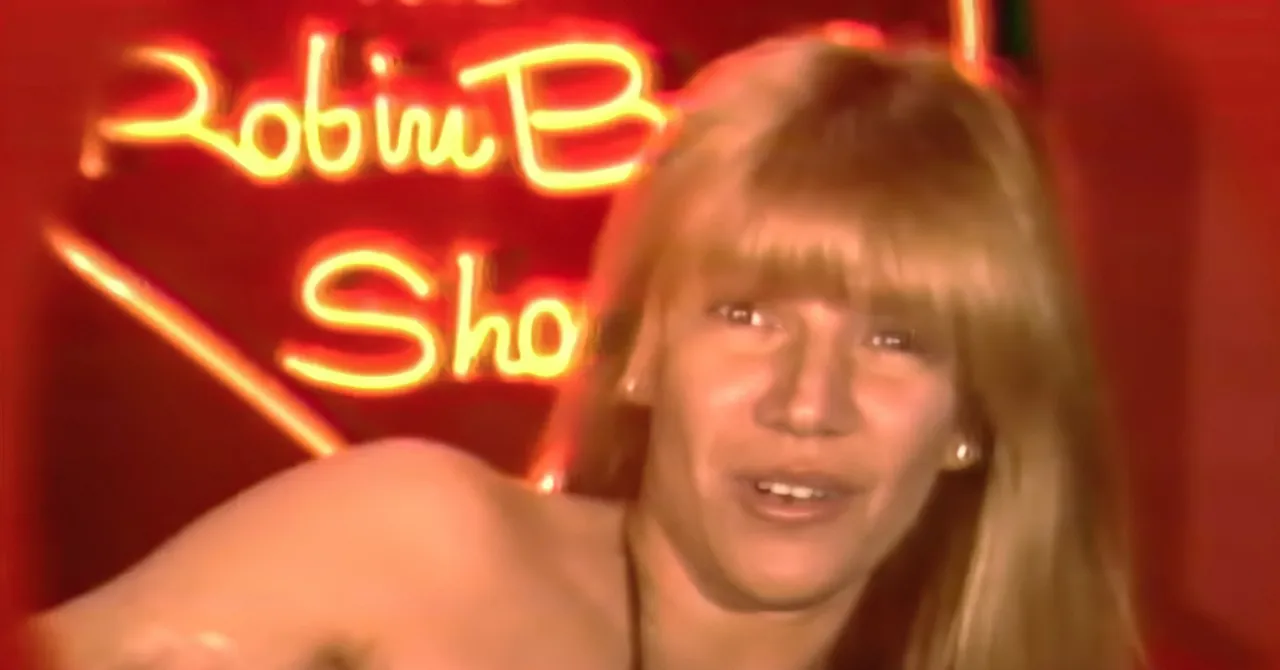
She would still be powdering her nose during the show’s opening moments (that’s how understaffed they were), and she would repeat her catch phrases (“Lie back and get comfortable,” “If you don’t have a loved one, you always have me”), and then she would introduce the first performer of the night — what were then called strippers, though this was the only show where that might be a porn queen in a G-string or a blueboy dressed in skimpy biker leather. In the age of triple-X entertainment, there was nothing that racy about it. The slightly outrageous fun is that you were watching this on television — and the fun, as well, was there in Robin’s innocent, giggly, pushy, in-on-the-joke-but-not-quite personality.
“Bang My Box: The Robin Byrd Story,” which recently premiered at the Tribeca Festival (and will drop on HBO on June 30), is the kind of documentary that now gets made because…well, just because. Because 40 or 50 years after the height of porno chic, or what you might call the Renaissance Age of the sex industry (think “Boogie Nights” and the hipification of the AVN Awards), a universe that was once thought of as a guilty pleasure, with performers who provided a service that was the furthest thing from respectable, is now taken more than a little seriously. The people we then called strippers are seen as having fired salvos of flesh against Puritan America. On top of that, the post-#MeToo world has reclaimed sex workers as liberators who were unfairly discriminated against. One of the producers of “Bang My Box” is Sarah Jessica Parker, and the fact that she would lend her name to a movie about Robin Byrd makes a mythological connection that feels right (though a while back it might have felt a little “Say what?”).