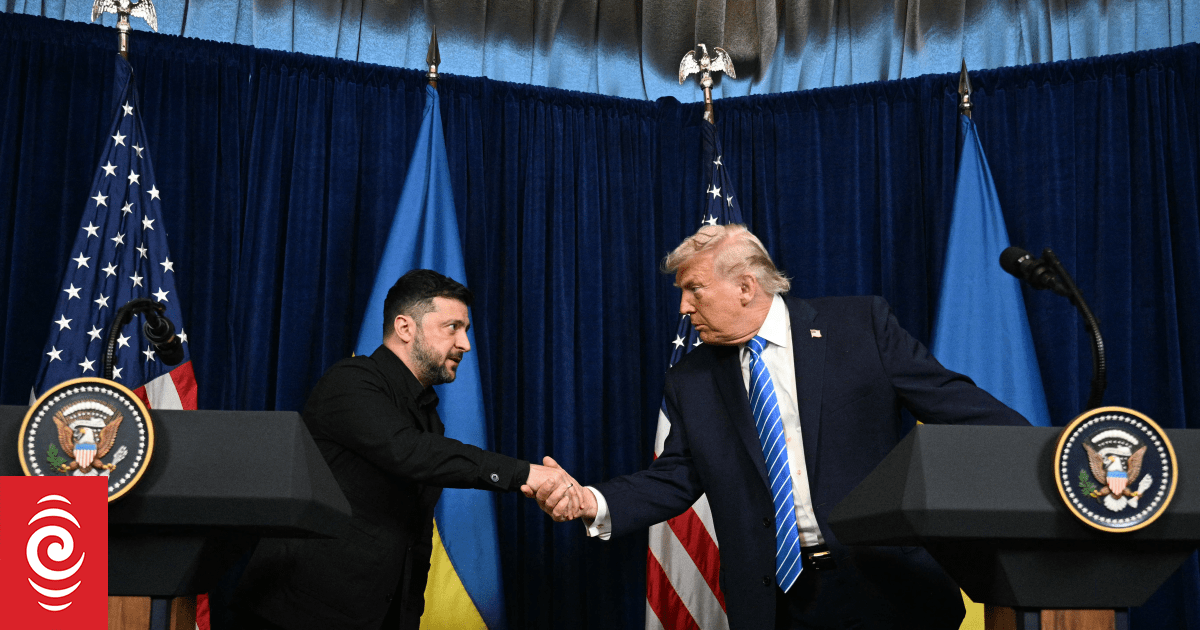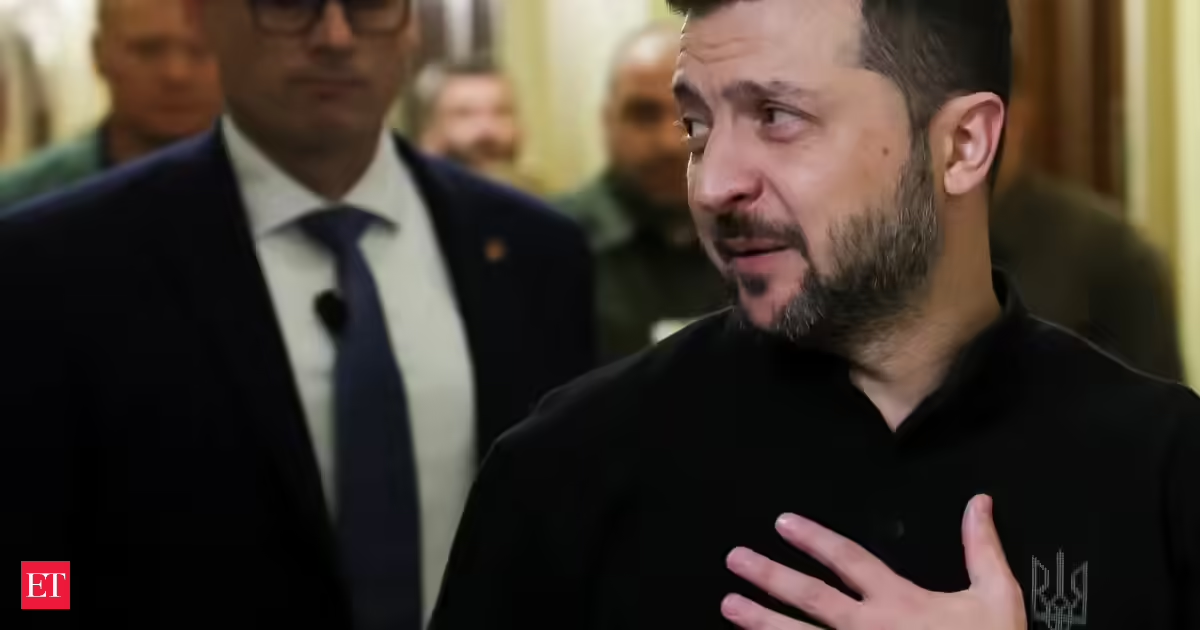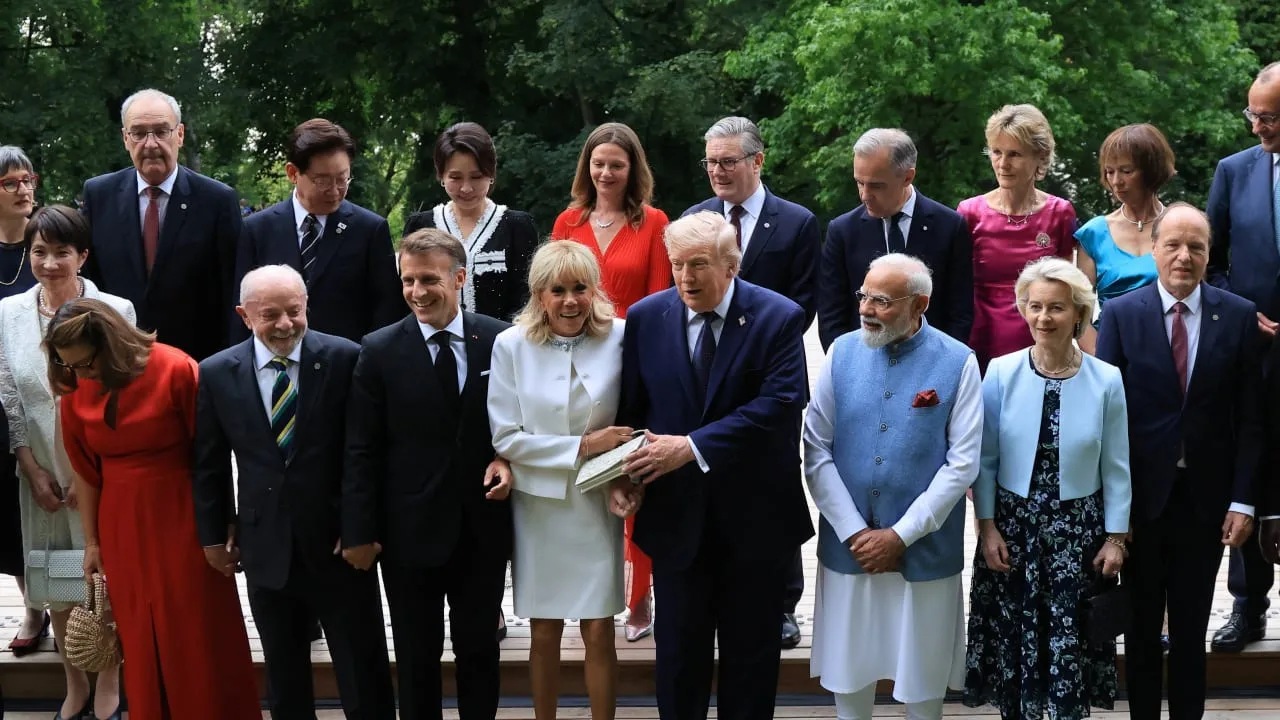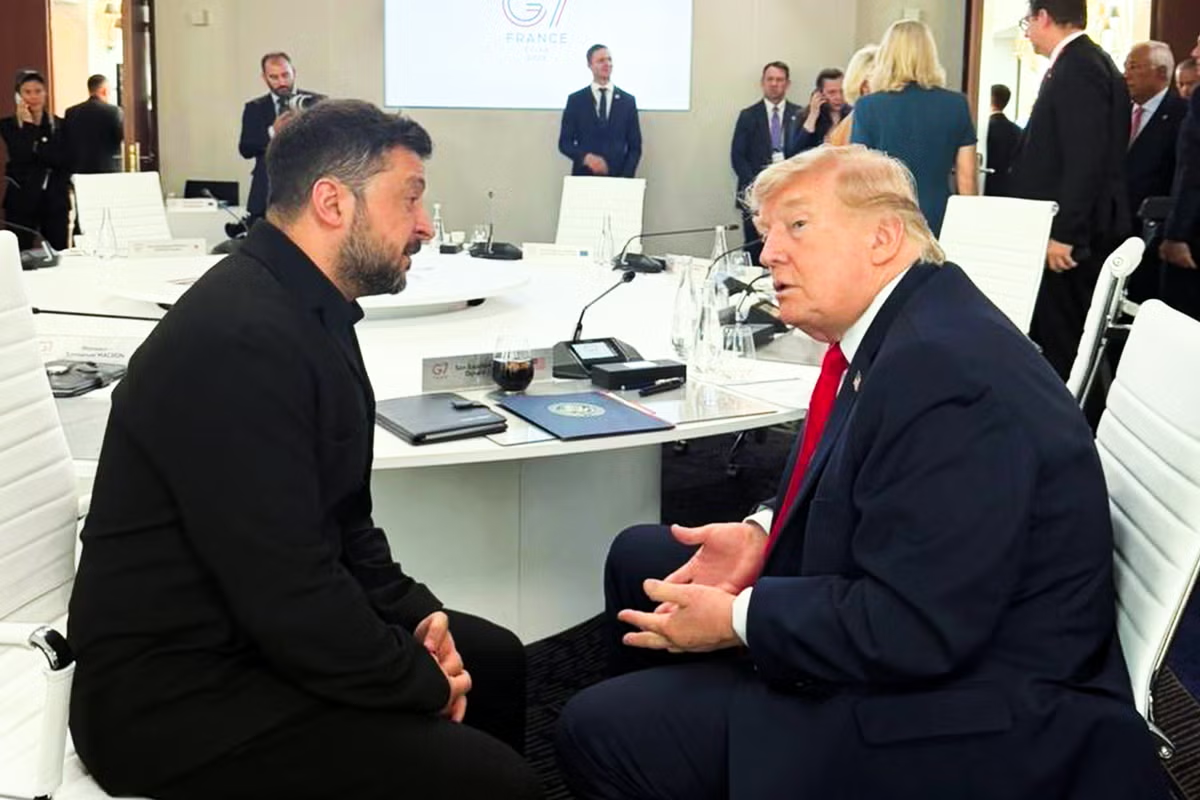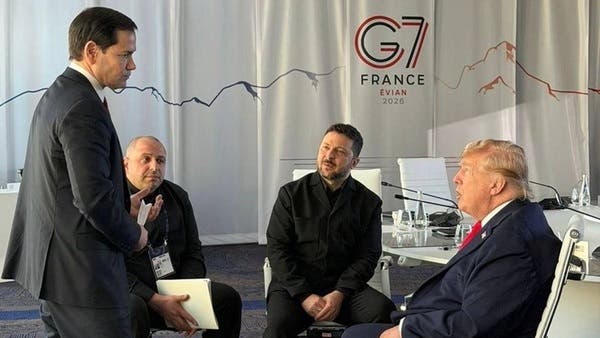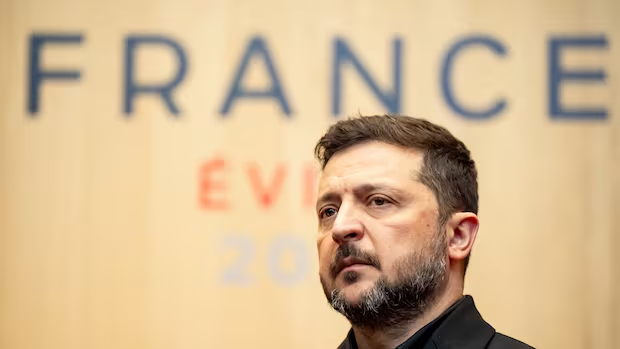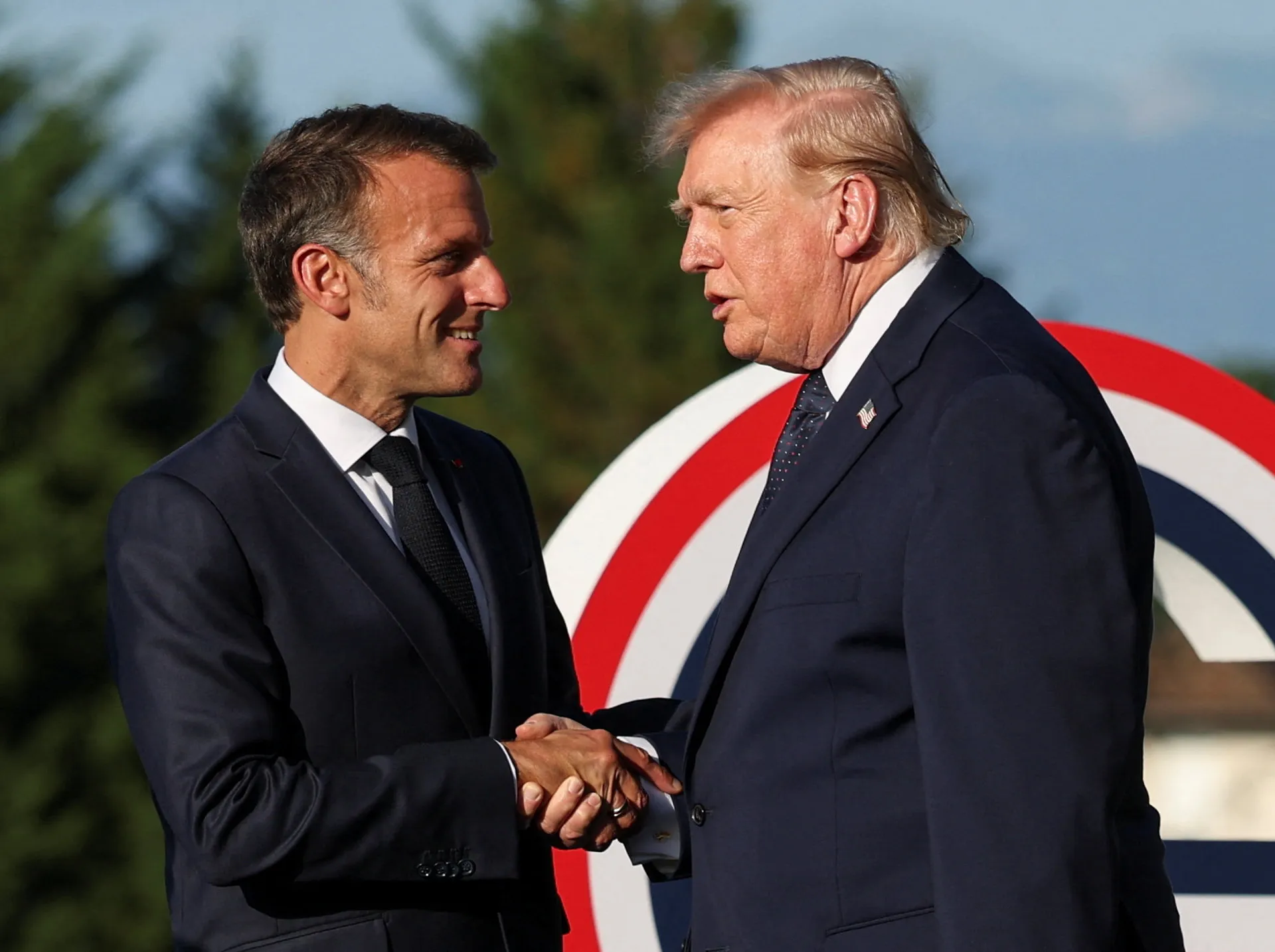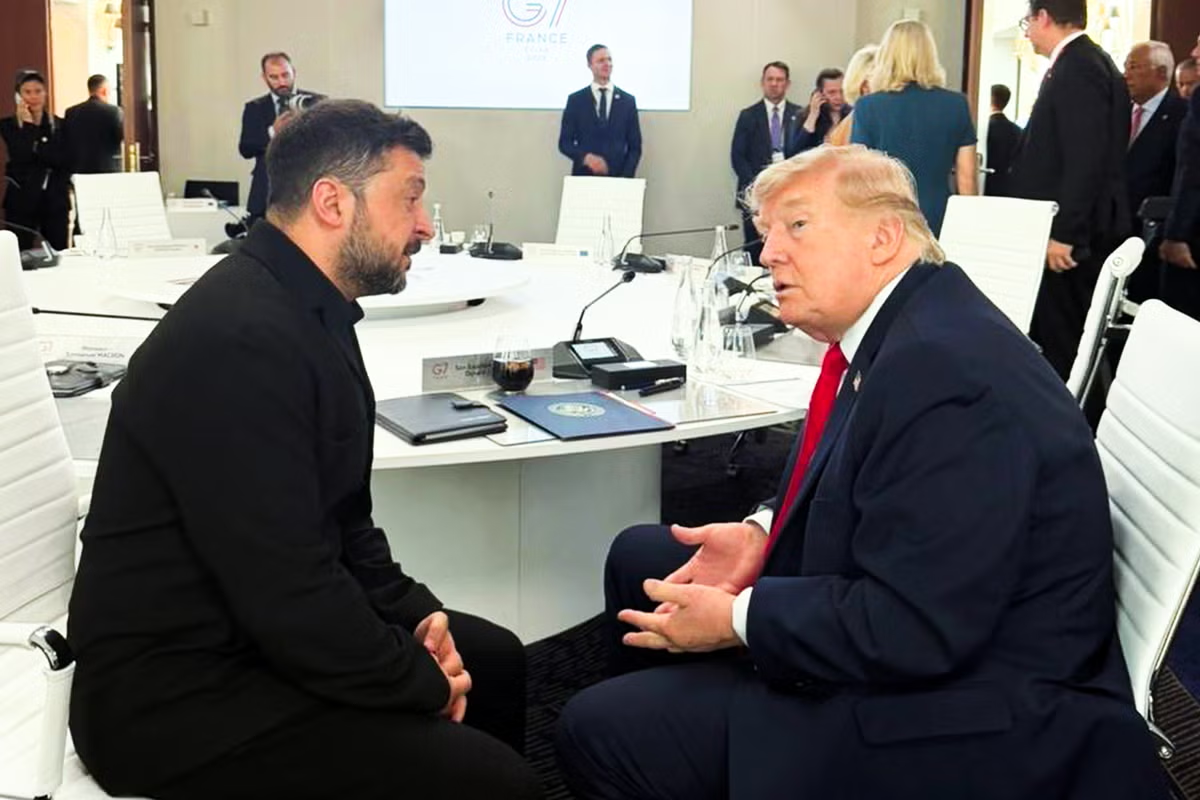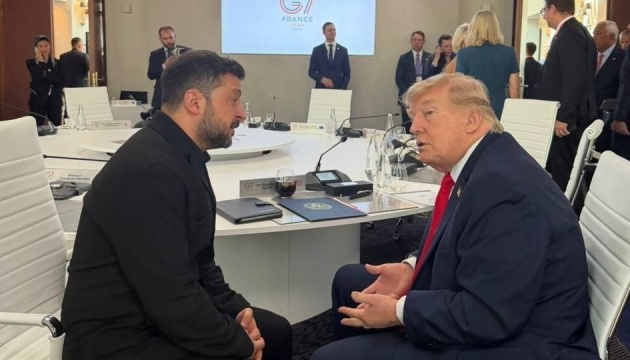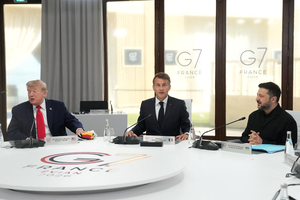
US President Donald Trump (left), French President Emmanuel Macron (center) and Ukrainian President Volodymyr Zelenskyy meet in Evian-les-Bains, France, Tuesday. (Reuters-Yonhap) US President Donald Trump said Russia should make peace with Ukraine after a "very good" meeting with President Volodymyr Zelenskyy Tuesday, in comments that sparked cautious optimism among G7 leaders that a peace deal could be struck.The upbeat mood over the Ukraine war, now deep into its fifth year, stands in stark contrast to Zelenskiy's meeting with Trump in the Oval Office last year, when he was told he had no leverage in potential peace talks with Russia.Zelenskyy and his European allies came to this week's G7 summit in the French lakeside resort of Evian-les-Bains hoping to impress upon Trump that Ukraine's battlefield fortunes had improved thanks to its drone incursions deep into Russia.Trump, who arrived at the summit brandishing a preliminary deal to end his war with Iran, said he would do what he could do to end the conflict in Ukraine, but there were few details of any concrete steps to raise the pressure on Moscow."Look, Russia should make a deal," Trump told reporters, adding that too many young men were dying on the battlefield on both sides. "I'm gonna do whatever I can." German Chancellor Friedrich Merz said Trump's statement that Russia should end the war was cause for cheer."I found him to be very cooperative, and I also saw him listening very attentively," Merz told reporters. "And in that respect, once again, it gives me a certain degree of optimism that we here, as Europeans and as Americans, are now doing everything we can, together, to end the war."After the group meeting with Trump, Zelenskyy told Reuters that G7 leaders agreed that Russia was not winning the war. He said they also discussed additional sanctions targeting Russia's oil exports, its banking sector and its military production to bring Moscow to the negotiating table.Ukrainian public broadcaster Suspilne later showed a clip of Zelenskiy saying he hoped to meet Trump again Tuesday."Our teams will be meeting over the course of the next 24 hours at various levels and will continue to meet," Zelenskiy said. "I think that tomorrow we will also meet separately with the president (Trump)."Zelenskyy said Monday that he had offered to meet Russia's Vladimir Putin at the G7 summit, but a Kremlin aide said that did not come up in a call between Trump and Putin.Two European diplomats said that, during the meeting, Zelenskiy showed Trump images of the aftermath of a Russian strike on Monday on Kyiv's Pechersk Lavra monastery.Trump expressed disapproval of the strike, one of the European diplomats said, while the other said that it had been "psychologically" a good move by Zelenskyy to show the images.European diplomats said the tone of the meeting had been constructive.But two of the diplomats said Trump had been noncommittal on imposing further US sanctions on Moscow, as European leaders want.Trump told reporters Washington was now in a position to let Russian oil waivers lapse after an interim accord to end the Iran war soothed markets, but he did not address the question of broader punitive measures.European leaders have wanted to convince Trump that previous US positions on the possible terms of a deal were overly favourable towards Moscow, particularly now that Ukraine's drone incursions into Russia have improved its fortunes."The tide is turning for Ukraine," European Commission President Ursula von der Leyen posted on X. "Russia's fatigue is openly showing. That's the time to double down on our support." A French diplomat said G7 leaders committed to providing Kyiv with more air defence capabilities — a key priority for Zelenskiy as he grapples with increased civilian strikes from Russia.European leaders were also set to warn Trump that an interim deal with Iran risks entrenching Tehran's nuclear and ballistic missile programmes. President Emmanuel Macron said the aim was to guarantee a "solid, serious agreement that is finalised."Tuesday's working lunch focused on the safe reopening of the Strait of Hormuz, which Iran largely closed at the end of February. Leaders also sought to identify alternative routes to bypass the waterway, which Trump said would be "completely open" on Friday.The interim deal should open a 60-day window for complex technical negotiations that would include the fate of Iran's stockpile of highly enriched uranium and the lifting of international sanctions.However, European allies fear an inexperienced US negotiating team may fail to secure a robust nuclear agreement or address Iran's ballistic missile programme in the next phase, potentially creating a prolonged standoff.Trump said the deal stated "loud and clear" that Iran would not develop a nuclear weapon - something Iran has long denied seeking to do. (Reuters)
G7 leaders express optimism for peace after Trump's 'very good' Zelenskyy meeting
US President Donald Trump said Russia should make peace with Ukraine after a "very good" meeting with President Volodymyr Zelenskyy Tuesday, in comments that s
778 words~4 min read