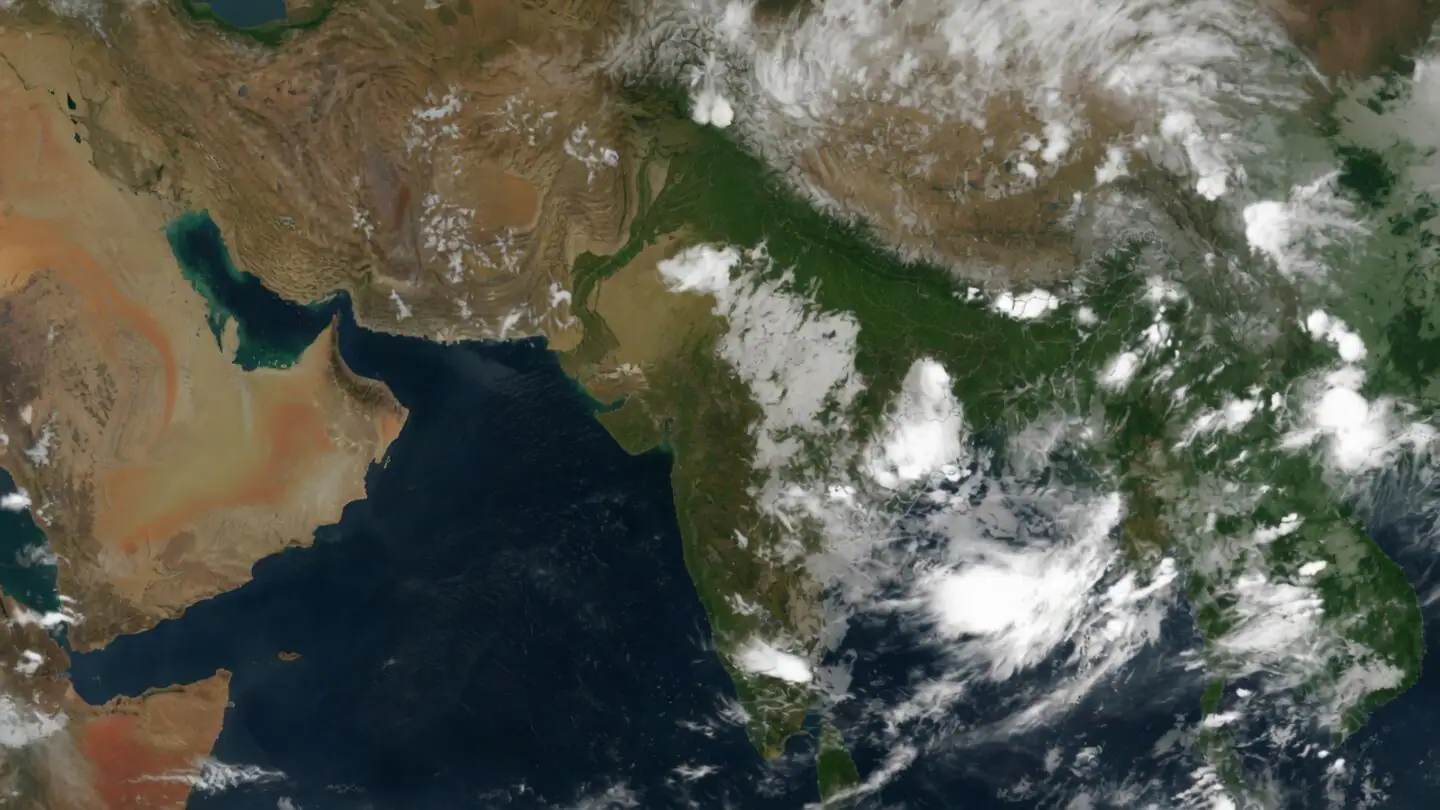
India has received 50.3 mm rain from June 1 to June 16, the 34th lowest rainfall for this period since 1901. The southwest monsoon brings 75% of India’s annual rainfall. 2026 being an El Nino year entails a weaker monsoon. What does it look like right now?Fishing boats lie anchored along the Arabian sea coast near Mumbai. (PTI)The official southwest monsoon season runs from June 1 to September 30. The first 16 days of this 122-day period, when the weather system associated with the system progresses over the Indian landmass, is now over. HT’s analysis of the gridded rainfall data of the India Meteorological Department (IMD) shows that the country-level rainfall deficit has widened rather than shrunk since the monsoon’s arrival at the Kerala coast on June 4. Both monsoon and non-monsoon rains are to blame.Monsoon report card so farThe first half of June is the 34th driest since 1901 India has received 50.3 mm rain from June 1 to June 16, the 34th lowest rainfall for this period since 1901, the first year for which IMD has published gridded data. The rain received so far is also 27.1% less than the 1971-2020 average for the June 1-16 period. The IMD currently considers 1971-2020 rainfall as the Long Period Average (LPA) for tracking rain’s performance. Clearly, all is not well with June rain so far.Gap with normal rains has almost consistently widened after onset over Kerala The arrival of the monsoon in Kerala did not help in decreasing June rainfall deficit. The national deficit was 27% on June 1, which decreased gradually to 4.1% by June 5, the day after monsoon onset over Kerala. That gap has again widened to 27%, as daily rain has been below the LPA on every day except June 5.Not all June rain deficit is because of below-par monsoon IMD also has estimated arrival dates for the monsoon across the Indian landmass. By June 15, the latest period for which normal progress data is available, the monsoon should have covered Maharashtra, the southern half of Chhattisgarh, and Odisha from the southern/south-western side; and the eastern half of Jharkhand and Bihar from the eastern side. As the accompanying map shows, a large proportion of the area that has a big deficit in rains – IMD classifies a 20% shortfall as deficient –lies outside the region where the monsoon should have reached by now. This means that not all deficit is because of the monsoon system not bringing enough rain. However, all is not well with the monsoon either. One reason is that the progress of the monsoon is now behind schedule, with the western arm stuck at the southern edge of Maharashtra since June 8. The second reason is the rains are deficient even in places where the monsoon has reached. To be sure, the trends for monsoon progress here must be read with the fact that the IMD was hasty in declaring onset up to Solapur in Maharashtra on June 8, a declaration that has been followed by days of little to no rain in that part of Maharashtra. Which states are contributing the most to the deficit?The map in the previous section shows that large parts of the country are reeling under a big deficit of rainfall this June. However, a 20% deficit in Punjab right now would not make the same contribution to the national level deficit as a 20% deficit in Kerala, which is expected to be much rainier than the former in June 1-16 period. Therefore, HT has also calculated the contribution of each state to the national level deficit. This shows that the states where monsoon should have reached indeed have a bigger contribution to the national deficit. These states have a contribution of -24% to the national LPA of the volume of rain for the June 1-June 16 period while the states where monsoon arrival does not happen by June 15 usually have just -3% contribution, giving a net deficit of 27%. To be sure, as the accompanying charts show, there is a large state level of divergence in both categories. Maharashtra, Gujarat, and Odisha are the biggest contributors to the deficit from the LPA, while Rajasthan, Kerala, and Uttarakhand are helping decrease the deficit.Number TheoryUnlock a world of Benefits with HT! From insightful newsletters to real-time news alerts and a personalized news feed – it's all here, just a click away! -Login Now!See Less
Monsoon report card so far | Number Theory
India has received 50.3 mm rain from June 1 to June 16, the 34th lowest rainfall for this period since 1901.
736 words~3 min read