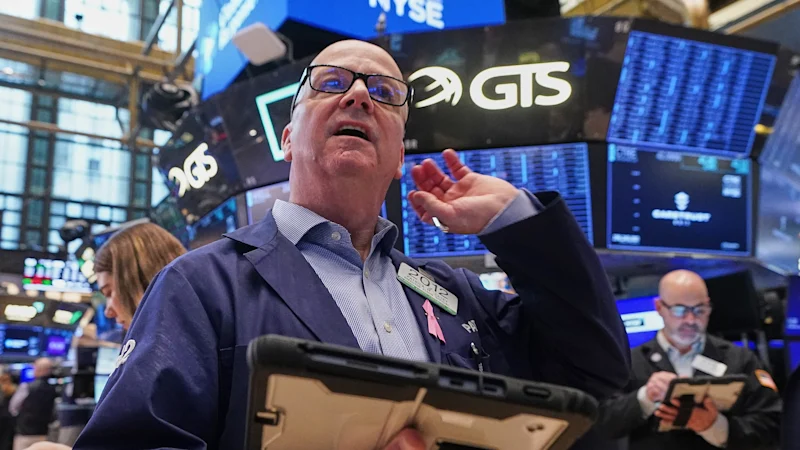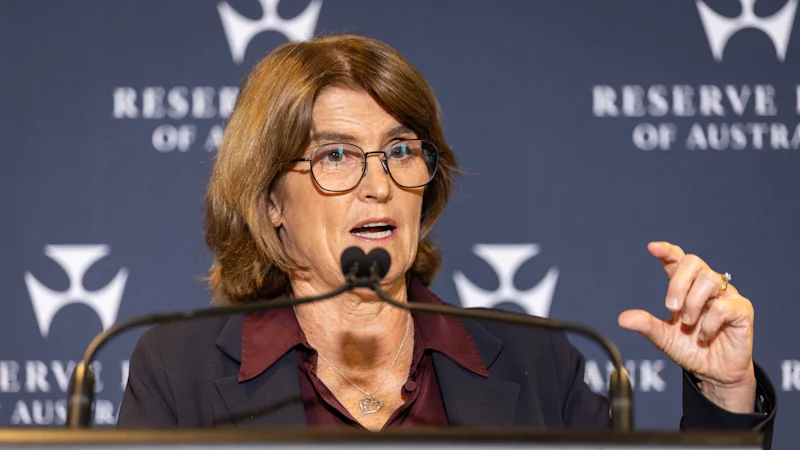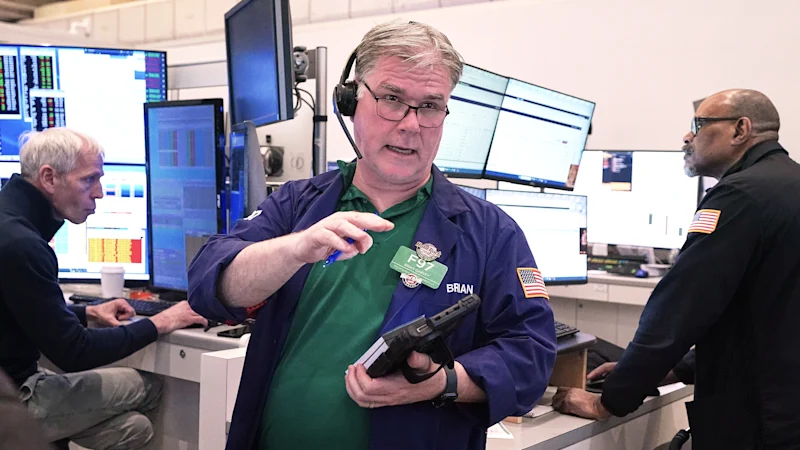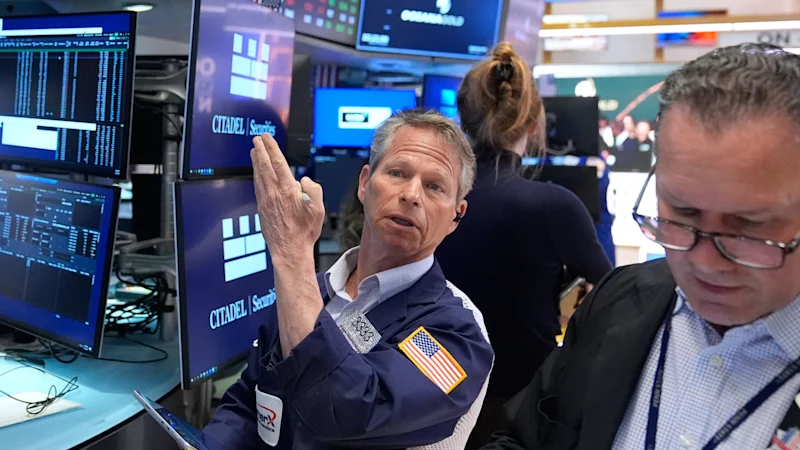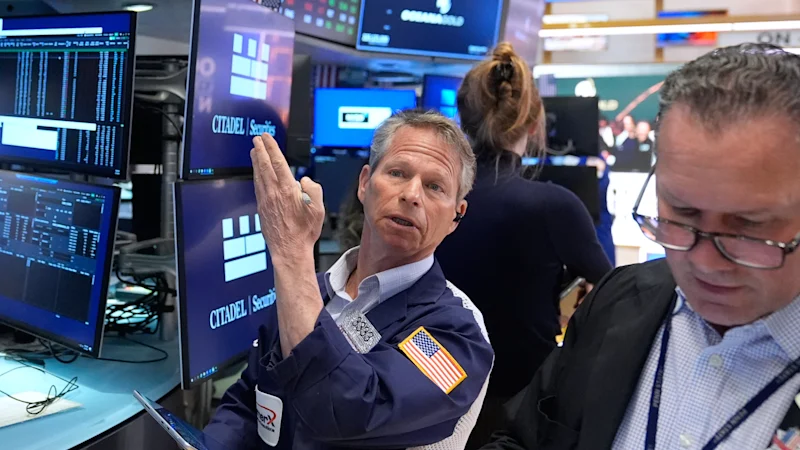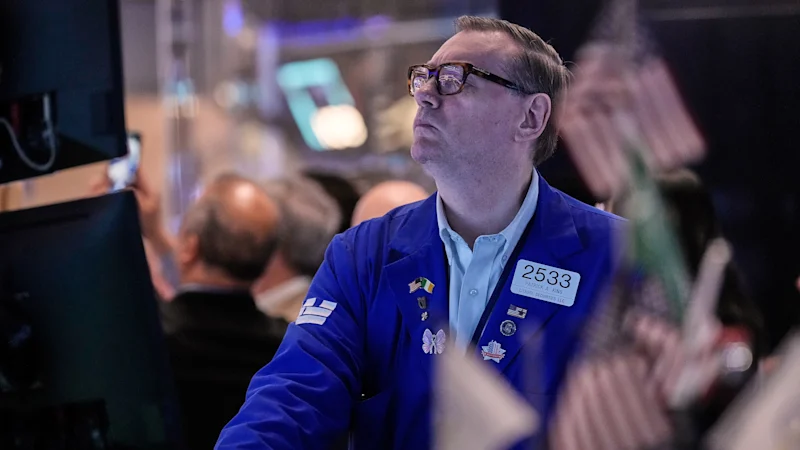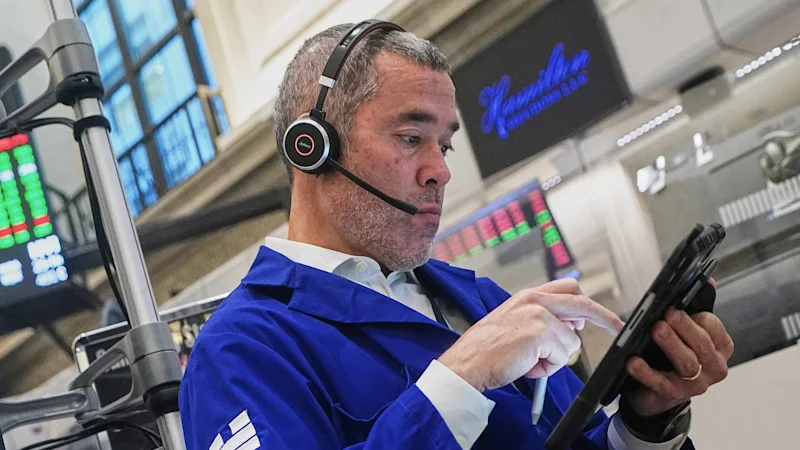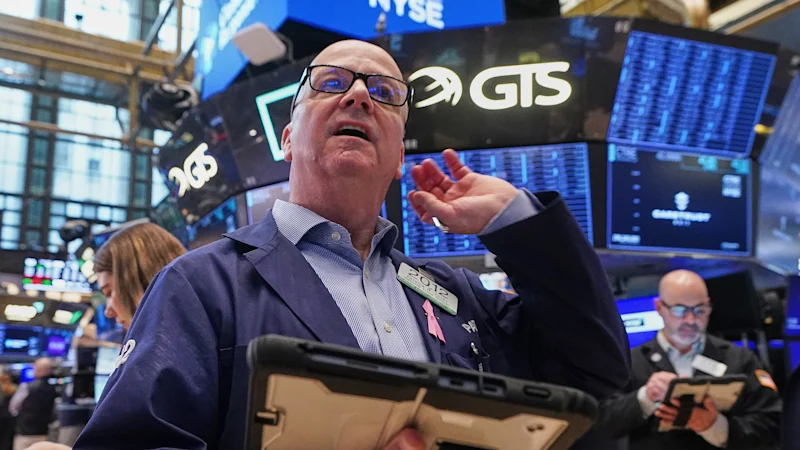
Staff writersUpdated June 17, 2026 — 11:28am,first published June 17, 2026 — 5:18amThe Australian sharemarket lacked a clear direction in early trade, tracking a patchy day on Wall Street where investors rotated out of technology shares and positioned for the first Federal Reserve interest rate decision under new chairman Kevin Warsh.Energy shares slumped after oil prices fell to the lowest since March in response to the peace deal in the Middle East. ARN News shares skyrocketed after the embattled media company settled a legal battle with high-profile shock jock Kyle Sandilands for a fraction of the $85 million he had sought.Oil prices fell below $US80 for the first time since March weighing on energy stocks.APSwinging between small gains and losses in early trade, the S&P/ASX 200 was down 11.3 points, or 0.1 per cent, at 8906.40 just after 11am AEST. The bourse trod water on Tuesday as investors paused after the relief rally over the US-Iran deal to reopen the Strait of Hormuz, and parsed the Reserve Bank’s decision to keep interest rates on hold. The Australian dollar was trading at US70.70¢.Energy stocks led declines in early trade as oil prices slumped to the lowest since March amid expectations that a deal to end the Iran war will reopen the Strait of Hormuz at the end of the week and get the global flow of oil going again. West Texas Intermediate traded below $US77 a barrel, after sinking 16 per cent over four sessions. Brent ended near $US79, down sharply from its $US100-plus level of a few weeks ago. The interim pact, which is due to be signed on Friday, offers Tehran broad financial incentives, including the right to sell its oil immediately.Oil and gas giant Woodside slumped 3.8 per cent, while its rival Santos dropped 2.8 per cent. Local refiners Ampol and Viva Energy lost 2.6 per cent and 2.3 per cent, respectively. Coal miners, which had benefited as the oil crunch was seen to boost demand for coal, also declined, with Yancoal down 2.8 per cent and Whitehaven Coal down 2.8 per cent.Tech stocks also pulled lower, tracking their peers’ slump on Wall Street. Software makers Xero and Technology One both dropped 1.6 per cent and family tracking app Life 360 lost 2.7 per cent.Bets that the war’s end will kickstart economic growth again and boost company profits saw some investors shifting out of defensive stocks, weighing on sectors such as consumer staples, utilities and real estate investment trusts. Supermarket chains Woolworths and Coles fell 0.6 per cent and 1.6 per cent, respectively, after a rally last week. Power companies Origin and AGL were down 2.5 per cent and 1.8 per cent. Warehouse owner Goodman Group was down 1.2 per cent and office property trust Charter Hall fell 0.9 per cent.But the heavyweight banking and mining stocks, which together make up more than half of the ASX, were mostly in the green, bolstering the market. BHP added 0.4 per cent, and the gold miners continued their rally, pushing Northern Star Resources up 2.1 per cent, Evolution Mining up 1.7 per cent and Newmont up 2.1 per cent. All big four banks were higher. CBA and ANZ Bank rose 0.6 per cent, Westpac added 0.5 per cent and National Australia Bank was up 0.4 per cent.ARN Media soared 28.6 per cent after Sandilands reached a $12 million settlement with the KIIS radio network owner as part of a deal that brings to an end one of two high-profile, messy legal battles involving the company. That amount is far less than the $85 million Sandilands had sought from the radio network for taking him off the air, which bodes well for unresolved parallel litigation launched by his former co-host Jackie “O” Henderson. The pair had been employed on contracts worth $200 million over a decade.Flight Centre shares rose 3.5 per cent after the travel agent sweetened a profit warning with the announcement of a share buyback of up to $200 million worth of its stock to show “its strong belief in Flight Centre’s recovery and outlook.” The company now expects underlying full-year profit before tax of $275 million to $295 million, down from a previous forecast of $310 million to $345 million due to cancellations and weaker long-haul bookings because of the war in the Middle East. While the “peace agreement reached this week provides a clearer runway” into the financial year starting on July 1, it has come too late to lift this year’s results, it said.On Wall Street overnight, the S&P 500 slipped 0.6 per cent and pulled 1.3 per cent below its record set earlier this month. The market was nearly evenly split between stocks rising and falling. The Dow Jones Industrial Average added 0.6 per cent to set a record for the second straight day. But drops for some influential tech stocks pulled the Nasdaq composite down 1.2 per cent.Stocks that had benefited from the boom in artificial-intelligence technology weighed on the market in particular following vicious swings over the last couple of weeks.They’ve been leading the market up and down amid worries that their stock prices shot too high in the mania around AI. That’s taken a toll because chip companies, makers of computer memory and other AI winners have grown so massive that they’ve become some of Wall Street’s most influential stocks.Drops of 2.4 per cent for Nvidia, 4.4 per cent for Broadcom and 6.2 per cent for Micron Technology were the heaviest weights pulling the S&P 500 lower.Dave & Buster’s Entertainment sank 6.2 per cent after reporting a weaker profit for the latest quarter than analysts expected, while Robinhood Markets fell 1.4 per cent after the investing platform said that it’s laying off about 10 per cent of its full-time employees.On the winning side of Wall Street was SpaceX, which rose 4.8 per cent for its third straight gain since its debut on the US stock market. The mega-cap, which is now bigger than Jeff Bezos’s Amazon, said it’s moving forward with a purchase of Cursor, a popular AI coding assistant, valuing it at $US60 billion ($84.9 billion).Yum Brands climbed 1.9 per cent after it said it’s selling the Pizza Hut chain for $US2.7 billion. Most of the restaurants will go to LongRange Capital, a private equity firm. Those in mainland China will go to Yum China Holdings.The strongest action was in the oil market, where optimism continued that a tentative US-Iran deal on their war will reopen the Strait of Hormuz at the end of the week and get the global flow of oil going again. West Texas Intermediate traded below $US77 a barrel, after sinking 16 per cent over four sessions to post the longest losing run this year. Brent ended near $US79. The interim pact, which is due to be signed on Friday, offers Tehran broad financial incentives, including the right to sell its oil immediately.Significant hurdles remain in the negotiations, including what to do with Iran’s nuclear program. But the hope on Wall Street is that this agreement will mean a long-term fix to a conflict that has worsened inflation around the world. The price of Brent has come down sharply from its $US100-plus level of a few weeks ago, though it could still take months for the energy industry to get back to full speed.In other international markets, indexes rose in Europe following a mixed performance in Asia.Tokyo’s Nikkei 225 briefly topped 70,000 for the first time before ending with a modest gain of 0.1 per cent after the Bank of Japan raised its benchmark interest rate to 1 per cent. That’s its highest level in three decades, and it followed a similar move by the European Central Bank last week.The Federal Reserve began its own meeting on what to do with interest rates on Tuesday, with an announcement on the decision scheduled for Wednesday [early Thursday morning AEST].It’s the first meeting under its new chair Warsh, who was nominated by President Donald Trump. Trump has been pushing for lower interest rates, which would give the economy a boost but also threaten to worsen inflation. The widespread expectation, though, is that the Fed will leave its main interest rate alone again.In the bond market, the yield on the 10-year Treasury fell to 4.43 per cent from 4.47 per cent late Monday and from 4.56 per cent earlier this month.High yields in bond markets worldwide caused by expensive oil prices have threatened to slow economies and undercut prices for all kinds of investments, including stocks and cryptocurrencies.High yields have already sent mortgage rates higher, and a report on Tuesday said construction crews broke ground on far fewer new US homes in May than economists expected.From our partners
ASX edges lower as energy stocks fall; ARN News soars on Sandilands settlement
The Australian sharemarket lacked direction in early trade, tracking a patchy day on Wall Street where investors rotated out of technology shares.
1,448 words~7 min read